
Tea Knowledge
Hakka Lei Cha Culture: Sharing, Hospitality and Local Context
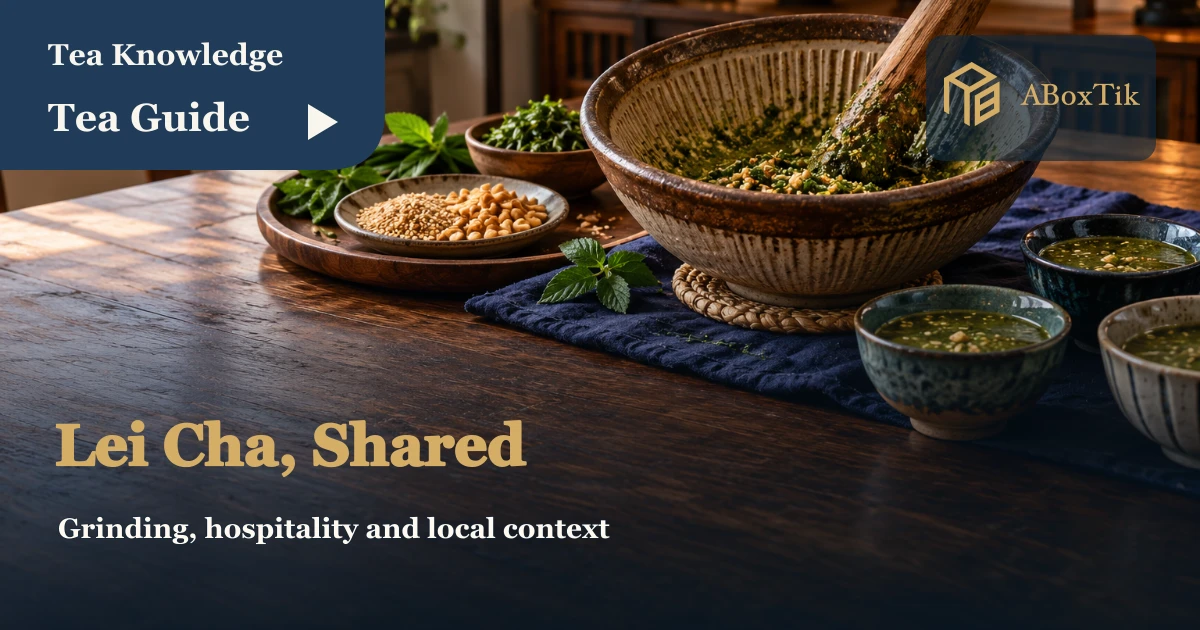
The sound beside a grinding bowl gives waiting a rhythm. A shared serving carries time and attention as well as flavour; an ingredient and a considerate question can open the conversation.
Hakka lei cha culture can be explored through a drink that may bring ground tea leaves together with grains, beans, nuts, seeds or herbs in a substantial drink. Its cultural meaning is larger than an ingredient list. Grinding, smelling, adding water, serving and talking can turn a prepared beverage into something a table makes together. Household and regional practices vary, so begin by respecting the host’s or locality’s method rather than declaring one version the only correct one.
Hakka lei cha culture: shared making beyond a single recipe
This article does not turn a bowl into a list of exact grams. A recipe belongs on a recipe page; here the question is how to understand lei cha when it is being shared. lei cha background and preparation Chinese tea culture tea hospitality tea as a gift
The name lei cha can be introduced through grinding. Hakka Affairs Council food material describes its hospitality role, while Hakka Cloud’s local account discusses Beipu and the presentation of tea culture. These provide specific entrances into the subject. The participation suggestions here are contemporary hosting ideas, rather than evidence that every household has always followed one fixed ceremony. Keeping that distinction makes a cultural introduction more inviting and more accurate.
Make participation comfortable beside the grinding bowl
Grinding asks for time, and that time gives the gathering a rhythm. One person controls the pestle, another passes ingredients, another prepares cups. These small actions may not appear in a recipe, yet they carry hospitality. If invited to join, watch how the host arranges the work and ask, “Which part would be helpful?” before taking over.
Lei cha can accompany a meal, a festival, or a family visit. Avoid presenting one household memory as a rule for every Hakka community. Specific stories deserve room for their own details. Taiwanese tea origins and craft gongfu brewing brewing basics aroma observation
When a grinding bowl is present, establish whether the host is inviting participation and ask how to hold the tool and take turns. Someone with an uncomfortable wrist can pass cups or read the ingredient card instead. A guest who prefers to watch is participating too. Small optional jobs make sharing easier than a compulsory round of grinding. Follow the venue’s tool instructions and keep attention on comfortable handling rather than speed. The bowl need not become a competitive event.
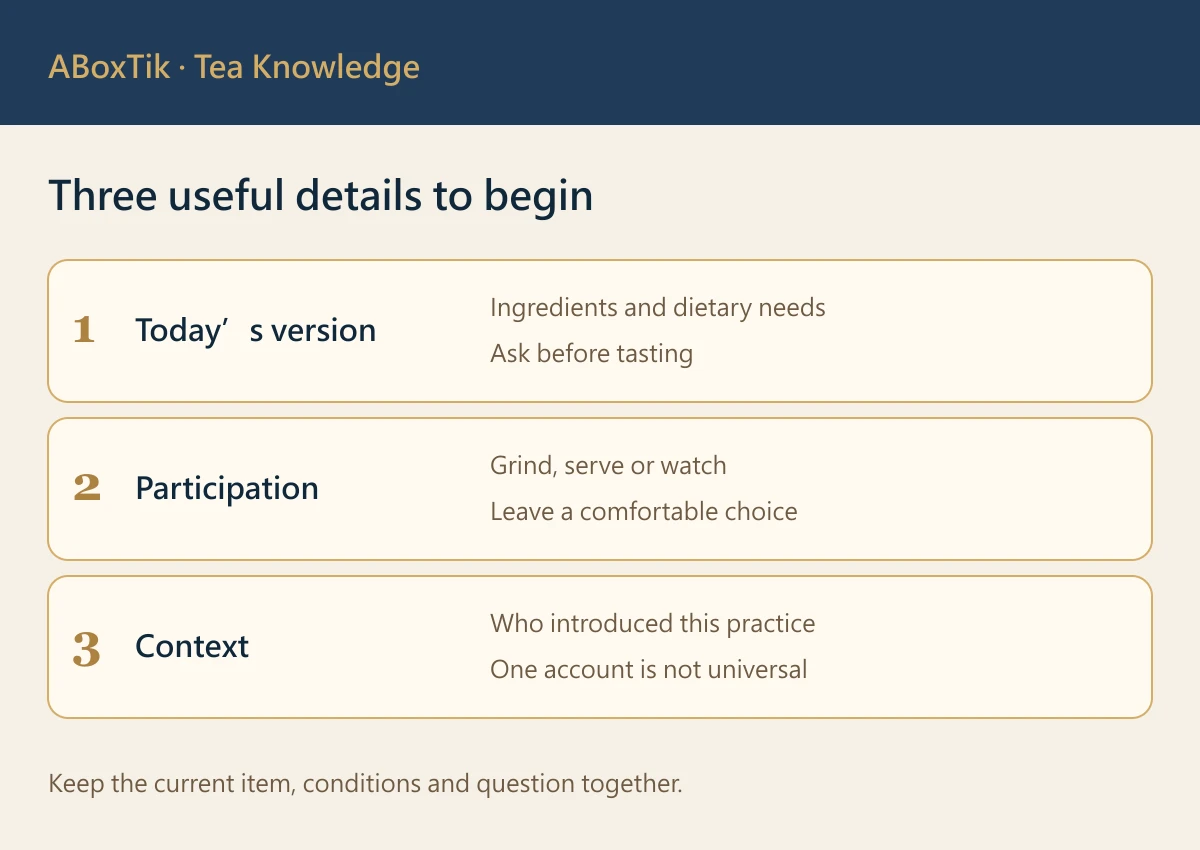
As a guest, ask about today’s ingredients and practice
Before tasting, ask what is in today’s bowl, whether it includes nuts or sesame, whether the direction is savory or sweet, and how the host suggests drinking it. Food allergies and dietary limits belong in the conversation before the first sip; that is care for everyone at the table.
Smell the ground mixture, then take a small sip and notice thickness, grain, tea and nut directions. Rather than rushing to compare it with another drink, ask what this aroma usually means in the host’s home. One well-placed question can make the story arrive at its own pace.
Ask for the ingredients in the version actually being served, including prepared powders, toppings and added sugar, rather than only asking whether the taste is traditional. If an allergy is relevant, clarify shared tools and preparation contact as well. Where the information is uncertain, do not taste first to find out. A sentence explaining the specific restriction helps the host respond. It makes care practical without turning the guest’s needs into a judgement about hospitality.
Host with a clear route and genuine choices
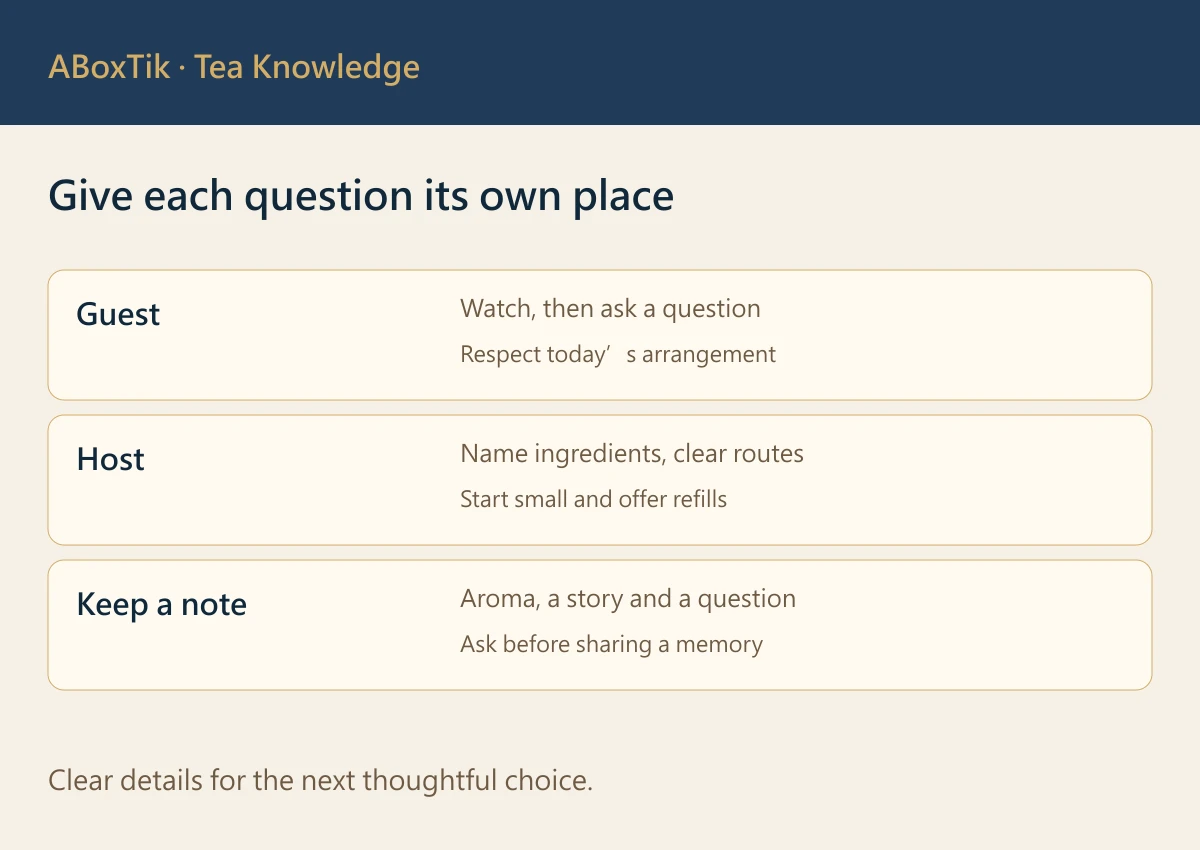
For a home gathering, prepare simple labels for ingredients and allergens, set out the tools, and offer different ways to participate. Some guests will enjoy grinding; others will enjoy listening and pouring. Both are legitimate. Serve small portions first and invite refills, instead of making an empty bowl the proof of appreciation.
If brewed tea is also on the table, introduce it separately from lei cha. One cup can help guests notice leaf aroma and infusion; one bowl can show how ground ingredients create fullness. Neither needs to replace the other.
A small table card can identify today’s version, known ingredients, the person introducing it and optional activities. Keep the hot-water route separate from the grinding area so a new participant is not handling heat while searching for a bowl. Begin with modest portions and offer refills. Keep plain tea available for anyone who wants it. Choosing a different drink does not mean a guest is less interested in the people or culture around the table.
Introduce a local practice with its name and context
The strongest introduction identifies where this table’s practice, memory or information comes from. If a detail comes from a local museum, cultural institution or family telling, say so. If a historical point is unknown, leave it as a question for a source that can support it. A vivid small fact is better than a grand claim without a home.
When offering Taiwan tea to visitors, put the product’s actual name and brewing information on a separate card from the lei cha story. Culture is not a decorative label; it is a relationship people have time to hear.
For overseas visitors, introduce lei cha with a short description such as ground tea drink, then explain today’s ingredients and sharing method. Avoid replacing its name entirely with matcha, a milkshake or an energy drink. A familiar comparison can open a conversation, but the differences should follow. Without a reliable source, there is no need to embellish an origin story with a precise ancient date or famous character. The actual grinding and serving already offer plenty to discuss.
Keep a gathering note without scoring the culture
Before leaving, note one aroma, one sentence you heard, and one question to ask next time. Continuing the spirit at home does not require reproducing every tool or ingredient. Invite a friend for tea and leave ten unhurried minutes for conversation.
ABoxTik tea can be a clear cup on the table, while the gathering is completed by human time. Lei cha offers a gentle reminder that a memorable drink is also made through doing, listening and remembering together. Taiwan tea regions classic four-box tea selection two-box tea gift Cuiyu oolong tea
Keep an unscored gathering note: who introduced the version, which ingredients were used, one distinct aroma, a sentence recorded with permission and one question for another visit. Ask before publishing a personal memory. A friend’s household account should remain that account rather than becoming a conclusion about all Hakka people. The card values an exchange between people; it does not award a certificate of cultural correctness. Let it preserve enough detail to continue the conversation kindly.
For another gathering, mention the version being introduced, whether hands-on participation is offered and the known ingredients in the invitation. Guests can raise questions beforehand. This small preparation leaves more time at the table for conversation instead of a last-minute search for an ingredient label.

Follow a box of tea: a small clear question for the next cup.
Follow a box of tea into everyday life
Understanding Hakka lei cha culture can begin with this particular table: who is introducing it, what is used, how work is shared and whether guests feel comfortable. The lei cha background and preparation answers ingredient and method questions. One open question can carry the exchange forward to another visit.
Plain Taiwan tea can have its own place beside the bowl. Choose a convenient format from the two-box tea gift or use familiar tea already at home. Leave time for people, identify each drink honestly and let the gathering have enough room to unfold without a performance.
Related reading
- lei cha background and preparation: ingredients and methods.
- tea hospitality: practical consideration.
- Chinese tea culture: explore varied tea tables.
Sources
Sources checked 16 October 2026.