
Tea Knowledge
TTES No.25 Purple Tea: Ziyun, Leaf Colour and Tea Styles
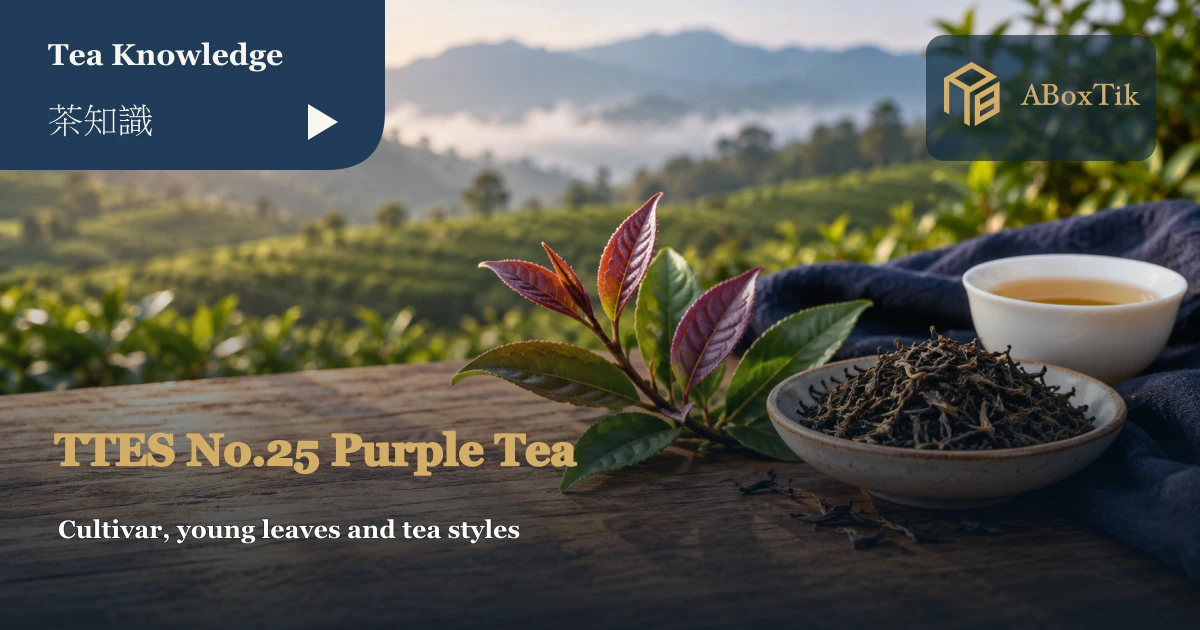
A purple-red shoot invites a second look. Follow that curiosity into the cultivar’s name, the way the tea was made and the character of the cup; a small discovery can become a clear understanding.
TTES No.25 purple tea, also named Ziyun, is a Taiwanese cultivar named in 2021. Its young shoots are purple-red, and it is suitable for green and black tea production. Leaf colour, dry tea and prepared liquor belong to different stages, so begin by checking cultivar identity and the actual processing style.
The colour is an attractive introduction, rather than a mysterious recipe. This guide connects the plant, its appearance and a practical tasting card. There is no need to turn a first cup into a laboratory demonstration: an interesting flavour and a clear explanation are already a generous beginning.
TTES No.25 purple tea begins with cultivar identity
Taiwan’s tea research station selected purple-red young-leaf material from naturally crossed descendants of Burma tea and named the cultivar TTES No.25 in 2021. Its official cultivar table lists the name Ziyun and suitability for green and black tea. Together, these details provide a useful introduction.
A cultivar is not a growing region. Read the actual origin, batch and production information separately. Likewise, the general description purple shoots does not automatically identify a product as TTES No.25; the formal name is worth confirming.
To explore Taiwanese breeding further, compare Jin Xuan, Cui Yu and Red Jade. A number provides a reference for finding information, rather than a quality ranking. There is no requirement to memorise the whole series before enjoying a cup.
Why are the young leaves purple-red?
Official information identifies anthocyanins in the purple-red shoots. Start by distinguishing the young leaf from the dry product and the prepared liquor. Making and brewing move the material into different conditions, so those views should not be treated as one interchangeable image.
Colour is an enjoyable conversation starter, but it is not a fixed promise about every finished cup or a measure of health effects. If appearance attracts interest, ask what product was made and how its liquor is described under the recommended preparation.
Two ordinary questions help: what tea style is this batch, and which cup will be used to brew it? Curiosity need not immediately become technical language. Recognising the different stages gives the next conversation a better foundation than collecting several impressive colour adjectives.
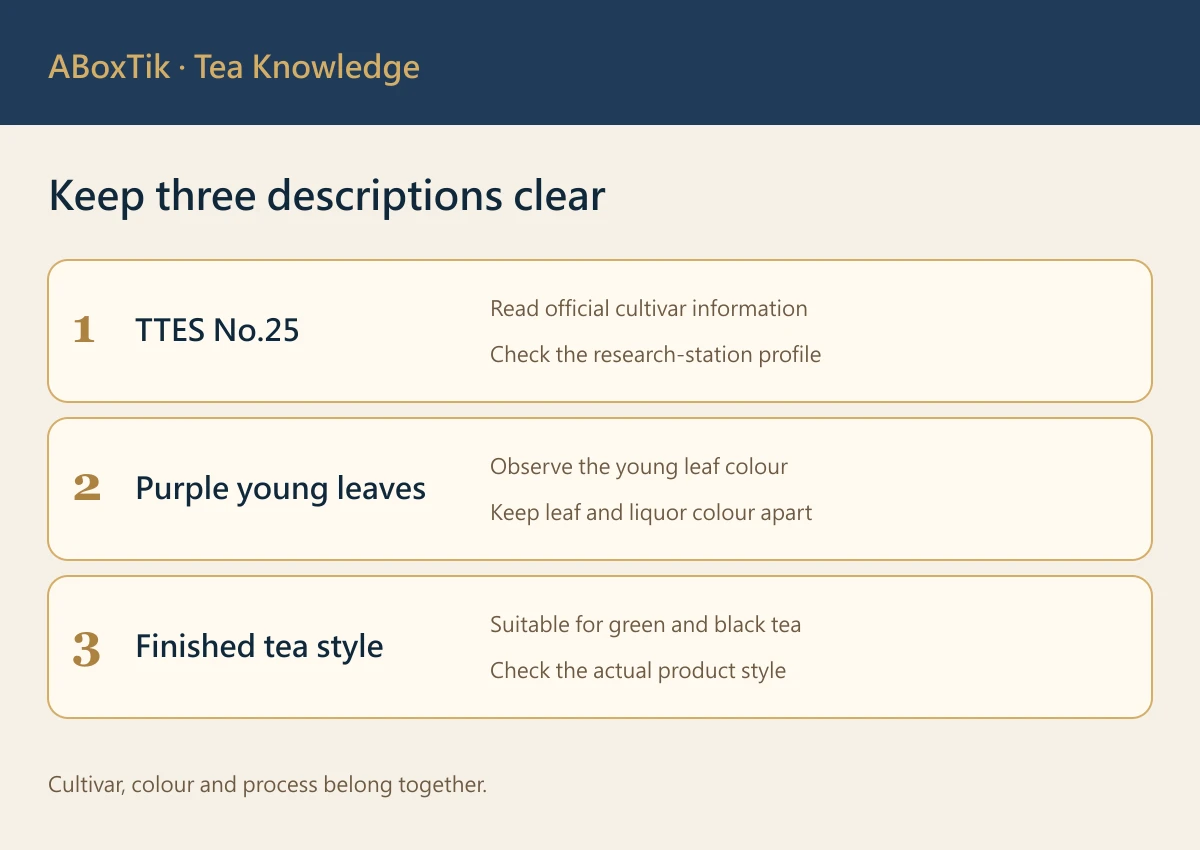
Green and black tea require different reading
Suitability for more than one process does not make the resulting teas identical. Green and black tea follow different manufacturing directions. Read the actual product style before choosing a brewing starting point, rather than turning the cultivar description into universal instructions.
| A label term | What it describes | What to read next |
|---|---|---|
| TTES No.25 / Ziyun | Cultivar identity | Origin and batch |
| Green or black tea | Finished processing style | Flavour and preparation |
| Purple-red shoots | Young-leaf appearance | Dry tea and actual liquor separately |
Use the tea categories for a basic map and the oxidation and processing guide for the terminology. In English, black tea describes the processing category even when another language names it red tea. Purple young leaves describe appearance, a different job for a colour word.
Give the first cup a chance to speak plainly
The research station has described colour and beverage-development possibilities for particular No.25 products. For a first home tasting, begin with the actual package instructions and an unblended cup. It is easier to notice the tea before adding other ingredients.
Choose a clear vessel or a cup with a white interior and look under ordinary light without a strong colour cast. Record the liquor first, then aroma and taste. A photograph may suggest something different because of background, vessel or camera processing; the cup in front of the drinker deserves its own attention.
If exploring mixed drinks later, keep the original preparation and added ingredients as separate notes and handle ingredients appropriately. Understanding this cultivar does not require staging a colour-changing performance. The first useful discovery may simply be a flavour worth tasting again.
Bring appearance and flavour onto one card
Follow the dry, hot and cooling aroma sequence, then taste at a comfortable temperature. Note aroma, strength, sweetness and astringency in familiar words. Official descriptions are references, rather than a list every drinker must complete.
| Field | What to retain | How to compare later |
|---|---|---|
| Identity and style | Label, origin and batch | Confirm the tea being compared |
| Appearance | Dry leaf, vessel and light | Use similar viewing conditions |
| Aroma and taste | Hot, warm and cooler impressions | Change one brewing condition |
If the tea is overly strong, adjust infusion time or leaf quantity, one at a time. Changing vessel, water and amount together creates a difference without explaining it. A clear record makes the next cup more useful than a dramatic but unrepeatable first result.
Keep preference separate from intensity too. A more obvious aroma is not necessarily the one a person most enjoys. Writing both avoids allowing the most noticeable feature to decide the whole verdict.
For a small tasting with a friend, divide one prepared batch between similar cups before discussing colour. Each person can write one visual observation and one flavour impression, then compare the notes. If the descriptions differ, check the lighting and the actual tea style before looking for a grand explanation. Retain a photograph of the label with the card. Later, that record helps distinguish interest in the cultivar itself from a preference for one particular green or black tea made from it.
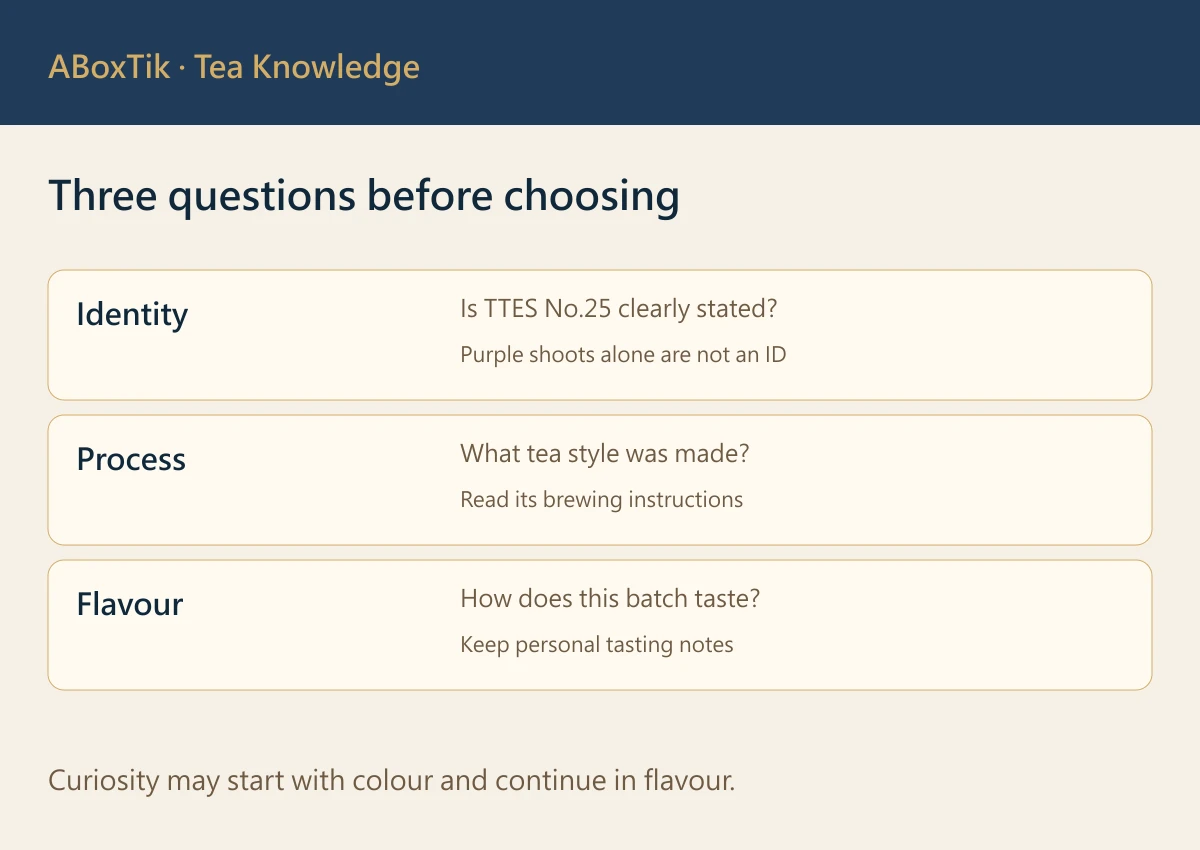
Ask about the product before taking it home
Check that the label identifies TTES No.25, the tea style, source and pack size. If it only says purple tea or purple shoots, ask for clarification. The point is to give an appealing name a dependable meaning, rather than create an examination at the shop counter.
Choose an amount that fits the drinking routine and review packing and storage instructions. After opening, follow tea storage guidance and retain the name and date. For a repeat purchase, knowing the finished style and preparation is more helpful than remembering the colour alone.
A Taiwanese tea selection or two-box tea gift can illustrate other cultivar formats and information. Confirm any specific No.25 availability from actual product details; a general display of tea formats does not establish that a particular cultivar is included.
Share one clear sentence before the longer story
Try introducing it as: “This is TTES No.25, also called Ziyun. Its young leaves are purple-red, and this batch was made as ___ tea.” Fill the space with the actual style, then invite the other person to look, smell and taste.
If colour prompts interest, compare information about young leaves with the dry tea and the actual liquor. Ask which stage attracts attention. This turns the occasion into an exchange of observations rather than a recital of unfamiliar terms.
Continue with Taiwanese breeding and craft, or use flavour directions to choose another tea to explore. A new name can be learned slowly, with enough room left for personal taste. One clear detail is a better souvenir than a long explanation nobody quite remembers.

Follow ABoxTik
Let a purple-red shoot open a new curiosity
At ABoxTik, a fresh discovery is most enjoyable when its information is clear. Colour may begin the interest; cultivar, processing and flavour give it somewhere useful to go.
Explore the actual teas in our Taiwanese tea gift boxes and choose a format and instructions suited to the recipient’s routine.
Related reading
Sources
Sources checked 19 October 2026.