
Tea Knowledge
Leafhopper Honey Aroma Tea: Leaves, Processing and Taste
Behind a honey-like aroma are a tea plant responding to its surroundings and a maker working with the leaf. The tiny leafhopper arrives without a honey jar, yet gives us a good reason to ask where the flavour began.
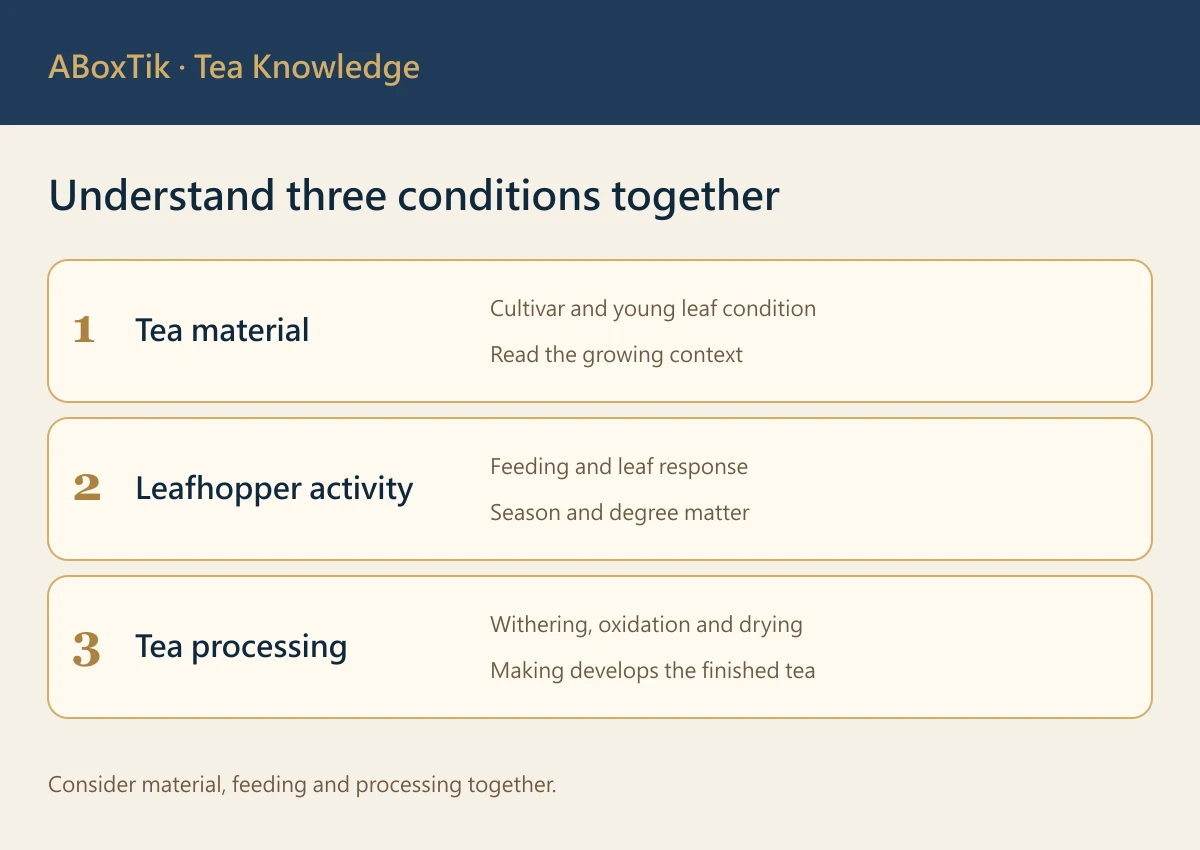
Leafhopper honey aroma tea develops through the interaction between feeding on young shoots, the plant’s response and subsequent tea processing. The name does not mean honey was added, and more insects do not automatically mean a better aroma. Cultivar, leaf condition and manufacture all matter.
The phrase “insect-bitten tea” can be a surprising introduction. Follow it from the garden to the finished cup, then use a short buying card to connect the story with information worth keeping. There is room for curiosity without turning one colourful detail into the whole explanation.
Leafhopper honey aroma tea starts with the leaf
Taiwan’s tea research station describes honey-aroma teas as a group made from shoots affected by tea green leafhopper feeding. The Taiwanese term zhuoyan refers to that interaction with the raw material, rather than an ingredient added during brewing.
The insects feed on tender growth, and the plant responds. Harvesting and manufacture then take the material through further changes. Read the tea-making sequence to see why the final cup cannot be credited to an insect alone.
Oriental Beauty provides a familiar introduction, but its manufacturing style does not represent every honey-aroma tea. Keeping those differences in view makes the story more useful. A memorable name should open a conversation, rather than close the question of how the tea was made.
How plant responses connect with aroma
Cho and colleagues’ 2007 study followed chemical composition and gene expression during Oriental Beauty manufacture using affected Qingxin Damao leaves. It connected plant stress responses with changes occurring through manufacture. Visible feeding marks alone cannot describe the finished flavour.
Think of leaf condition as the starting material and processing as the continuation. The study used particular leaves and conditions, rather than establishing a flavour guarantee for every commercial batch. Origin, style and batch information remain useful when choosing a product.
There is no need to memorise a list of chemical names before enjoying it. Ask where the leaves came from and what tea they became. Those questions connect the garden with the packet in front of the drinker. The technical vocabulary can wait until after the tea has been poured.
Why more leafhoppers do not mean better tea
Scott and colleagues’ 2020 density experiment found that insect density, visible damage and changes in plant metabolites were not a simple straight line. Different compounds responded differently. Increasing insect numbers did not increase every desirable characteristic together.
A shopper therefore needs no single insect score to rank teas. Cultivar, growing conditions, damage and handling all contribute. Ask how a maker describes the particular batch rather than turning one feature of the raw leaf into an overall quality measure.
Garden ecology and cultivation records answer other questions. Read organic tea labelling and verification separately if those matters guide a purchase. A honey-like aroma is a sensory description; actual management information comes from the relevant product and producer records.
Keep the research scale in mind as well. A controlled experiment helps investigate relationships. It does not give a home drinker an instruction to encourage feeding or a practical recipe for growing premium tea. For buying, clear batch information is a more useful starting point.
Why affected leaves can become different tea styles
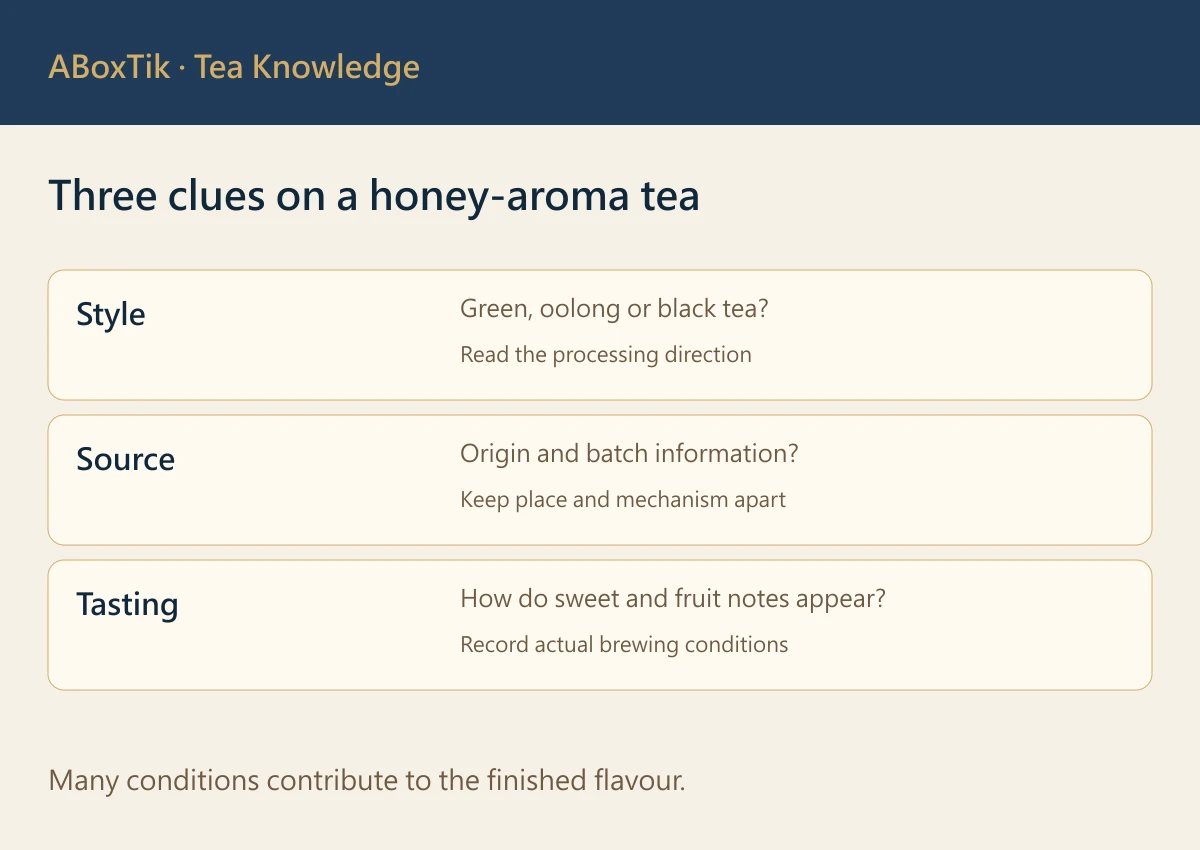
The research station includes green, oolong and black forms in its honey-aroma tea descriptions. Feeding history explains one part of the raw material, while tea category explains a manufacturing direction. They belong in different fields of the same introduction.
| Information | What it describes | What to ask next |
|---|---|---|
| Leafhopper affected | Interaction with fresh shoots | Cultivar, source and batch |
| Green, oolong or black | Finished processing style | Flavour and preparation |
| Honey-like aroma | A sensory description | Actual tasting and preference |
Use the tea categories and oxidation and processing as a basic map. Then compare black tea with lighter and roasted styles. Liquor darkness does not measure feeding intensity, and a tea category is not an insect scale.
Keep a useful note from the first cup
Begin with the actual package instructions and taste at a comfortable temperature. Record aroma, strength, sweetness and astringency separately. Familiar phrases such as ripe fruit or soft sweet aroma are useful; the first sip need not produce a professionally polished description.
Distinguish a smell from sweetness on the tongue. An aroma that recalls honey does not establish added honey or higher sugar content. When ingredients matter, read the ingredient list instead of asking the nose to do the work of a label.
Follow the aroma sequence through hot, warm and cooler stages. Use infusion-time guidance to change one brewing condition at a time. A Taiwanese tea selection also offers a way to compare clearly named teas while retaining the batch and preparation notes.
Write a preference alongside the observation. “Noticeable fruity aroma; I preferred it slightly lighter” is more useful for the next cup than a score alone. It explains what attracted attention and what would make the tea more comfortable in an ordinary drinking routine.
A simple comparison card needs only three lines: what the label says, what was noticed, and what to repeat next time. Keeping them separate prevents an attractive story from becoming an expected answer. It also gives a friend an easy way to join the conversation without knowing the research vocabulary. If the next preparation is preferred, retain that version rather than treating the first cup as a permanent verdict.
Take three short questions to the tea counter
Ask what style the batch was made into, whether its origin and cultivar information are clear, and how the seller suggests preparing a first cup. Those questions turn an appealing story into instructions that can travel home with the tea.
For gifts, compare the actual contents, ingredients and equipment needs of a two-box tea gift or premium tea gift box. Confirm availability of any particular leafhopper-affected tea from the current product details rather than assuming a general gift selection contains it.
Ask about an appropriate small pack if trying something unfamiliar. Keep the tea name, opening date and preferred preparation together, then follow storage guidance. At the next purchase, those details are more dependable than remembering the colour of the box.
Leave a question open when sharing the story
Try: “The young leaves in this batch were affected by leafhopper feeding before being made into this tea. What does the aroma remind you of?” Explain the conditions first, then invite observation without hiding a required answer inside the question.
A friend who does not notice honey may find floral, fruity or softly sweet impressions. Different experiences provide different reference points. A short pause often makes a better conversation than a rapid list of ten aroma terms delivered before anybody has tasted.
Continue with Taiwanese growing environments and craft, or visit the ABoxTik story for our approach to sharing tea. Give the information a clear shape and leave room for the drinker’s own response. That is an inviting place for a second cup to begin.
Follow ABoxTik
Let a honey-like aroma leave a clearer understanding
At ABoxTik, a tea story is most enjoyable when its details can be followed. Bring a few simple questions to a tasting and find the flavour worth making again.
Choose an amount and format suited to the drinking routine, then retain the name and preparation. Sharing the next cup can involve less recital and more discovery.
Related reading
Sources
- 茶及飲料作物改良場:蜜香茶
- Cho et al. (2007), Oriental Beauty manufacturing and aroma formation
- Scott et al. (2020), Leafhopper density, damage and tea metabolites
Sources checked 19 October 2026.