
Tea Knowledge
Tea Drinking Etiquette: Seating, Pouring and Tasting with Ease
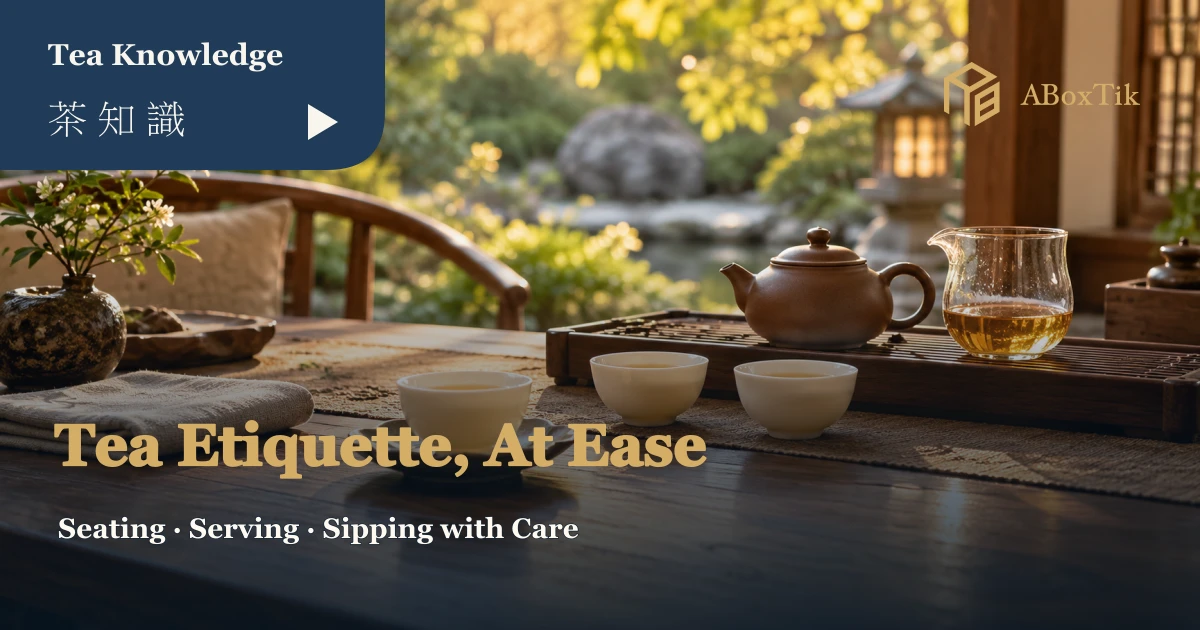
Set the cup down steadily and let the story unfold. A comfortable seat and room to express a preference are a lovely beginning for a shared pot of tea.
Tea drinking etiquette begins with comfort, steady handling and a real choice about refills. Seating, serving order and gestures vary between households, regions and occasions. Observe the host, ask when unsure, and use small practical actions that help everyone enjoy the tea. A guest should be able to request less, pause, or choose water without explaining why.
A first visit to a tea table can feel a little daunting. Start with one easy question: “Would it be convenient to put the cup here?” It gives the host something useful to answer without requiring a performance. If preparing the gathering, our Taiwanese tea hospitality guide handles preparations. Here we begin when everyone is taking a seat.
Tea drinking etiquette: start with seating and a clear route
The Southern Branch of Taiwan’s National Palace Museum presents both Japanese matcha and Taiwanese oolong tea settings. Urasenke links tea practice with harmony, respect and care for utensils. These offer cultural context; an ordinary gathering can still follow its host’s arrangements and its guests’ needs.
If the host invites a guest of honour or an older relative to sit first, follow that guidance. Without an assigned seat, simply ask whether a position is convenient. A round table, sofa and desk have different layouts, so think about the actual route for hot water. Keep kettles away from edges, and leave files and phones out of the pouring path.
Put a bag where it will not block the walkway. Someone who needs easier access, more room to move or a cup within closer reach can say so before settling in. Hosts can offer a choice of suitable seats. The chair is not the opening question in an etiquette examination; it should let arms and feet settle comfortably.
For broader context, explore Chinese tea culture and Taiwanese tea’s character. The arrangement of today’s chairs is still best agreed by the people using them.
Ask about preferences before introducing the tea
“Would you like tea or water?” is an easy beginning. Follow with a flavour question if tea sounds appealing: floral and lighter, or a more noticeable roasted direction? Someone unfamiliar with tea names can answer that. Let a refusal stand; the guest’s choice is enough information to make the next move.
Before serving the first infusion, make sure the pot and pitcher feel manageable. A fairness pitcher, also called a tea sea, gathers an infusion before it is divided between cups. It can help share the strength more evenly, as a practical choice rather than a compulsory ritual. Our gongfu and Taiwanese brewing guide explains equipment and timing.
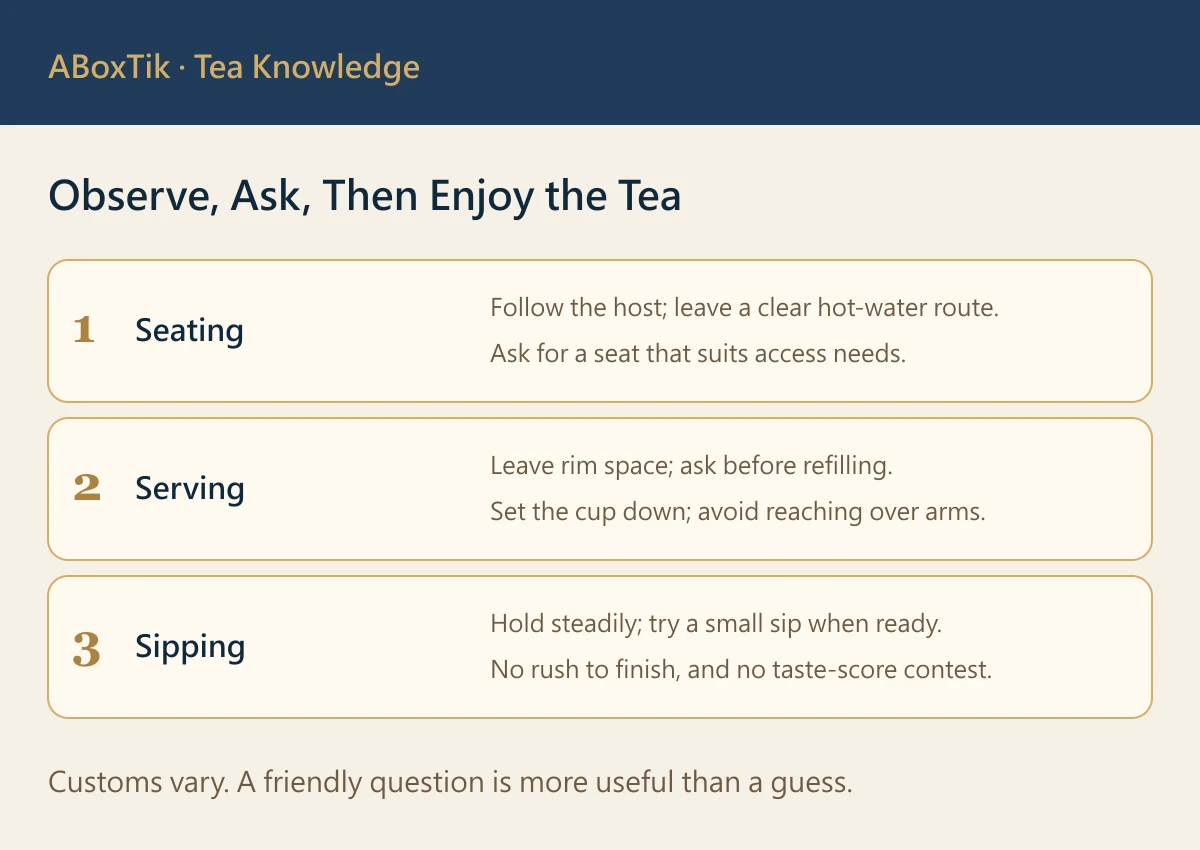
Pour close to a steady cup and leave room at the rim
Bring the pot or pitcher close to a cup resting steadily on the table. Avoid reaching across another person’s arm, sleeve or computer. Leave enough rim space to lift the cup and reduce spills. If the position is awkward, pause and move the cup to a clear place before pouring.
If asked to help serve, follow the host’s order and make sure each cup is within comfortable reach. A guest who has stepped away should not return to hot tea balanced in an easily knocked position. A small pause to set things down is often more helpful than a beautifully swift gesture.
Advice to fill a cup around seven-tenths is best approached as a reminder to leave useful space, rather than an exact measurement for every cup. Shape, handles and temperature differ. The cups have not entered a synchronised water-level competition. If one pot requires two rounds, explain that and continue calmly.
Receiving and passing a cup: make the movement clear
Use one or two hands as suits the cup, its heat and the setting. Choose a steady grip that avoids hot surfaces. Place a served cup where the other person can reach it, rather than trying to pass a hot vessel into moving hands. A simple “I’ll put this here” makes the movement easy to follow.
Some households have particular receiving gestures or an order for guests. Follow the host’s guidance and ask if unfamiliar. Emily Post’s general principles emphasise consideration, respect and honesty. Applied here, those principles leave room for a clearly communicated preference and safe handling.
Sipping and conversation can both take their time
Give newly poured tea time to reach a comfortable drinking temperature. Notice the aroma, then try a small sip when ready. Ordinary descriptions such as “lighter,” “more roasted,” or “I’d enjoy a gentler next infusion” are useful. The aroma observation guide offers more ways to describe a cup.
There is no need to finish every serving because the host has explained the tea at length. Put the cup down or ask for water when preferred. A generous host can take that information without treating it as a review of their hospitality.
For cups with a spoon and saucer, Emily Post advises quiet stirring, putting the spoon on the saucer before drinking, and avoiding an exaggerated raised little finger. Small oolong cups may have neither spoon nor saucer; use the equipment actually provided. Finish a sip before speaking, and put the cup down before reaching for food.
Our steeping-time guide and light and roasted tea comparison can help turn a preference into a practical adjustment for the next infusion.
Pause before refilling: an empty cup needs a question
Ask whether another serving would be welcome instead of immediately filling a nearly empty cup. This lets the guest choose a quantity and avoids adding a new infusion to unfinished tea. If someone is talking, working or eating, wait for a natural pause.
An empty cup may mean “more, please” or “a little rest.” Words are easier to interpret. Some settings use finger taps, cup positions or other gestures; follow the explanation given there. When unsure, “Thank you; I’ll enjoy this cup slowly” communicates a need clearly.
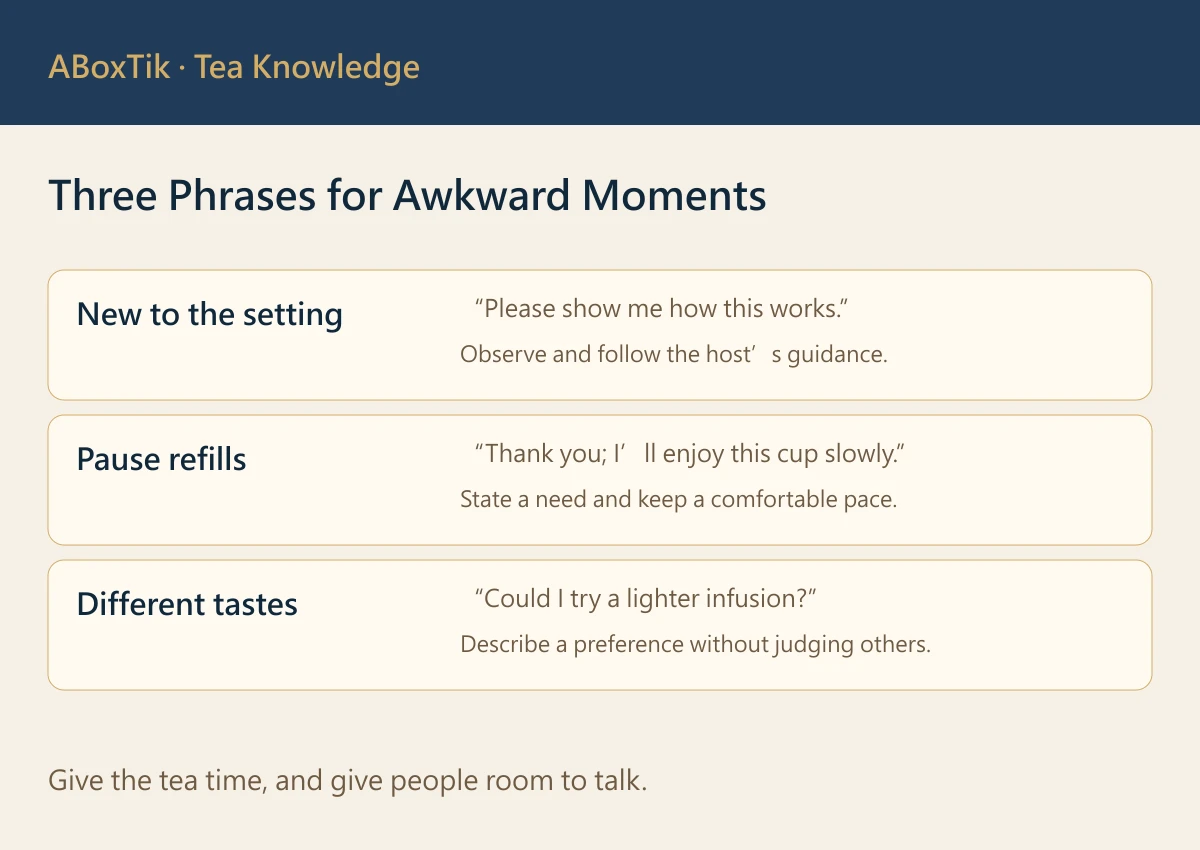
Simple phrases for the small awkward moments
- “This infusion is quite light. Would you like a small cup?”
- “Would the cup be convenient here?”
- “Another serving, or a gentler infusion next time?”
When the answer is “not yet,” let the refill pause. If a guest asks about the tea, extend the conversation into Taiwan’s tea regions or the actual tea’s flavour. A little curiosity makes a better invitation than filling every silence with information.
| Moment | A helpful action | A natural phrase |
|---|---|---|
| First visit | Observe, then ask | “Please show me how this works.” |
| Tea feels too strong | Describe a personal preference | “Could I try a lighter infusion?” |
| A drip beside the cup | Set down hot vessels, then wipe | “I’ll wipe this; leave the cup there.” |
| A photograph | Ask before moving anything | “May I photograph this angle?” |
A little practice: a friend moves a cup closer while telling a story. Pour immediately, or ask whether they would like more? Asking gives the friend a choice. If the story has absorbed their attention, let it continue. The teapot has no contractual right to a speaking role.
Leave a little room for the next gathering
Useful tea drinking etiquette makes a seat comfortable, a cup manageable and preferences easy to express. Choose one small action to practise next time: ask before pouring, leave rim space, or check before refilling. Those details can help a gathering feel unhurried.
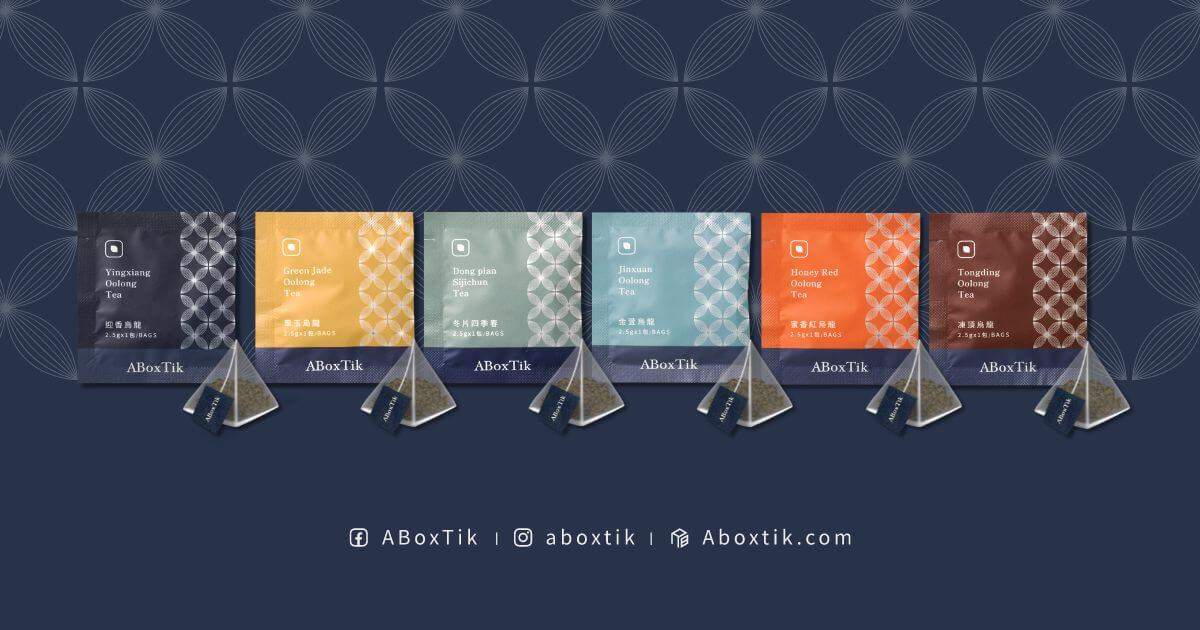
For several flavour choices, read the Classic Taiwanese Tea set. When exploring different ingredients, the mixed tea and herbal selection needs a look at each blend. Check current contents, keep a familiar tea, and use the four-flavour starter guide to explore another.
Bring guest numbers, cup sizes and preferred flavours when talking with ABoxTik. Our selection story can then meet a very ordinary aim: a table where the host also gets to sit down and enjoy a cup.
Follow ABoxTik | Leave room in the cup, and time for the conversation.
Related recommendations
- Taiwanese tea hospitality: prepare a welcoming gathering.
- Gongfu and Taiwanese brewing: arrange tools and serving pace.