
Tea Knowledge
Business Tea Gift Etiquette: Taiwanese Tea for Client Visits
A business tea gift begins with policy, not packaging.
Before bringing tea to a client visit, ask whether the recipient organization permits gifts and how it handles them. A Taiwanese tea gift can be thoughtful, but the recipient’s policy decides whether it has a comfortable place to land.
Put recipient policy, handover timing and sharing format in a clear order. Asking first gives the greeting an easier place to land and keeps the visit focused on its purpose.
Ask about the recipient’s gift policy first
Ask a contact whether gifts are accepted, whether there is a declaration or central-receipt process, and when a handover is appropriate. The recipient organization’s policy comes before the sender’s good intention.
State a simple purpose
A short explanation such as a visit greeting, shared office tea or a post-meeting thanks helps a contact assess the situation. Keep tea outside exchange conditions, urgency and special treatment.
tea gift box selection can help once acceptance is clear. Corporate quantity planning belongs after policy, not before it.
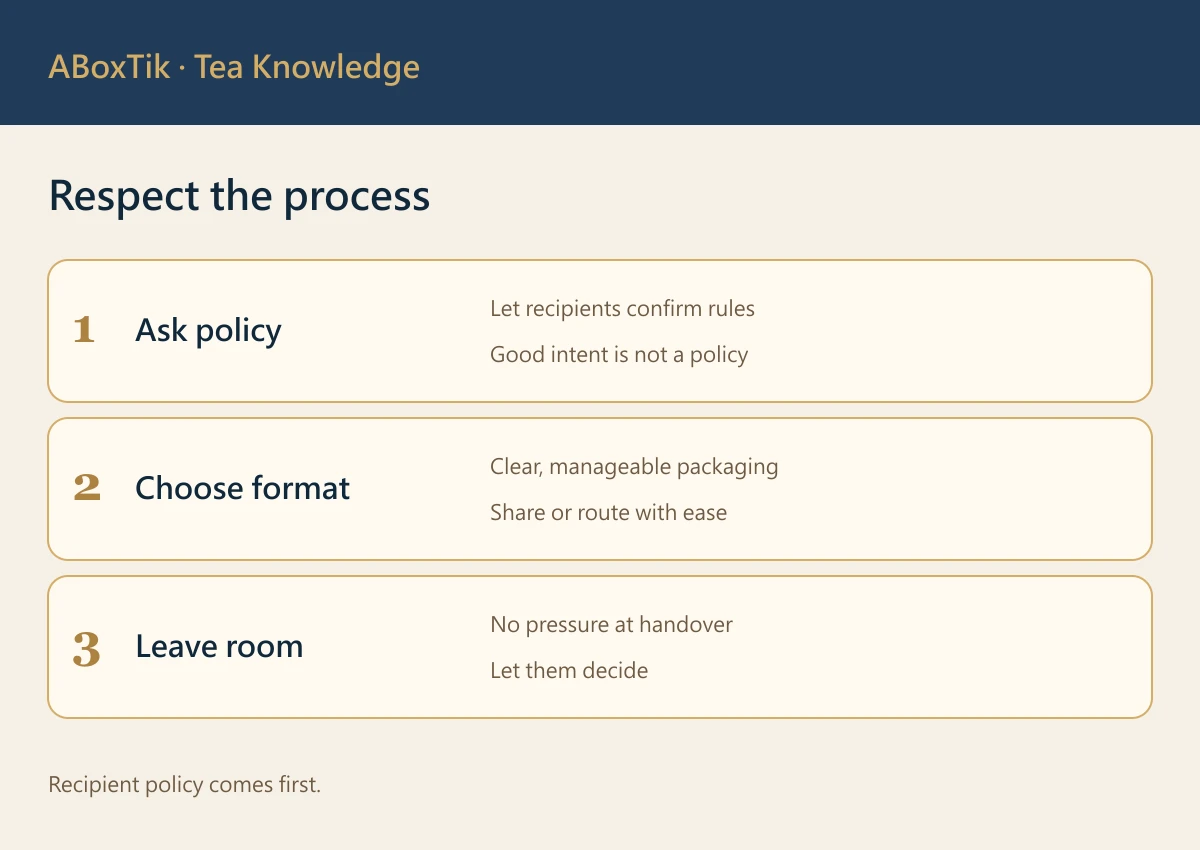
Choose a format that can be handled easily
When permitted, choose a clearly labelled, intact tea gift that can be shared or routed through a contact. Confirm the delivery point, storage conditions and whether item information is useful.
Whole-leaf tea bags and a mixed tea-bag set can suit shared settings; a premium tea gift box offers a reference for a formal tea presentation.
Give the recipient room to decide
At handover, say plainly that you understand if policy makes acceptance unsuitable. Do not ask for an opening, photograph, tasting or response. Consideration leaves room for the other person to follow their rules.
If the answer is no, take the gift back calmly. A prepared meeting, punctual arrival and careful listening remain valuable forms of professional regard.
A pre-visit tea gift checklist
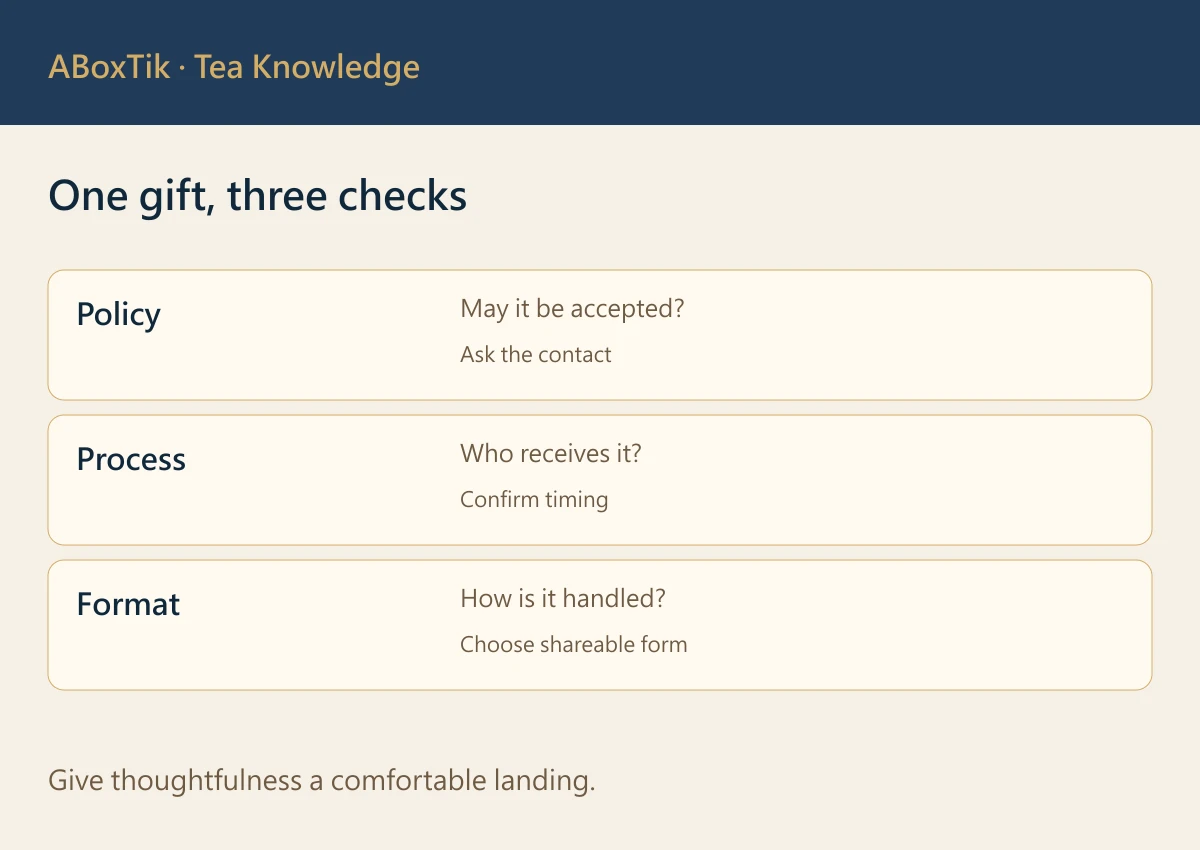
| Step | Check | Question |
|---|---|---|
| 1 | Policy | May your organization accept this? |
| 2 | Handover | Who and when is appropriate? |
| 3 | Format | Shareable or centrally handled? |
| 4 | Follow-up | Is item information needed? |
The point is not to make tea gifts fussy. It is to let every answer come from the recipient side. Tea hospitality and sharing and tea hospitality add useful context.
Keep the gift respectful and shareable
A suitable business tea gift does not need to make a grand announcement. Confirm policy, choose a manageable form, give clear information and avoid pressure at handover.
If you decide not to bring a gift, the visit has not lost its care. Good preparation and respectful attention travel well without a ribbon.
Arrange a handover that does not interrupt the visit
Ask a contact about the handover before choosing the package. A permitted gift might belong at a reception desk, with a designated coordinator or at a particular point after the meeting. Knowing that route helps choose a manageable box and prevents the visitor from carrying a question into a room where nobody can answer it. Keep the answer with the visit notes so another colleague does not need to repeat the request.
Separate the person who receives the parcel from the intended use. A reception colleague may handle a delivery for a team without personally accepting a gift. If the organization has a central process, use its wording and destination rather than asking someone to make an exception. The tea should be easy to route with the information provided, not dependent on someone remembering a long explanation.
Once acceptance is clear, check practical details: quantity, pack size, contact name and a simple description of the contents. Include tea names and brewing information where useful. For a shared office, individual servings may make distribution easier; for a formal handover, a compact intact box may fit the occasion. Choose from the actual current product information rather than assuming every gift set contains the same teas.
Keep the accompanying message short. A greeting can thank the team for the meeting and explain that the tea is for sharing, if that is the agreed purpose. It need not describe the price, imply a return favour or ask the recipient to perform appreciation on the spot. The ribbon has a very small job; it should not be asked to negotiate the next contract.
Three common situations, with a comfortable next step
If a contact says gifts are not accepted, remove the tea from the visit plan. Do not ask whether a smaller box, a different recipient or a personal delivery would get around the policy. Confirm the meeting arrangements instead and put the preparation effort into the agenda. A clear answer has made the visit easier, even if the package stays at home.
If policy is still unclear shortly before departure, keep the gift out of the handover until the recipient can confirm. A polite message asking for the appropriate process is enough. The point is to avoid transferring an unresolved question to a busy host. A well-prepared visitor can arrive empty-handed without arriving unprepared.
If the gift is permitted but the planned contact is absent, follow the agreed receiving route. Avoid leaving an unexplained parcel on a desk or asking a colleague to accept it personally. Supply the sender, purpose and destination information that the organization asks for, and keep the handover record practical. It should tell the team what happened without turning the gift into a demand for acknowledgement.
After an accepted handover, provide product information if requested, then let the recipient decide when and how to use it. There is no need to chase a tasting report. A thoughtful follow-up can return to the meeting’s actual work, with tea remaining a modest gesture alongside it. Respect is most visible when the other side has an easy choice.
Choose the tea information before the decorative extras
Read the contents and serving format before comparing sleeves, ribbons or cards. A recipient who shares tea with colleagues benefits from knowing what is inside and how to prepare it. Look for clear tea names, actual quantity, storage guidance and an accessible brewing note. If those details are difficult to find, ask before ordering. Good presentation carries useful information rather than making it smaller.
Think about the final desk or shared pantry. A very large package can be harder to move, divide or store than a modest one. Check whether the planned format fits the receiving arrangement instead of treating size as a measure of regard. For multiple destinations, verify the list and contact details through the agreed channel before dispatch.
When there are several approved options, choose the one that asks least of the recipient: simple opening, clear contents and a format suited to the intended sharing. A small explanatory card can introduce Taiwanese tea without assuming the team owns specialist teaware. Let the next cup be easy to begin.
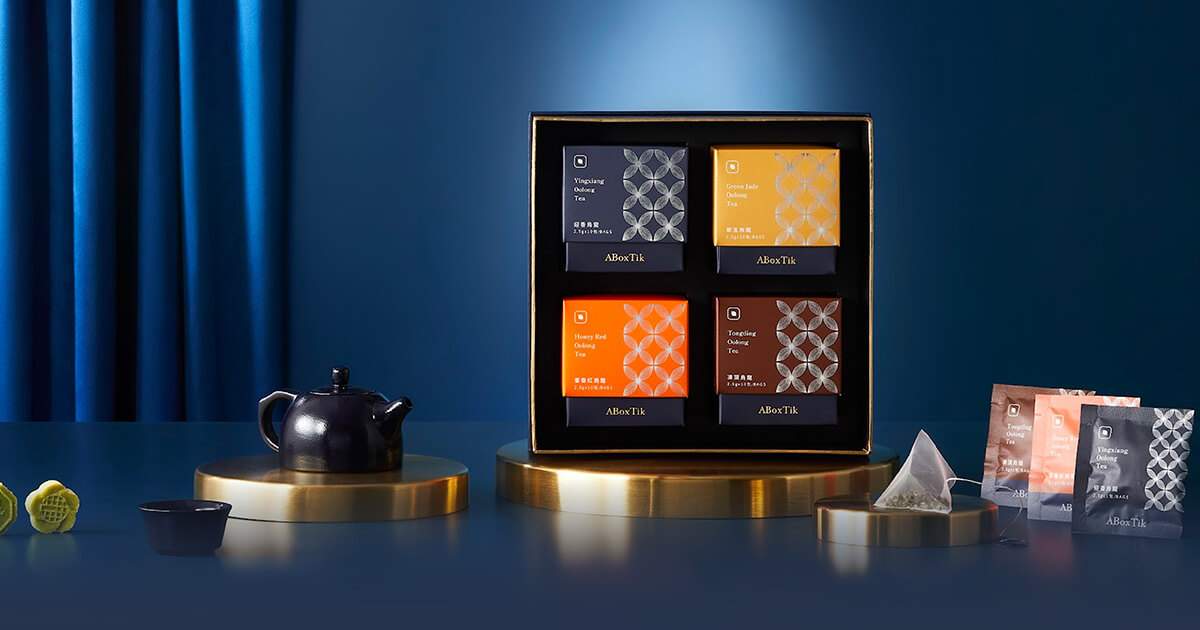
A box of tea, a measure of respect
Give thoughtfulness a comfortable landing place
At ABoxTik, we think the quietest luxury in business gifting is transparency and respect. Start with policy, then let tea become an optional, shareable greeting.
Continue with tea gift box selection and Tea hospitality and sharing.
Related reading
Sources
Sources checked 19 October 2026.