
Tea Knowledge
New Year Tea Gift Messages for Friends, Family and Clients

A New Year tea gift card does not need to audition as a winning couplet. One relationship-aware sentence can do the kinder work.
For a New Year tea gift, tune the card to the relationship: companionship for friends, everyday care for family, and clear appreciation for clients. Tea is the gift; the note explains why this particular person came to mind.
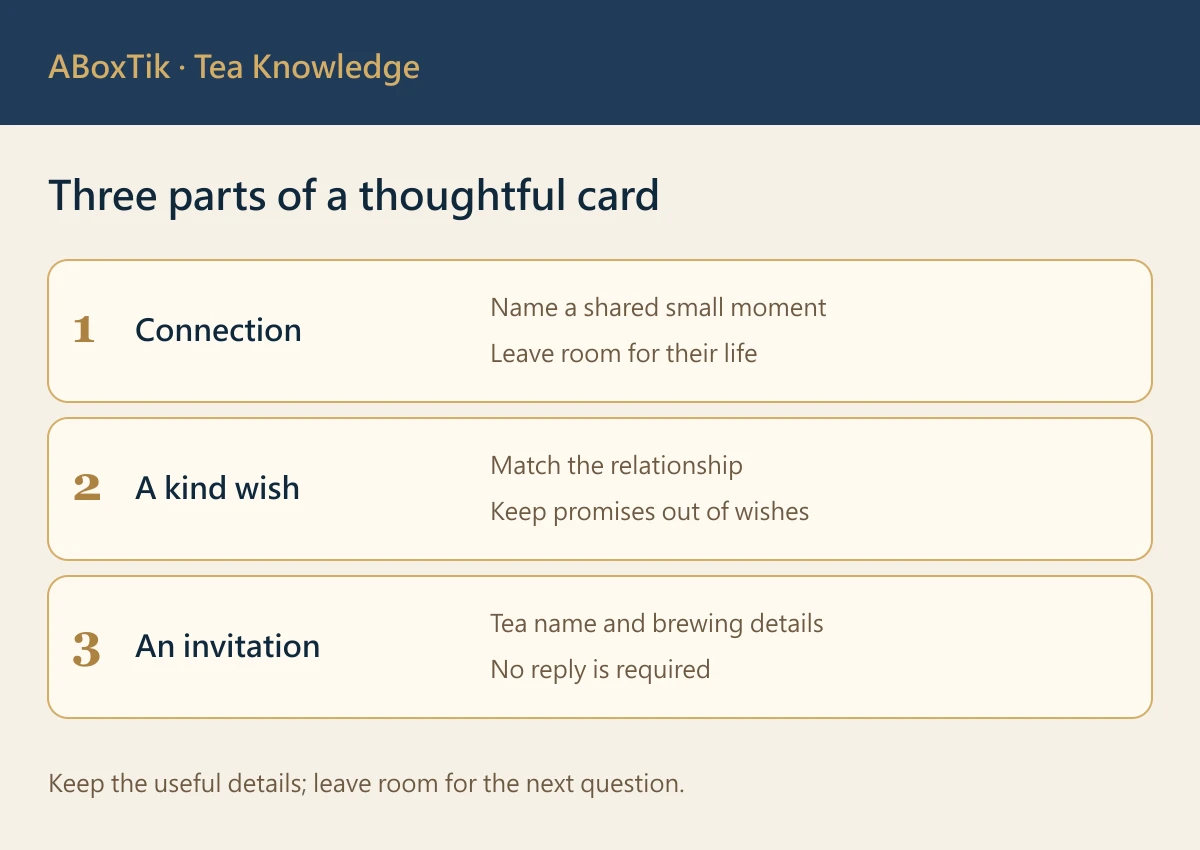
Use the examples as editable starting points. Choose the relationship, then add one or two real details so the message sounds like something you would naturally say. A brief personal line is enough; unfamiliar sayings and extravagant wishes can be left off the card.
New Year tea gifts: let the relationship set the tone
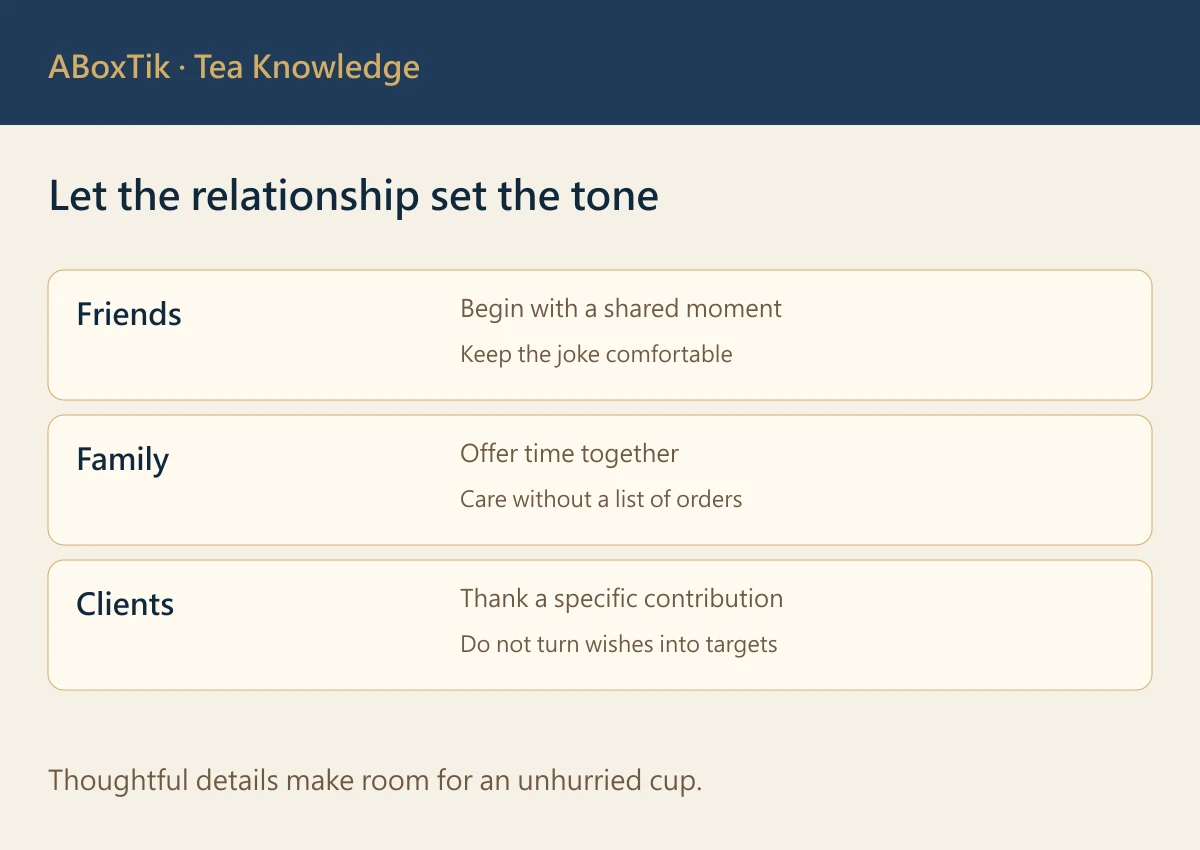
A friend’s note can be light and forward-looking; a family note can rest on ordinary care; a client note can name appreciation and collaboration with restraint. One universal template rarely fits all three. Begin with the recipient’s name and add a recognisable, non-private detail such as a recent project, a shared reading list, or a conversation worth remembering.
When preparing many gifts, organise names, forms of address and signatories first. Gift-list planning helps prevent the final-night scene in which the blank cards look alarmingly judgmental.
Before writing, decide whether the recipient prefers humour, formality, or a quieter kind of warmth. A message can be sincere without becoming intimate, particularly in a professional relationship. One reference to the shared context is enough; the card should feel like a door left open, not a summary of everything you know about someone.
For a group of recipients, prepare a plain master message and a small column of personal details. Copy the shared material only after confirming it reads naturally, then add one line that belongs to the individual. This keeps the work manageable while preserving the reason gifts matter: people can sense when a message was written with their relationship in view.
If format is the uncertainty, the whole-leaf tea-bag guide helps connect the choice to the recipient’s available tools.
Friends: make the note an invitation
Try: “For the new year, I hope busy days still leave a few slow tea moments. At our next catch-up, I would love to hear the story in full.” It gives warmth without promising a grand transformation.
For someone beginning a job or moving home: “Keep this tea near your new routine as a small pause. I hope each cup reminds you that you are finding your way.” Choose tea through their likely preferences, with this gift-selection guide as a starting point.
For a friend who dislikes ceremonial language, a practical line can work beautifully: “May this tea give you an excuse to pause between the useful chaos.” It carries affection without forcing a mood. Avoid telling the recipient how they should feel; offer a small occasion they can take up in their own way.
Proofread aloud once before sealing the card. Look for names, titles, pronouns, dates, and accidental promises about delivery, availability, or future plans. A careful final read is quiet hospitality. It protects the sender from embarrassment and gives the recipient a note that feels considered rather than hurried, even when the season itself is noisy.
For a friend who likes adjusting leaf quantity, check the actual contents of the classic tea selection and include a brewing reference.
Family: trade slogans for everyday care
A family note may say: “I wanted to place a little quiet in the house this new year. Save this tea for after breakfast, before evening, or whenever a chair feels inviting.” It is often more moving than a long list of instructions disguised as affection.
For relatives who do not usually speak sentiment aloud: “Thank you for carrying so much of home. Please leave a little time for yourself this year.” A name beneath the sentence is enough. Tea-bag gift sets can suit different daily rhythms; check current product details before choosing.
Family messages can also acknowledge distance. “Thinking of our next unhurried meal together” may be more truthful than a large declaration. If you are writing for a household, name the people naturally and keep the note readable aloud. A card does not need to perform emotion; it only needs to carry it safely.
If a message still feels too formal, remove one abstract noun and replace it with an ordinary image: a slow breakfast, a clear desk after a meeting, a future conversation. If it feels too casual for the relationship, make the sign-off calmer rather than piling on ceremonial phrases. Tone often improves through subtraction.
The light and roasted tea comparison provides a more useful preference question than simply asking whether someone likes good tea.
Clients: state appreciation, leave room
A client note can read: “Thank you for the trust and thoughtful discussions this year. We look forward to continuing good work with a clear, steady pace in the year ahead.” The tea should not behave like a tiny bell demanding an immediate reply.
For a new contact: “It has been a pleasure to connect this year. Please accept this New Year tea gift with thanks for the professional, candid exchange.” Verify names, titles and addresses card by card; that care matters more than ornate wording.
For client cards, consider what can be read comfortably by the recipient and their team. Thank them for a concrete quality—careful feedback, patience, clarity—rather than making a promise about business outcomes. Keep the send date and organisational signature consistent across the batch, then make only the opening detail personal.
A tea gift has room for both usefulness and affection. The package can explain tea and brewing; the card can carry thanks, companionship, or good wishes. Keeping those jobs distinct makes the note easier to read and easier to keep. It also means that when the tea is finished, the message can still remain on a desk or tucked into a book.
Link to the everyday brewing guide when useful, leaving practical instructions available without filling the greeting card.
A four-box writing tool
Use four boxes: name; one true, shareable detail; a measured wish; signature and date. After filling them, remove sentences that only repeat “wonderful.” The note usually becomes warmer when it becomes more specific.
For example: “An / our after-work book swaps / may the new year keep room for curiosity / Daphne.” Or, for a client: “Manager Wang / thank you for consistently prepared discussions / may the new year unfold with steady collaboration / the ABoxTik team.” These are starting points, not scripts.
The four boxes also help when you are stuck. Write an intentionally plain first draft, then replace one general adjective with an observed fact. Read it from the recipient’s point of view: does it sound respectful, easy to receive, and free of an obligation to answer? If yes, it is ready to accompany the tea.
When the card is complete, put it aside for a few minutes and return with fresh eyes. You may find that one sentence can be shortened, or that the most meaningful detail needs to appear earlier. The finished note should sound like a person who knows why the tea was chosen. That is a durable kind of New Year generosity, even after the calendar page turns.
The story of Taiwanese tea’s place and craft can begin a conversation without turning the card into a tea examination.
Let practical tea information do its job
Before gifting, check whether the recipient prefers loose leaf or tea bags, brighter or deeper styles, and whether brewing needs to be simple. Taiwan Tea Research and Extension Station guidance advises protecting tea from heat, moisture, odours and sunlight; keeping the original package intact also preserves useful product information.
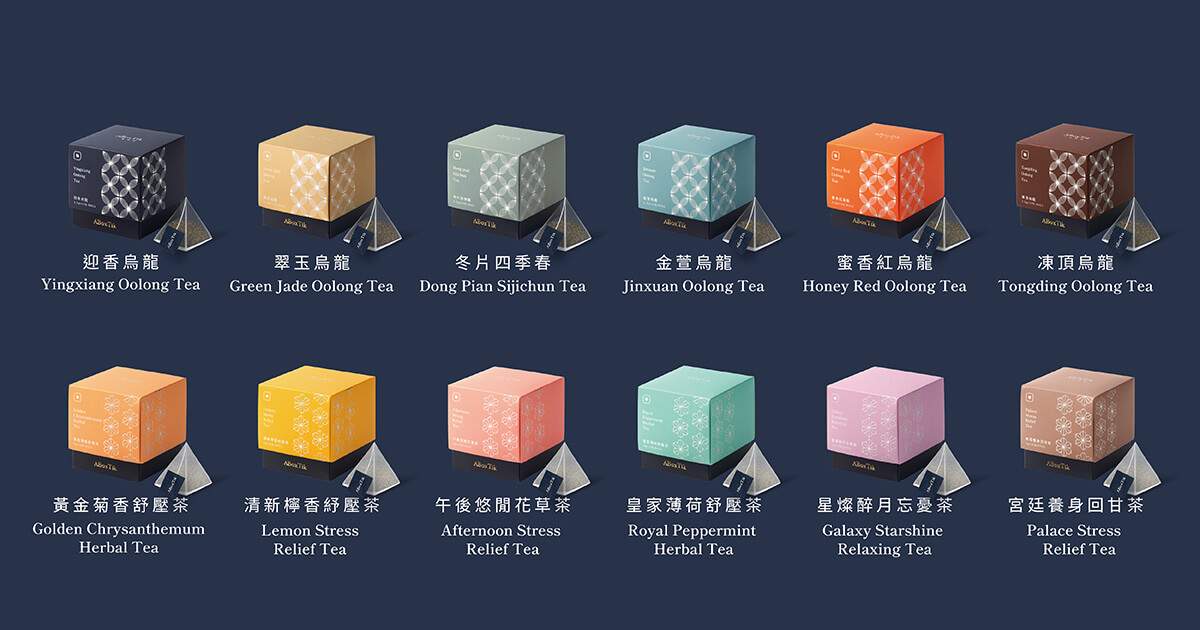
A tea-bag gift set is one convenient format, subject to the current product page. The best New Year meaning is rarely a fixed lucky phrase. It is the feeling that someone was considered with care.
Storage information belongs in the product information, not as a stern paragraph inside the greeting. A short line such as “The package includes brewing guidance” is enough where useful. Separating the practical note from the blessing lets the card remain warm while giving the recipient a clear way to begin.
A simple signature, a clear name, and one true detail often give a seasonal greeting its longest life, because they allow the recipient to recognise the person behind the tea without having to decode a grand occasion.
ABoxTik helps tea gifts speak with warmth and proportion.
Write a New Year tea gift card worth keeping
Read the finished card aloud once. Check the name, the signature and the small detail that makes this greeting belong to this relationship. If the sentence would feel awkward in a real conversation, simplify it before adding decorative language. A shorter, recognisable voice is usually easier to receive.
Then let the gift leave without a task attached. An invitation to share tea later is enough; there is no need to request a review, a reply or a particular feeling. A thoughtful New Year tea gift gives the recipient room to decide when and how the next conversation begins.
Related reading
Sources
Sources checked 17 October 2026.