
Tea Knowledge
TTES No. 23 Qiyun: Cultivar Background and Black-Tea Choices
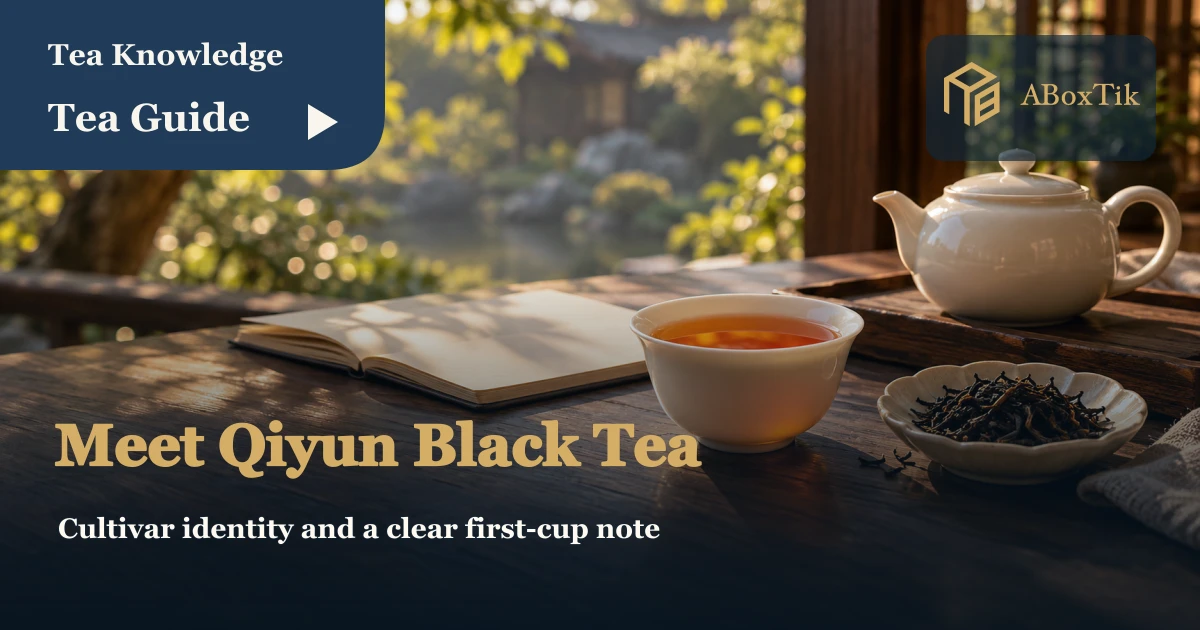
An unfamiliar tea name can be an invitation rather than another thing to memorise. Ask where it comes from and what it is made into, then leave a little room for the next cup to introduce itself.
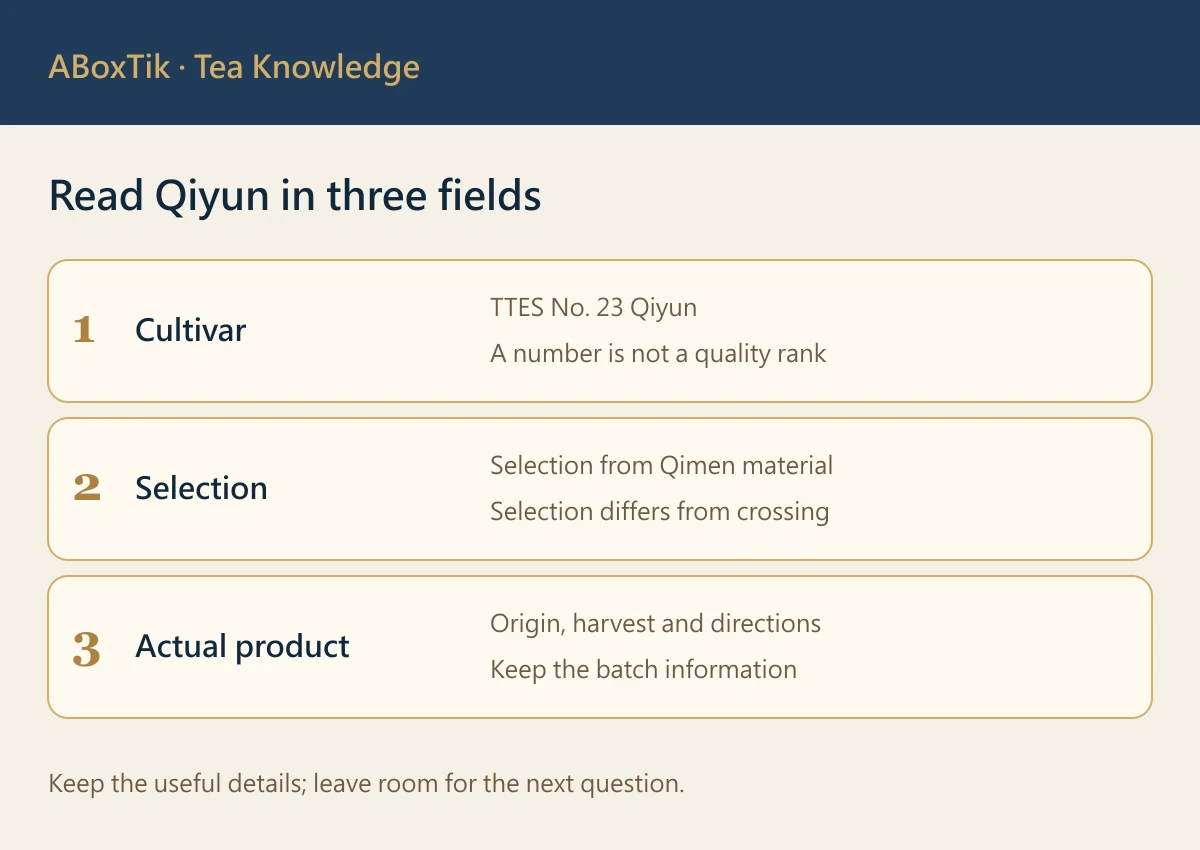
TTES No. 23 Qiyun is a small-leaf cultivar selected from Qimen tea material and identified in official Taiwanese references as suitable for aromatic black tea. Keep its cultivar name, processing style and the actual product’s origin in separate fields. That small distinction makes a new name considerably easier to use.
If Ruby or Hongyun is already familiar, Qiyun offers another cultivar background to explore. The Hongyun and Ruby comparison has its own guide. Here, begin with Qiyun’s identity, then use clear product information and a modest tasting note to decide what interests you.
TTES No. 23 Qiyun: three names to keep apart
The numbered name identifies a cultivar; Qiyun is the name associated with it. Neither is a quality score, an intensity scale or a promise about every finished tea. Twenty-three does not automatically outrank eighteen. The numbers can retire from competitive sport and return to their much more useful job of identifying plants. The Taiwan black-tea overview provides a broader introduction to tea styles.
Next, look for where the actual tea was grown or made. Qimen material in a breeding history is different from the origin printed on a present-day packet. Likewise, a regional black-tea name does not identify a single cultivar. Use the questions in the tea traceability guide to connect a description with a specific item rather than assuming that one familiar name answers everything.
Make three short fields: cultivar, stated origin or producer, and finished tea style. If a listing gives only a poetic product name, ask whether it identifies a single cultivar or a blend, and which batch the information describes. A useful answer can be brief. The aim is to bring home enough information to choose and brew the tea, rather than collecting a miniature family archive.
What does selection from Qimen material mean?
The Tea and Beverage Research Station identifies Qiyun as a selection from Qimen material. Its black-tea cultivar overview also describes selection from small-leaf Qimen material. Selection involves identifying an individual with desired characteristics within existing material and evaluating it; it should not be rewritten as an invented cross between two named parents.
Other cultivars have different documented histories. The Yingxiang parentage guide explains one, while TTES No. 8 and its Assam background introduces another. Let each official record describe the cultivar concerned. There is no need to make every Taiwanese cultivar fit the same breeding story just because that would produce a tidier chart.
Hongyun and Qiyun should not be treated as interchangeable because their background accounts both mention Qimen. When a shop displays them together, start with a concrete question: does this product identify No. 21 or No. 23? Then check the specification. Keeping the Romanised names beside the numbers also helps an overseas recipient find the same tea again without relying on a remembered sound.
How to read floral and fruit aroma descriptions
Official cultivar descriptions associate Qiyun black tea with bright orange-red liquor and sweet floral-fruit aroma. The National Taiwan Science Education Center also mentions citrus or floral-fruit directions. These are useful introductory references. They are not a checklist that every batch, brewed in every way, must satisfy. Actual material, harvest, processing and preparation still shape the cup.
Keep a sweet-smelling association separate from sweetness on the tongue. Similarly, citrus-like aroma and citrus listed as an ingredient answer different questions. The honey and fruit aroma comparison and the guide to aroma, taste and mouthfeel help keep those fields clear. A descriptor is an invitation to notice something, rather than a roll call at which a particular fruit must appear.
Ask the supplier which flavour description belongs to this batch, where that description comes from, and which initial brewing conditions they suggest. Keep the response with the packet information. If a later cup seems different, that record provides somewhere to begin adjusting strength. It is considerably more useful than deciding immediately that either the description or the drinker must be wrong.
Compare Qiyun with other teas without ranking cultivars
First decide whether the question concerns breeding information or an everyday drinking preference. The former needs relevant official records; the latter needs actual products, preparation and personal choice. Both are worthwhile, but the strength of one infusion cannot establish a cultivar’s overall quality. Reading Taiwanese tea origins benefits from the same separation of background and individual product.
Before a comparison, place cultivar, origin, harvest, batch, leaf format and brewing directions side by side. Keep any differences visible instead of attributing every sensory difference to cultivar alone. The tea categories and processing guide is a separate reference for classification. If the practical question is simply what to drink today, preparing each product according to its own directions may be the most useful starting point.
With a friend, write one sentence independently about when each tea would fit into daily life. Breakfast, an afternoon pause or sharing a snack gives a preference somewhere to live. Those are situations, not grades. Exchange notes after both are written, without asking anyone to match a supplier’s adjectives. Two different favourites can be a perfectly informative outcome, and the table has room for both.
Make a first-cup note that can support the next brew
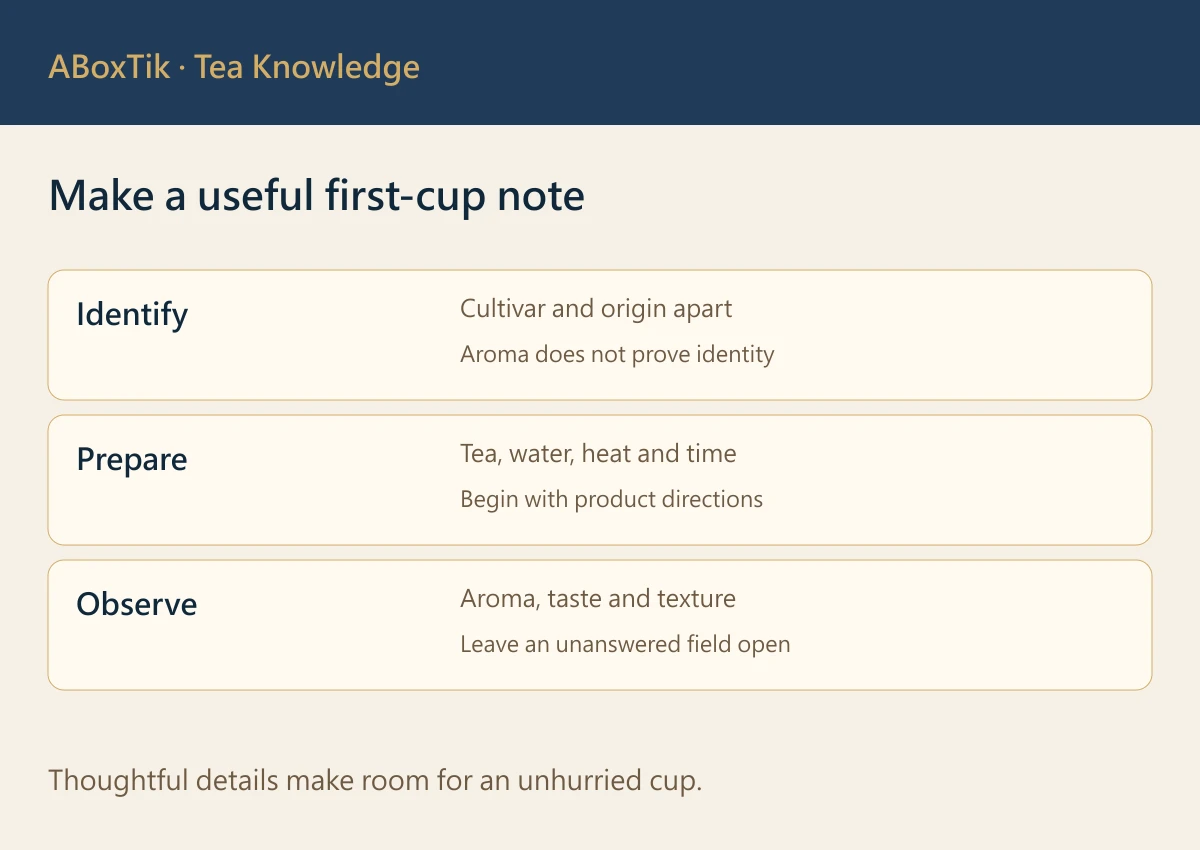
Use clean utensils without a noticeable residual smell. Follow the product directions, recording tea, water, temperature, time and how the infusion was separated from the leaves. Wait until it is comfortable to sip. When changing the preparation, adjust one variable at a time. The everyday brewing guide supports those basics; one universal infusion time would not accommodate every Qiyun product.
Divide a small note into aroma, taste, texture, the impression after drinking, and one question for next time. An unnamed aroma can remain unnamed. If astringency dominates, record the preparation before deciding whether a shorter infusion would help. Consult the aroma observation sequence when needed, rather than making the first cup carry an entire sensory-training course.
Keep the original note and add a revised version after an adjustment. Do not copy a supplier’s description into the space intended for personal observations. Blank fields can stay blank. For another convenient format, consult the actual contents of the two-box tea gift. To explore Qiyun specifically, however, choose a product that clearly identifies that cultivar instead of relying on a general tea assortment name.
Questions to take shopping or include with a gift
A practical enquiry can ask whether the product is TTES No. 23 Qiyun, whether it is single-cultivar or blended, where it was grown or made, and which harvest or batch is described. Continue with the finished tea style, storage guidance and an initial brewing recommendation. For a larger order, confirm the current specification and available contents separately from general cultivar information.
A gift note needs the actual tea name, known origin information and somewhere to find brewing instructions. Add a personal invitation rather than telling the recipient which aroma they must discover. A line such as “Tell me which direction you enjoyed when we next share tea” leaves room for their experience. Clear details make starting easier; affection does not need to take the form of a tasting examination.
ABoxTik’s editorial approach is to understand the item and its everyday role before choosing a sharing format. Read the actual tea choices in the classic Taiwan tea selection without assuming that an assortment contains Qiyun. The tea storage guide supports another useful part of the decision: choosing a quantity that can be kept and enjoyed as intended. Naming a cultivar is only the beginning of caring for the tea.

Follow a box of tea: let a new name become a clear everyday choice.
Give an unfamiliar cultivar a useful place at the table
Begin with three answers: which cultivar this is, where the actual tea comes from, and how to prepare it. Official background and aroma descriptions offer a direction. The preference belongs to the particular cup and the notes made beside it. There is no need to settle every question before enjoying an introduction.
Share one question with a friend, or continue exploring Taiwanese tea’s origins and craft. A new tea name can become more than another fact to remember: it can be a reason to sit down together, compare a small observation and leave an interesting question for the next visit.
Related reading
- Hongyun and Ruby compared: keep similar names clear.
- TTES No. 8 background: explore another black-tea cultivar.
- Tea aroma observation: find the practical sequence when needed.
Sources
- Tea and Beverage Research Station: TTES No. 23 cultivar record
- Tea and Beverage Research Station: black-tea cultivars
- National Taiwan Science Education Center: TTES No. 23
Sources checked 17 October 2026.