Tea Knowledge
World Black Tea Styles: Ceylon, Taiwan and Masala Chai
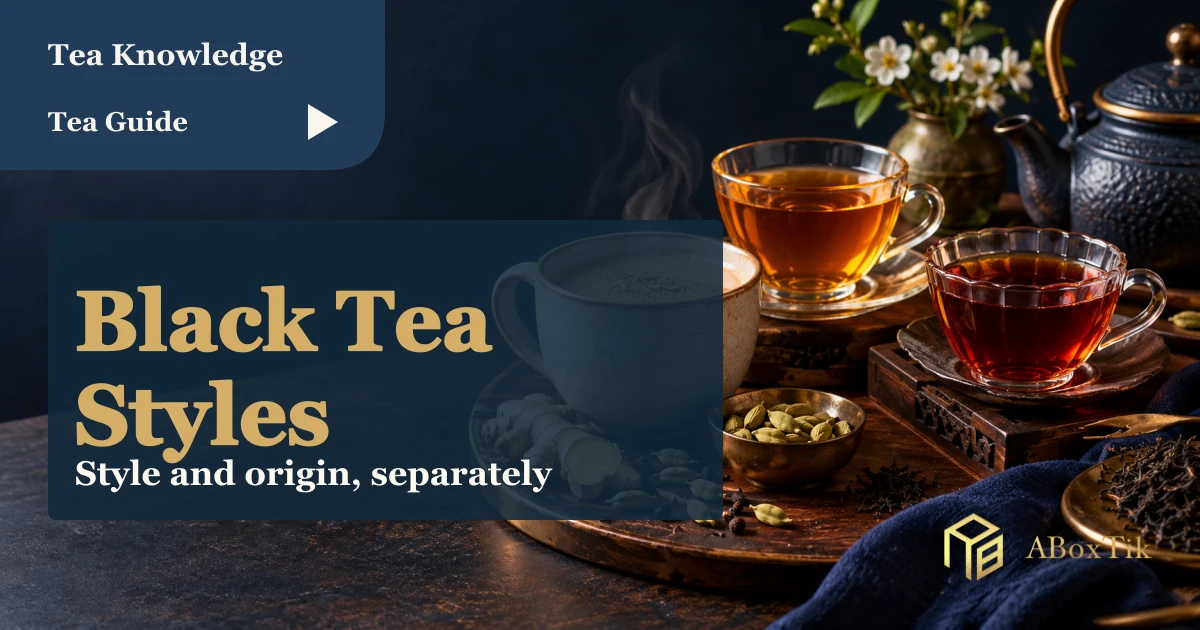
Black teas from different places need not compete for one crown. Learn how each cup is prepared, share what you notice, and leave room for another direction.
How should you compare black teas from around the world? Begin by asking whether a name describes an origin, a tea cultivar, a leaf grade or a way of serving the drink. Ceylon and Taiwan can point to where tea comes from; Indian masala chai describes a way of combining black tea with spices. They can meet at the same table without being three national grades in a competition.
If choosing among a plain cup, milk tea and a spiced tea feels confusing, you do not need to memorise a map first. Start with the strength and occasion you enjoy, then look at the details on each package. Those details give your preferences somewhere useful to land.
Put origin, leaf grade and serving style in separate columns
| Name or clue | What it tells you | What to ask next |
|---|---|---|
| Ceylon tea | A Sri Lankan origin context | Which region, batch and leaf grade? |
| Taiwan black tea | A Taiwan origin context | Which cultivar, area and process? |
| Masala chai | A spiced black-tea drink | Which tea base, spices and other ingredients? |
| OP or BOP | Examples of Ceylon leaf-grade terms | What brewing guidance accompanies this tea? |
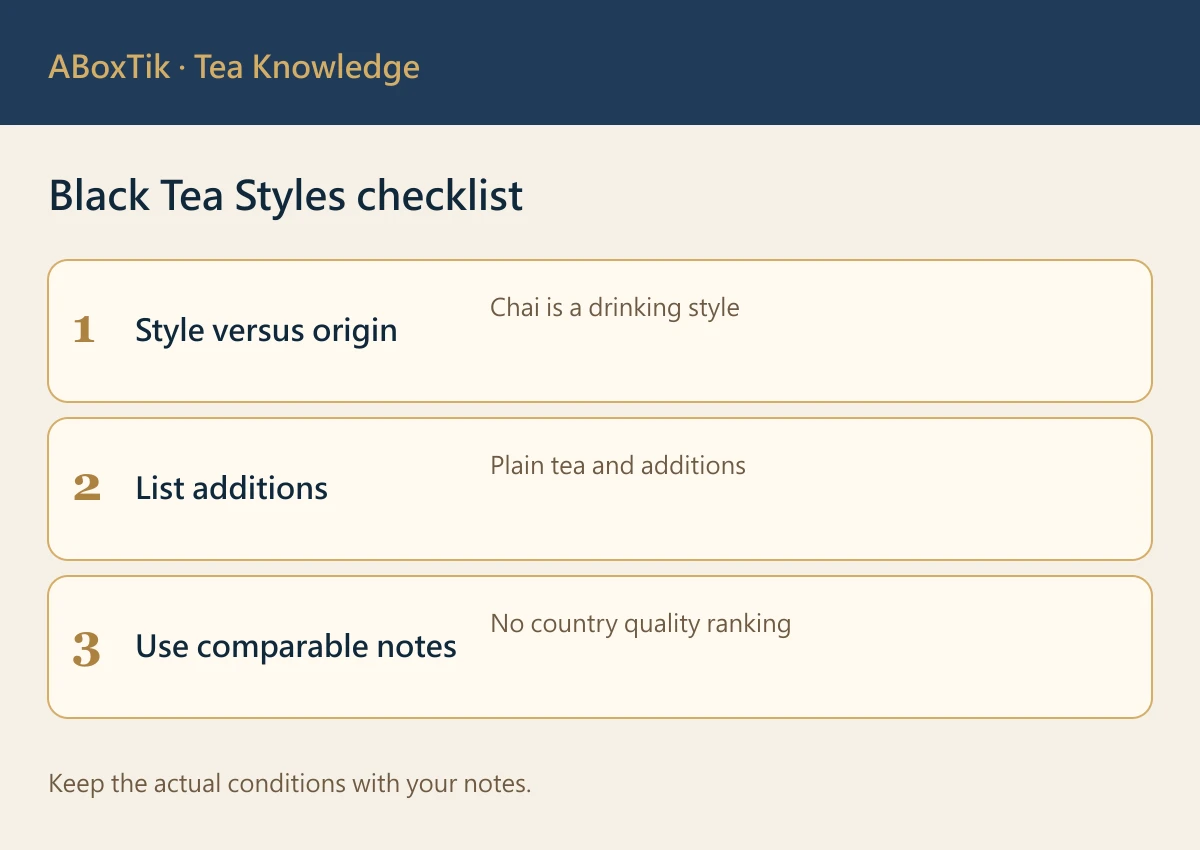
One tea may have an origin, cultivar and leaf form, and it may also be served in different ways. These labels are not mutually exclusive. The Sri Lanka Tea Board describes seven tea-growing regions, each with a different environmental and flavour profile. A regional description is a helpful starting point; raw leaf, processing, storage and brewing also influence the individual batch in your cup.
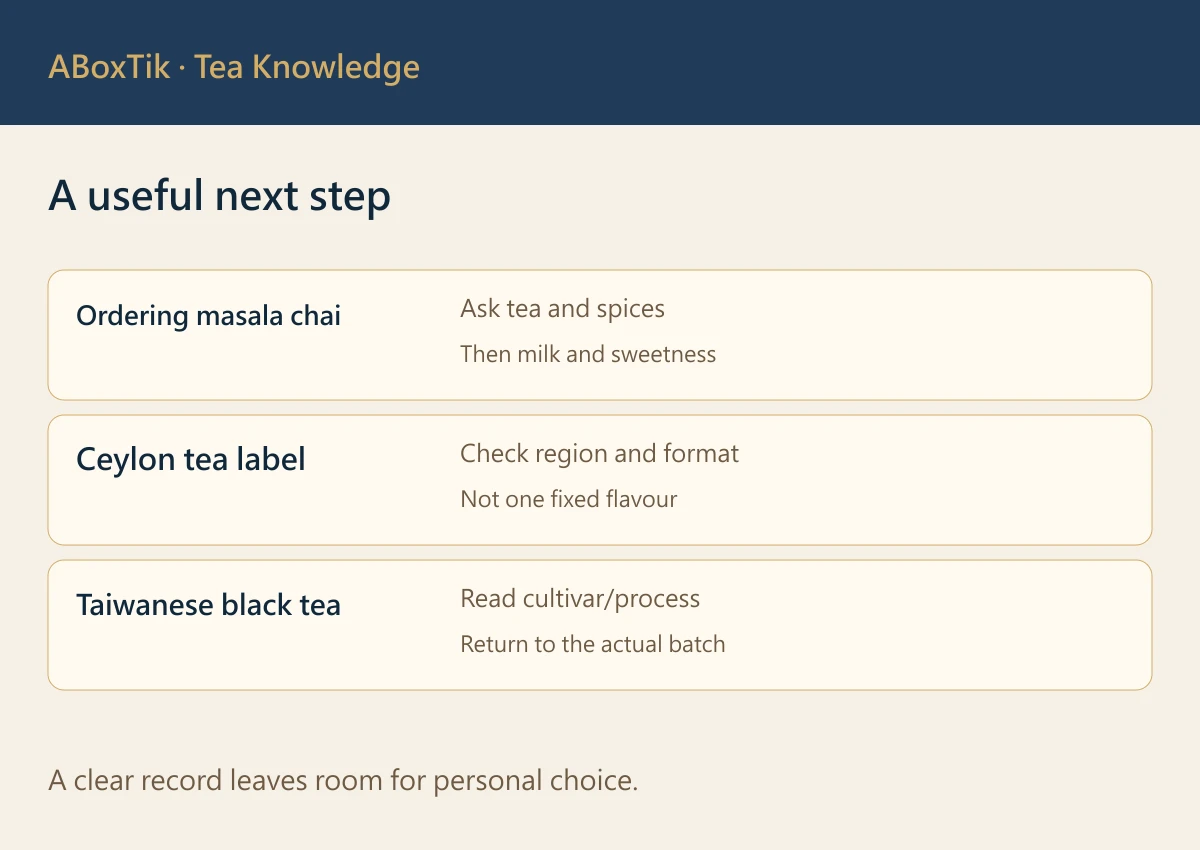
When a menu lists only a country, treat the name as an invitation to ask a little more. A server or seller may be able to tell you whether the tea is a blend, how the leaves are prepared, and whether it is intended for drinking plain or with additions. If an answer is unavailable, enjoy the cup for what it is and leave that field in your note open.
Indian masala chai: find the tea beneath the spices
Tea Board India describes masala chai with Indian black tea and examples of spices including cardamom, ginger and cinnamon. It is a way of combining and drinking tea, rather than a single growing region. Spice choices can vary, and the name does not mean every Indian black tea is served with spices. The first sip can be fragrant and lively; the next question is how much of that impression comes from the tea and how much from the additions.
At home, try a small cup of the tea base on its own first. Note its strength and aroma, then add the ingredients you enjoy. Introducing flavours gradually makes it easier to notice how each contributes. The spices do not all need to compete for the microphone at once. If you would like to explore milk and tea bases further, the tea latte design guide offers another starting point.
There is room for personal preference here. One person may want the warmth of ginger to be prominent, while another prefers a quieter spice note and a more noticeable tea base. Record what you used and what you would change next time. A useful cup is one you can make again, not one that must match an imaginary universal recipe.
Ceylon tea: region and leaf form both matter
The Sri Lanka Tea Board presents Ceylon tea through seven regions, describing a range of growing conditions and styles. Start with the region, flavour description and brewing instructions on the actual product. Some drinkers may enjoy a lighter impression; others may prefer a fuller cup. Regional information helps narrow the search but should not be treated as a guarantee that every batch will taste identical.
An OP label stands for Orange Pekoe. The Tea Board explains that it refers to leaf size, not an orange flavour. BOP and other abbreviations describe other grades or leaf forms. Smaller broken leaves can infuse more quickly, so following the recommended time for a first brew helps avoid making the cup much stronger than intended. A leaf grade can guide preparation; it is not a complete quality score or a promise of personal enjoyment.
Two teas labelled Ceylon may come from different regions, use different leaf grades, or be blended for different occasions. Ask whether the product identifies a region or a blend, and whether its maker suggests drinking it plain or with milk. If the label does not say, avoid supplying a mountain name from memory. Begin with what is known and use the cup to guide your next question.
Taiwan black tea: look at cultivar and making
Taiwan produces black teas from different cultivars, places and making choices. Names such as Ruby and Hong Yun provide cultivar clues, but they do not guarantee the same flavour in every batch. The guides to Taiwan Tea No. 18 Ruby and Hong Yun compared with Ruby go deeper into those particular names. For the tea in front of you, check the garden or region and the producer’s description as well.
Try a small cup plain first. Notice dry-leaf aroma, the scent of the warm infusion, its entry on the palate and how it changes as it cools. Then decide whether you would like to add milk or other ingredients. If the first cup feels too intense, shorten the next steep. If you plan a milk drink, start with the product guidance and adjust for the amount of milk you actually use.
Avoid treating Taiwan tea as one fixed aroma. Even the same named cultivar can vary between gardens and batches, and processing and brewing affect the result. An origin is a little like the cover of a book: helpful for finding the subject, but there are still many pages inside.
Make a card for the plain cup and the finished drink
For a tasting with friends, make five columns: tea and origin, cultivar or blend, leaf grade, brewing conditions, and ingredients added. Record the plain tea first, then write a separate note after milk or spices. A plain cup and a spiced milk drink can certainly be compared for enjoyment, but the differences cannot all be assigned to the country of origin.
For a first round, use comparable water, vessels and leaf-to-water proportions. Record the steeping time. If the leaf forms differ, note that difference too; in a second round, follow the individual package recommendations. Everyday words are welcome: “bright,” “fuller,” “warming spice” or “gentle finish” are all useful if they help someone prepare the next cup.
| Step | Record | Why it helps |
|---|---|---|
| Plain first cup | Leaf, water, time and impression | Establishes a reference for the tea base |
| Individual guidance | Each product’s instructions and result | Shows how that tea responds to its suggested method |
| After additions | Milk, sweetener or spices used | Separates the contribution of ingredients |
| Next time | One adjustment to try | Makes the next cup easier to reproduce |
This is a home tasting for curiosity and preference, not a study that can decide the character of an entire region. If one person prefers the lighter tea and another chooses the spiced cup, both observations belong on the card. Ask how each cup was prepared before debating which one is “best.”
Choose for the occasion instead of crowning a winner
If you enjoy noticing aroma slowly, a clearly described tea served plain may be a pleasant place to begin. If you want a drink with milk, consider whether the tea base remains appealing after the milk is added. For a spiced cup, decide which spices you enjoy and choose a base you would also be happy to taste on its own. Different occasions can lead to different, equally satisfying choices.
When choosing a gift, consider whether the recipient uses tea bags or loose leaf, whether they enjoy spices, and whether the quantity fits their routine. Check the current contents and availability before arranging delivery. To explore Taiwan tea styles, the Classic Taiwan Tea four-box set offers a place to review current options and specifications. Choose the actual teas according to the product information and the recipient’s preferences.
For an office afternoon, a tea bag and a familiar cup may be practical. At a leisurely weekend table, loose leaves and several small pours may be part of the pleasure. Neither setting needs an elaborate ceremony. What matters is having enough information to prepare the tea comfortably and enough space to notice whether you like it.
The world of black tea is large, but there is no need to drink it all at once. Next time, try one small exercise: separate origin, cultivar, leaf form and serving style on the label, then write one sentence about the cup. That sentence can lead to a more interesting conversation than asking which country wins.