
Tea Knowledge
Qingxin Damao and Oriental Beauty Tea: Cultivar and Tea Style
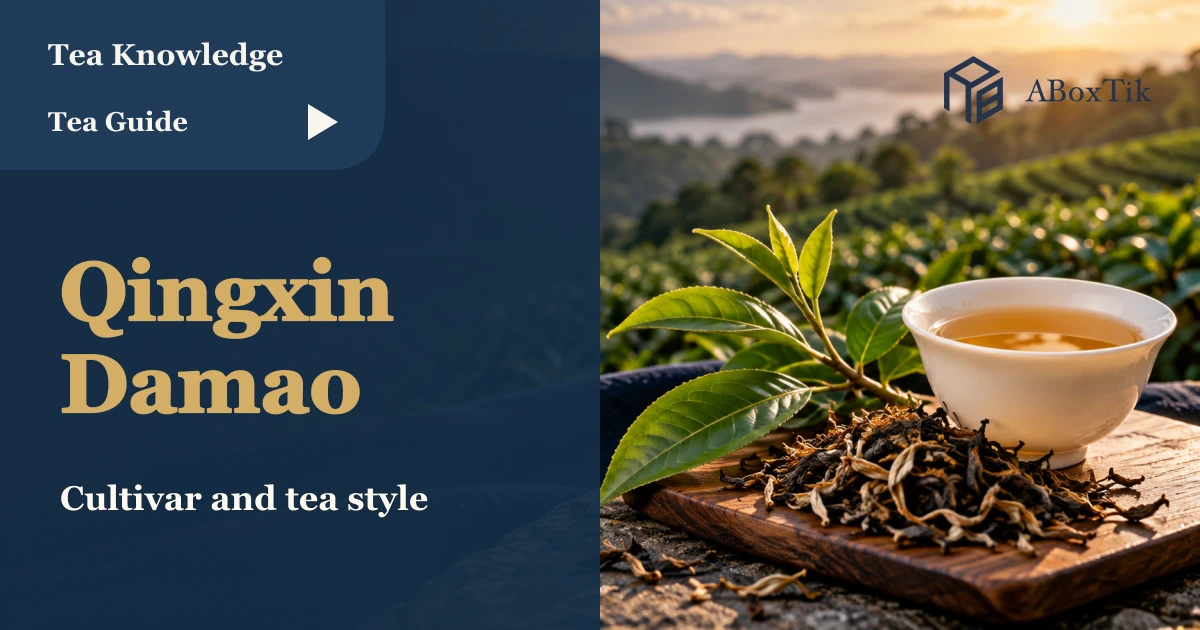
A cultivar gives the story a starting point; the leaves and the maker bring the cup into focus.
Qingxin Damao is a tea cultivar; Oriental Beauty is a Taiwanese tea style made through a particular combination of leaf conditions and processing. The Tea and Beverage Research Station also writes the cultivar name as “Chin Shin Dah Pan”; the two spellings refer to the same cultivar. The station describes it as the principal cultivar used for Oriental Beauty and explains the role of leafhopper-bitten young shoots and the subsequent processing. The names are related, but they answer different questions. A cultivar name alone does not tell you that the finished tea is Oriental Beauty, and the name Oriental Beauty does not by itself identify the cultivar in every batch.
It is easy to see why the labels can become tangled: a package may give a tea name, a region, a cultivar and a flavour in just a few lines. Give each one its own space and the label becomes much easier to read.
Four questions to ask of a tea label
| Detail | What it tells you | Example |
|---|---|---|
| Cultivar | Which tea plant was used? | Qingxin Damao or Qingxin Oolong |
| Tea style | What finished tea was made? | Oriental Beauty |
| Origin | Where was this batch produced? | Check the actual product information |
| Flavour | What might the cup suggest to a taster? | Honey-like or ripe-fruit notes |
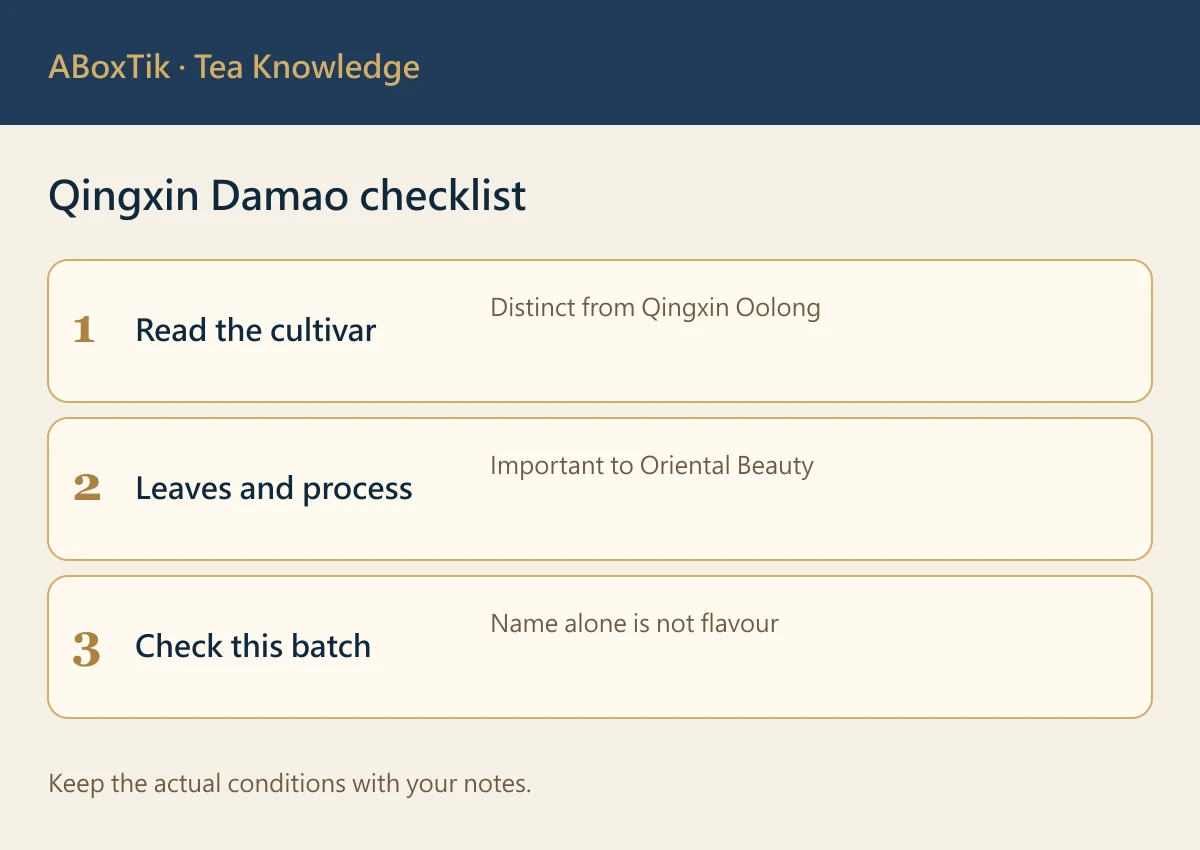
The research station’s description puts the cultivar, leaf condition and process together. The plant is the starting material; the condition of the shoots and the maker’s decisions are part of the finished tea’s character too. A cultivar name is useful information, but it is not a promise of one identical aroma in every cup.
If a label simply says “honey aroma tea”, ask for the tea style, origin, cultivar if known, and brewing guidance for that product. Keep confirmed information separate from details still to be checked. For the geographical context, explore the Oriental Beauty tea regions; a regional guide cannot replace the origin information for the particular tea in hand.
Is Qingxin Damao the same as Qingxin Oolong?
They are different cultivars, even though their names share “Qingxin”. The research station’s profile describes Qingxin Damao’s distribution and the appearance of its leaves and young buds, including their fine white hairs. These details are useful for understanding the plant, but a finished tea leaf is a poor substitute for a batch record: harvesting and processing also affect its appearance.
When the cultivar is not on the package, ask the supplier instead of trying to identify it from a single leaf. A separate Qingxin Oolong cultivar guide offers a useful comparison. Similar words on a label do not mean the two plants are interchangeable.
How do honey and ripe-fruit notes develop?
The research station describes Oriental Beauty as tea made from young shoots bitten by tea leafhoppers, followed by substantial withering and agitation, fixation, resting to redistribute moisture, rolling and drying. Its finished tea may present honey-like or ripe-fruit aromas. This is a chain of conditions and skilled work, not a prediction that every leaf exposed to an insect will make the same cup.
Harvest, weather, leaf condition and processing can vary from batch to batch. Treat the tasting description as a direction to explore. “Honey-like” describes an impression and does not mean honey has been added; check the ingredient list if you need to know what is actually in the product.
For a first cup, follow the product’s own instructions for tea, water and time. Notice whether the aroma appears while the cup is warm or after it cools a little, and whether the taste feels light or full. On the next brew, change one variable and write down what happened. “Ripe fruit while warm, a softer sweet aroma later” is a useful note; a perfect flower or fruit name is not required.
What should I ask before buying?
Start with the actual tea name and origin. Ask whether the cultivar is known and whether the pack size and brewing format fit the intended routine. Loose tea works well with a pot or infuser; for a recipient who uses a mug, think about how the leaves will be separated. Leave unknown details open for confirmation instead of filling them with a persuasive story.
To compare two teas, use similar vessels, tea-to-water ratios and timing, then note aroma, strength and what you would enjoy drinking again. A cultivar is a useful part of the story rather than a quality ranking. The best next question is often a practical one: “What is this batch, and how would you suggest brewing it?”
For a broader view, explore what makes Taiwanese tea distinctive and the basic brewing guide. Each answer gives the next cup a little more context, without asking it to fit a single name.
Three label examples to practice with
Imagine a first package names Qingxin Damao, a specific production area, Oriental Beauty and a honey-like aroma. The cultivar identifies the plant, the place identifies where the batch was produced, the tea name describes the finished style, and the aroma describes a possible sensory impression. All four can appear on one label, but each has a different job. Check the actual place and cultivar against the supplier’s information for the tea being purchased.
Now imagine a second package says “Oriental Beauty” but does not name a cultivar. The tea name still helps you understand what you are buying and how to ask for brewing advice. If the plant variety is central to the purchase, ask the supplier whether the information is available for the current batch. A blank space can remain “to be confirmed” while you decide whether that answer matters to you.
Finally, a third package names Qingxin Damao without identifying the finished style. That tells you something about the plant material, but does not establish the whole process. Ask what tea was made from it and whether the maker can share a flavour description and brewing guidance. These are reading exercises; the actual product information remains the starting point for any purchase.
Give the first cup room to be different
A smaller package can make sense when trying a new style. Before buying, consider the equipment you already use: can you measure the water, and can you separate the leaves from it at the intended time? A mug and a suitable infuser can make a practical starting setup. There is no need to assemble an elaborate tea table before finding out what you enjoy.
When giving tea, first find out whether the recipient drinks it and what format is convenient. Keep the tea name, actual contents, storage and brewing directions where they can be found after the gift is opened. A short card can introduce a honey-like aroma as a possible impression; it need not predict precisely what the recipient will taste. The invitation is to explore, not to pass a tasting test.
If a later cup seems different, look at how the package was resealed and where it was stored, then check the water volume and steeping time. Adjust one thing for the next brew and record both sets of conditions. If a product detail remains unclear, bring the package and batch information to the supplier. A specific question about the tea tends to produce a more useful answer than asking whether it is simply “the best”.
Common questions
Is every tea from Qingxin Damao Oriental Beauty?
The cultivar names the plant, while Oriental Beauty names a finished tea style. Check the actual tea name and processing information. The research station describes Qingxin Damao as the main cultivar for Oriental Beauty alongside leafhopper-bitten shoots and the subsequent steps.
Does Oriental Beauty come from only one place?
Regional context helps tell the story of a tea, but the package or supplier should identify the origin of the batch being considered. Do not assign a location from aroma alone. Different producers can offer distinct information about their own tea and its production.
Does a honey-like aroma mean honey was added?
It can describe a sensory association. The ingredient list answers whether honey or another ingredient was actually added. Keeping flavour language and ingredient information separate makes the description easier for everyone to use.
Can cultivar alone determine quality or price?
It is one piece of information. Harvest, processing, storage, the condition of the batch and personal preference also matter. If tasting is possible, consider whether the aroma is pleasant and the liquor suits your taste, then compare the quantity with your budget.
Related reading and tea choices
Continue exploring
- Leafhopper influence on honey-like aroma
- Honey-like and fruit aroma descriptions
- Where rolling fits in the process