
Tea Knowledge
Gift Tea or Everyday Tea: Which Selection Criteria Can You Share?
Two routines can begin with one thoughtful comparison.
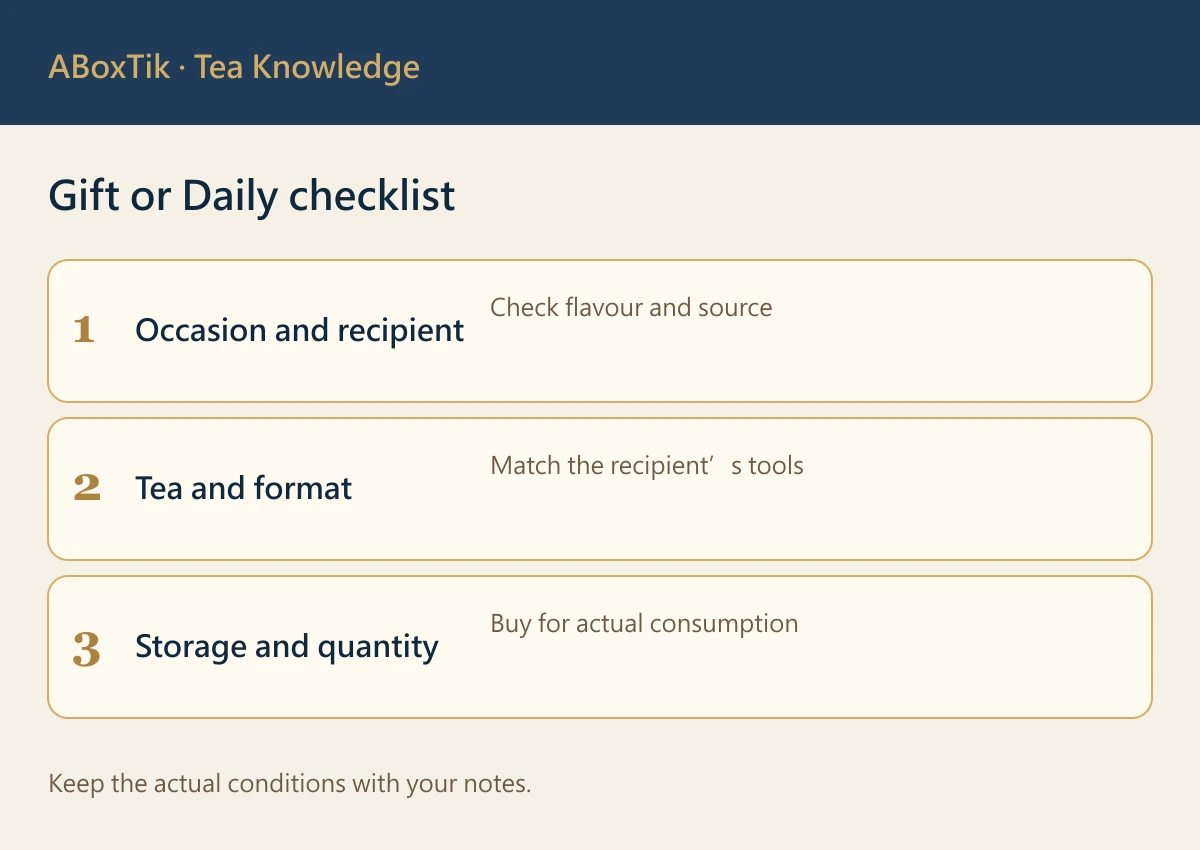
Gift tea and tea for yourself can be compared using the same core information: the tea and its ingredients, flavour description, quantity, storage and budget. Then separate the questions that depend on the drinker: who will use it, how it will reach them and what you know about their routine. A shared comparison sheet makes it easier to see where one tea suits both purposes and where two different choices would be more useful. A gift does not automatically need to be the most expensive option, and your own favourite does not automatically become someone else's.
When buying one box to give and one pack to keep, it is natural to ask whether they can be the same tea. They can, if both uses fit. You might also choose related styles in different formats. The practical question is what happens after each package is opened: can its owner prepare it comfortably, enjoy it and find the information needed to store it?
Start with the information both purchases share
Record the tea's name, ingredients and available product information so you know what you are comparing. Note the stated flavour direction and the preferences already known to you. Check net weight, number of bags or loose-leaf quantity, along with the suggested preparation. Keep the original storage directions, seal and date information. Finally, write the actual price and any packaging or delivery charges into the appropriate budget.
These details give a comparison a starting point. Appearance alone does not establish tea quality. Taiwan's Tea and Beverage Research Station explains that moisture, light, heat and odours are among the conditions relevant to storage. Follow the package directions and use dry utensils. Tea in a gift box and tea in an everyday pack both need suitable care once opened.
Separate what you know about each drinker
For your own tea, recall how often you make a cup, which vessel you use and whether you usually prefer a fresh floral direction or a roasted one. A convenient format may suit a desk and a mug; loose tea may be appealing if you enjoy adjusting leaf quantity and steeping time. Compare the actual products rather than ranking quality solely by format.
For a gift, you may know less. Does the recipient make tea regularly or only occasionally? Will the box be kept on one person's desk or shared by a group? Where preferences are unclear, look for understandable product information and a manageable quantity, and leave room to ask. Do not assume caffeine needs, ingredient suitability or flavour preferences on another person's behalf. Check the product and ask when the answer matters.
Create two columns labelled “known” and “to confirm” for each use. Your personal column may already include your mug and usual time of day. The gift column might contain only a delivery address and occasion. Empty fields do not need to be filled with guesses. One considerate question can be more useful than a surprise that is difficult to use.
Build a two-column comparison
For each candidate, list the place and equipment, flavour preferences, likely consumption or sharing, packaging and information, and total cost. Under your own column, write a typical week's use and the tea you already enjoy. Under the gift column, distinguish confirmed details from questions still to ask. Include the box, card and delivery costs where relevant.
Compare two actual candidates after filling in what you know. If one tea meets both columns, the same tea can serve both purposes. If flavour is similar but equipment differs, compare available formats. If the gift must be shipped to another address, confirm the destination and delivery arrangements separately; a household shopping note is not automatically a dispatch checklist.
Scenario one: similar flavours, different equipment
Imagine that you and a friend both enjoy a light floral direction. You use a teapot, while your friend usually makes tea in an office mug. Look for clearly described teas, then check the current contents, quantity and instructions for a loose-leaf option and a bagged option. If they are not actually the same tea, record their names and ingredients separately. Similar packaging colours do not establish identical contents.
A card might say, “I remembered that you enjoy lighter aromas and chose a tea that is convenient for your mug,” provided both details are confirmed. For your own pack, keep the tea name, opening date and a note on the preparation you liked. If you later share impressions, describe each person's vessel and time. Do not attribute every difference in the cups to the packaging format.
Scenario two: you want to experiment, your friend likes the familiar
For yourself, a manageable quantity of a new style may be a welcome experiment. For a gift, begin with what your friend has actually said they enjoy. Someone who likes comparing teas may appreciate two clearly different small portions. Someone with a favourite may be happiest with a familiar tea. A known preference is valuable information; creativity does not require turning another person's cupboard into a mystery box.
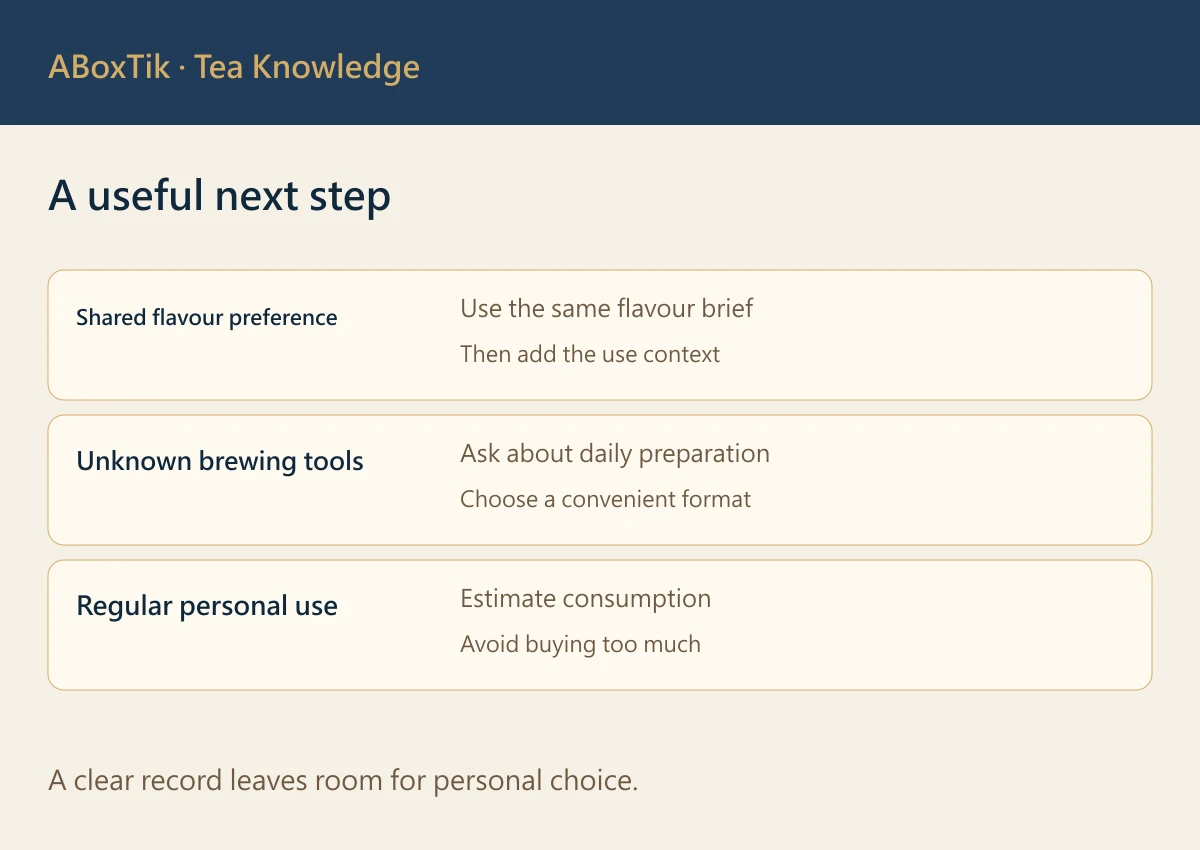
When you do not know, ask a small, useful question: “Do you tend to prefer a lighter or a roasted tea? Do you usually use bags or a pot?” Two concrete choices can be easier to answer than a broad request to describe every preference. Offering a choice does not reduce the thought behind a gift. It helps the thought fit the person's everyday life.
Scenario three: a shared box and a small personal supply
For a team gift, consider the actual number of people, where the tea will be used and the ingredient information available so each person can decide. If you drink one cup a day at home, base your own purchase on that routine. Count both the individual bags and the net weight; two boxes called “one set” do not necessarily contain the same amount.
Individual packs, information cards and outer boxes perform different jobs. For a shipped gift, check protection and delivery arrangements. At home, a suitable original package may already be practical. Keep the name and dates visible rather than transferring every tea into a new container immediately. A package that is easy to identify, close and use may matter more than a perfectly matching shelf.
Give each purpose its own budget
Write a comfortable range for personal use and for the gift separately. A gift may include a card, outer packaging and delivery. Your own purchase depends more directly on quantity and the pace at which you will use it. Compare the actual contents and total cost, not simply the price of two packages with different net weights. A higher price is not the only way to express regard for a relationship.
If one tea suits both uses but buying two exceeds the budget, keep the purchase that matters most now. The other use can wait or take a different format that fits the budget. A gift is also about whether it is appropriate, clearly presented and welcome. There is no need to stretch the budget simply to make both packages identical.
Leave one useful next step for each tea
For your own cup, note the leaf or bag amount, water and time you used, together with one thing you liked. If you adjust it, change one condition at a time. For your friend's gift, confirm the name, ingredients, packaging, storage and delivery, then use one natural sentence to convey your thought. If it is unclear whether the recipient can accept a gift, ask first.
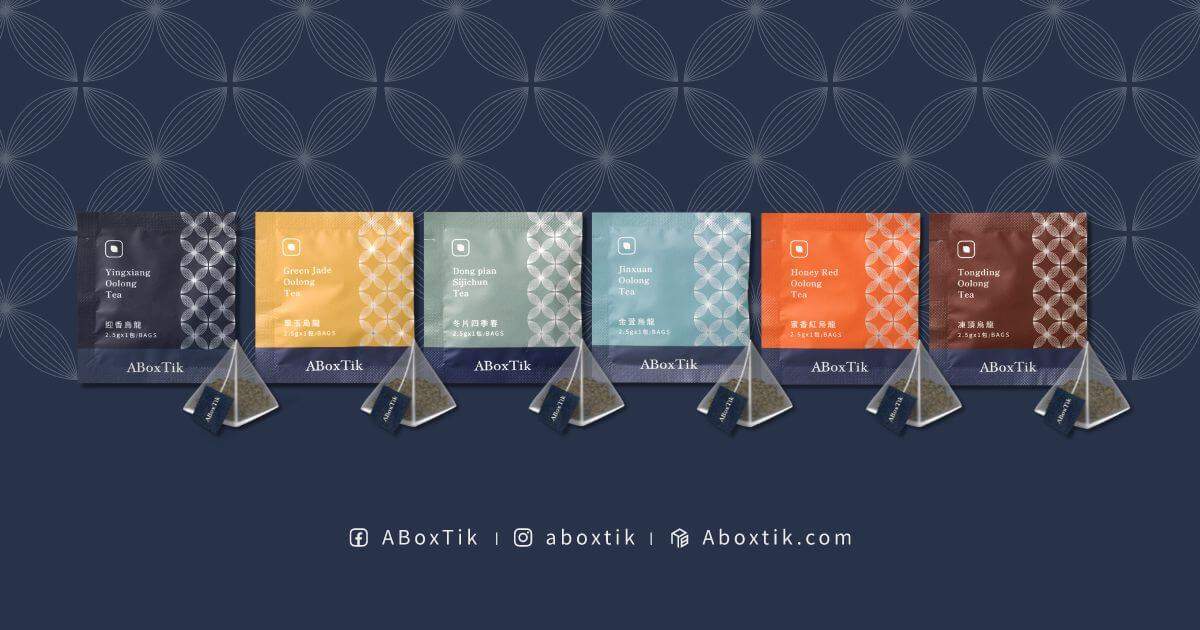
To explore ABoxTik teas, compare current product details for bagged and loose-leaf formats, contents and quantity, and use the tea-gift guide for the recipient-specific questions. One tea may fit both routines beautifully. If you end up choosing two, that simply reflects the fact that two cups can have different jobs.
| Question | For your own tea | For the gift |
|---|---|---|
| Equipment | Your actual cup or pot | Known equipment, or ask first |
| Flavour | A style you enjoy or wish to try | A stated preference; leave unknowns open |
| Quantity | Your real drinking routine | One person or a group |
| Total cost | Tea and delivery | Tea, card, packing and delivery |
Related reading and tea choices
Sources
Sources checked: 29 October 2026.