
Tea Knowledge
Tea Plant Propagation: Seeds, Cuttings and Cultivar Consistency
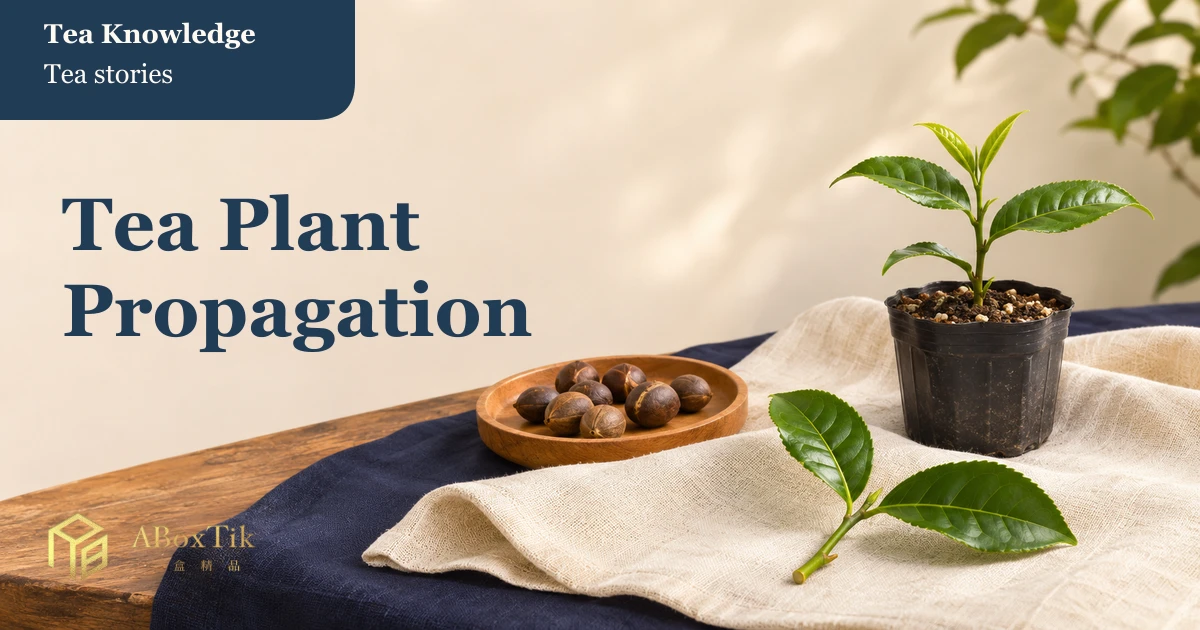
A seed and a cutting begin differently. Give each its place in the story, then follow the cultivar, garden and making of the tea towards the cup.
Tea plant propagation can begin with a seed or a cutting. Seed reproduction combines genetic material, so seedlings can differ from their parents and from one another. A cutting is a form of vegetative propagation: a new plant grows from part of a parent plant and retains its genetic characteristics. Neither method alone tells you how the finished tea will taste. Growing conditions, harvest and processing matter too.
If the words on a tea package seem to answer different questions at once, try separating them. One question is how the plant was propagated. Another is where its leaves grew and how they became tea. Both can be interesting; neither needs to become an afternoon exam.
tea plant propagation: Seed-grown tea plants: why seedlings can differ
Taiwan’s Tea and Beverage Research Station describes tea as an outcrossing crop. Seed-grown offspring can differ from the parent in appearance, yield and quality. Think of seedlings as members of a family: they have a relationship, but need not arrive wearing identical outfits. Their individual characteristics have to be observed rather than assigned in advance from the phrase “seed-grown.”
Variation can give breeders opportunities to observe and select plants. That does not mean every seedling becomes a new cultivar. Observation, selection and subsequent evaluation take work and evidence. When a seller mentions seed-grown plants, ask about the garden’s plant material and the particular tea rather than treating the propagation method as a grade.
Tea cuttings: continuity from a parent plant
A cutting is a part of a plant used to grow another plant; tea can be propagated using shoots. This is vegetative propagation, a different process from raising a plant from seed. Cuttings from a selected parent carry its genetic characteristics, helping growers retain the traits of that plant.
Continuity at the plant level does not promise identical cups. The same cultivar grown in different places or handled differently after harvest can yield different finished teas. Give two cooks the same ingredient and the menu still has to be written: cultivar is useful context, while the conditions and batch deserve attention too.
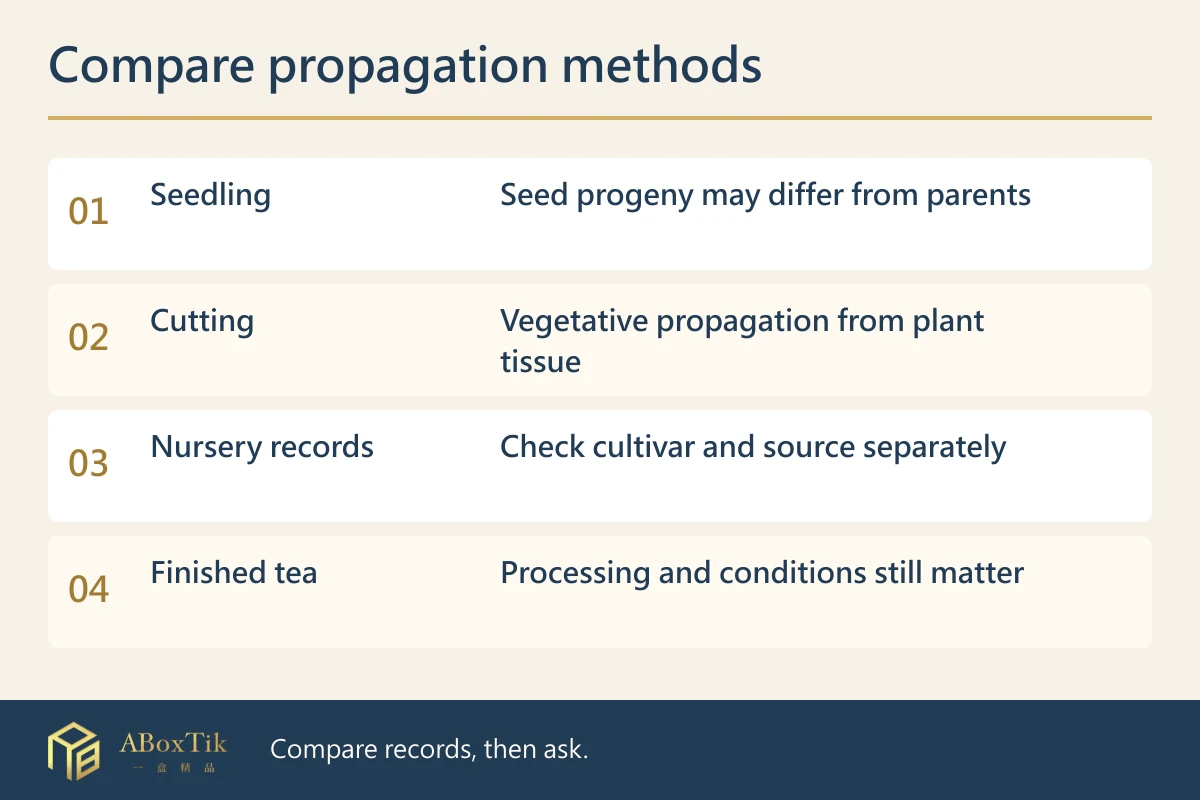
| Question | Seed propagation | Cutting propagation |
|---|---|---|
| Starting point | A seed germinates into a seedling | A shoot is grown into a new plant |
| Relationship to the parent | Sexual reproduction; offspring may vary | Vegetative reproduction; genetic characteristics of the parent are retained |
| Does this predict the cup on its own? | No | No |
| A useful next question | What is known about the garden’s plant material and this batch? | Which parent or cultivar was used, and how was this tea made? |
Cultivar consistency and flavour consistency are different questions
“Qing Xin Oolong” names a tea cultivar. It is not a growing region or a promise of one fixed brewing result. The same cultivar can appear in different finished-tea traditions. Our Qing Xin Oolong guide explores the distinction between plant, place and processing.
When comparing two teas, note cultivar, origin, harvest season and tea style in separate fields. If the cultivar is the same but the batches differ, record aroma, taste, texture and brewing conditions. Describe a difference before assigning a cause: there is a rather eventful journey between a nursery plant and a cup.
Questions to ask when buying tea
Start with the full cultivar name, origin and tea style if these are available. If a package says only “oolong,” ask whether the seller can share more. If propagation interests you, try: “Were the plants in this garden grown from seed or cuttings, and does that information apply to this batch?” If the answer needs checking, leave the field open rather than filling it with a guess.
Then return to the occasion. Are you looking for a fragrant cup to explore slowly, or something to share? The Taiwan tea first-taste guide offers a starting point, and the Taiwan tea set can be checked for its current contents. A little plant knowledge is useful when it helps you ask a clearer question.
Frequently asked questions
Is tea from cuttings always better than tea from seed?
No such ranking follows from propagation alone. Consider the plant material, growing conditions, processing and your own experience of the finished tea together.
Will teas from the same cultivar always smell alike?
Not necessarily. A cultivar is one helpful clue. Growing conditions, harvest, processing and preparation can also matter. Write down what you notice in the cup before predicting every other cup from its name.
Does seed-grown mean a plant has no cultivar?
Propagation method and cultivar identity answer different questions. Check the seller’s specific information about the plants and batch; neither “seed-grown” nor “cutting-grown” alone supplies a complete cultivar identity.
Read a tea label with a four-field card
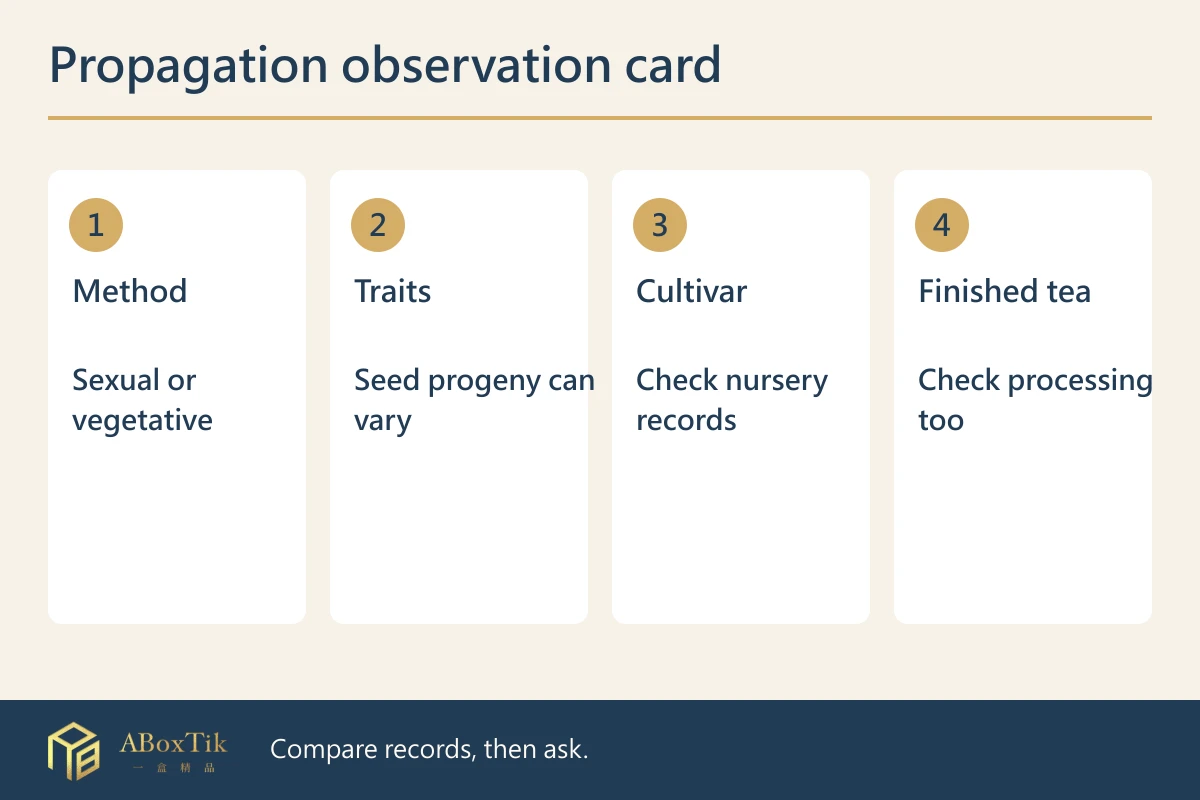
Make four headings: propagation method, full cultivar name, place and batch, and finished-tea processing. Enter only information actually supplied. If the propagation method is absent, leave that field open. The card is a way to organise a question, not a demand that every tea drinker collect nursery records before enjoying a cup. For an everyday purchase, clear information about the tea, its source and preparation may be the most useful starting point.
For example, “TTES No.13 / Cuiyu” belongs in the cultivar field. A label that says only an oolong from a named place supplies different information: it does not identify the cultivar or establish that the plants were propagated from cuttings. If the seller later provides information about nursery material, keep its source, date and scope beside the entry. Different words on a package can each be informative without being interchangeable.
Try a second exercise with two teas labelled as the same cultivar but from different places or processing styles. Before reading every aroma description, prepare them with the same equipment and record the actual conditions. Give each its own aroma, taste and mouthfeel notes. The exercise records those two cups; it cannot isolate propagation as the cause of a difference. To investigate further, first identify which fields differ and which remain unknown.
A useful conversation with a seller can move from the complete cultivar name to the garden or batch covered by the information, then to how the tea was made. A retailer may know the finished product well while needing to ask the producer about nursery material. Keep that question open rather than turning an incomplete answer into a judgement of the tea. There is time to learn the family history without postponing afternoon tea until every box is filled.
For cultivar examples, compare Cuiyu cultivar information, the TTES No.19 Biyu profile and the TTES No.22 Qinyu background. Keep those cultivar records separate from Taiwan tea regions and growing context. To follow the leaf beyond the garden, read oolong processing and oxidation and withering. Then use an aroma observation sequence and tasting notes to record the finished tea.

Follow ABoxTik
A clear next step towards a cup
Return from propagation to a tea you would actually like to drink. Read its cultivar, processing and preparation information together, then leave a short note about the cup. ABoxTik approaches Taiwanese tea through understandable product information and opportunities to compare styles. One carefully chosen tea and one clear question make a comfortable next step.
Related recommendations
Sources
, accessed 4 November 2026: Tea and Beverage Research Station: Tea plant propagation; National Taiwan University Experimental Farm: Crop propagation.