
Tea Knowledge
Should You Stir Tea While It Steeps? Compare Two Cups Carefully
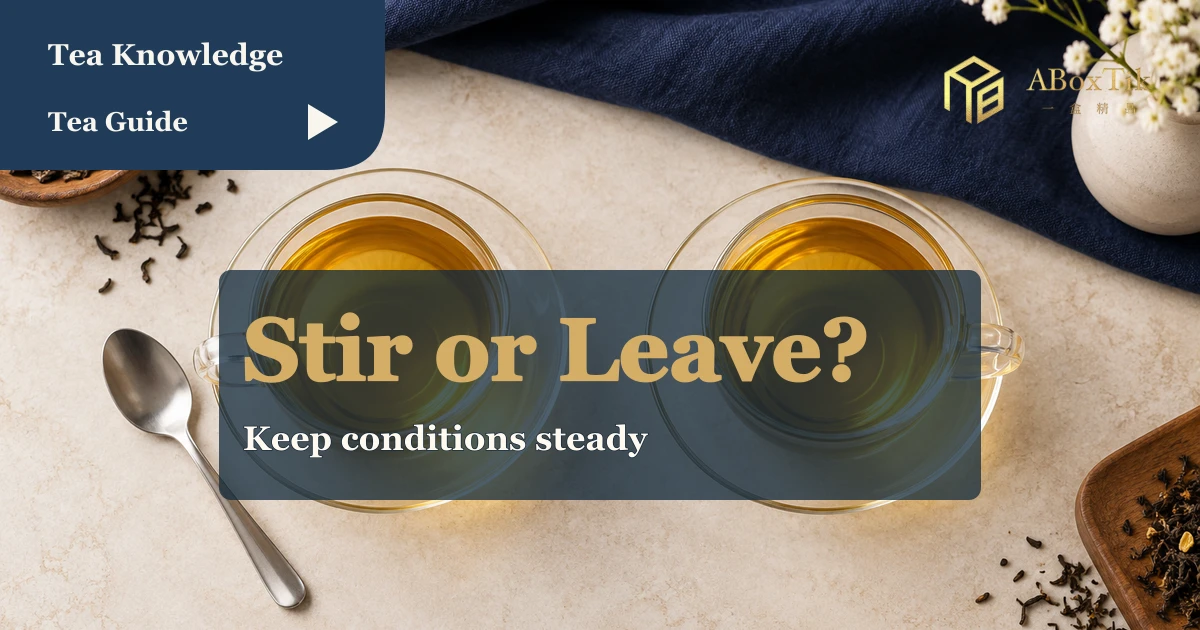
Keep the conditions clear, and let each cup speak for itself.
Tea does not have to be stirred. To find out whether stirring suits your taste, prepare two small cups of the same tea with the same water and steeping time. Leave one still and stir the other gently, then record what you did and what you noticed. Start with the tea’s package instructions; a tea bag does not need to be squeezed repeatedly to work harder.
A floating leaf may invite a quick swirl, while another drinker may wonder whether movement makes a cup too strong. Both are fair questions. Start with one comparison that can be repeated. Stirring and the position of a tea bag in a cup are different variables; if both change at once, it is difficult to say what contributed to a difference.
Stirring, shaking and squeezing are different actions
Stirring means moving the liquid with a clean food-safe utensil. Shaking moves the container as well. Squeezing applies pressure to a tea bag. Each action can be done at different times and with different intensity. To compare stirring, leave shaking and squeezing out of the first round and note the direction, number of movements, time and utensil. For loose tea, keep the separation or straining method consistent as well.
Hot tea can splash. Place the cup on a stable surface, leave room for the utensil and stir gently. Do not grasp a hot tea bag with bare hands or shake a sealed container of hot liquid. For an everyday cup, following the product instructions and removing the tea when you want steeping to stop is already a clear starting point.
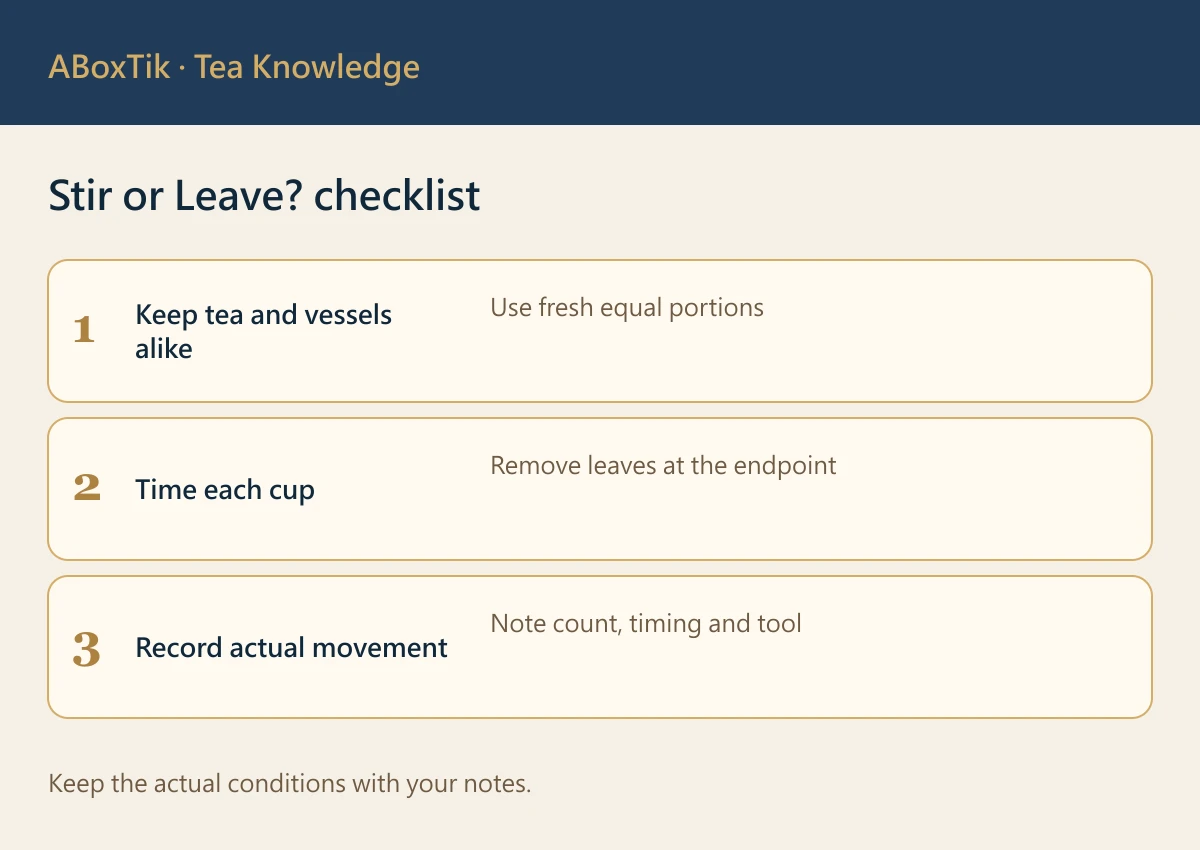
Fix six conditions before comparing
The same tea may taste different when the amount, cup or time changes. Use two bags of the same tea or measure equal amounts of loose leaf. Choose two identical cups suitable for hot drinks. Record the tea, water volume and temperature, pouring method, steeping time and how the leaves are removed. If the cups start at different times, time each separately so both steep for the same duration.
| Condition | Keep consistent | If you cannot |
|---|---|---|
| Tea and amount | Same product and batch; equal amounts | Record the actual difference |
| Water and temperature | Same drinking water and measured volume | Label estimates as estimates |
| Cup and pouring | Identical cups and pouring method | Note the difference |
| Steeping and removal | Time each cup and remove at the same duration | Record actual times |
| Tea bag position | Observe immersion and movement | Note any change |
| Action | A still; B gently stirred as planned | Record departures and consider repeating |
These fields make an observation easier to interpret; they are not an exam. Without a thermometer, write down what you know and leave unknown values blank. A careful note is more useful than a precise number guessed afterward.
If only one suitable cup is available, you can make the two cups in separate rounds. Record the dates, water and surrounding conditions for both. When the rounds are far apart, storage, temperature and memory may differ, so keep those limitations with the notes. A second round can still be useful for personal preference, but it is less direct than comparing two cups side by side. There is no need to buy more equipment simply to finish the exercise: a familiar cup and an honest record are enough to begin.
Make one small comparison
Label the cups A and B. Pour water in the same way and start a separate timer for each. Leave A still. At a time chosen in advance, stir B gently using a clean food-safe utensil and note the number and direction of movements. Do not pull the bag up and down as an extra action, and do not leave B steeping longer than A.
At the planned time, remove the bags or separate the leaves in the same way. Let both cups reach a comfortable drinking temperature. Smell each, then take a small sip and separately record strength, taste, texture and preference. A difference is not compulsory: finding the cups similar can help decide whether stirring is worth adding to your routine.
| Record | A: still | B: stirred |
|---|---|---|
| Action | None | Time, number, direction and utensil |
| Actual conditions | Tea, water, temperature and time | Same fields; note any differences |
| Observation | Aroma, strength and texture | Aroma, strength and texture |
| Preference | Like, dislike or unsure | Like, dislike or unsure; next step |
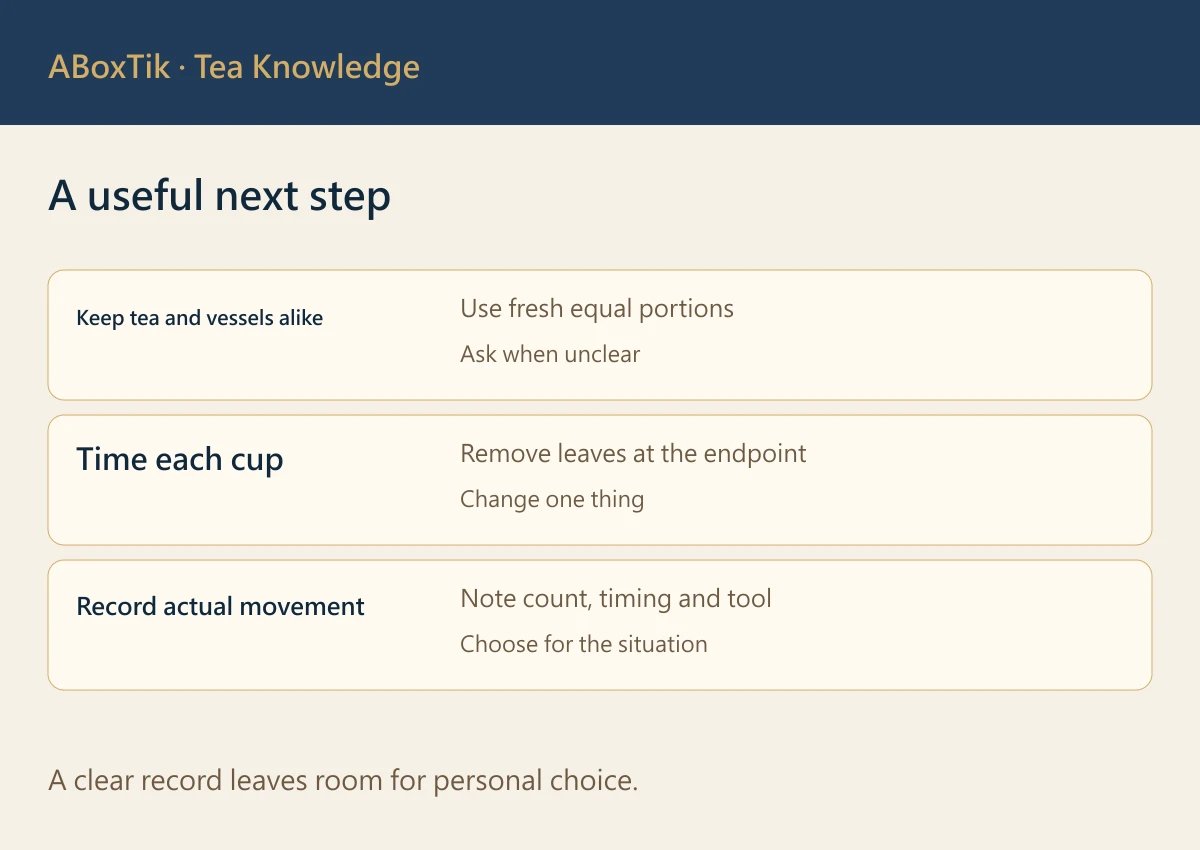
Note tasting order and temperature
The first and second cups may be experienced differently for reasons that include their temperature or the order in which they are tasted. If you want another observation, make a fresh round under the same conditions and reverse the tasting order while retaining each cup’s label. Record the time and temperature if measured; otherwise use a simple description such as warm or cooler.
If B seems stronger, revisit the water volume, steeping duration, removal and stirring notes. If a bag was not fully immersed or one cup was removed later, keep that fact in the record. A home comparison can guide your own routine; it cannot by itself establish how every tea, vessel and stirring method behaves.
Too strong or too light? Change one thing next time
To adjust strength, choose one easily recorded condition within the product’s suggested range, such as water volume or steeping time. Keep the tea, cup and other actions consistent and brew again. If you later want to compare stirring, give that question its own round. Changing water, time and movement together makes it much harder to find the adjustment you actually liked.
If a bag is damaged or its contents appear questionable, stop using it and ask the supplier. Let a removed bag drip into the cup before placing it on a prepared saucer. Clean and dry utensils according to their material instructions. A place for the bag is a small preparation that saves a search when the timer rings.
Share observations without choosing a winner
When tasting with a friend, each person can write one line first: “aroma, strength, what I enjoyed.” Compare notes afterward. One person may prefer a lighter cup while another enjoys a more pronounced tea character. Both answers belong on the page. Avoid announcing which cup should be better before everyone has tried it.
There is no need to open several teas at once. Begin with a familiar bag or loose tea, follow its instructions and use one comparison to answer one question. Related guides to steeping time, mug brewing and tea bag position can help with other variables. Check current product details and instructions when choosing a tea.
Take the result back to your next cup
Choose the question that matters today: is a still cup already enjoyable, or do you prefer a gently stirred one? Hold the other conditions steady, record the action and compare at a comfortable temperature. If the difference is unclear, choose the method that is convenient and pleasant. Your tea does not need to win a spinning contest to earn its place in the day.

Related reading and tea choices
Sources
Sources checked: 29 October 2026.