
Tea Mixology
Warm Pear and Taiwanese Black Tea: A Guide to Tea, Fruit and Temperature

Keep a plain cup nearby and give pear and tea room to meet.
Pear and Taiwanese black tea can be a lovely starting point for a warm drink. Brew a black tea you enjoy on its own, then compare a small portion with a little pear. Notice whether the tea and fruit both feel right to you. The fruit, tea and serving temperature can all change the experience, so keep a plain cup nearby and write down the ingredients you actually used.
It is tempting to add fruit, sugar and spices all at once when preparing a welcoming drink. Begin with tea and pear instead. Once those two have had a chance to speak, the next adjustment becomes easier to choose. This is a guide for small experiments; if you find a combination you enjoy, use your notes to make it again.
Choose a black tea you enjoy on its own
Taiwan’s Tea and Beverage Research Station describes different black tea cultivars as having their own aromatic characteristics. Check the tea name, ingredients and brewing instructions on your package. Brew a cup as directed, smell it, and wait until it is comfortable to drink before taking a sip. Note the strength, taste and texture you notice. “Not sure yet” is a useful observation too.
Divide one batch into two small heat-safe cups. Keep one plain and reserve the other for pear. Your reference cup is not an answer key; it is somewhere to return when deciding what to change. Use the selected tea’s instructions as your starting point for water, time and temperature.
The research station’s work shows that water temperature affected the teas and sensory results studied. Those specific results should not be treated as a universal setting for every product. If you want to compare a different brewing temperature, make that a separate round rather than changing it at the same time as the pear.
Fresh pear, juice or purée? Read the ingredient first
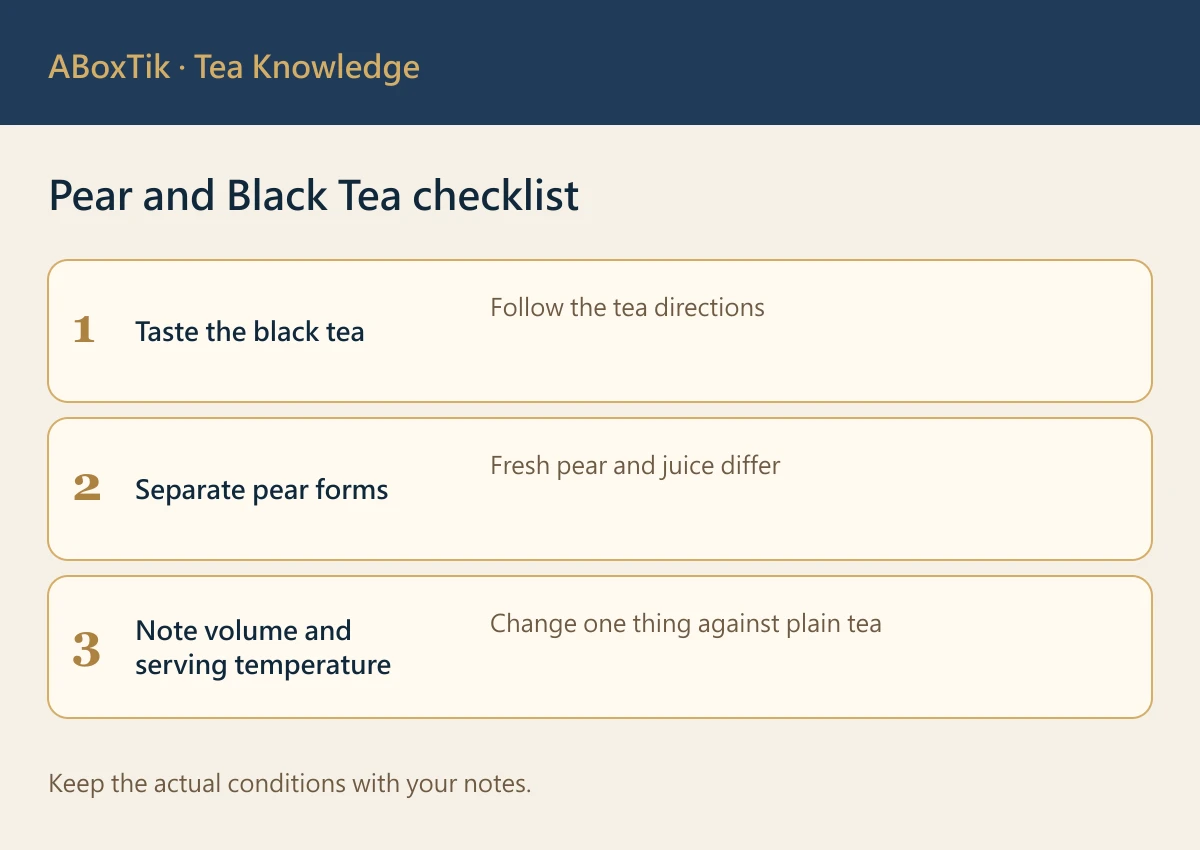
Fresh pear, juice and purée differ in texture and liquid content. A processed product may already contain sugar or other ingredients. Read its label for ingredients, alcohol content, added sugar and storage instructions. For fresh fruit, note its variety, ripeness and the part used. Even fruit with the same name can differ from one batch to another.
| Form | Check first | Record in your small trial |
|---|---|---|
| Fresh slices or pieces | Condition, washing and cutting | Size, amount, whether eaten and contact time |
| Non-alcoholic pear juice | Ingredients, sweetness and storage | Amount added, final volume and sweetness |
| Purée or another prepared product | Ingredients, texture and added sugar | Amount, mixing method and mouthfeel |
Do not assume one spoonful of each form is interchangeable. Juice adds liquid, pieces affect the texture in the cup, and purée may make the drink cloudy. Any of those can be welcome; separate notes simply help you decide which qualities to keep.
Make warmth comfortable and measurable
Choose a cup the maker says is suitable for hot drinks and place it on a stable surface. Let freshly brewed tea cool to a comfortable temperature before smelling closely or sipping. If you have a thermometer, record a measured value. Otherwise, a description such as “warm” or “cooler” is more useful than an invented exact number.
Note how the pear was handled: at room temperature, taken from the refrigerator, or separately heated using a method appropriate to the ingredient. Record when it was added and how long it stayed in contact with the tea. Choose one approach for the first round and change one condition at a time later. Different fruit and heating methods can give different results; there is no single temperature that fits every pear and tea.
When sharing, use cups that are comfortable to hold and let each person wait until the drink is pleasant to sip. A warm drink should invite an unhurried conversation, not make anyone race their cup.
Compare two small cups, changing only the pear
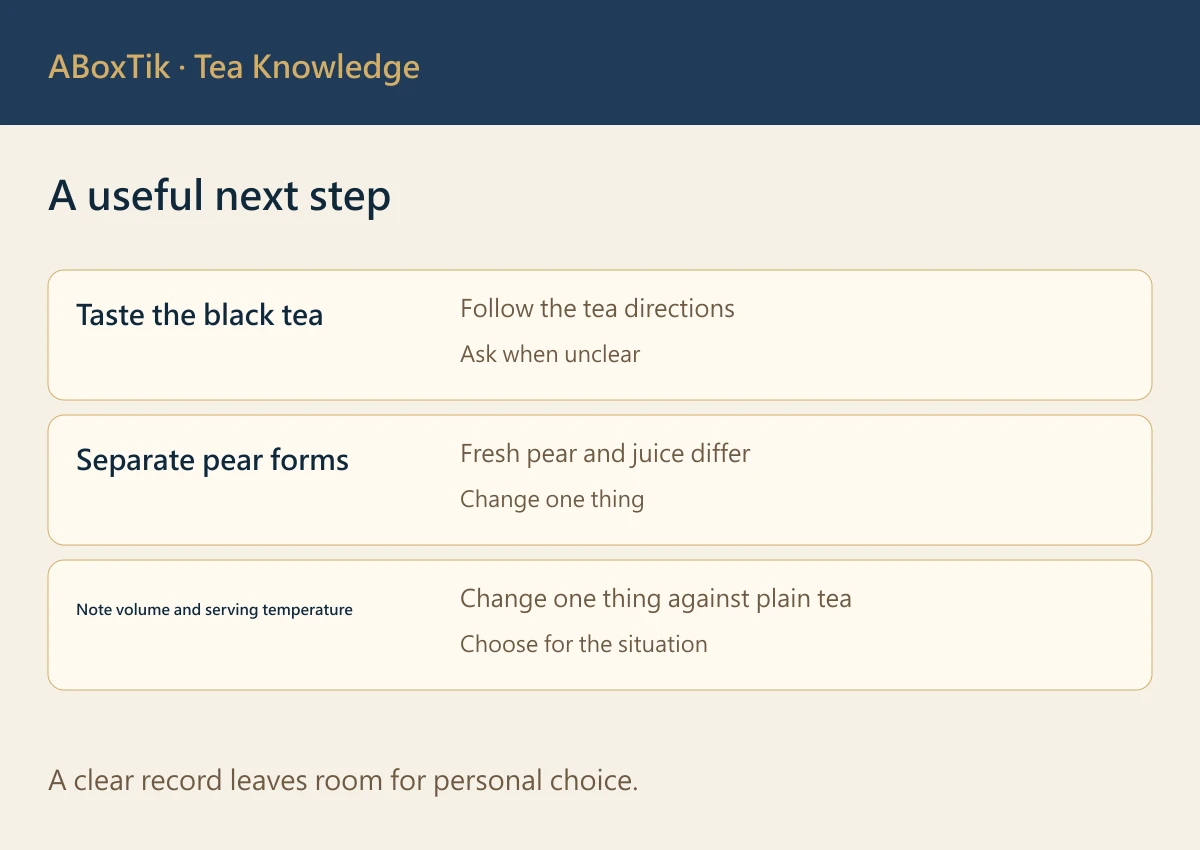
Brew one batch of black tea and divide measured amounts between two similar cups. Keep cup A plain. Add one form of pear to cup B, noting the amount and form. Leave out sugar, spices and other fruit juice for this first comparison. Taste the cups at similar times and at a comfortable temperature.
Smell A, then B, and taste each in small sips. Can you still recognise the tea? Is the fruit character appealing? What do you notice about sweetness and texture? On another round, you can reverse the tasting order while keeping the cups labelled. If the pear adds liquid, record the final volume as well: dilution and other conditions may affect the impression, so avoid assigning a difference to the fruit alone.
| Field | A: plain tea | B: tea and pear |
|---|---|---|
| Tea | Name, amount, water and method | Same batch and amount used |
| Pear | None | Variety or form, amount and added sugar |
| Temperature and time | Measured temperature or description | How and when added; contact and tasting time |
| Impression | Aroma, taste and texture | Tea character, fruit, sweetness and texture |
| Next round | Keep as reference | Choose one adjustment |
If the difference is difficult to notice, that is useful information. You might try one small change next time, or serve pear alongside a cup of plain tea. Both are perfectly good ways to enjoy the ingredients.
Adjust one thing at a time
Tea feels too light: look first at the final volume and how much juice was added. In the next round, try less juice while keeping the tea and serving conditions similar. Avoid also changing the steeping time at the same moment; otherwise it becomes difficult to tell which change helped.
You would like more pear character: try changing either the amount of pear or its contact time in a separate round. Keep your plain reference cup. If what you enjoy most is eating the fruit pieces, write that down too; aroma does not have to do all the work.
The drink tastes too sweet: check whether the juice or another ingredient already contains sugar. Try reducing that ingredient first and leave additional sweeteners out of the next trial. If you prefer a sweeter cup, record what you added and how much so you can repeat it.
You want spice: once you have found a tea-and-pear direction you like, try one food-grade spice in a separate round. Note its name, form and contact time. Offer a plain or unspiced option when sharing; the spice can be a guest without taking over the whole conversation.
Prepare fruit thoughtfully and make room for choice
Wash the pear under running water before cutting it. Use clean utensils and a cutting board kept separate from raw meat and seafood. Refrigerate cut fruit and ingredients requiring refrigeration according to their instructions. The FDA recommends refrigerating perishable food promptly; plan to enjoy a freshly prepared drink at the time it is made and handle any remaining ingredients according to their storage needs.
Tell guests what is in each cup and ask whether they would prefer plain tea or the fruit version. Check the actual ingredients and sweetness of any bottled juice. Serve a small portion first: someone who would like more can always have another, while someone who prefers a lighter taste has room to choose.
Keep the details of a cup you enjoy: tea, pear form, quantities, final volume, serving temperature and the impression you want to preserve. Recreate it as a small cup before preparing more. For further ideas, explore ABoxTik’s warm tea and alcohol-free tea mixology guides; when choosing a tea base, check the current product details and begin with one you would happily drink on its own.
Related reading and tea choices
Sources
- Tea and Beverage Research Station: black tea
- Tea and Beverage Research Station: water and temperature
- FDA: selecting and serving produce safely
- FDA: safe food storage
Sources checked: 29 October 2026.