
Tea Knowledge
Reusing a Tea Tin: What to Record Before Claiming Savings
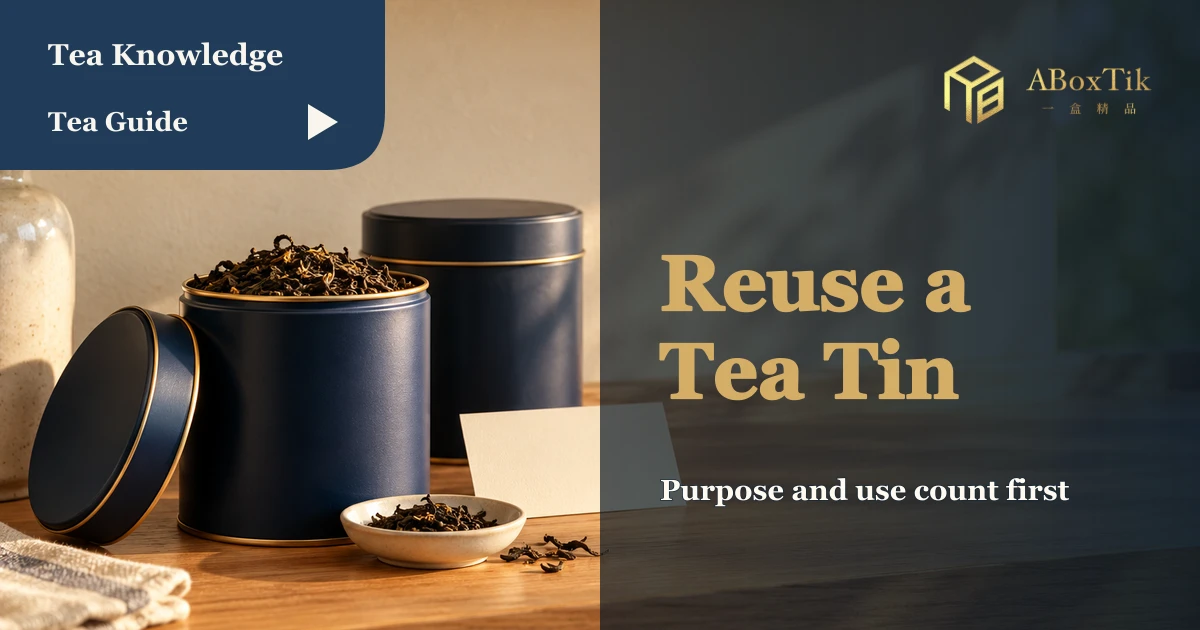
A tin can take another job. Let the evidence arrive before asking its lid to become a calculator.
Using a tea tin again does not by itself reveal how many resources have been saved. Define its purpose, the packaging it actually replaces, the materials involved and the real number of uses. Record cleaning and transport too. Comparable information can then support discussion of a particular resource or environmental impact. Without that information, describe the action you can confirm, such as filling the same suitable tin with another portion of tea.
Keeping a favourite empty tin is perfectly understandable. Give it an actual next job: storing suitable tea or organising small objects that do not touch food. Keeping a container and avoiding a new package are different observations. The cupboard does not need to expand into a waiting room for tins that have not yet been assigned any work.
Define the next job first
UNEP describes packaging reuse in terms of multiple uses for the original purpose, including systems with take-back, washing or repair. At home, using a tin for tea and using it for paper clips belong in different purpose fields. Both can be useful, but a resource comparison needs to identify what each action replaces.
If you already needed a stationery container and use an existing tin, record the object it replaces. If the tin is merely being kept empty, record it as awaiting use. Nor should a household arrangement be described as a brand-operated refill service. Check what any commercial service actually offers. A small, accurate description makes the next entry easier to understand.
Compare an equivalent storage task
| Field | Record |
|---|---|
| Service | Tea quantity, storage period and protection needed |
| Previous arrangement | Original packet, refill pack, another vessel or actual alternative |
| Reuse arrangement | Existing or newly purchased tin; retained inner packaging |
| Indicator | Material weight, water, energy or a specified assessment result |
A large tin serving several portions cannot be compared with one small bag simply by counting packages. Adding a tin around a packet that remains in use does not remove that packet. List retained and additional components before deciding what has been replaced. Package count, material weight and emissions are different indicators; a change in one does not automatically answer for the others.
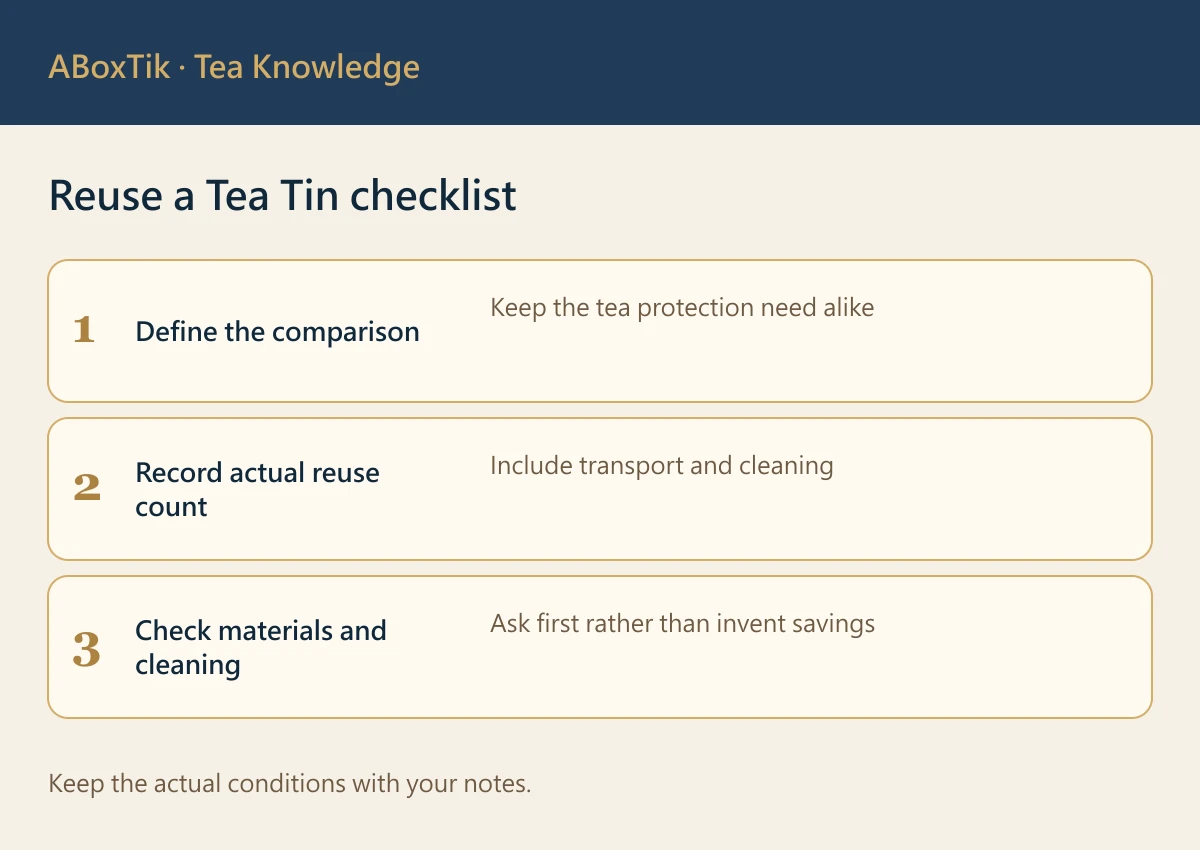
Separate an existing tin from a new purchase
For an existing tin, first check whether it suits the proposed use. Include any new refill packs or accessories required. If a tin is bought specifically for reuse, record it as a new acquisition rather than removing the purchase from the comparison. Obtain available information about material, weight, lid and lining instead of identifying every component by appearance.
Draw up a simple list for each option: body, lid, seal, inner bag, label and transport packaging. This does not require a complete household life-cycle assessment. It makes visible what still exists after the word reuse has been applied. Missing information can become a question rather than a surprisingly precise number guessed from a metallic finish.
Suitability matters more than an impressive count
Before storing tea directly, check the intended use, internal surface, closure and cleaning instructions. Keep the vessel dry and free from unwanted odours. If suitability is uncertain, ask the supplier or choose another appropriate use. A tin previously holding spices, coffee or non-food items is not automatically suitable for tea simply because it has been washed. Peeling surfaces, rust, difficult cleaning or a poor closure are reasons to stop that use.
Follow the maker’s care directions and allow complete drying. Do not mix cleaning products or continue unsuitable use to increase a reuse count. Retain the original tea information, batch and dates; changing containers does not restart shelf life. The tea portion container guide helps with storage choices. If the original inner bag stays inside the tin, keep that bag in the component record.
Use one counting convention
| Date and purpose | What happened | Also record |
|---|---|---|
| Acquisition | Existing tin or new purchase | Material, weight and original purpose |
| Another use | A new portion of tea or a different job | Actual contents and any inner bag |
| Cleaning and transport | Actual operations | Water, energy, cleaning supplies and return trips |
| End of this use | Reason and date | Next handling according to material and local instructions |
Agree whether a use means completing a portion of contents or merely opening the lid. When comparing packaging services, daily opening cannot be counted as avoiding a new tin every day. Keep the first use and later rounds dated separately so total uses are not confused with additional reuses. A short entry whenever contents change is a manageable beginning.
If the tin becomes stationery storage, open another purpose field instead of counting that job as another tea-storage cycle. Empty time remains waiting time, not ten future years of confirmed service. The tin can be patient without signing a long-term attendance guarantee.
Ask for information that matches this object
Send the product name or photograph and explain the intended use. Ask which materials make up the body, lid and lining, which use instructions apply and how cleaning and maintenance should work. If savings are claimed, ask about the comparison version, tea quantity, number of uses and indicators. A useful answer should connect to the object you actually have.
For an assessment, distinguish observed cycles from assumed ones. Check whether cleaning, return transport, refill packaging and eventual handling are included, and whether the alternative delivers the same storage function. European Commission JRC methodology includes reuse count, transport and cleaning in considering reusable packaging. That is background for reading a study, not a universal threshold for tea tins.
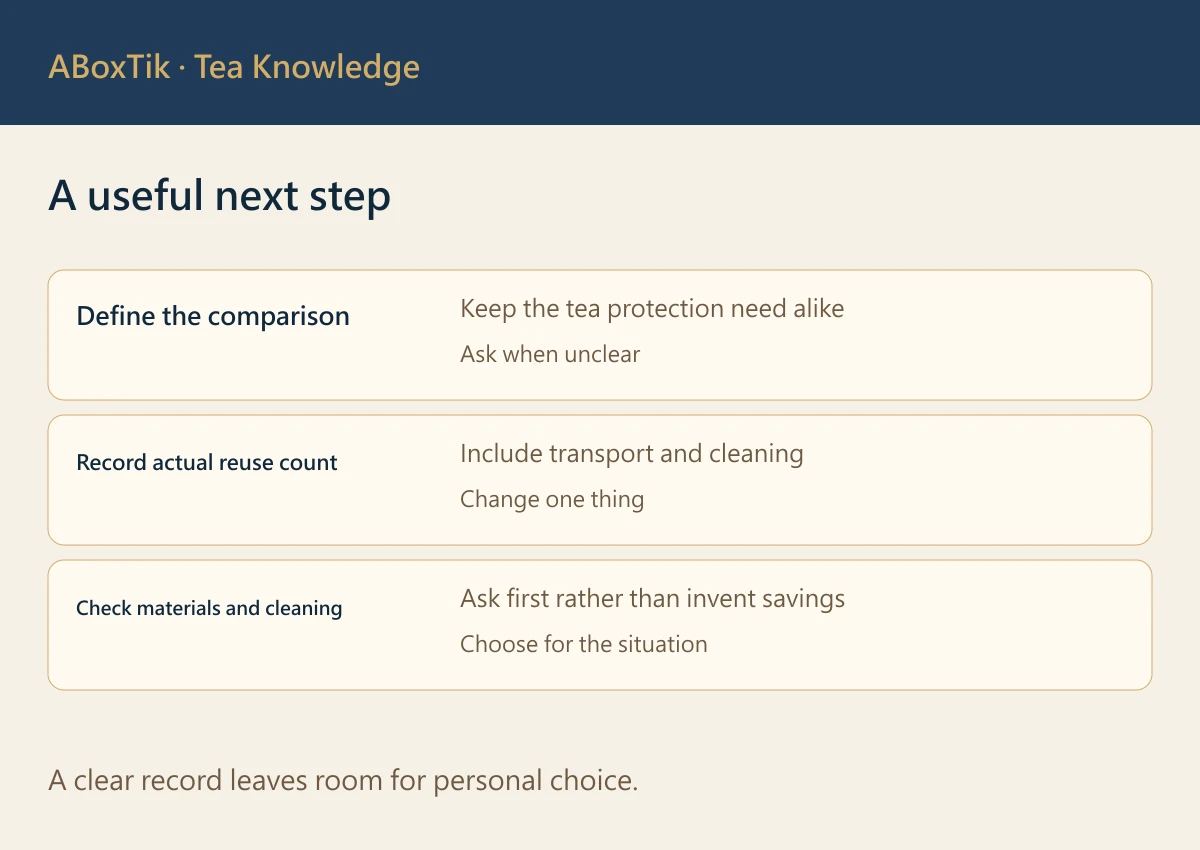
Two situations, two honest conclusions
In the first situation, an existing suitable tin continues storing tea after care as instructed, with the original inner bag retained. Record exactly that. To investigate material savings, ask what would otherwise have been bought or used. A bag that remains part of the arrangement cannot already be counted as eliminated.
In the second, several new tins are bought to organise a cupboard but only one enters regular use. Record the acquisitions and the unused state of the others alongside the working tin. Before the next purchase, check the actual need. An orderly photograph cannot stand in for a record of completed uses, even when all the lids match beautifully.
For either situation, keep the question small enough to answer. Did a particular component stop being used? Was another delivery made solely to obtain a refill? What did cleaning require this time? Answering one question accurately is more useful than collecting several unrelated percentages. A resource record can grow with the routine rather than arriving as a finished environmental verdict.
Give the tea and tin a workable routine
Choose one tin today and note its purpose, the alternative it replaces and the information to keep next time. For a practical household routine, that small card may already be enough. If preparing environmental copy, use the low-carbon tea claim checklist to check figures and scope. Long use is worth recording, and precise wording is worth keeping beside it.
Choose tea by flavour, manageable quantity and real drinking habits, using the current ABoxTik Taiwan tea collection information. Give the tea a plan to be enjoyed and the tin an actual job. Every opening does not need to become a polished environmental score.

Related reading and tea choices
Sources
- UNEP: Topic Sheet on Reuse Schemes
- European Commission JRC: Life-cycle assessment methodology and packaging reuse
Sources checked: 29 October 2026.