Tea Knowledge
Tea Portion Containers: Choose Bags or Tins by Routine
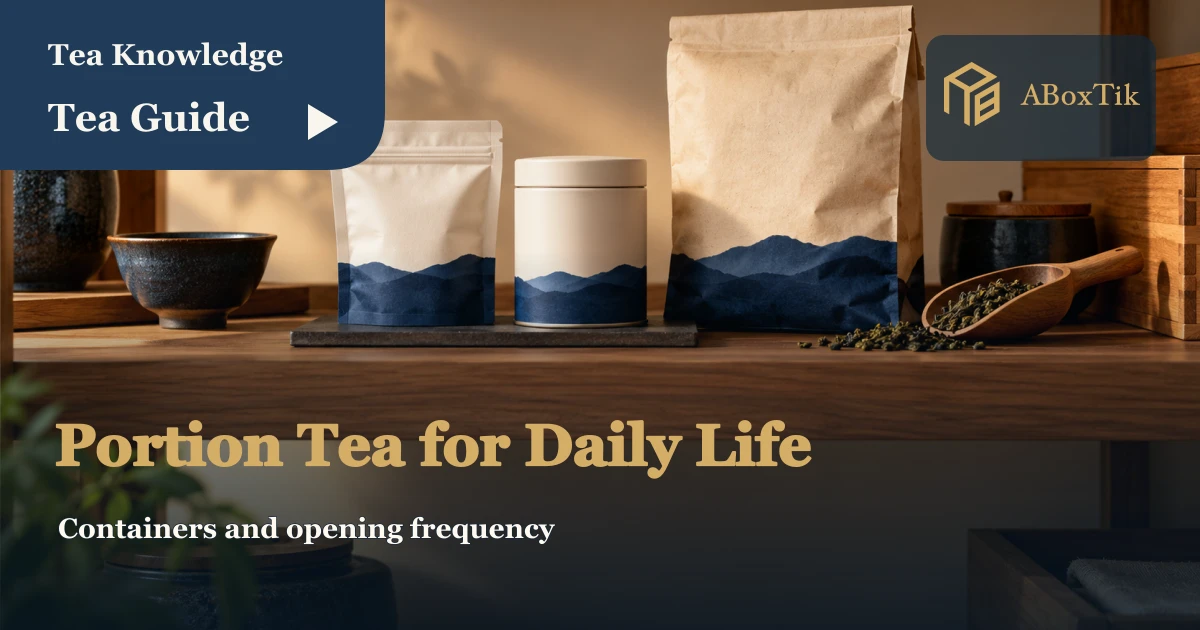
Keep a useful portion close, and clear information beside it. Small routines can be thoughtful care.
Choose tea portion containers by opening frequency and the amount used, then compare light protection, closure, odor and handling. A small working portion can suit daily use; unopened reserves often belong in their original sealed packaging. Keep the tea name, lot reference, opening date and original best-before information. Moving tea into a tin does not restart its shelf life.
A matching row of small tins can look satisfying, but the cupboard does not need a group photograph at the tea’s expense. Ask how often each container will open before choosing its color. That question usually helps the tea more and leaves fewer tins to wash.
Divide the routine into three opening patterns
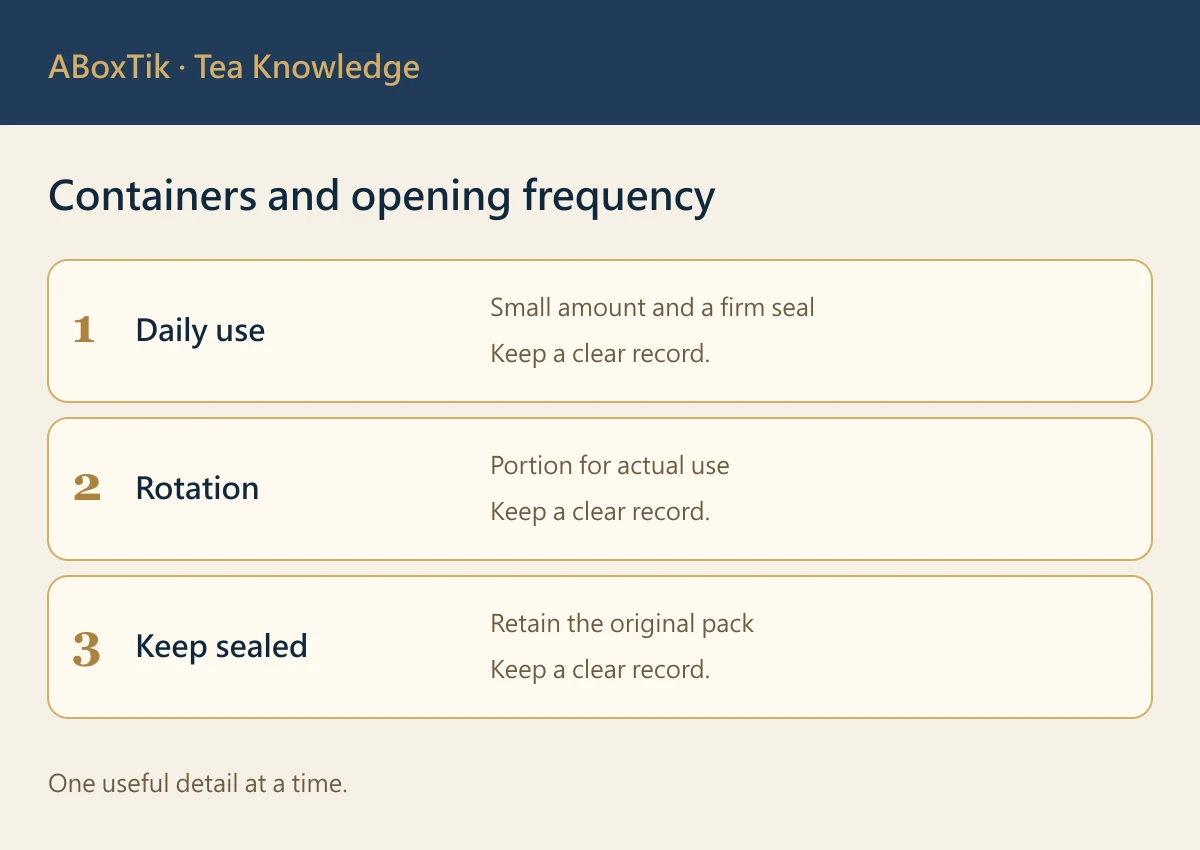
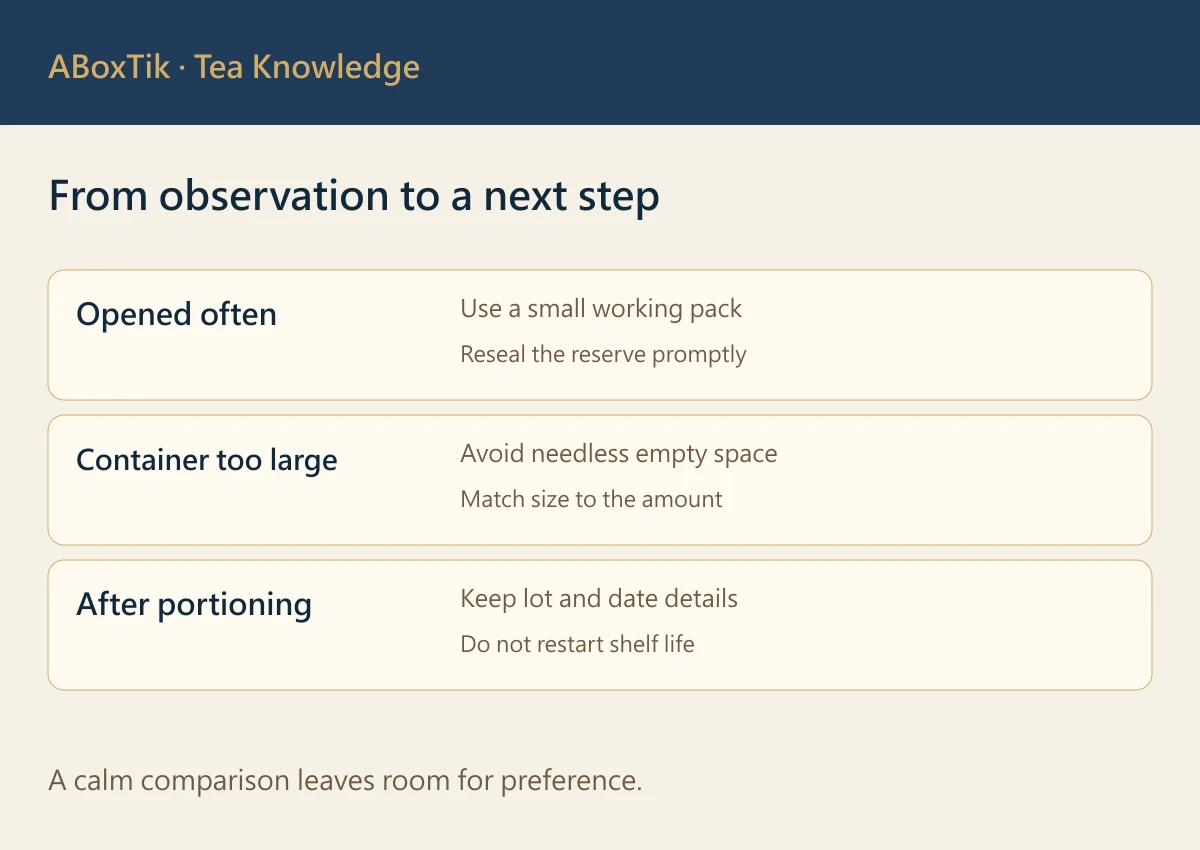
One group is tea used regularly, with a manageable working portion near the brewing area. Another is tea rotated among several choices, portioned according to actual use. The third is a reserve not yet needed, kept with its intact packaging and information. There is no universal weekly or monthly portion suitable for every household.
If the amount is unclear, record a few real leaf doses before choosing a small portion. The whole-leaf bag guide, gift assortment guide and storage guide help interpret existing packs. Outer box size alone does not show how the contents are protected after opening.
| Routine | Container approach | Check |
|---|---|---|
| Daily use | Small, easy-to-close working bag or tin | Closure and dry handling tools |
| Several teas in rotation | Small batches matched to use | Clear labels and a resealed reserve |
| Not yet needed | Retain the original intact pack | Follow its storage directions. |
| Short trip | Manageable travel portions | Crush protection, closure and instructions |
For bags, inspect the closure; for tins, inspect the whole structure
A small bag makes portioning convenient, but check whether its seal closes fully, whether tea fragments obstruct it and whether the material is damaged. A transparent bag does not become light-protective because it is small. If an outer layer is needed, consider how the complete arrangement stays dry, closed and protected from light.
A tin offers convenient access, but a lid alone does not establish a tight seal. Inspect the joint, lid design and interior odor, then choose a size suited to the quantity. Do not compress leaves to fill it. Nor does a small working portion require a very large tin that opens every morning mainly to welcome another meeting of air.
Metal, glass and other material names do not evaluate the complete item. Glass needs attention to light exposure; every container needs appropriate intended use, sound surfaces and suitable cleaning instructions. Official tea-packaging guidance highlights moisture and gas protection, absence of odors, light protection and resistance to crushing. Appearance alone cannot confirm those properties.
Arrange the work surface, tools and containers before opening tea
Use clean, dry, suitable containers and scoops without obvious odors. A freshly washed tin still containing moisture is not ready for dry tea. A container previously used for coffee, spices or strongly scented foods needs a careful odor check. Choose a work area away from sinks, steam and active cooking.
Prepare labels and the required portions first, then open the original pack. Seal the remaining reserve promptly after taking what is needed. If the original small sealed portions already suit the routine, repacking may add work without improving use. The travel guide considers taking tea away, while the home tea-bar guide helps arrange daily access.
Make the process easy to repeat. A container that requires several fiddly steps may be left open in a hurry. A scoop stored where it collects steam can undermine an otherwise thoughtful arrangement. These practical details deserve attention before buying a complete matching storage set.
Keep four core label details and retain the original information
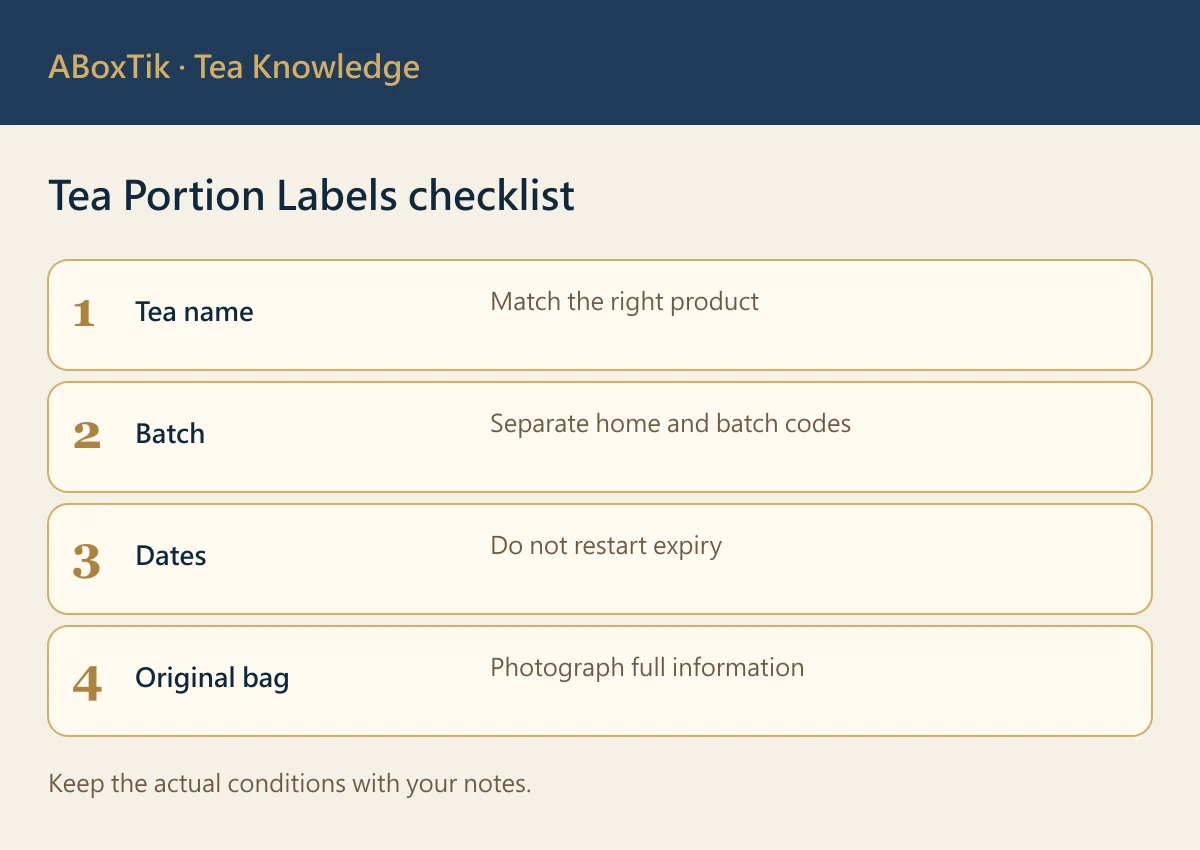
Retain the tea name, a lot or original-pack reference, the opening date and original best-before date. A separate portioning date can record this operation, but it does not replace the original opening date or restart the shelf life. Keep ingredient, supplier and brewing information on the original label or in a clear photograph.
Do not mix different lots in one tin and label everything with the newest date. Keep older and newer portions identifiable so the label continues to describe the contents. The traceability guide explains another information check, and the drying and moisture guide distinguishes repacking from processing the tea again.
If several people share the cupboard, use a naming system they can understand without asking its organizer. A familiar tea name plus a lot reference can be more useful than a private code alone. Put reserve information where the next person can find it; good storage includes the ability to identify what is being brewed.
Try one small portion before reorganizing everything
Begin with one regularly used tea and one suitable container. After several uses, ask whether it pours or scoops easily, closes reliably and remains identifiable. Is too much tea still open at once? An attractive tin that is difficult to operate can be replaced with a simpler form. The leaves do not need to cooperate with a storage photograph.
Changing containers does not justify extending the printed date or adding refrigeration to every tea routine. Follow the particular pack’s directions. If tea was already kept cold, handling and warming need to fit that packaging method so repeated operations do not introduce unnecessary moisture. Confirm the actual conditions rather than adopting a universal container ranking.
Before portioning, ask whether this pack needs opening now
Arrange the cupboard in three groups: currently used, likely to open soon, and not yet planned. Check closures and dates in the first group. Ask whether portioning serves a real purpose in the second. The third can remain intact. This sequence reduces opening several packs merely to organize them and reveals actual household use without a full inventory exercise.
For shared storage, agree where the scoop belongs and face labels toward the person reaching for tea. When topping up a small tin from a larger bag, keep dates and lot references aligned with the contents. If the two portions may come from different lots, retain them separately. Even an attractive container cannot reconstruct lost batch information.
If fragments obstruct a bag closure, address them appropriately for that packaging and check that the seal actually engages. If a lid is loose or an odor remains, choose another suitable container rather than passing the problem to the next opening. These small checks make portioning a practical improvement instead of merely moving tea into a different object.
Once the routine works, keep it modest. There is no obligation to replace every pack with a matching tin. A reliable closure, a readable label and an amount you will use are the useful parts of the arrangement.
Follow ABoxTik: make the cupboard easy to understand and use
For a format that may reduce portioning work, review the current quantities and packaging in ABoxTik’s two-box tea gift or Classic Taiwan tea selection. The mug-brewing guide helps plan daily access, and the aroma guide offers a way to enjoy what has been opened.
Tonight, organize just one tea already in use: check the date, inspect the closure and choose a manageable working amount. The cupboard does not have to become a showroom. Finding the tea, sealing it properly and finishing it comfortably is already thoughtful everyday care.

Related reading and tea choices
Weekly tea portions: let the label travel with the leaves
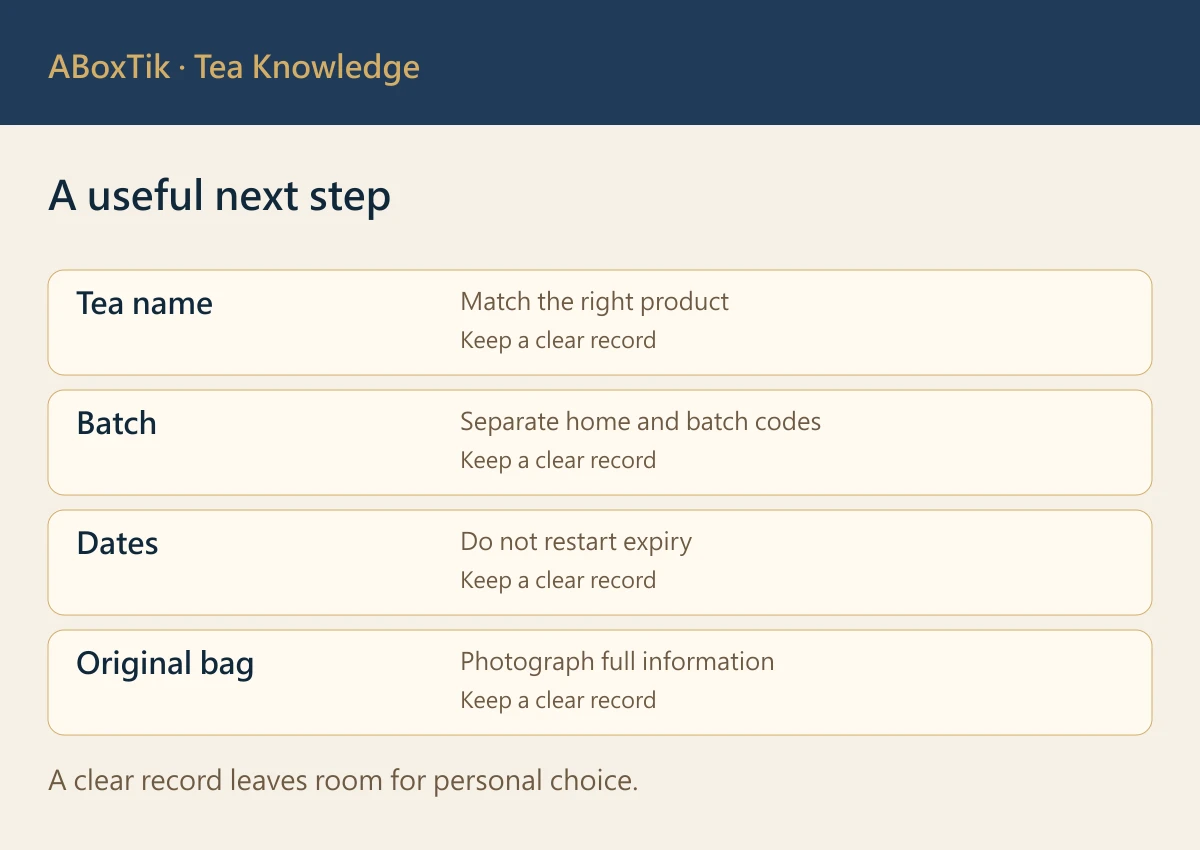
Treat the original package as the main record and each small label as a pointer to it. Photograph both sides of the original bag, then give each working portion a short reference that leads back to the correct photograph. “Oolong, packed today” is rarely enough when several teas share a cupboard. The leaves may move into a smaller home; their identity should move with them.
Weekly portioning describes a household routine, not a newly established shelf life. Choose an amount that matches actual use and follow the original storage directions. Keep the original expiry date, the first opening date and the portioning date as separate fields. A fresh bag does not restart a product’s date.
| Field | How to record it | Purpose |
|---|---|---|
| Tea name and original-bag reference | Product name / A01, for example | Identify the right product |
| Original batch identifier | Copy it exactly; if absent, link a household code to the package photograph | Keep a household reference distinct from a supplier’s batch code |
| First opening and portioning dates | Use two separate fields | Retain the handling history |
| Original expiry and storage directions | Copy the original information | Avoid inventing a new date |
| Photograph location | A recognisable folder or filename | Retrieve ingredients, supplier and brewing details |
Prepare the labels before opening the bag. Use suitable clean, dry containers and tools, and keep each portion connected to one original source batch. Where the original package has no batch number, A01 simply means “the bag shown in this photograph.” It is not an official traceability code. Explain that distinction if another person will use the tea.
When replenishing a container, avoid pouring a new batch over an unidentified older remainder. Finish the existing portion and clean and dry the container according to its instructions, or use a separate labelled container. If batches have already been mixed, retain both source records and dates. Do not let the newest date stand in for the entire mixture; ask the supplier when handling or remaining dates are unclear.
One short practical test is enough to begin. Label a portion of a tea already in use, then ask another household member to find its original package photograph. Can they identify the product, original date and storage directions without needing an explanation? If not, simplify the code or filename. A label is useful when it helps someone else find information, not merely when its handwriting looks attractive.
Keep only the number of open portions that the household can reasonably use. More small bags also mean more labels to maintain and more handling. Where the original individually sealed format already suits the routine, leaving it intact can be the easier choice. The aim is a clear, workable cupboard rather than a small administrative department.
At the next refill, check that the remaining tea, label and stored photograph still agree. Remove obsolete labels before a container changes contents. That small habit prevents yesterday’s tea name from introducing tomorrow’s tea by mistake.
Sources for this addition
Sources
- Tea and Beverage Research Station: packaging and storage
- Tea and Beverage Research Station: expiry-date questions
Sources checked: 24 October 2026.
Do you need gloves to portion tea? Start with clean, dry hands and tools
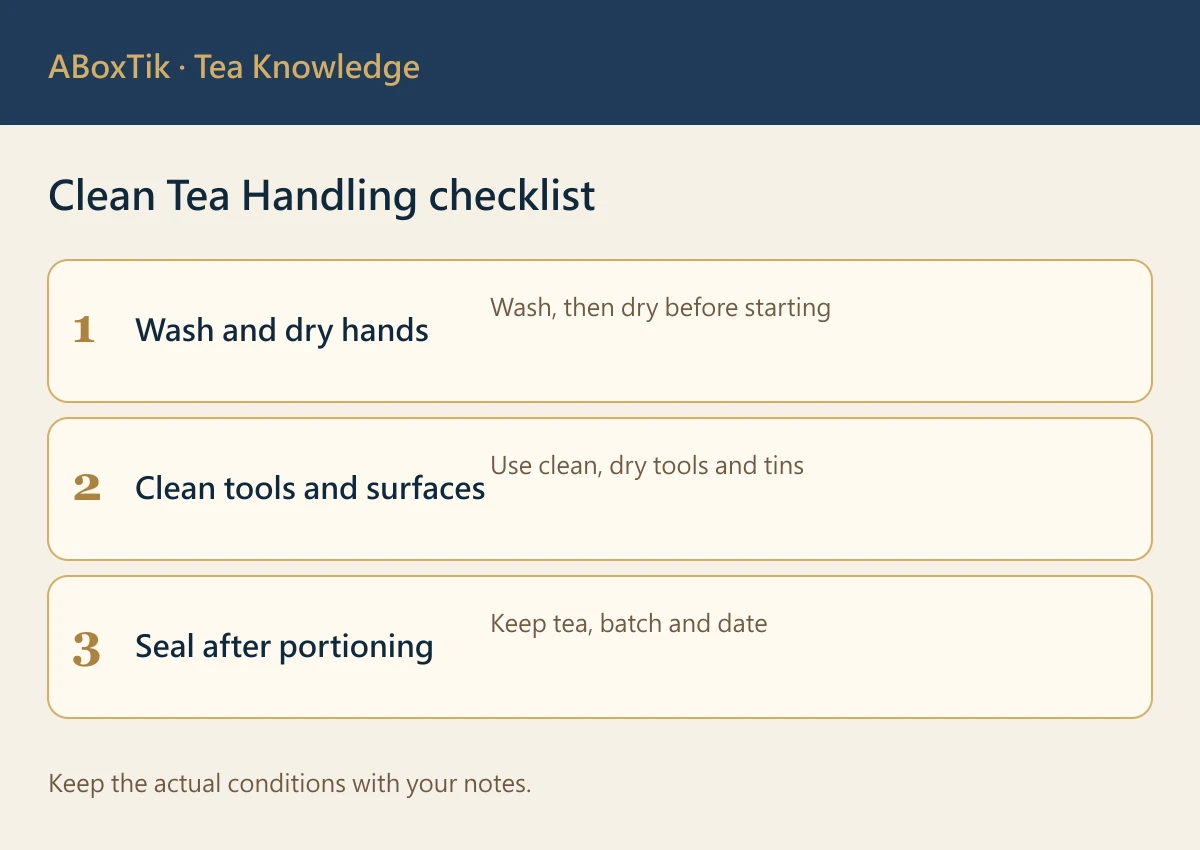
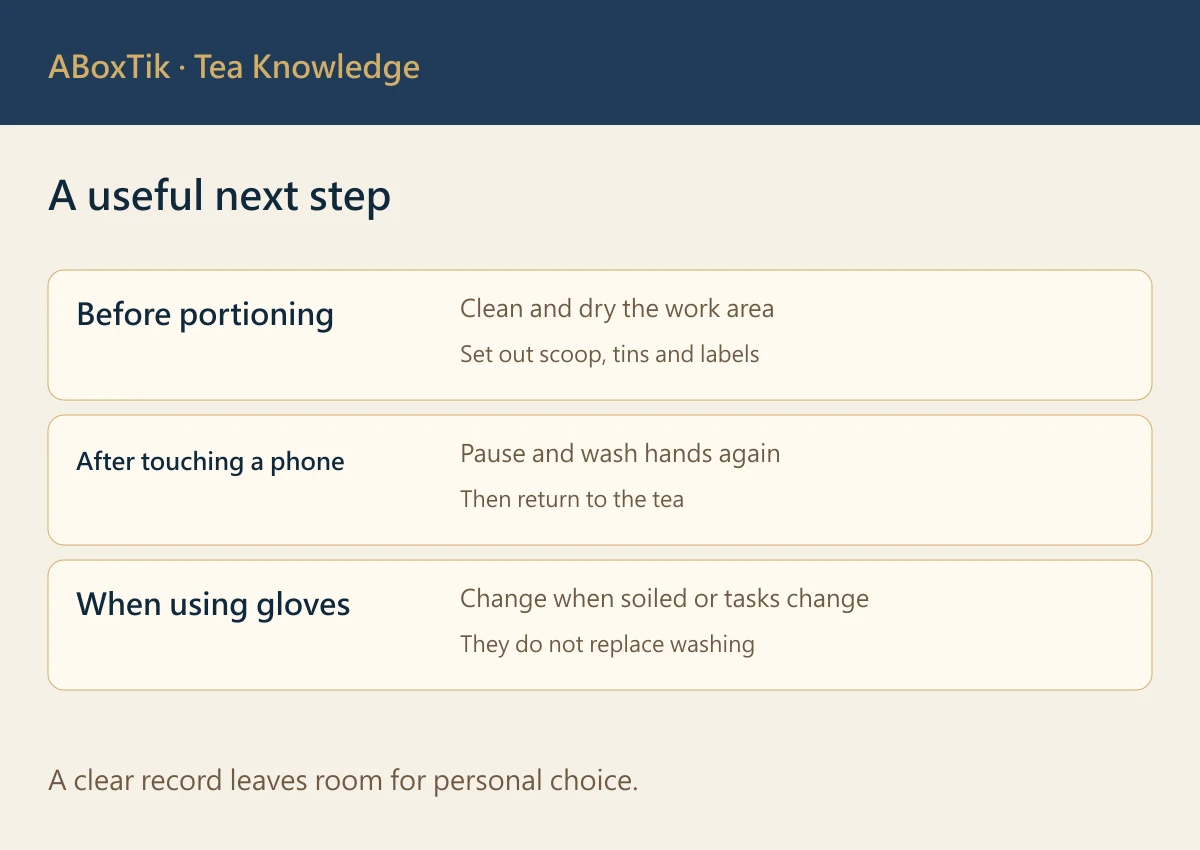
For portioning dry tea at home, wash and dry your hands, prepare clean, dry food-contact containers and utensils, and use a utensil to handle the tea. Gloves do not replace handwashing. If using disposable gloves, wash hands before putting them on and after removing them, change them when dirty or damaged and when changing tasks, and do not reuse them. Treat gloves as a tool that needs attention: touching a phone and returning to the tea can transfer what was on the phone.
| When | Practical check |
|---|---|
| Before | Wash and dry hands; check that the tools, containers and work surface are clean and dry, away from the sink and steam. |
| During | Use a dry utensil; wash hands again after touching other objects and change gloves as needed. |
| After | Seal portions and the original package; retain the tea name, batch and dates, and put tools away. |
Hong Kong’s Centre for Food Safety explains that gloves do not replace handwashing and should be changed when contaminated, damaged or moving between tasks. These practical steps concern handling tea at home. Commercial operations should arrange procedures for their own premises and applicable requirements, checking with the relevant authority. If tea becomes wet or has a mouldy smell or another concerning change, stop using it and ask the supplier; repackaging does not resolve the issue.
Arrange labels, tools and the amount to be portioned before opening the original package. A little preparation means each portion can be closed promptly and found easily later.
Centre for Food Safety: guidance on gloves for food handling (accessed 29 October 2026).