
Tea Knowledge
Tea Cloth Placement for a Dry Tea Table

A thoughtful cup begins with a few clear, practical details.
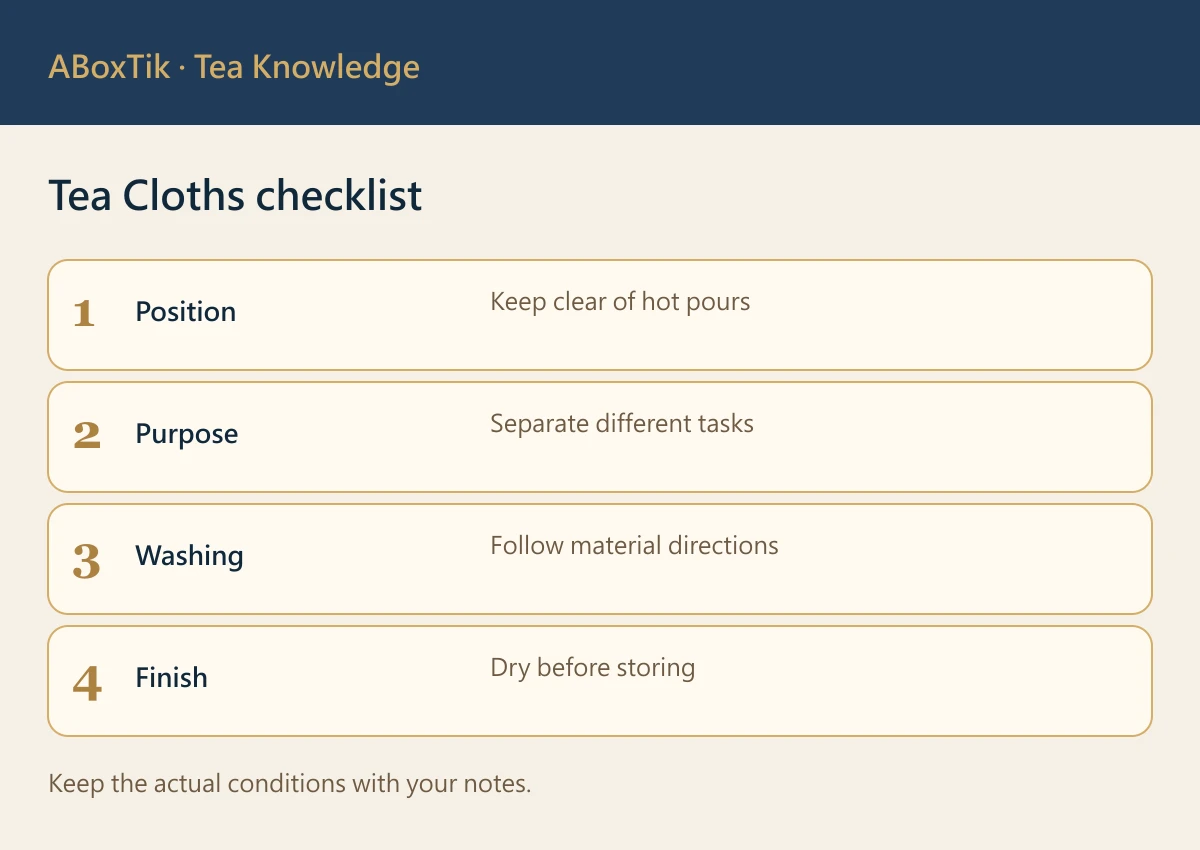
Place a tea cloth on a clean, reachable part of a dry tea table where it will not obstruct hot water or cups. Give cloths separate jobs: one for drops on the outside of utensils and another for spills on the table. Replace a wet or soiled cloth, wash it according to its care instructions and let it dry thoroughly. A small table can work beautifully when each item has a clear place.
A dry tea setup is an arrangement that makes the surface easy to keep orderly; it does not mean a drop of water can never appear. A cloth is there so you know what to do when it does. It should not have to compete with the teapot for a route across the table.
Make three working zones
| Zone | What belongs there | What to leave clear |
|---|---|---|
| Brewing | Teapot or gaiwan and serving pitcher | A stable surface and room to pour |
| Dry cup area | Drinking cups, tea and packaging | Space away from likely drips |
| Wiping | Clean cloth and a suitable water-catching vessel if needed | A route that does not cross hot water |
Place the utensils you actually use, then rehearse the movements with empty hands: lift, pour, set down and pass a cup. If reaching the cloth means crossing a guest’s cup, move it. On a small table the clean edge beside the brewer can be practical; perfect symmetry is not a requirement. Before using hot water, check that the surface and utensils are stable and move cords and clutter out of the way.
Give each cloth one job
Use separate cloths for wiping drops from utensil exteriors and cleaning spills from the tabletop. Different colours or folds can make the jobs easy to remember. Keep floor-cleaning cloths and other soiled cleaning materials apart. A cloth used on a dirty surface should not be used directly on cup rims or the insides of utensils. Replace a cloth that falls on the floor or touches an unclean surface.
The cloth need not touch tea leaves or the drink. Avoid wiping a cup rim and then wiping the table with the same section. Put a hot vessel down securely before cleaning around it, and avoid hot surfaces. If a spill is larger than the cloth can manage, stop pouring and use a suitable cloth or container. Keeping one clean spare is more useful than asking a soaked cloth to continue working overtime.
Adjust for one person or a group
When brewing alone, keep your cup where it is comfortable to pick up and the cloth somewhere it will not brush the rim. With guests, clear a route for passing cups so nobody has to reach across the hot pot. If the setup is likely to drip, arrange a water-catching vessel and keep wiping separate from the cup area. After the first round, notice where water collected and adjust the spacing next time.
Handedness, table depth and vessel size differ, so there is no single correct side for every cloth. Practise once with room-temperature water to check lifting, setting down and reaching before introducing hot water. The porcelain brewing guide covers vessel cleaning and pouring; the hospitality guide considers group size and serving rhythm.
Wash, dry and store after use
Follow the cloth maker’s care instructions, remove tea residue and rinse away cleaning products as appropriate. Let the cloth dry thoroughly before storing it in a clean place. Do not leave a damp cloth crumpled beneath a tray for a long time; replace one with persistent odour or obvious soiling. Follow each utensil maker’s care instructions too, rather than assuming every piece can withstand the same temperature or appliance.
Before clearing the table, check whether the dry zone remains clean, whether the used cloth needs washing, and whether a clean spare is ready. Those small habits make the next pot easier to prepare and leave more room for the conversation around it.
Choose a cloth that fits your routine
Begin with the size of the table and the way you reach. A very large cloth may hang into the pouring area or occupy the space needed for a cup; a very small one can become saturated quickly. Fold it to a manageable size and keep a clean spare. You do not need to buy every colour before making tea. Check the maker’s care instructions for the material rather than assuming that every cloth can be washed in exactly the same way.
If using two cloths, agree on an easy distinction: perhaps one colour for utensil exteriors and another for the table, or a different fold for each. The colour is simply a household cue; it does not confer a special cleaning property. When someone else makes the tea, a short explanation of each cloth’s job is kinder and more useful than expecting them to guess.
What if the base of the pot drips?
First set the pot down securely and make sure your hand will not touch a hot surface. Use the clean cloth assigned to utensil exteriors to deal with the drops. If a vessel is too hot or awkward to hold safely, do not force the movement; wait or choose another suitable way to deal with the water. Return the cloth to its designated area afterwards, away from cup rims and loose tea.
For tea spilled on the table, move cups that could be knocked over to a safe position first, then use the tabletop cloth to contain the liquid. If water approaches an electrical appliance or cord, stop using the setup and follow the equipment’s safety instructions. Do not continue pouring while chasing the spill. A tea cloth is useful, but it does not need to be promoted into the solution for every accident.
Make a small handoff card
Three notes are enough: where the utensil cloth lives, where the table cloth lives, and where used cloths go for washing. If family members take turns, point out the dry cup zone and any vessel used to catch water before starting. These are practical shared positions, not a test of hospitality etiquette. Guests do not need to memorise a rulebook before they can have tea.
Adjust the arrangement to what actually happens. If reaching the cloth requires stretching across cups, move it. If drops often reach the dry zone, shorten the pouring path or move the catching vessel. Change one position and observe whether it helps. The comfort of a tea table often comes from these quiet adjustments, none of which requires a formal announcement.
Check once before and once after
Before brewing, check that the surface is stable, the assigned cloths are clean, and cups and tea are away from likely drips. Place a water-catching vessel where an elbow or sleeve will not easily knock it over. Move unnecessary bags and cords away so the pouring area stays clear. Follow the instructions for each vessel when using hot water.
Afterwards, handle spent leaves and used cloths separately, then clean the surface and utensils as appropriate. A soaked cloth should be washed and dried rather than folded back into its clean place. A second clean cloth can take over while the first dries. Shared, clearly marked positions help the next person restore the setup without needing to guess what happened during the last session.

Related reading and tea choices
Sources
Sources checked: 30 October 2026.