
Tea Knowledge
Tea Stems: A Practical Sorting Guide
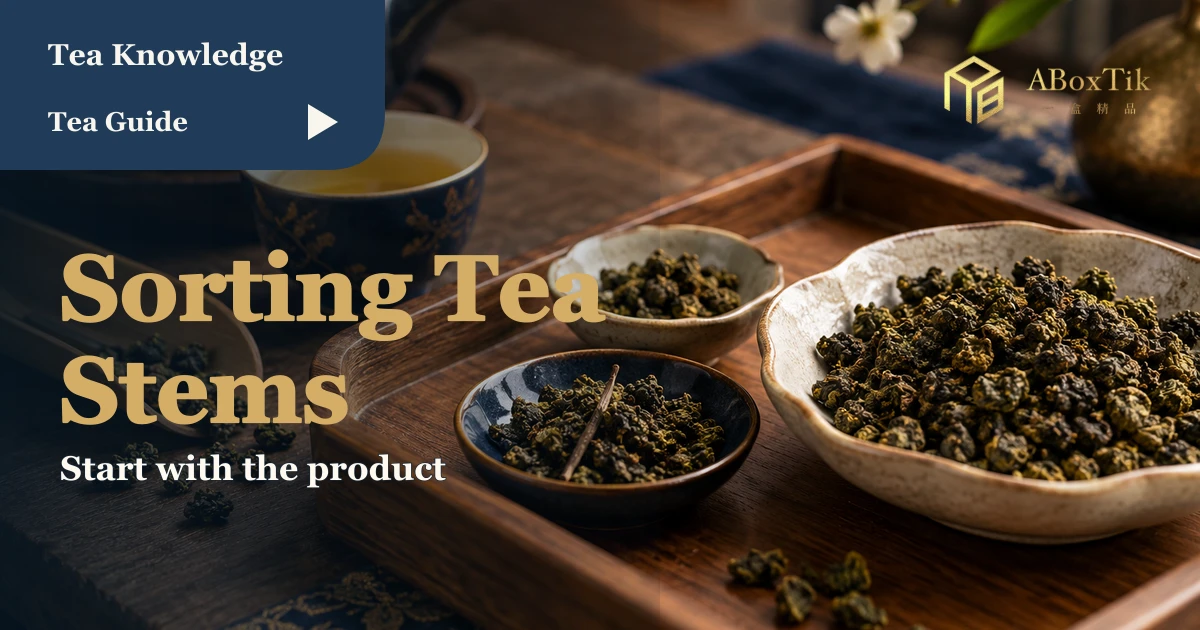
A thoughtful cup begins with a few clear, practical details.
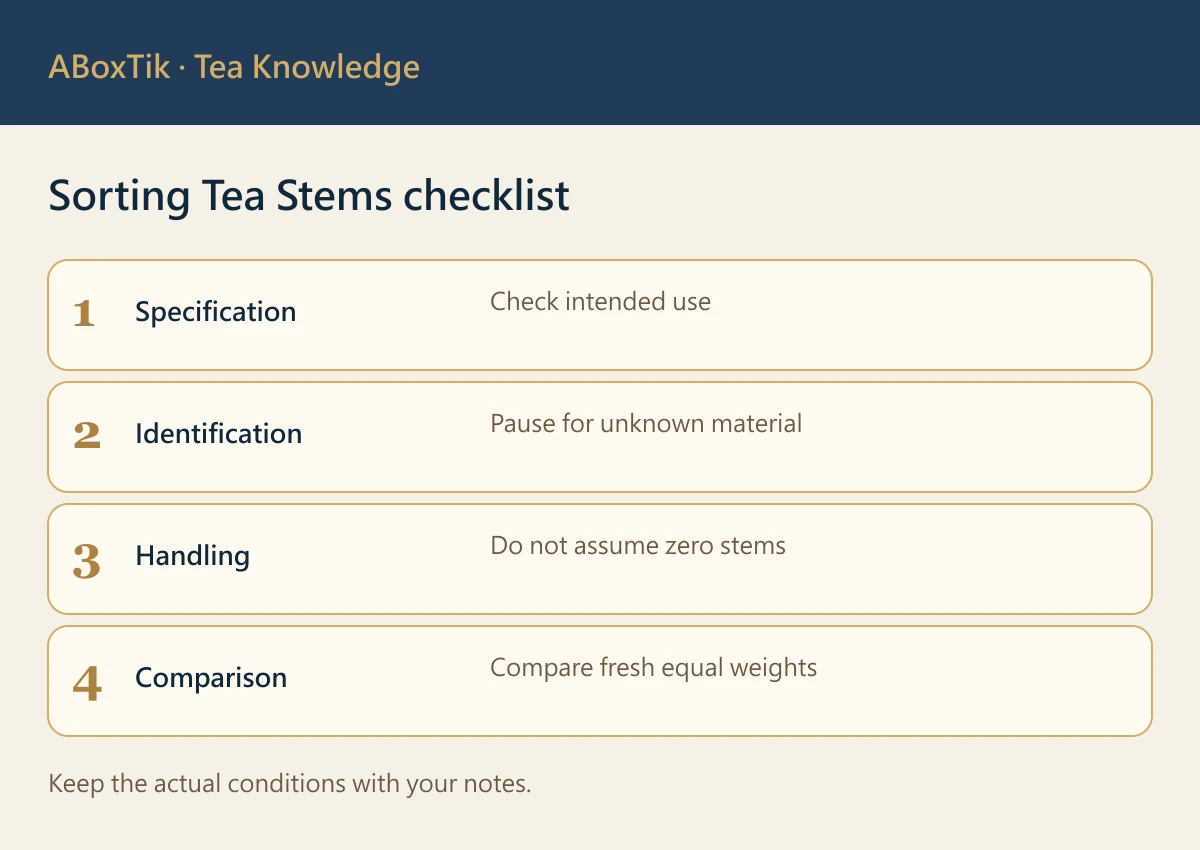
Tea stems do not always need to be removed. Start with the type of tea, the product description and its intended use. A tea sold specifically as stem tea or as a leaf-and-stem product may include stems by design. If the contents look markedly different from the description, retain the packaging, take a photograph and ask the supplier. When an object cannot be identified as tea, separate and retain it, pause use and seek help. The number of stems alone cannot establish quality, safety, origin or chemical composition.
It is understandable to pause over a thin, twig-like piece in a new bag of tea. There is no need to hold a dismissal hearing for every little stem. Separate three questions: what was this product intended to contain, what can actually be identified, and what would you enjoy in the cup? Each question has a different route to an answer.
Begin with the tea and its specification
Read the product name, ingredients, format and any instructions for the batch in hand. Some products feature stems; others may retain some stem material as part of a leaf tea. Practices and expectations vary with the tea and its intended use. The producer or supplier can explain what this particular product contains. Do not turn the appearance of one tea into a universal template for all the others.
It also helps to ask what stage the material has reached. Is it a packaged tea intended for brewing, a product identified as stem tea, or material supplied for a different purpose? If that is not clear, ask about its condition, intended use and preparation. Ask the supplier about initial processing and later sorting. Here the narrower question is how to recognise a possible stem, decide what to do with it and communicate a concern.
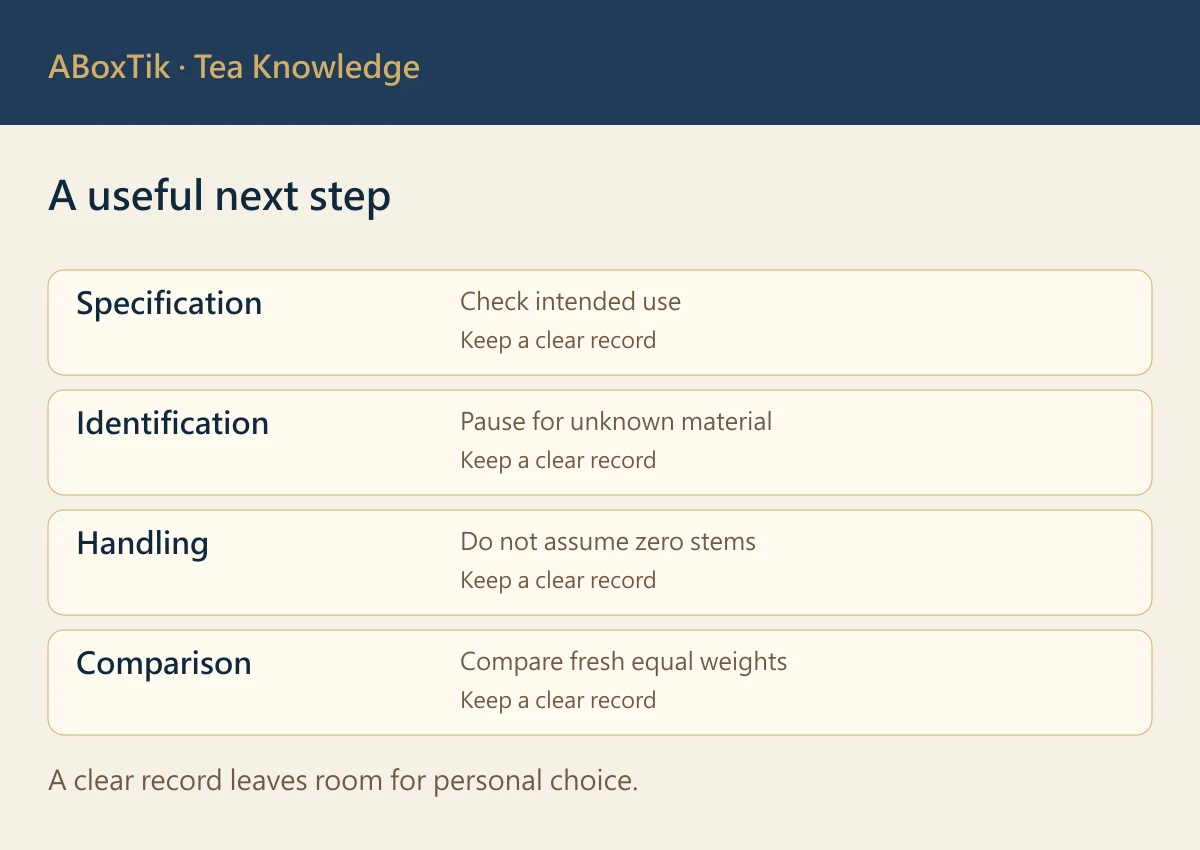
| What you notice | A useful next step | Do not infer |
|---|---|---|
| A product identified as stem or leaf-and-stem tea | Read its ingredients and intended use; prepare according to its instructions | That stems automatically mean lower quality or greater sweetness |
| A few stem-like pieces in a leaf tea | Compare with the product description and ask if uncertain | Grade or safety from a count alone |
| An unidentified object or contents unlike the description | Keep the object, package and batch details; pause use and contact the supplier | That a photograph or a taste proves it is tea |
| Curiosity about a personal comparison | Use fresh equal-weight portions and record the preparation | That any difference isolates a single chemical |
Distinguish an identifiable stem from an unknown object
A tea stem is the stalk associated with tea shoots and leaves. The appearance of finished material varies with raw material and processing. Visual inspection can help you formulate a question, but drying, rolling and breakage can make identification difficult. A twig-like appearance alone is not enough to establish that an unfamiliar object belongs in the product.
Use a clean surface or utensil to set an unidentified item aside. Keep the original package, batch information and proof of purchase if available; photograph the item and its surroundings and ask the supplier for guidance. If the package is damaged, the tea is damp, there is an obvious mouldy odour or another concerning condition, stop using it and contact the supplier. Removing a visible object, rinsing the tea or making another infusion does not establish that the remainder is safe. When you cannot identify what you are seeing, pausing is a clearer decision than guessing.
What can stem sorting do during processing?
A Tea and Beverage Research Station machinery description refers to refining crude tea by picking out stems and screening powder before further drying. It is an example of work that can occur during later processing, not a statement that every tea passes through identical steps or that all finished tea must be stem-free. The target product, desired form, available equipment and producer’s decisions matter. Ask what was done to the batch rather than reading a complete factory record into its appearance.
Sorting is also distinct from rolling and shaping and fixation. Rolling concerns how leaves are worked and formed; fixation concerns heat treatment at a particular point in the process. Later sorting addresses the material selected for a product. A single stem cannot reveal all of those operations, their temperatures or the tea’s place of origin.
Should you remove stems at home?
If the item is clearly sold as a stem-focused tea, begin with the maker’s instructions and decide whether you enjoy the result. Removing the ingredient that defines the product merely to match an imagined appearance may leave you comparing something different from what was intended. With identifiable stems in an ordinary loose-leaf tea, you might keep them, or cleanly separate a small portion for a personal comparison. If the contents differ from the description, ask the supplier instead of assuming that the difference is either acceptable or a defect.
For a tea bag, begin with the package instructions; opening every bag for inspection is not necessary. If you have a concern, retain unused bags and the outer package and contact the supplier. A strainer may help manage loose leaves from a torn bag, but it cannot identify an unknown object or establish safety. When browsing the Taiwan tea collection, check the current items and specifications rather than treating the collection name as a guarantee about the appearance of every leaf.
A personal comparison using fresh, equal-weight portions
This simple observation exercise helps you record a personal preference. Take two fresh portions from the same package. Leave portion A in its original composition. From portion B, use clean tools to remove the pieces you can identify as stems, then weigh the remaining material and add more similarly sorted tea until its total dry weight matches A. Note what was removed and how you handled the sample; there is no need to present one observation as a recommended stem percentage.
Use comparable vessels, the same water source, water volume, temperature and steeping time, and decant at similar moments. Begin with the product’s brewing guidance. Handle hot vessels carefully and wait until each cup is comfortable to taste. Record aroma, perceived strength, mouthfeel and preference separately. If you would like to reduce expectation, a companion can label the cups and reveal their identities after you have both written your notes. Finding no noticeable difference is a useful result too.
Equal weight does not make the samples chemically identical. In B, removing stems and replacing the lost weight changes the proportions of leaf and other tea material. Variation in the original mixture and personal perception can also affect the result. Do not attribute a difference to one compound, sugar or caffeine, or turn one tasting into a rule for all teas. If you repeat the exercise, take fresh dry tea and record the new conditions. A second infusion of already brewed leaves is not a fresh parallel sample.
| Record | A: original composition | B: stems removed, brought back to equal weight |
|---|---|---|
| Tea, batch and dry weight | ___ | ___ |
| Water, temperature, time and vessel | ___ | ___ |
| Aroma, strength and mouthfeel | ___ | ___ |
| Preference and next question | ___ | ___ |
Questions worth keeping separate
Does more stem mean the tea is poor?
Not by itself. Check the intended use and specification, then consider the available source information, storage condition and your own experience. If a particular item differs from its description, ask the supplier about that item rather than using an unrelated tea as a ruler.
Does stem-free tea mean it is safe?
No. Appearance is a limited clue and cannot establish hygiene or safety. If a package is compromised or the contents contain an unidentified object, pause and retain the information needed to ask the supplier. Picking out something visible does not answer the wider question.
Is there a universal amount to remove?
There is no single home-sorting percentage suited to every tea type and product purpose. Start with the product information and decide whether a small personal comparison would be useful. Do not turn that observation into a product specification or a safety threshold.
Return the question to the tea in front of you
Read the product, identify what you can, and then decide whether to keep, compare or ask. Taiwanese tea and its craft provides a wider view of varieties and processing, while leaf shape and rolling offers context for appearance. Clear information lets a small stem stop doing the work of an entire product history. Begin with a cup you understand, and let the next question wait until you are ready for it.

Related reading and tea choices
Sources
Sources checked: 30 October 2026.