
Tea Mixology
Tea and Chocolate Pairing: Labels, Sweetness and Three Comparisons
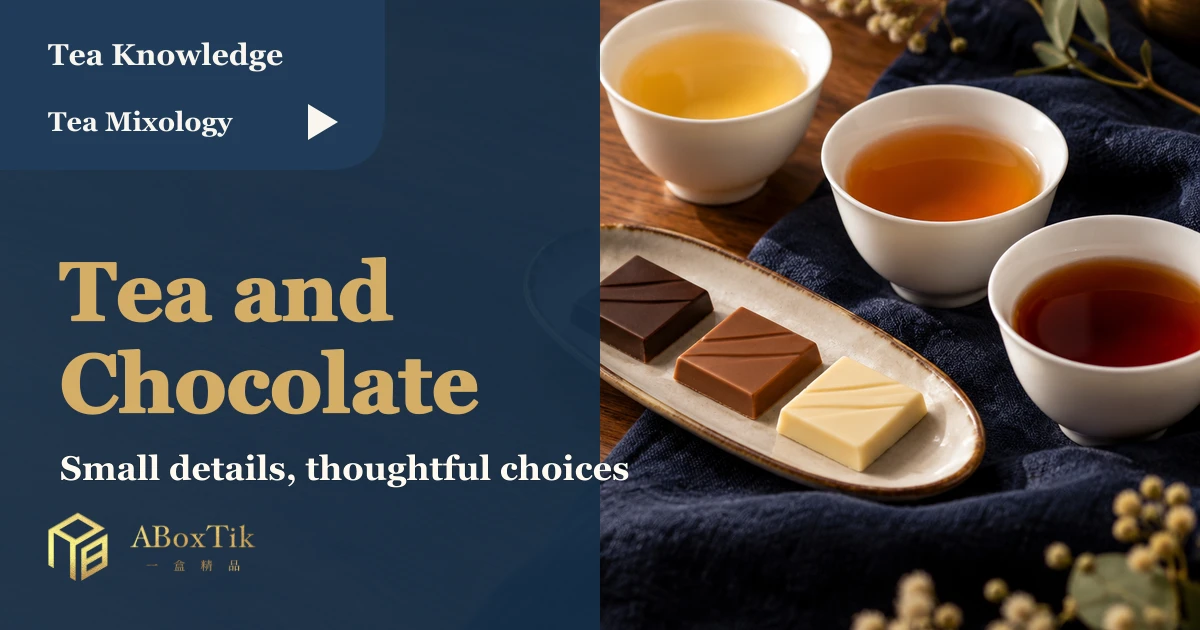
Start a tea and chocolate pairing by reading the full ingredient and nutrition information, with cocoa percentage as one clue rather than the whole answer. A percentage alone cannot tell you the sugar content, texture or what everyone will enjoy. Tea changes with the leaf and preparation too. Make one change at a time and write down your own response; there is no need to find a universal winner.
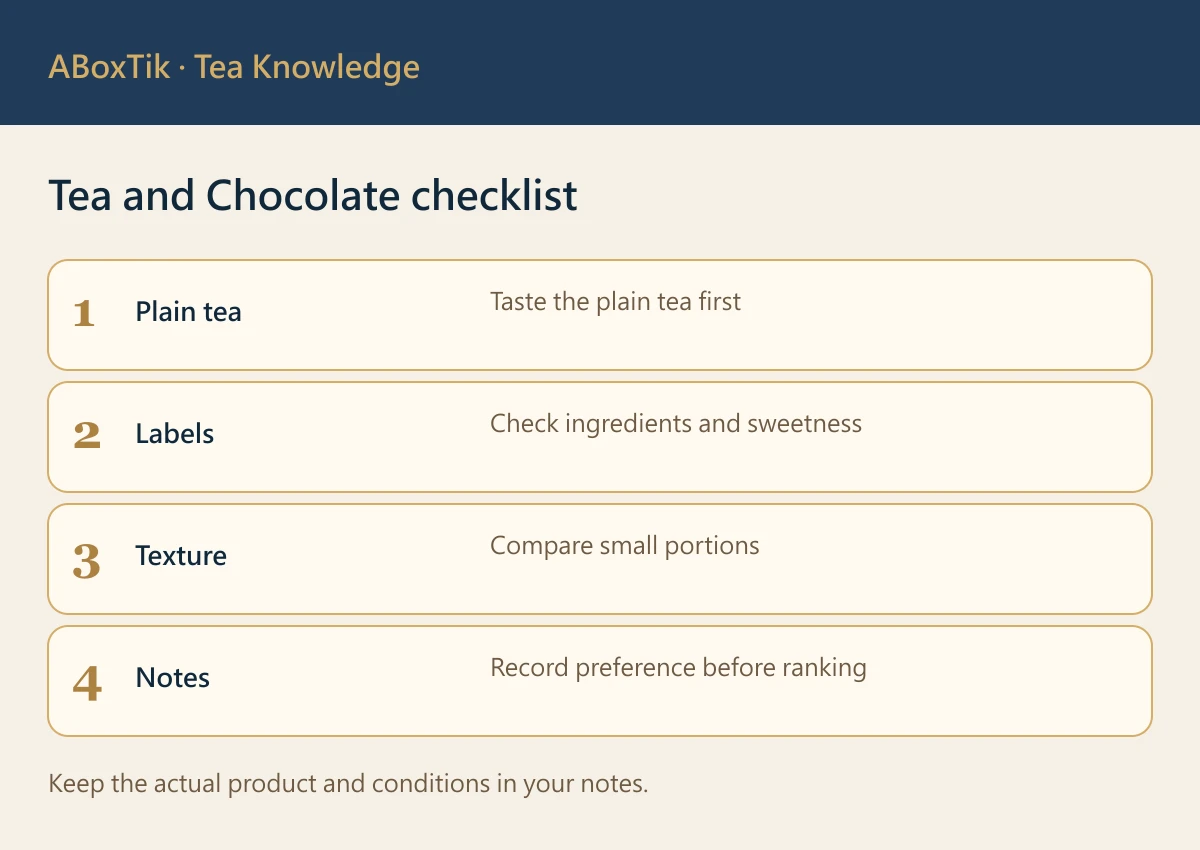
Look beyond the large number on the front of a wrapper. Check the product name, ingredients, nutrition information, serving size and allergen details. If two labels use different serving sizes, compare their stated figures on the same basis. Different recipes can still taste different, so do not infer sweetness from cocoa percentage alone. Before sharing, check the ingredients against each person’s needs.
| Note | What to record |
|---|---|
| Chocolate | Product name, cocoa percentage, ingredients, labelled sugar and serving size |
| Tea | Name, leaf and water amounts, water temperature, steeping time and serving temperature |
| Your response | What you notice in each separately and together; what you enjoy |
| Next time | What to keep and the one thing you would change |
Leave a measurement blank if you did not take it. The card is there to make the next cup easier to remember, not to grade anyone’s palate.
Three ways to compare
- One tea, two chocolates. Read both wrappers and note differences in ingredients, then try a small piece of each in the same way. Record which sweetness you prefer without attributing every difference to cocoa percentage.
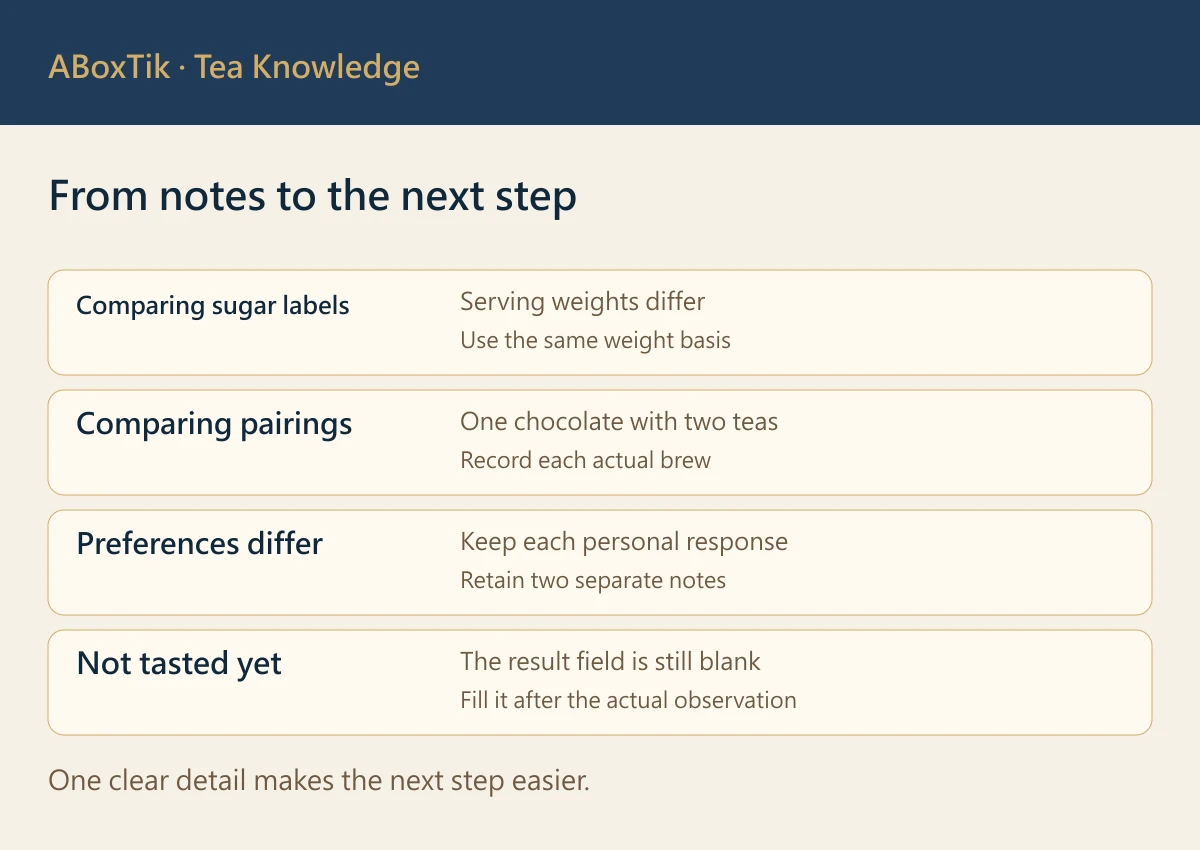
- One chocolate, two teas. Record each tea and how it was prepared. Compare your response to the same chocolate with both cups. Several features of the teas may differ, so keep your conclusion specific to those samples.
- One pairing, one brewing change. Keep the tea and chocolate the same next time and alter only the steeping time or another single condition. Start with the tea’s instructions and note what actually changed.
“I did not notice a difference” is a useful result too. If flavours linger, pause or sip water before continuing at a comfortable pace. Portions and ingredient choices should suit the people at the table.
One person may prefer a clearer tea flavour, while another enjoys the sweeter finish. Recording the actual products and preparation makes a later comparison more useful than writing only “oolong and dark chocolate.” The existing Taiwanese tea and cheese guide offers a different food pairing to explore with the same kind of observation card. Choose a tea and quantity that fit the occasion, check the current product details, and keep one combination in mind for another day.
What cocoa percentage and sugar information can tell you
The percentage on the front of a wrapper is one piece of information, not a complete sweetness ranking. Compare ingredients and nutrition labels as well. If two products use different serving sizes, first express the labelled amounts on the same weight basis. That gives a comparison of label figures; a person’s perception of sweetness can still differ with recipe, portion and individual experience.
For an arithmetic example, imagine one label lists 8 grams of sugar per 20 grams and another lists 9 grams per 25 grams. On a 100-gram basis those figures become 40 grams and 36 grams. These are invented numbers to illustrate the calculation, not claims about particular products. If both packages already provide a per-100-gram column, compare those columns directly. Keep cocoa percentage, sugar, ingredients and preference in separate spaces on the card.
Also notice what kind of product is being compared. A filled chocolate, a bar with nuts and a plain bar may differ in several ingredients at once. Their labels help you understand what is present, but they cannot tell you exactly what another person will notice in a cup of tea. Avoid turning one front-of-pack number into a prediction about every flavour or every drinker.
Prepare a small, comfortable comparison
Choose two chocolates you can identify and one tea you already have or would like to try. Keep the wrappers nearby. Arrange drinking water, distinguishable cups, a sheet of paper and a place to tidy up. Before sharing, check the ingredients and allergen information against each participant’s needs. Follow the chocolate’s storage instructions and begin with the tea’s own brewing directions.
First pay attention to the tea and chocolate separately. Then try them together at a comfortable pace. People do not have to eat equal portions or complete every round. Let hot tea cool to a suitable drinking temperature. If the flavour of one sample lingers, pause or have some water before continuing. This is an invitation to notice a personal response, not a test of endurance or a search for a correct score.
Give each round one question
Round one: what differs between the chocolates?
Use the same tea with two chocolates. Write down their names, ingredients and portions before comparing. If one contains nuts, filling or another ingredient, the recipes differ in more than cocoa percentage. It is useful to record which sample you preferred in this sitting; it is not enough to conclude that the percentage alone caused the difference. A later comparison can use products with fewer obvious differences if that is the question you want to explore.
Try a simple note such as “I preferred the second sample with this cup” and add the reason you noticed, if you can describe it. You do not need to borrow the vocabulary on a wrapper. If the difference was not clear, write that down. Both clear and uncertain observations can help decide whether this is a comparison worth repeating.
Round two: what changes when the tea changes?
Keep one chocolate and use it with two teas. Record each tea name and the actual preparation. The teas may differ in style, roast, quantity and strength at the same time, so the result belongs to these two cups. A useful question is “Which tea could I still recognise after the chocolate?” rather than “Which entire tea region is best with chocolate?”
If the brewing directions are different, follow the directions appropriate to each tea and note that the preparations were different. You may be comparing two everyday experiences rather than isolating a single brewing variable. Both are worthwhile as long as the note makes the distinction clear.
Round three: change one brewing condition next time
Keep the same tea and chocolate and choose one manageable change, such as steeping time. Record the actual leaf and water amounts, temperature, time and cup. If you use a different batch or serving temperature, note that as well. When conditions cannot be held constant, call the exercise a personal comparison rather than a controlled experiment. Its purpose is to make the next choice easier.
A blank card for people who actually taste
Date: ____. Participant’s preference: ____. Chocolate name and ingredients: ____. Serving weight and labelled sugar: ____. Tea name: ____. Leaf and water amounts: ____. Water temperature and steeping time: ____. Serving temperature: ____. Tea alone: ____. Chocolate alone: ____. Together: ____. One change for next time: ____.
Every field is optional. “I did not notice a difference today” is useful. So is “I would rather drink this tea on its own.” A group can write independently before comparing notes, which gives quieter drinkers a chance to form their own impressions before the first confident answer takes over the table.
Frequently asked questions
Does a higher cocoa percentage always mean less sweetness?
Do not rely on the percentage alone. Compare ingredients and nutrition figures on the same basis, then make room for individual taste. Different products may contain other ingredients, and perceived flavour is not described by sugar content alone.
Do I need a large collection to start?
No. Begin with small amounts of products you are happy to eat and drink, and ask one comparison question. Follow the storage instructions after opening. Buying extra supplies solely to complete a table can turn a relaxed tea break into another cupboard-management project.
What if two people choose opposite favourites?
That is useful information. Let each person record their impression and explain what they enjoyed, if they want to. Different preferences do not mean one person has made a mistake. For a future gathering, you can keep both options available rather than forcing the group to crown one combination.
Can this card establish that a pairing works for everyone?
No. It records what particular people noticed with particular products and conditions. Keep the product names and preparation beside the observations, and treat an untried pairing as an idea to explore rather than a verified result.
Related reading
