
Tea Knowledge
Corporate Tea Gift Unboxing: From the Box to the First Cup
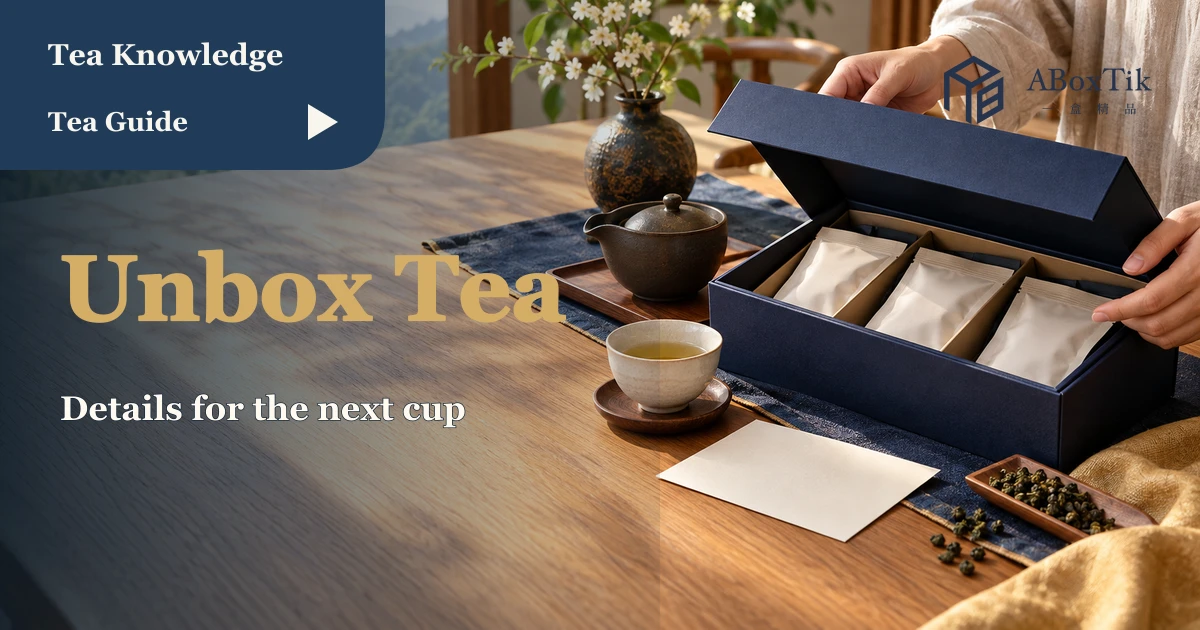
A little thoughtful preparation makes room to enjoy the tea.
A thoughtful corporate tea gift gives its recipient a clear path from the outside of the box to a first cup. Can they tell who sent it, what is inside, how to begin and where to find storage guidance? Visual presentation and a company signature matter; so does the quiet practical information that helps the gift become part of an ordinary day.
The purchasing team may know every version and delivery detail, but the recipient meets this box for the first time. They may open it at a desk, carry it home, share it later or put it away until a quieter week. This guide follows that journey without assuming a teapot, an immediate tasting, a photograph or a visit to a website.
Map five moments: notice, open, understand, brew and put away
Place the actual sample on a table and invite a colleague who did not make it to explore at their own pace. Resist the temptation to say, “The card is under the second layer.” Note where they pause, what they pick up and what they ask. Compare the observations with the approved specification, then decide whether an adjustment is useful.
| Moment | What a recipient may need | What the team can check |
|---|---|---|
| Receiving the box | A recognisable sender and a convenient way to carry it | Signature, outer identification and bag |
| Opening it | An understandable opening without pulling sealed inner packs | Closure, layers and how items lift out |
| Identifying the tea | Tea names, contents and relevant product information | Card matches contents; type is readable |
| Making a first cup | Equipment and brewing directions | Actual product instructions are easy to find |
| Putting it away | How to close and store the tea | Original labels and storage instructions stay accessible |
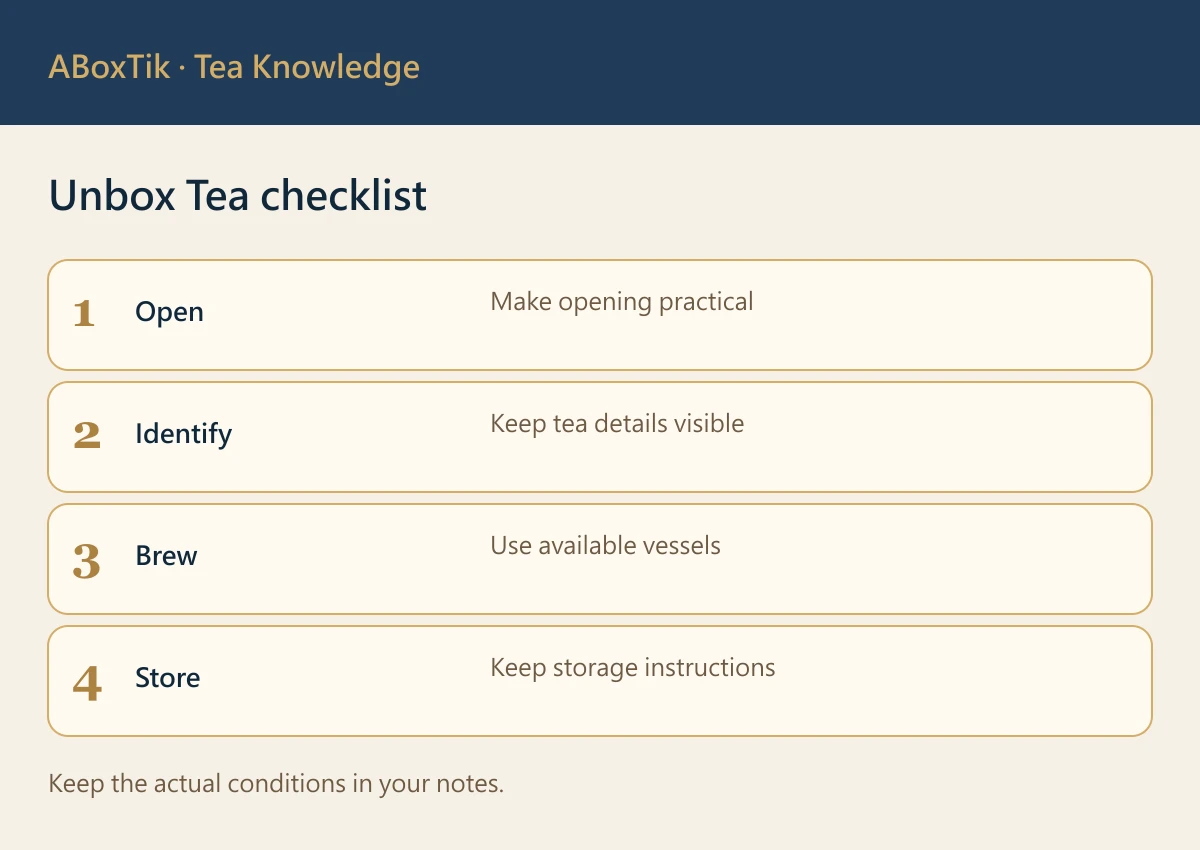
No one has to follow these moments in order. One person reads the card first; another looks for a tea name. Someone else simply puts the gift away. The table helps the team find missing information, not turn receiving a gift into a timed obstacle course.
Let the outer box answer who sent it
A company name, an event name or a short expression of thanks may belong on the box, sleeve or card, depending on the agreed design. If both the sending company and the tea maker appear, keep their roles understandable. The outer layer can identify the gift, a card can carry the message, and the original product information can explain the contents. None of these surfaces needs to repeat the entire story.
Handle the sample as it will actually be handled: lift it, put it down, open the closure and remove the contents. Check whether a sleeve or sticker covers a product name, date or storage instruction. If a sleeve is removed, make sure essential information remains available on the package inside. The corporate logo and proofing guide discusses placement and approvals in more detail.
Write the card for a person and keep product information close to the tea
A card can begin with thanks, mention the actual tea selection and identify the sender. For example: “Thank you for working with us. We chose these Taiwanese teas for a quiet pause in the days ahead.” If there is only one tea, describe one; if there are several, check their actual names. Review names, company spelling and each language, then look at the card at its printed size. A gracious message should be easy to read without borrowing a magnifying glass.
A card and a label have different jobs. The card carries the greeting; the original package retains the name, contents, dates and other product information. If a QR code is included, say where it leads and test it on a phone. Someone who chooses not to scan should still be able to find the basic directions needed to start. Review the destination and language again before the final version is approved, because a website can change.
Remove the small obstacles to a first cup
Start with what the team actually knows about the recipient group. Will people mostly use mugs at work? Is the gift likely to be shared? Do they already use loose-leaf equipment? Mark unknowns for confirmation instead of inventing a single routine for all partners. When comparing bags and loose tea, use the current product specification and consider whether the package makes quantity, water and steeping guidance easy to locate.
A short instruction acts like a signpost: find an appropriate vessel and water, follow the selected tea’s directions, then remove the tea bag or separate the leaves. Temperatures, quantities and times should come from that particular product. If a recipient wants a different strength later, they can change one variable and note the result. The basic brewing guide provides a longer explanation for anyone who wants it; a small card can stay concise.
Sharing tea is an invitation. A recipient can save the box for another day or choose another drink altogether. A first-cup pathway should give useful information without creating an obligation to drink, respond or perform appreciation on a schedule.
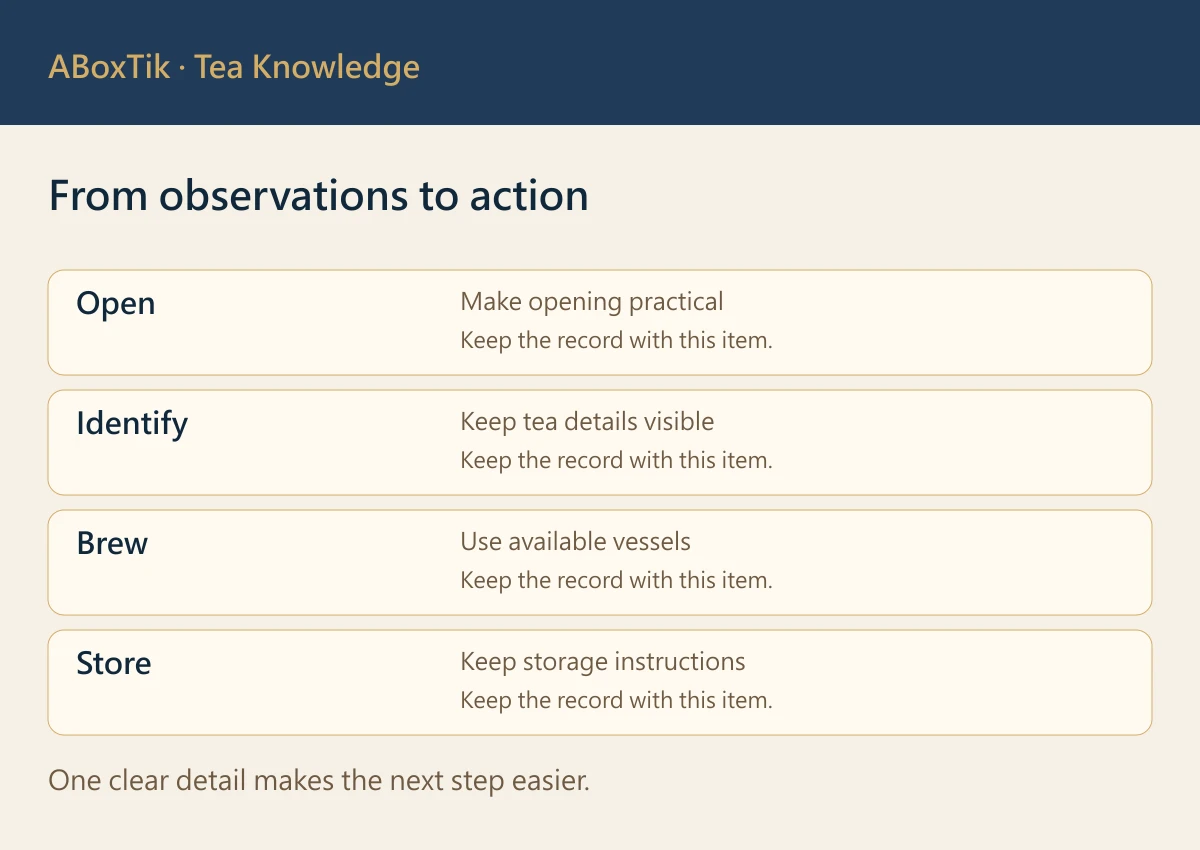
Walk through a sample before signing off
- Use a sample that matches the proposed box, card and contents, and record its version.
- Invite someone unfamiliar with the design to explore independently and describe what they see.
- Record confusing labels, hard-to-find instructions or awkward openings separately.
- Ask the relevant owner and supplier about feasible changes, cost and timing; approve the next version explicitly.
- Repeat the affected steps after changes and retain the final approved record.
If only a general display sample is available, document how it differs from the intended version. It cannot establish that every delivered item will be identical. This review concerns the recipient’s route through the gift; receiving quantities, outer-carton checks and exceptions belong to the project’s agreed acceptance process. The customisation timeline helps connect the proofing and delivery decisions.
Adapt to the occasion without making extra work for the recipient
At an office desk: consider whether a suitable mug and water are readily available. Make the tea name, individual serving format and instructions easy to find. If the gift may be shared, keep each tea identifiable after the box is opened; several similar unlabelled packets are not much help to the next person.
For a group: discuss distribution using the actual contents and package format rather than converting a box count into a promised number of servings. If information appears only on the outside, check how people will still find the tea name and instructions after the pieces are shared. Keep different batches identifiable instead of combining them for convenience.
For taking home: consider carrying and storage space, retain the sealed packaging and keep the product’s instructions accessible. The Taiwanese tea research station identifies moisture, light, oxygen, temperature and odours as storage considerations. Follow the directions for the actual product and choose a suitable place. The tea gift selection guide offers another way to compare formats and contents.
Keep the last questions on one sheet
Check the sender’s name and card version, the teas actually included, how to open and read the package, the brewing and storage information, and each required language. Assign a final owner. If something changes, record the new version and revisit the steps it affects. Availability, customisation, quantity, price and timing should be confirmed in the supplier’s current written response; an idea in a meeting is not yet a service commitment.
Try one final question with a colleague holding the sample: “I would like my first cup. What do I do next?” If they have to ask, note the question and decide whether its answer belongs on the box, inner package or card. Information is most helpful where it is needed, not necessarily on every available surface.
The unboxing is only one moment. A clear thank-you, tea with instructions that can be found, and freedom to choose when to enjoy it can carry the gesture much further. Explore the current format of the Taiwan tea selection, then match the actual specifications to the occasion.

Related reading and tea choices
Sources
Sources checked: 1 November 2026.