
Tea Knowledge
How to Blind Taste Tea at Home: Codes, Brewing and Notes
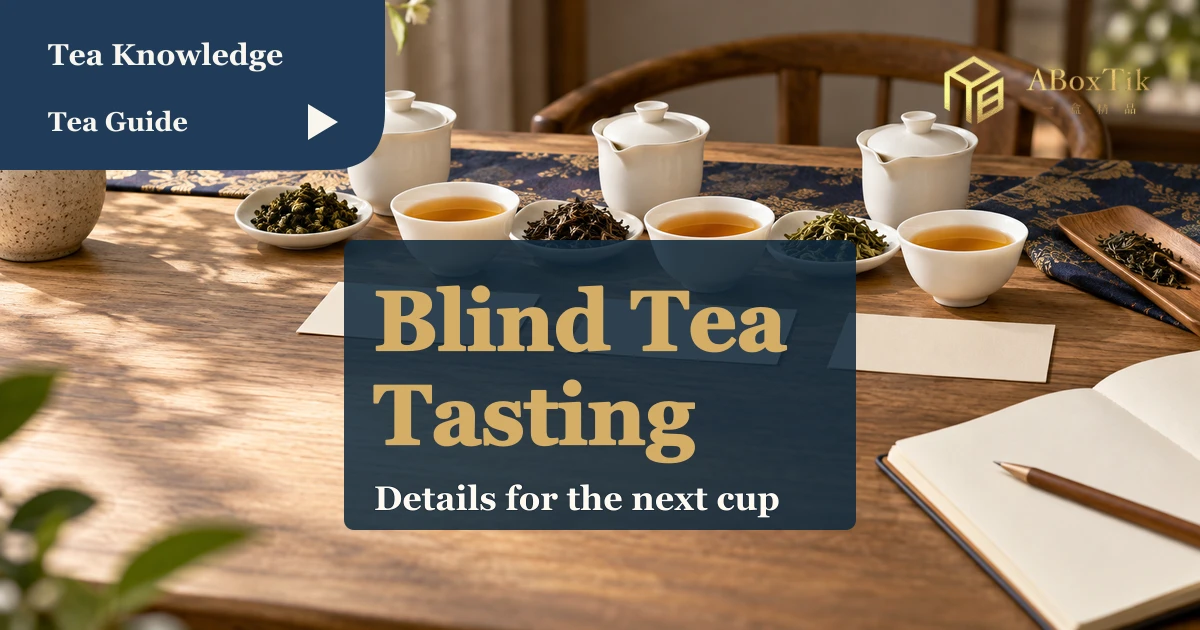
A little thoughtful preparation makes room to enjoy the tea.
To blind taste tea at home, start with two samples, two codes and a simple note sheet. Ask someone who is not tasting to keep the key, brew under conditions chosen in advance, write individual impressions and reveal the names afterwards. This temporarily puts familiar packaging, prices and expectations to one side. The result answers a modest question: what did I notice or prefer in these cups under these conditions? It does not certify origin or quality.
You do not need to rent a laboratory. A clean table, suitable cups, legible codes and permission to leave a box blank are enough. If tasting alone, a friend can prepare the codes and keep the key. A person who knows which sample is which cannot be fully blind to that information; an honest note is more useful than pretending otherwise.
Choose one question before choosing the cups
Comparing two different teas under the same brewing conditions may reveal differences in those particular cups, but it may not show either tea at its preferred preparation. If their package directions differ substantially, decide whether to use a common set of conditions or follow each product’s directions. Record the choice. A common method makes some conditions easier to compare; product-specific directions may be closer to everyday use, but tea and brewing both change, so the source of a difference cannot be isolated.
To explore the effect of time or temperature, use equal fresh portions from the same batch. Keep water source, volume and equipment consistent and change one variable at a time. Previously infused leaves and fresh dry leaves do not start in the same state. A second infusion is interesting in its own right, but it is not an independent single-variable comparison against fresh leaves.
Prepare the table and make codes more visible than names
| Item | Preparation | Purpose |
|---|---|---|
| Samples | Two labelled teas or fresh portions from one batch | Keep names, batches and instructions for the reveal |
| Code key | A helper records which tea is A or B and puts the key away | Tasters can record impressions independently |
| Cups and brewing vessels | Use clean, similar equipment and mark the outside | Reduce confusion from different vessels and positions |
| Timer and notes | Prepare a timer, measuring tools, pen and sheet | Record quantities, time and observations |
| Water and breaks | Provide drinking water and let tea reach a comfortable temperature | Make room for an unhurried tasting |
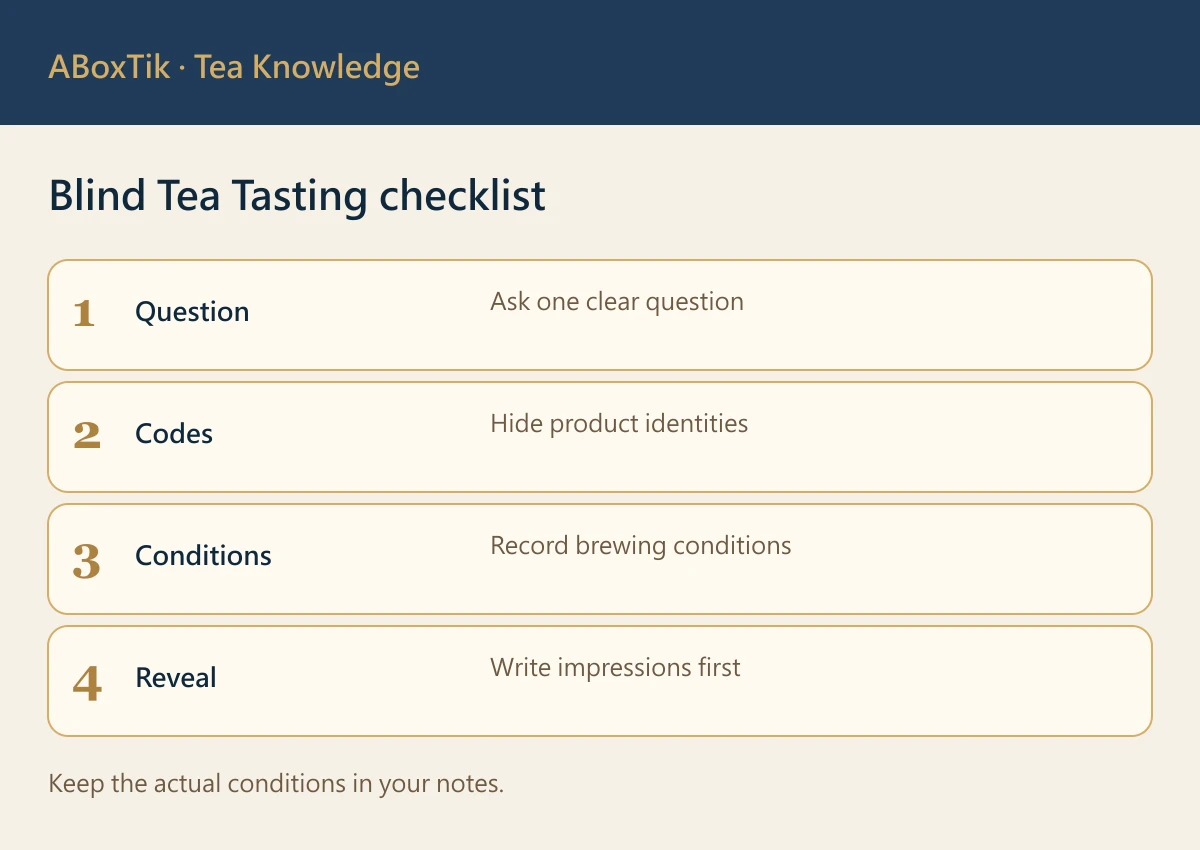
Leaf appearance, aroma or packaging may still give a clue. Write that limitation down: hiding a name does not remove every possible cue. Use arbitrary letters and do not make A stand for the more expensive or more popular tea every time. Check the cups against the key carefully; the reveal should be about the tea, not a search for a missing B.
Six steps for one round
- Write down the question and prepare the samples with their original labels.
- Have the helper assign codes, record names and batches, and keep the key out of sight.
- Brew according to the chosen method, recording leaf, water, temperature, timing, vessel and pouring order.
- Let the liquor reach a comfortable drinking temperature. Smell and sip separately, then fill in the sheet before sharing preferences.
- Discuss impressions, reveal the key and match the actual teas to the notes.
- Review the conditions and write one question for a future round.
If simultaneous brewing is impractical, record the order and when each cup was poured. Waiting can change temperature; try to keep the difference small and describe what happened. The helper can also vary tasting order rather than always serving the same sample first. Everyone can drink at a comfortable pace; there is no prize for tasting tea while it is too hot.
A worksheet to copy
| Record | Cup A | Cup B |
|---|---|---|
| Leaf, water, temperature and time | ___ | ___ |
| First aroma impression | ___ | ___ |
| Taste and texture | ___ | ___ |
| Finish and personal preference | ___ | ___ |
| Name and batch after reveal | ___ | ___ |
| Question for next time | ___ | ___ |
Everyday language is welcome: “lighter aroma,” “fuller on entry” or “a dry feeling afterwards” can all be useful. “Not clear” is a valid answer too. The tea flavour vocabulary guide can offer ideas after the notes are written; do not force a sensation into a category just to complete a wheel.
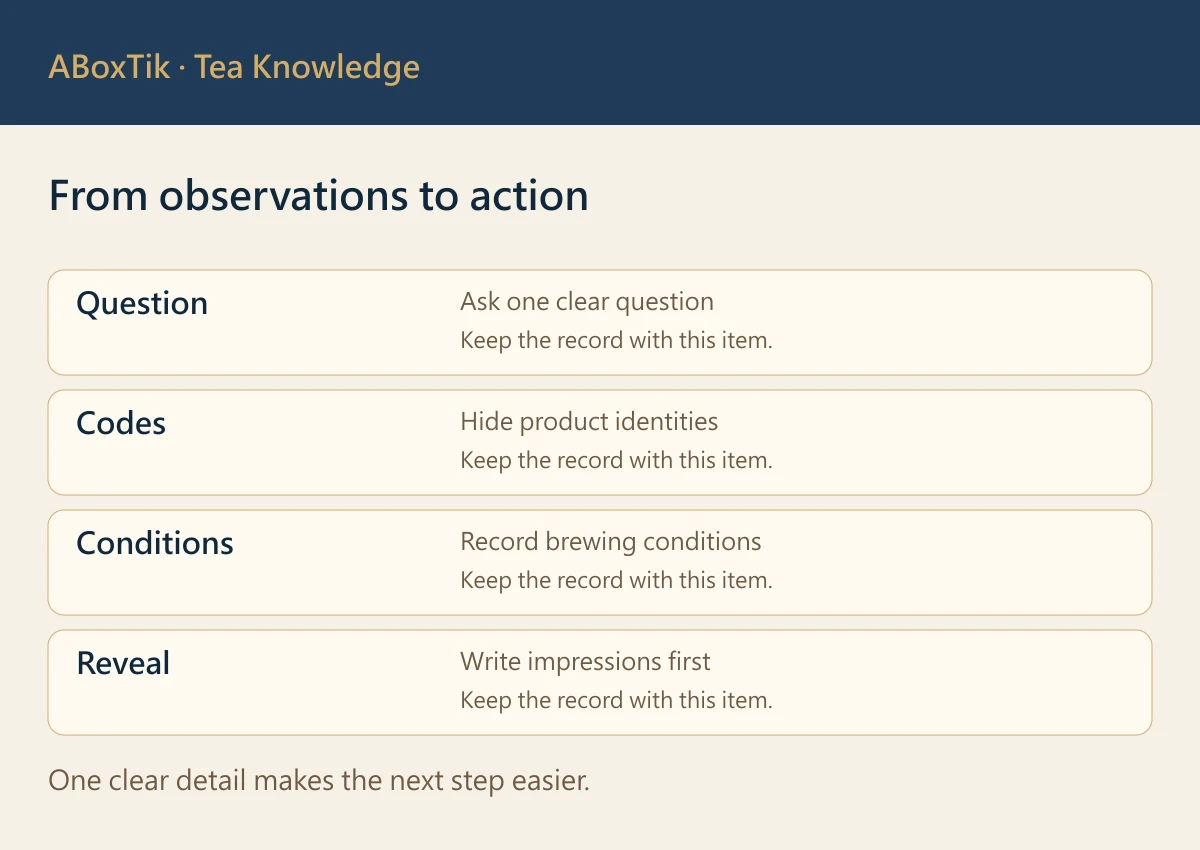
After the reveal, read the conditions as well as the names
If A is more enjoyable than B, check whether temperature, timing or vessels differed before drawing a conclusion. Preference can depend on the day and the preparation. You might repeat the comparison under similar conditions or make each tea according to its own directions next time. One result is worth keeping, but it cannot rank every batch or everyone’s taste.
Guessing a cultivar or origin can be entertaining, but a familiar aroma cannot prove where leaves were grown or establish certification. If the price surprises you at the reveal, ask which particular quality you enjoyed instead of immediately defending the choice. The reward is not a trophy for being the person who “knows tea”; it is a clearer record of what you enjoy.
When the result feels inconclusive
No obvious difference: write that down, check the conditions and repeat another day if curious. A winner is optional. A friend disagrees: preserve both observations and ask what each person noticed. No one needs to find the same descriptor. One cup is too bitter: record bitterness and drying sensation separately, then make a fresh portion from the same batch and adjust one condition. The bitterness and astringency guide can help with that next step.
Two samples, a helper willing to keep a key and one real question are enough to begin. If choosing small amounts to compare, review the current contents and packaging of the Taiwan tea selection first. Then let the coded cups speak, and give your notes the space to be unfinished.
When one person prepares and several people taste
The helper can move the original packages out of view and place codes on the outside of the cups. Transparent cups may still reveal liquor colour; leaf shape or a conspicuous roast aroma can provide clues as well. Note what was visible or noticeable. These cues are not mistakes, but they matter when interpreting how blind the round really was. If someone recognises a tea, they can record that privately and let the others finish before sharing.
During discussion, take turns offering one observation and asking when it appeared. One person may notice aroma first; another may focus on texture. Keep those observations separate rather than merging them into a single official answer. If planning another round, retain the original packages and store the remaining tea according to their instructions. New cup positions and codes make a useful fresh start, but repeating an informal exercise does not turn it into a formal sensory assessment.
End with a small review: did the session answer the original question? If the new question is whether B tasted stronger because it steeped longer, use fresh equal portions from B’s batch next time and change only time. Splitting a large question into small rounds is easier to interpret than changing the leaf, vessel and temperature together.
Before putting the cups away, keep the code key with the notes and label the date. If a later round uses different water or equipment, record that change beside the new observations. This makes the two sessions easier to interpret without expecting memory to supply every detail.

Related reading and tea choices
Sources
Sources checked: 1 November 2026.