
Tea Knowledge
Tea Cup Foot Rings: Stability, Table Surfaces and Storage
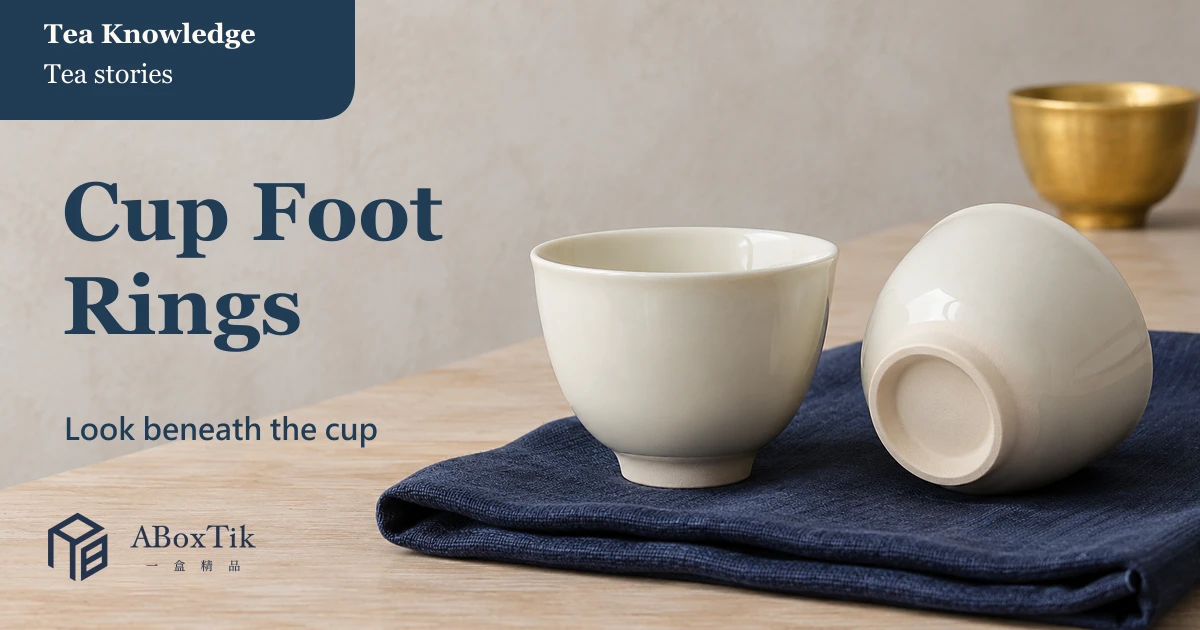
A cup holds tea and finds a place on an everyday table. A look beneath it and a little space around it help a favourite object fit the day.
A tea cup’s foot ring is one part of the base that may meet the table. Start by checking whether the empty cup sits steadily on a level surface and whether its contact points are in good condition. Then consider the table and storage you actually use. A shape in a photograph cannot establish friction or promise that a surface will be protected from heat.
Tea cup foot ring: inspect the contact area first
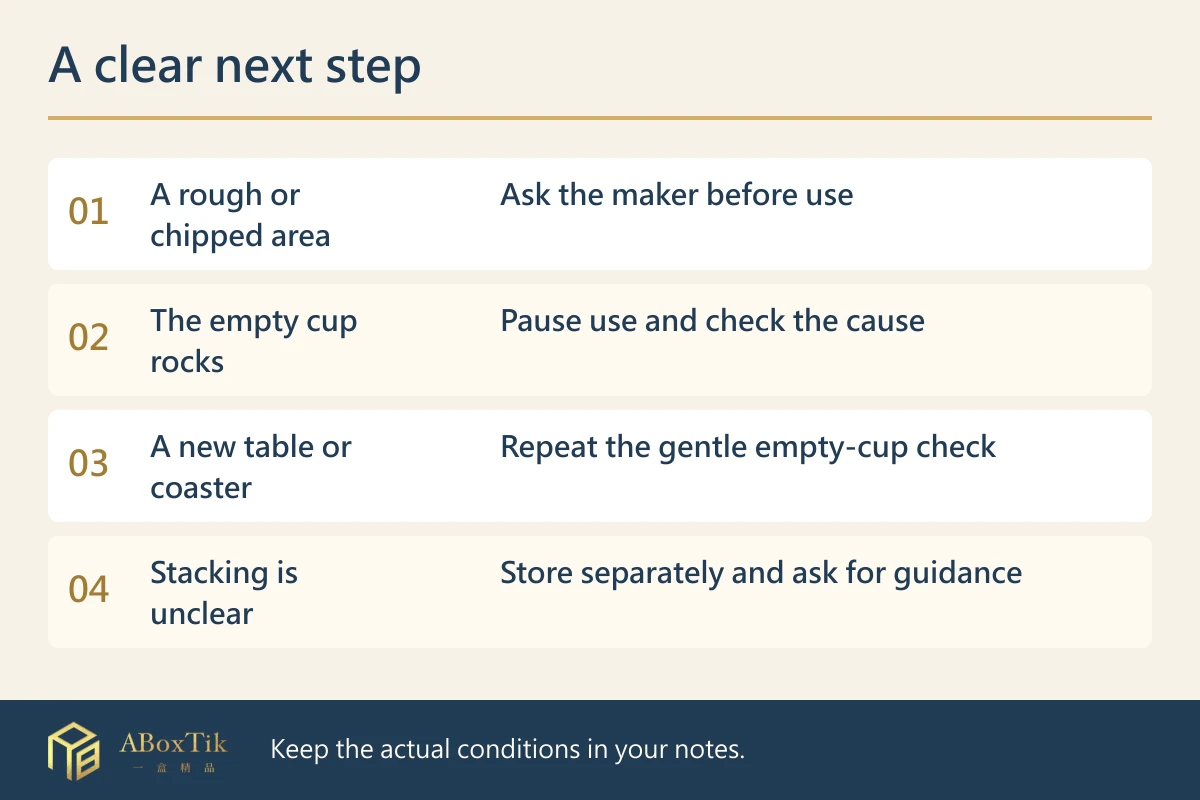
Place the empty cup on a soft, clean surface and look at the foot ring or flat base and the parts that touch the table. Check for chips, obvious roughness or dirt. Handmade pieces can differ; ask the maker about care and use when uncertain. Avoid rubbing an edge that might be sharp or testing it against a treasured tabletop.
Check stability on a level surface
Place the empty cup on a clean, level table and see whether it sits naturally. Touch the side gently to notice any rocking. This describes that cup on that surface, not every table. If it rocks unexpectedly, stop using it and ask the maker.
Shape, centre of mass, table surface and the amount of liquid can all affect how a cup feels in use. Leave room when pouring and avoid exposed table edges. Handle hot tea according to the actual temperature and the maker’s instructions.
When comparing two empty cups, look directly at each contact ring, then lower your viewpoint to table level and look for a visible gap between cup and surface. Touch the side gently from different directions and observe whether it keeps rocking, rocks only in one direction or settles naturally. Use the same level table and empty-cup conditions for both. Do not repeat this movement with hot water in the cup.
A note could say, “Cup A settled after a gentle touch on this table; cup B rocked when touched from the left, so ask the maker.” That is an observation, not a friction measurement or a ranking across all surfaces. If the table itself is uneven, move to a surface known to be level before interpreting the cup.
Consider friction, the table and storage separately
Wood, stone and cloth feel different under a cup. If a table needs protection, choose a suitable coaster and lift the cup instead of dragging it. A rough-looking or smooth-looking foot alone cannot establish that a cup will never slip or scratch.
Clean and dry the cup before putting it away. Check the maker’s instructions before stacking; if uncertain, store pieces separately. For how the rim and shape may affect perception, see the cup shape and aroma guide. Here the question is how the base works at the table.
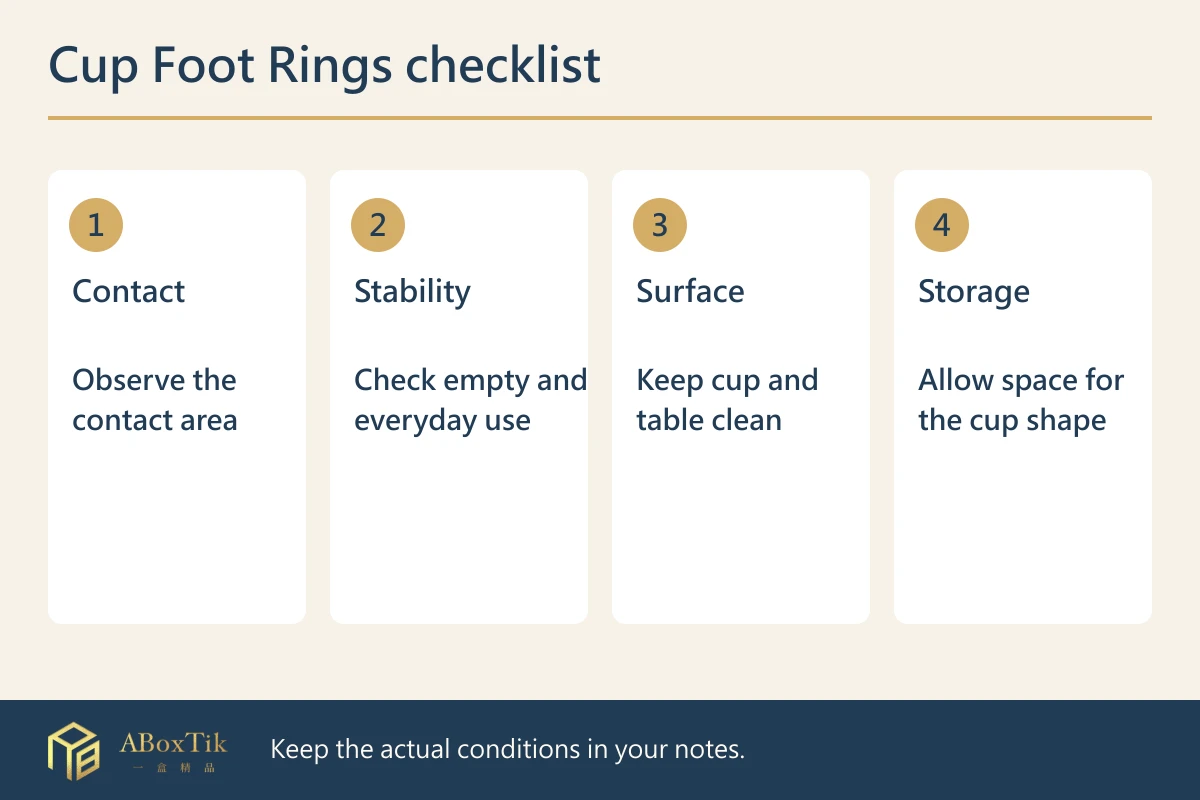
A practical foot-ring checklist
| Check | Observation and next step |
|---|---|
| Contact points | Look for chips, dirt or obvious roughness; ask the maker if uncertain. |
| Stability | Does the empty cup sit level? Stop using it if it rocks unexpectedly. |
| Table | Would a suitable coaster help? Can the cup be lifted to move it? |
| Storage | Check stacking guidance and put the cup away clean and dry. |
Once the cup is settled, attention can return to the tea. It does not need to win a tabletop Olympics; it simply needs a comfortable place in the routine.
How to compare two cups fairly
If choosing between two cups, use the same clean, level table and place each empty cup down in turn. Note whether it sits steadily, whether the hand has a comfortable place to hold it, and whether setting it down feels natural. Do not push or strike the cups to create a more dramatic test. A tabletop does not need to become a racecourse.
Separate observation from inference. “This cup rocks on this table” describes what you saw; “all cups with this kind of foot are unstable” goes well beyond it. If an online image does not show the base, ask the maker or seller for a photograph, dimensions and care instructions. A single informal check cannot replace guidance for the actual object.
Choose a coaster for the table you use
Look for a coaster that lies flat and has enough room for the cup’s contact area. Check the care guidance for both the coaster and the table, including how they should be cleaned and dried. If the coaster curls, is damp, or moves on the surface, address that condition first. Adding a layer does not automatically make every arrangement more stable.
After pouring, check that the outside of the cup is suitable to hold, then lift the cup fully when moving it. Keep the base and table clean so particles are less likely to sit between them. For a delicate finish, follow the table maker’s recommendations for protection.
Put the everyday setting on a selection card
Will the cup live on a desk, dining table or tea setting? Are papers, a computer or passing hands nearby? Does it need to move frequently, or mostly sit in one place? Write those answers down and compare them with how the cup sits, how it is held and the care and storage it requires. An object can be visually appealing and practical; both are useful votes.
Before purchasing, confirm the dimensions, care instructions and whether stacking is recommended. Ask the seller about a chip or unclear detail. Each cup and table combination is different, so finding a steady place for the actual cup is more helpful than ranking every foot ring in the abstract.
The purpose of inspection is to understand the object, not test its limits. Do not rock a cup containing hot water, or place it on a table edge or an unstable stack of objects. If the foot develops a crack, chip or new unexplained rocking, stop using the cup and ask the maker or an appropriate conservation professional about the next step.
For online shopping, prepare four questions: “Can I see the contact area in a photograph of the base?” “What are the cup’s diameter and height?” “How should it be cleaned?” and “Is stacking recommended?” Save any conditions in the seller’s reply. When the object arrives, inspect it gently on the table where it will actually be used.
If both candidates sit well, the decision can return to grip, capacity and appearance. Pour an amount that matches the normal routine and notice whether the cup is easy to lift, set down and clean. Record the answer on the checklist; next time there will be a useful reference drawn from the real table, rather than a promise inferred from a photograph.
When sharing the cup with guests, leave a clear place for each person to set it down and keep the area around the edge free of unnecessary objects. A coaster should lie flat and match the table maker’s guidance. These small arrangements help the table remain easy to use without requiring everyone to adopt a particular tea ritual.
Add three fields to the checklist if useful: coaster material, placement and ease of lifting. Observe again after changing the table or coaster, because the earlier observation belongs to the combination used at that time. Follow the separate care instructions for the cup and the table; avoid strong cleaning methods on an unknown material.
Keep any instructions supplied with a handmade cup. If a notch or mark raises a question about whether it is a design detail or damage, photograph it and ask the maker before attempting to sand or repair it yourself.
When using another person’s cup or a shared tea setting, ask the host about the usual coaster, placement and cleaning arrangements.
Fit the cup into the rest of the tea station. handling a gaiwan and gaiwan and teapot routines deal with other handling routines; questions about glaze and use and everyday clay-teapot care belong to material and care questions rather than conclusions drawn from a foot ring.
For a new object, a first craft purchase provides a buying conversation. At home, tea cloth placement and a small home tea station help arrange a clear place to put it down.

Follow ABoxTik
Make the next cup easy to begin
Bring the useful observation back to an ordinary cup. Choose a tea format that fits the equipment and the occasion, use the current product information, and leave room for individual preference. ABoxTik offers a way into Taiwanese tea through clear descriptions and practical formats; a small, well-chosen next step is enough.