
Tea Knowledge
East Taiwan Honey-Aroma Tea: Leafhoppers, Place and Craft
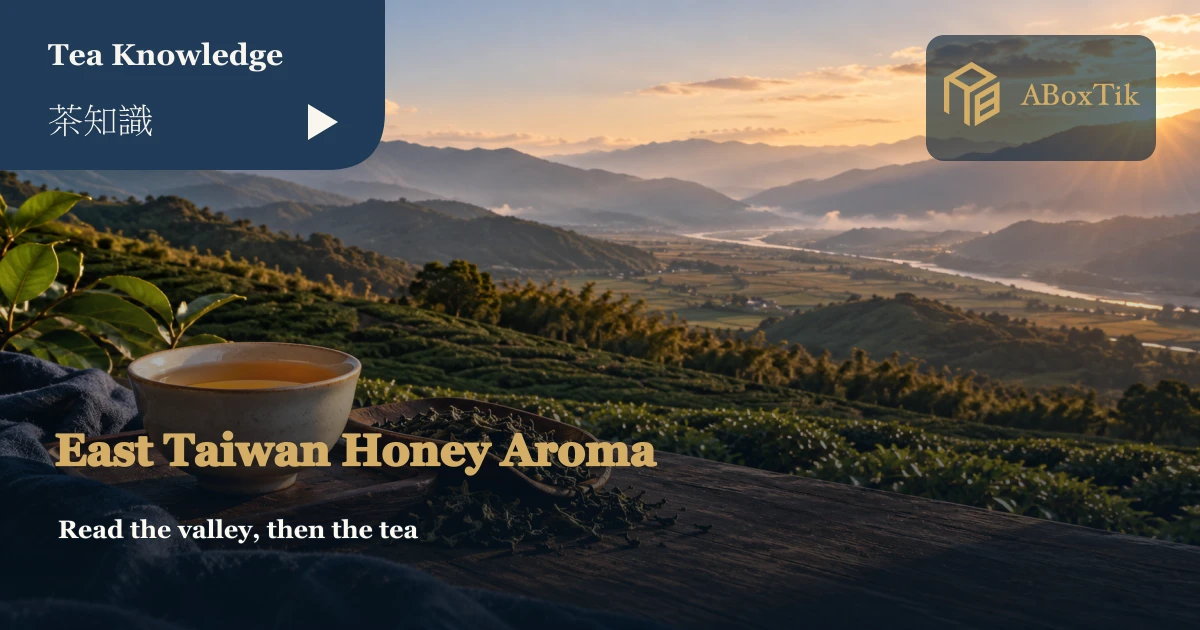
An East Taiwan honey-aroma tea may recall mountains and a valley, while still inviting one more question: where did this leaf actually come from?
Read East Taiwan honey-aroma tea through origin, leafhopper-associated material and tea making together. Hualien Wuhe honey-aroma black tea is a representative context described by the Tea and Beverage Research Station; East Taiwan also includes other honey-aroma tea styles. A valley name or tea leafhopper mention cannot establish every packet’s cultivar, method or cup aroma.
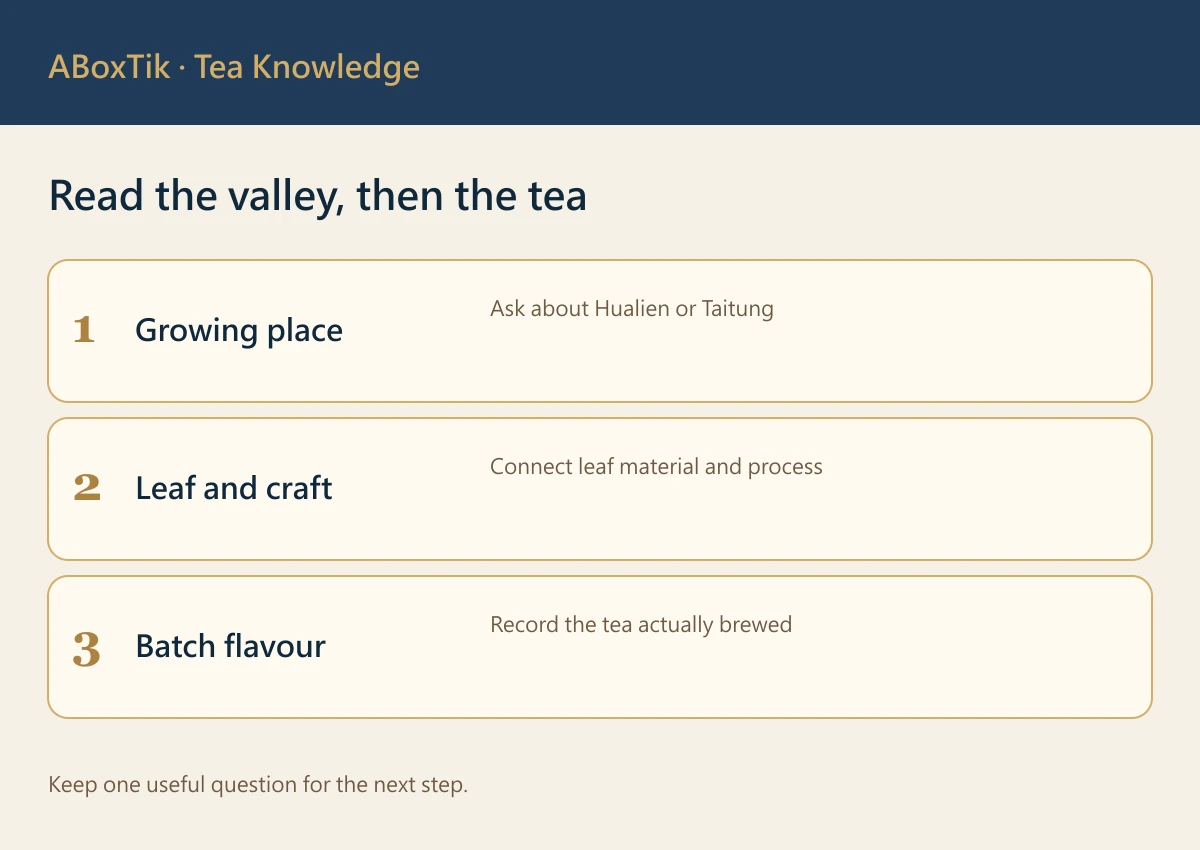
Confirm whether the actual origin is in Hualien or Taitung, then ask cultivar, lot and finished-tea form. This guide focuses on East Taiwan landscape and buying questions; a dedicated article handles the general mechanism of honey-aroma formation so place stories and scientific explanation keep clear roles.
Separate an East Taiwan place name from the finished tea
“East Taiwan” names a regional context, “honey aroma” names an aromatic direction, and black tea, oolong or red oolong identify finished-tea clues. These terms can appear on one packet, but none replaces the others. Seeing East Taiwan does not reveal every material or process; seeing honey aroma does not confirm an origin.
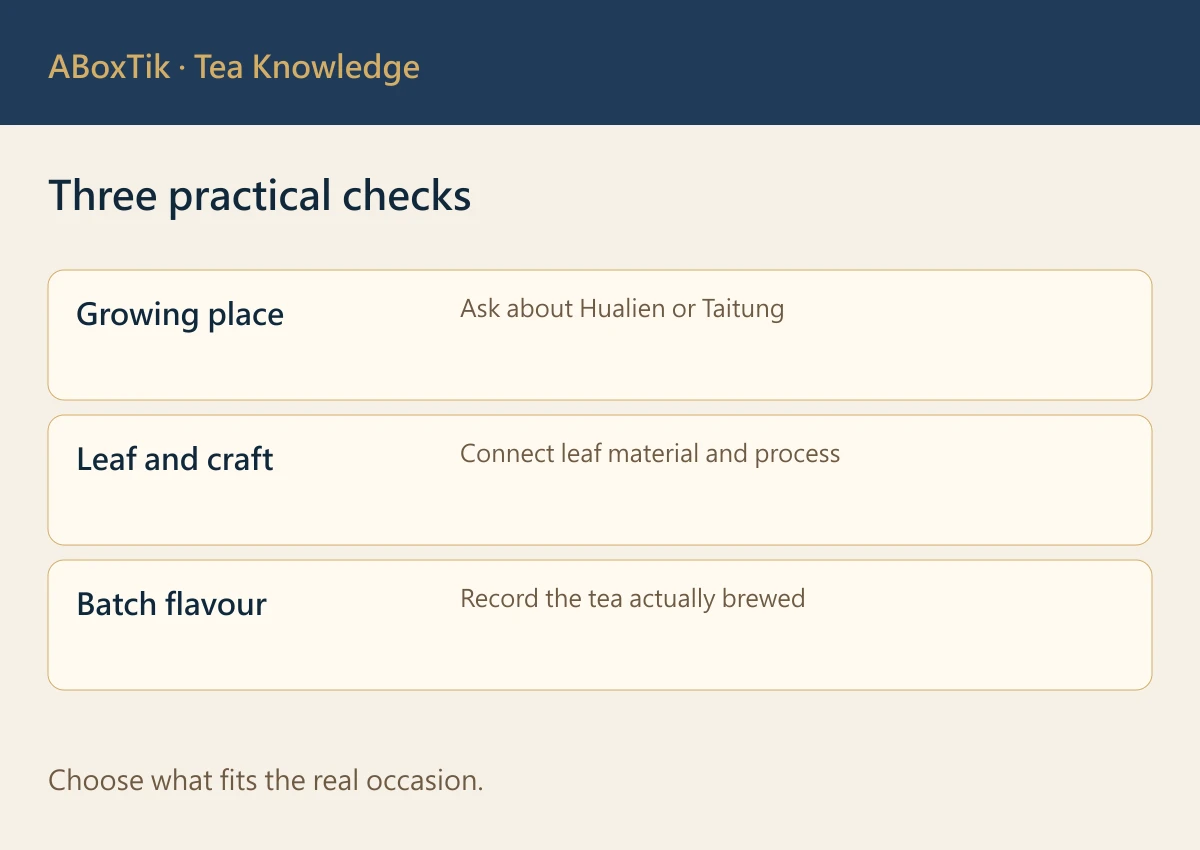
Write four fields when choosing: actual origin, cultivar, finished tea type and lot. If a label reaches only county level, retain that level and ask the supplier for more. Taiwan tea regions provides a broad map, while the product in the cup still needs its own details. Do not infer added honey from a natural aromatic association; read the ingredients and use honeyed and fruity aroma for observation.
Hualien Wuhe is one specific origin entry point
The Tea and Beverage Research Station’s honey-aroma tea information presents Hualien Wuhe honey-aroma black tea as an important example of this tea context. Research and tea-making work also explore honey-aroma teas at different oxidation directions. This makes the connection between Wuhe and honey-aroma black tea clearer without turning every other place into the same name.
For a tea marked Wuhe, ask for garden or producer, cultivar, season and making details. Official information about different cultivars and processing reminds us that material and craft remain active after the place name is known. Keep the actual packet information beside the regional background. Before a visit, prepare one question about the garden and one about making; the answers can give the landscape a more personal point of connection.
Keep Taitung making contexts distinct from every East Taiwan tea
East Taiwan tea research also includes directions such as red oolong. Red oolong processing helps distinguish finished-tea types. A packet described as East Taiwan honey aroma should first be asked whether it is honey-aroma black tea, honey-aroma oolong, red oolong or another form.
Garden location, cultivar and making can still differ under the same eastern-origin wording. Do not use an aroma description from one Taitung tea for every Hualien tea, or apply Wuhe promotion material to the entire region. Choosing honey-aroma red oolong can support product selection after this article has arranged the regional information.
When comparing Hualien and Taitung samples, say whether finished-tea type and lot are comparable. The result may be a difference between two actual teas, not a permanent law about two counties. Each place name deserves room of its own.
Ask concrete questions about valley climate and tea gardens
A regional name is not a fixed climate number. To understand one garden, ask whether location, slope, elevation or surrounding environment have verifiable information, then read season and year records. If those details are missing, do not write that a certain day-night range necessarily created a certain honey aroma.
Tea leafhoppers, fresh-leaf condition and making must be considered together. Leafhopper interaction and honey-aroma formation explains the general mechanism, while tea-garden biodiversity adds environmental context. For the tea in hand, ask the garden or maker about the particular growing and harvesting arrangements.
Visible shade, vegetation and valley scenery are interesting travel observations, but they remain clues. Ask about seasonal records, the garden area and the actual harvesting arrangements to connect the view with a concrete account of the work. A comfortable origin story still needs to connect with questions that a producer can answer.
Make an East Taiwan honey-aroma information card
Use a small card to retain actual facts: Hualien or Taitung, township or garden; cultivar, picking season and lot; finished-tea type and processing; hot aroma, cooling aroma and mouthfeel under one brewing method. When a field is uncertain, ask whether the actual leaf origin or lot information can be supplied instead of filling the blank with a broad valley story.
| Field | Record first | Question when uncertain |
|---|---|---|
| Origin | Hualien or Taitung, township or garden | Can the leaf origin be provided? |
| Material | Cultivar, season and lot | How does this lot differ from the last? |
| Finished tea | Black tea, oolong or red oolong | What processing or roast is stated? |
| Cup | Hot and cooling aroma, mouthfeel | Under which brewing method? |
Invite each person at the table to name one aroma impression before revealing the origin label. Different answers can remain different; tea names do not require noses to vote into one format. Aroma observation gives a shared starting order while leaving personal language intact.
Let landscape return to everyday selection and brewing
Start with the actual product’s brewing directions and record leaf amount, water, temperature and time before judging aroma and texture. Steeping time and Re-steeping observations support adjustments without imposing one formula on every honey-aroma tea. Cultivar, leaf shape and making still matter.
For a gift, write origin, finished-tea type and brewing guidance on a small card. Honey-aroma red oolong product information and multi-tea selections can be compared through their actual contents; an origin article should not supply a product’s missing source details.
After opening, follow dry-tea storage guidance and retain lot and origin information. When seeking a similar tea later, “I liked this cup’s ripe-fruit and sweet aroma with this brewing method” is more useful than asking for a vague East Taiwan flavour. A landscape is large; the next tea question can be small.

Follow ABoxTik
Let a honey-aroma tea keep a clear origin
ABoxTik hopes origin stories bring both imagination and better questions. Knowing where a leaf came from and how it was made, then adding an aroma note, gives East Taiwan a place in ordinary tea life.
Continue with Taiwanese tea terroir and craft and give the cup in front of you a little time. Let the story look outward while actual information keeps the next choice close at hand.
Related reading
- Understand leafhopper interaction and honey aroma
- Separate honeyed and fruity impressions
- Check actual honey-aroma red oolong product information
Sources
- Tea and Beverage Research Station: Honey-aroma tea
- Tea and Beverage Research Station: Origins of red oolong
Sources checked 21 October 2026.