
Tea Knowledge
Same Tea Cultivar, Different Regions: A Practical Comparison
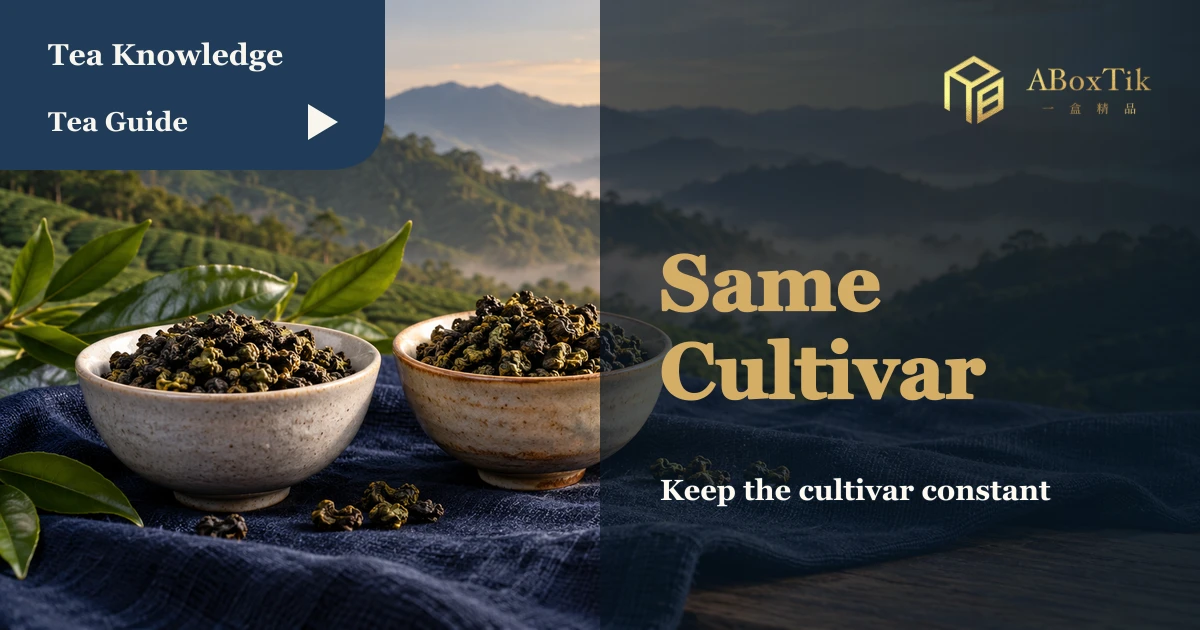
Keep the cultivar constant, then give place, process and preference their own space.
To compare the same tea cultivar from different regions, check the batches before judging the places. Match the cultivar, then note harvest year and season, processing, roast, packaging and opening dates. Finally, record preparation separately from flavour. Two place names can introduce a conversation; they cannot do all the explaining on behalf of the leaves.
This is a useful next step when a familiar cultivar has become a favourite. Perhaps you enjoy Cuiyu and wonder what another producer or growing area might offer. Start with two clearly described, manageable samples. The aim can be modest: identify a style you would enjoy preparing again and leave yourself one better question for the next purchase.
Give cultivar, region and tea style separate fields
Cultivar identifies the tea plant. Region supplies growing and production context. A finished tea category relates to processing. A cultivar name, a mountain name and the word oolong may therefore answer three different questions on the same label. If one packet gives only a place name, ask for the missing cultivar information before treating the samples as a matched pair.
Taiwan’s Tea and Beverage Research Station discusses temperature, rainfall, light, wind and soil as growing conditions. Its processing overview distinguishes the sequences used for different tea types. Together, these provide useful context: keeping the cultivar constant does not hold every other condition constant. The garden, harvest and making of each batch still matter.
Choose samples whose differences answer your question
For a first regional comparison, look for the same cultivar, reasonably similar harvest timing and a comparable finished style and roast direction. Perfect matches may be unavailable. That is fine, provided the differences are visible in the record. A strongly roasted tea and a lightly roasted tea can still make an enjoyable product comparison, but roast must remain part of the explanation.
| Field | Record for both samples | A useful follow-up |
|---|---|---|
| Cultivar | Confirmed plant name | Does the commercial name mean anything else? |
| Origin and harvest | Region, year, season and batch | Does this description apply to this batch? |
| Processing | Tea type and roast description | Are these useful samples to compare? |
| Condition on arrival | Packaging, opening date and storage | Have the samples been handled differently? |
Check net weights and suggested leaf quantities before buying. If you want two independent preparation rounds, obtain enough dry tea for both. With only one serving, make one useful first observation instead. An empty field marked “ask the seller” is more helpful than an imaginative description of a mountain breeze that no one has actually documented.
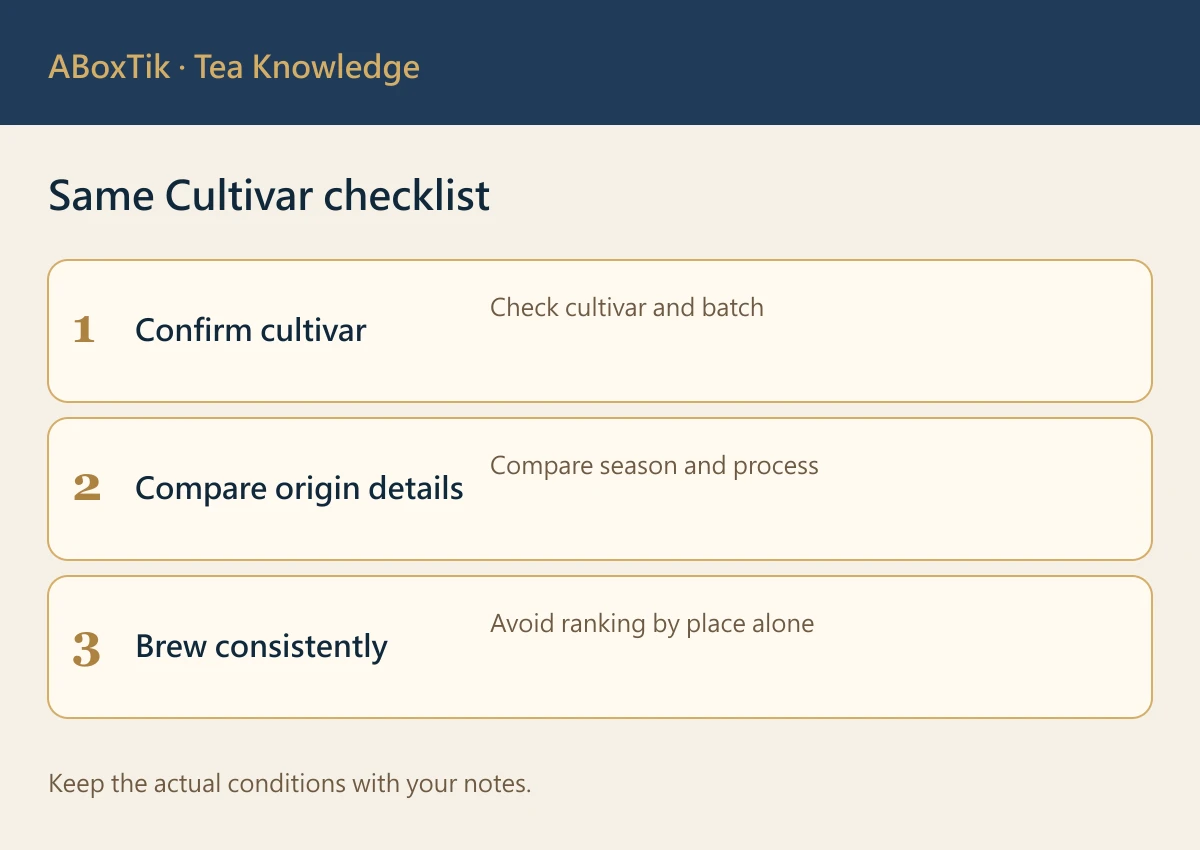
Round one: follow each recommendation
Prepare each tea according to its package or maker’s advice, using equipment you can comfortably use again. Record leaf weight, water volume, temperature and time, alongside aroma, strength and texture. This round asks a practical purchasing question: under its recommended preparation, which product suits your routine? Different instructions need not make the exercise useless; they simply need to remain visible.
Convenience belongs in these notes too. One tea may suit a short, attentive preparation while another fits the mug you use at work. That can influence a purchase without proving anything about the superiority of its growing region. A tea does not need to win an imaginary mountain championship before it can be the one you happily reach for on Tuesday.
Round two: make preparation more consistent
If sufficient tea remains, take fresh dry portions of A and B. Use the same water source, comparable vessels, a consistent leaf-to-water ratio, the same starting temperature and the same timing convention. Arrange pouring and separation from the leaves in a similar way. Write down what you actually did so the procedure can be repeated rather than reconstructed from memory.
This reduces selected preparation differences. It does not make the gardens, harvests or processing identical. Re-steeping the same leaves answers a useful question about successive infusions; changing preparation with fresh portions answers another. Keep those exercises distinct. Otherwise, the second infusion arrives carrying the first infusion’s history while pretending to be a completely new appointment.
Separate background, sensation and conclusion
Use three small fields rather than one grand verdict. Background contains confirmed batch details. Sensation describes this preparation. Conclusion answers the question you set for the session. “I preferred A’s aroma as it cooled today” preserves a useful experience. “This entire region is always more aromatic” reaches much further than two cups can support.
| Field | A reusable sentence |
|---|---|
| Background | Same cultivar; harvests ___; roast descriptions ___; unknowns ___. |
| Sensation | With preparation ___, A showed ___ more clearly, while B suggested ___. |
| Next step | Ask ___; change only ___ next time; currently prefer ___ for daily use. |
Begin with two differences you can describe comfortably. There is no need to invite every flower, fruit and forest into one tasting note. You might cover the names and prices until after tasting. When sharing the session, write one observation independently before discussing it. Agreement is interesting; disagreement is useful too, and neither person needs to borrow the other person’s nose.
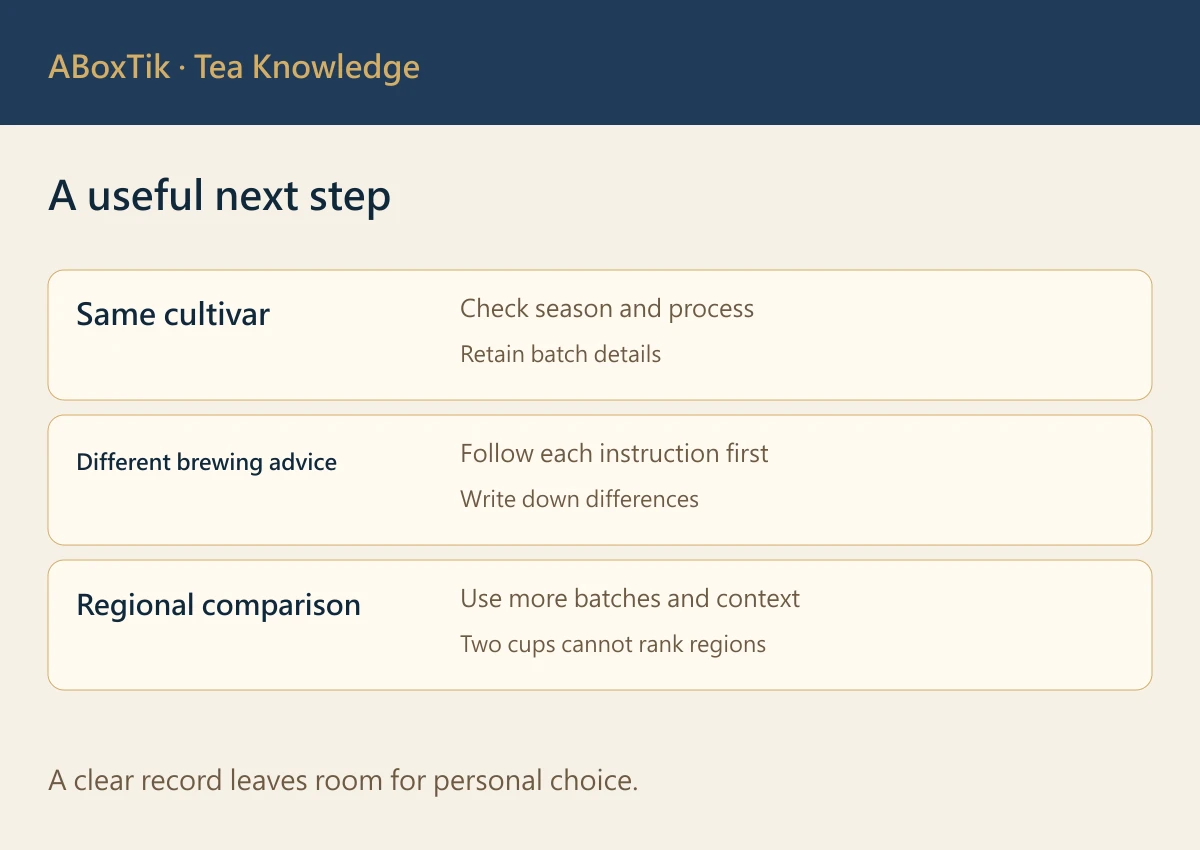
Build regional understanding across more than one batch
A product can introduce a region without representing every garden, producer and year there. If a style interests you, try another batch from that area or a different producer working with the same cultivar. Keep using the same background fields. Look for impressions that recur and those that change, rather than turning one pleasant afternoon into a permanent regional personality.
Ask how detailed origin descriptions connect to the actual garden and batch. Missing information does not automatically make a tea poor; it limits the explanation you can confidently attach to the comparison. A smaller question often gets a clearer answer. “What should I notice when comparing these two packets?” gives a seller a more manageable task than speaking for an entire district.
A message you can send before buying
“I would like to compare the same cultivar from two regions. I prefer ___ and normally brew with ___. Could you suggest two small samples with reasonably similar harvest timing and processing? Please include cultivar, origin, harvest or batch details, roast direction and preparation advice. If those conditions differ, what should I keep in mind?”
Keep the reply with photographs of the original packets. On a later purchase, distinguish whether you want the same batch, a similar flavour direction or simply the same cultivar. Those are different requests. “The one I enjoyed last time” is a lovely memory, but a batch reference gives that memory an address the seller can actually find.
Common questions while choosing a pair
Must both teas have exactly the same harvest date? That may be impractical. Record the available season and year, explain any gap, and keep the conclusion about the products sampled. Do not quietly describe unmatched timing as controlled timing.
Can two teas from one region be useful? Certainly. They can explore producer, batch or preparation differences. Write that question at the top of the sheet instead of calling the session a comparison between regions.
What if I cannot identify a particular floral note? Record what you can recognise: clear or hard to distinguish, gentle or prominent, pleasant at a certain temperature. Useful personal language is preferable to borrowing an impressive word that does not match the cup.
Explore with ABoxTik, one clear question at a time
Keep three things from today: the cultivar, your preparation and one impression worth returning to. Continue with the Cuiyu guide for the distinction between cultivar and finished style, or high-mountain tea quality for factors beyond altitude. The Taiwan tea collection offers a way to explore different product styles; check current specifications when selecting any matched comparison. Let a place name open the door, then allow the actual batch and your daily routine to guide the next cup.

Related reading and tea choices
Sources
Sources checked: 29 October 2026.