
Tea Knowledge
How to Choose Calligraphy Art: Script, Text and Space
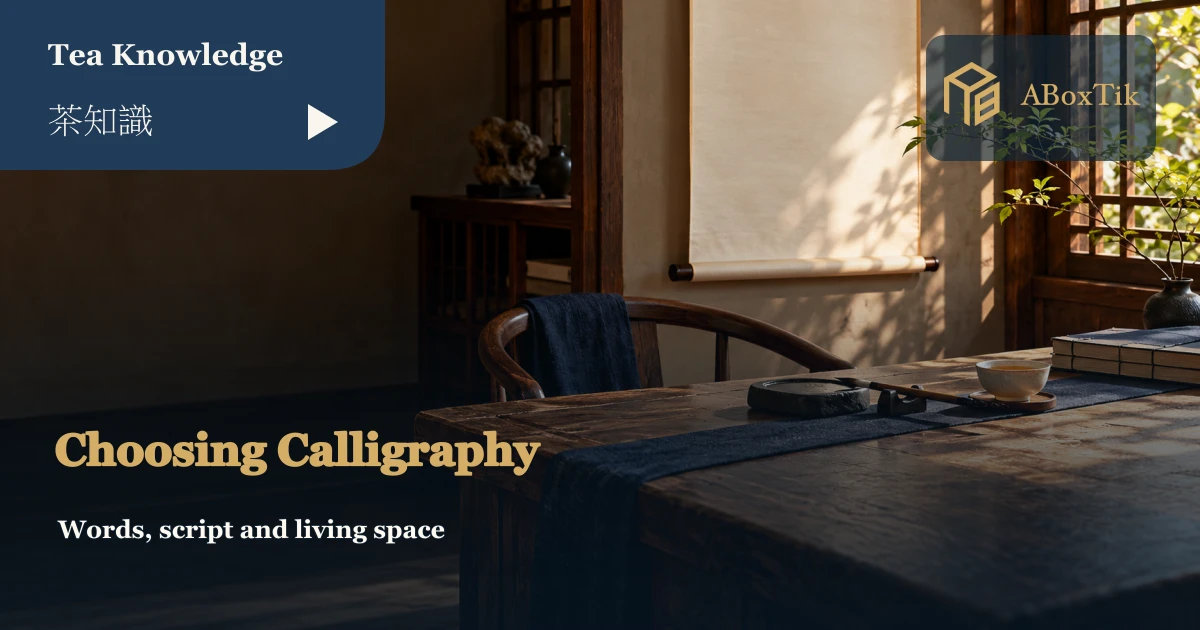
Let the eye pause at a work first, then allow its words to enter everyday life.
Choose calligraphy by reading its text, observing script, composition and line, then confirming both the work’s dimensions and its overall mounted size, provenance information and intended space. Enjoying the visual movement and wanting to read a sentence every day are distinct needs. Define the everyday role before choosing by fame or a single auspicious character.
Taiwanese calligraphy has varied periods and creative approaches. This guide offers a first viewing and enquiry method without ranking works by script names. If the eye is interested before the words are clear, ask for a transcription; the dictionary need not work overtime on the spot.
Separate the words from the visual encounter
The National Taiwan Museum of Fine Arts places calligraphy and painting within different historical and cultural contexts in its Taiwanese art presentation. A selection can likewise consider the maker and setting, rather than treating every work as one generic way to write a favourable phrase.
First stand back: where do ink, empty space, scale and arrangement lead the eye? Then approach to read the text and details. Liking the composition and welcoming the meaning are separate answers, both worth recording.
Taiwanese paper craft and tea hospitality offer other links between material and everyday use. Calligraphy can converse with a room without requiring every tea table to display the same sentence.
Use script names to describe, rather than rank
Calligraphy includes different scripts. Begin with legibility, connection between strokes and the overall rhythm if classification feels unfamiliar. The National Palace Museum’s calligraphy exhibition provides a historical introduction; an actual purchase still concerns the particular work in front of you.
If family or visitors should be able to read it regularly, place legibility high on the list. If movement appeals, a less immediately readable script may still be welcome, provided a correct transcription and explanation are available. Harder to read does not automatically mean more accomplished, and clear characters are not a lesser artistic category.
Identify one appealing visual feature and ask the artist about it. Wanting lighter lines, more space or a quiet reading presence usually opens a more concrete conversation than asking for the piece with the greatest abstract “presence”.
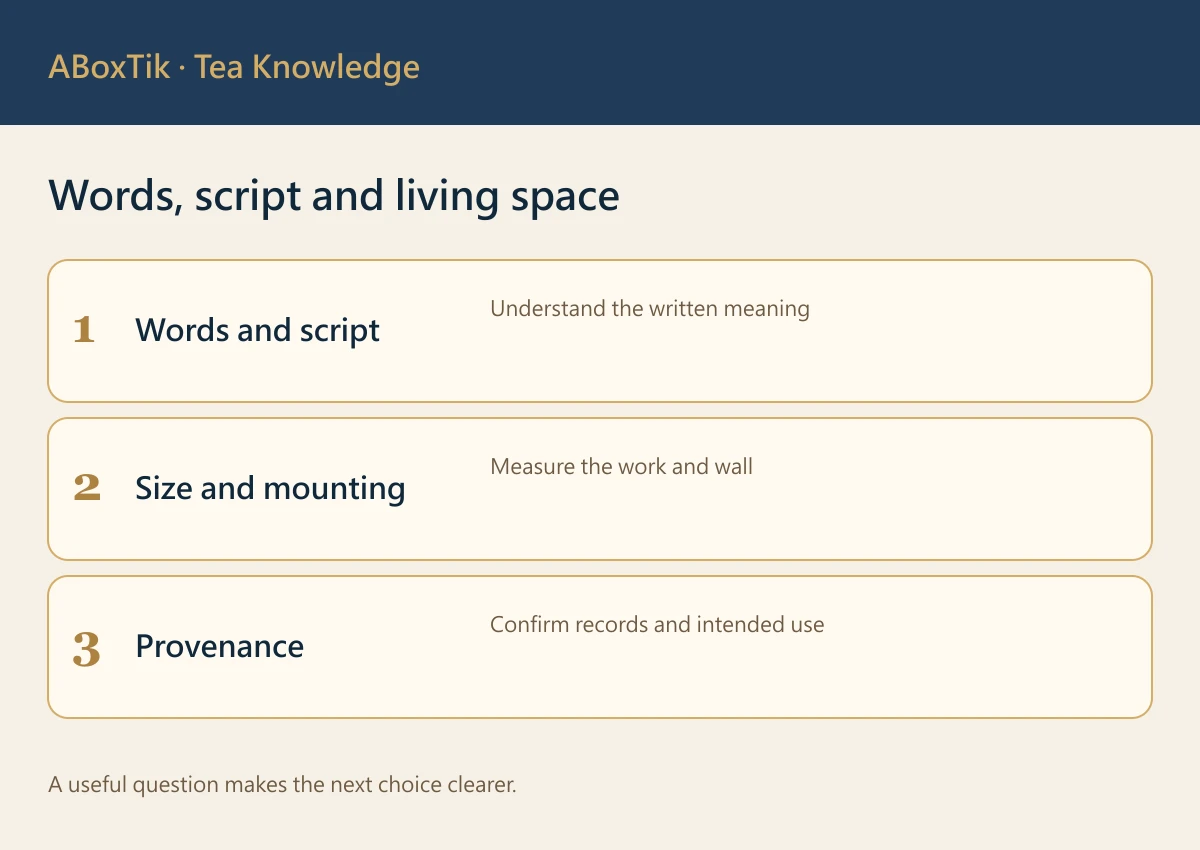
Read the transcription and its context
Request the complete transcription and identify the main text, inscriptions, signature and seals. For a poem or older passage, understand its fuller context too. A fragment can carry a different emotional tone when returned to its source, so read it before deciding it should become a daily companion.
For a gift, consider whether the recipient welcomes the words and has an appropriate wall. A powerful-looking character should not quietly become an unexpected decorating project. the tea gift box guide uses a related principle: attend to practical use and leave the recipient room to choose.
Museum object pages show how author, script, transcription, material and inscriptions can be recorded separately. Those fields model useful clarity, but a museum record does not establish the identity or authenticity of a different work offered for sale.
Measure twice: the work and the full mounting
The image or paper dimensions may differ from the overall hanging scroll, mount or frame. The National Palace Museum’s object record distinguishes the main work from the full format, a useful reminder to ask which measurement a seller supplies. The space receives the final outer dimensions.
Measure the wall, neighbouring furniture, walking route and normal sight line. Use clean paper or a removable outline to test the size, then step back to the usual seated or standing position. Assess density and legibility there rather than borrowing the much larger wall in a styled photograph.
Near a tea table, avoid splash routes, direct steam and places where utensils are frequently moved. Ask the artist or framer for suitable display and care guidance. A home tea corner and utensil use benefit from clear working space; art and hot water can each have their own place.
Clarify the actual object: original, print or commission
Ask whether the item is an original, a printed reproduction or another presentation, how its material and production are described, and which mounting and packing are included. Formats can serve different purposes. Clear description is more useful than applying one “original-looking” adjective to everything.
For a commission, agree on the text, intended script direction, dimensions, paper, signature, communication or preview arrangements, completion and delivery. Retain what was actually confirmed. A reference photograph alone cannot ensure both people expect the same result.
If later photography, printing or other uses matter, ask the provider for information suited to that intended use. Possession of a physical work or access to a web image should not be treated as confirmation for making merchandise.
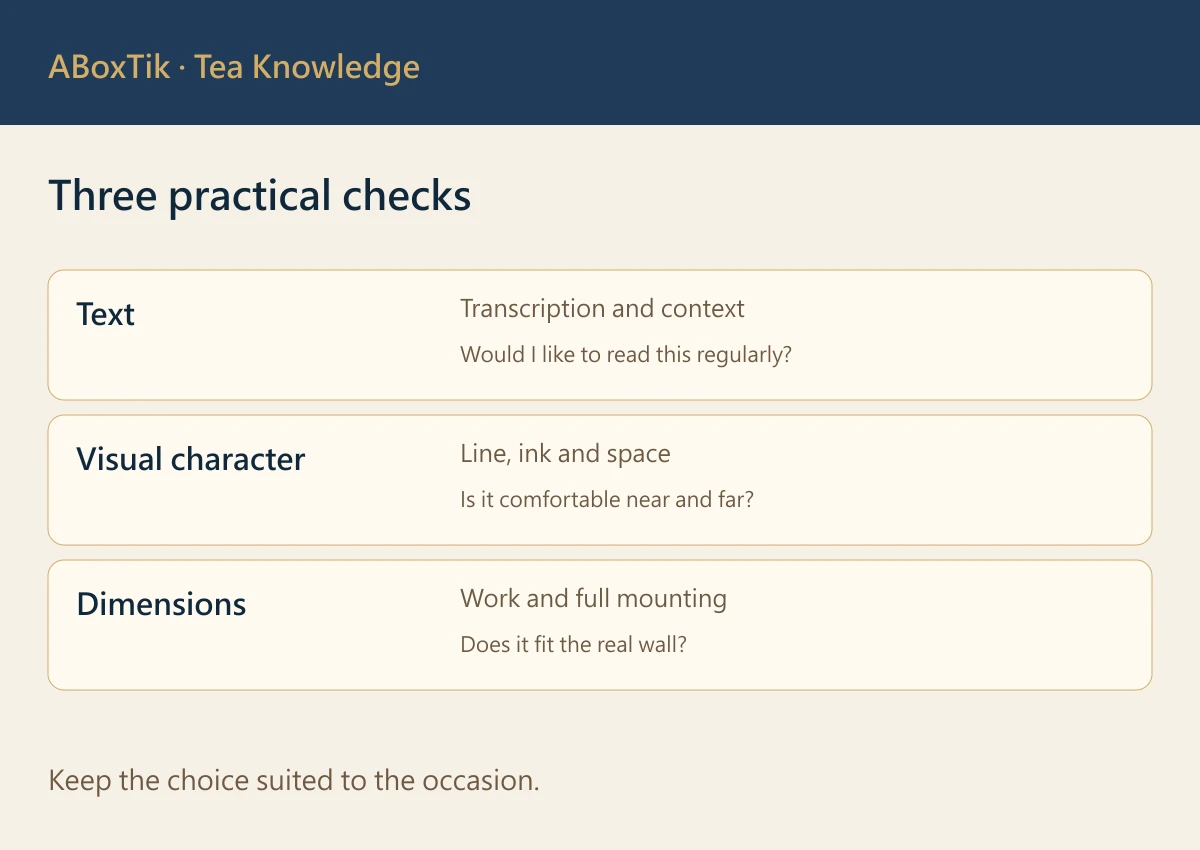
Five fields between liking a work and living with it
| Field | Confirm | Ask at home |
|---|---|---|
| Text | Transcription and context | Would I like to read this regularly? |
| Visual character | Line, ink and space | Is it comfortable near and far? |
| Dimensions | Work and full mounting | Does it fit the real wall? |
| Object | Original, print or agreed commission | What is included? |
| Care | Display and maintenance guidance | Can daily life accommodate it? |
Choose one work and note only the line or empty space that first appeals. Then read the transcription and finally measure the intended space. If it still invites another look after all three, there is a useful direction for further questions. A first exhibition visit need not complete a collecting résumé.
Looking at official collections and exhibitions before buying is also worthwhile. Read Taiwan’s tea landscapes and craft alongside paper, writing and utensils. An attentive habit of looking can last longer than a hurried decision about the most famous object.
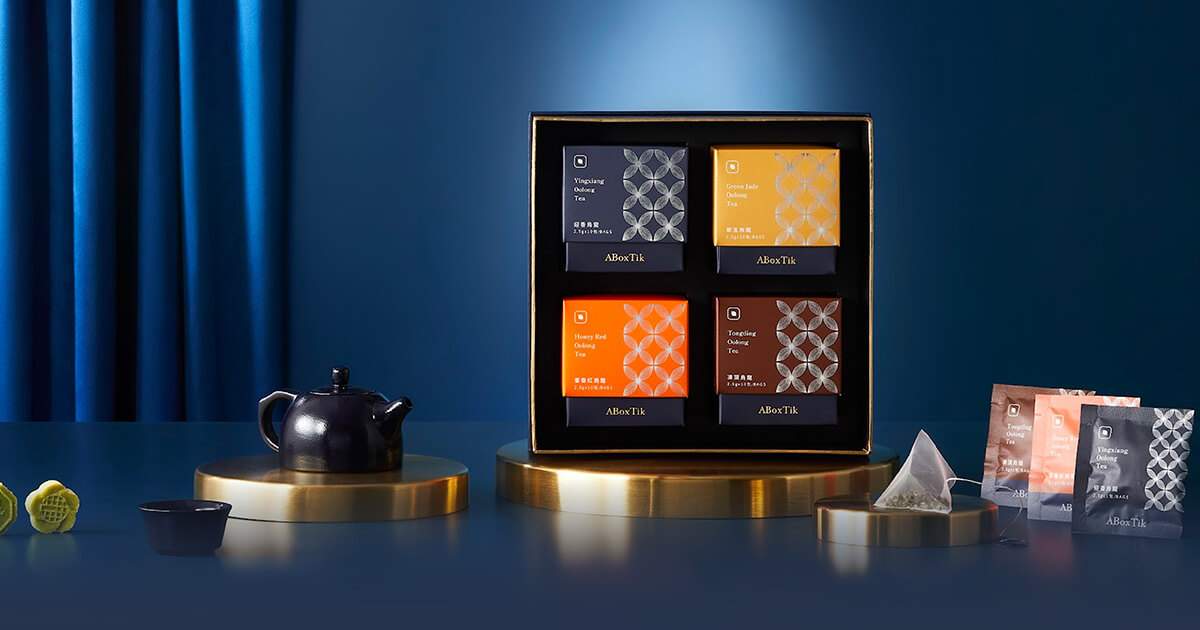
Tea, one box at a time
Give the writing and the tea their own comfortable space
At ABoxTik, craft enters everyday life through a detail worth pausing over. Clearly understood words and a suitable scale make that interest easier to live with, rather than simply adding another object.
For a tea beside the next reading, explore the Classic Taiwanese Tea selection, or continue through Taiwanese paper craft. Let the choice fit the actual room and allow an eye for detail to develop gradually.
Related reading
- Explore Taiwanese paper and material
- Arrange a home tea corner
- View the Classic Taiwanese Tea selection
Sources
Sources checked 20 October 2026.