
Tea Knowledge
Climate Change and Taiwan Tea: Harvests and Flavour
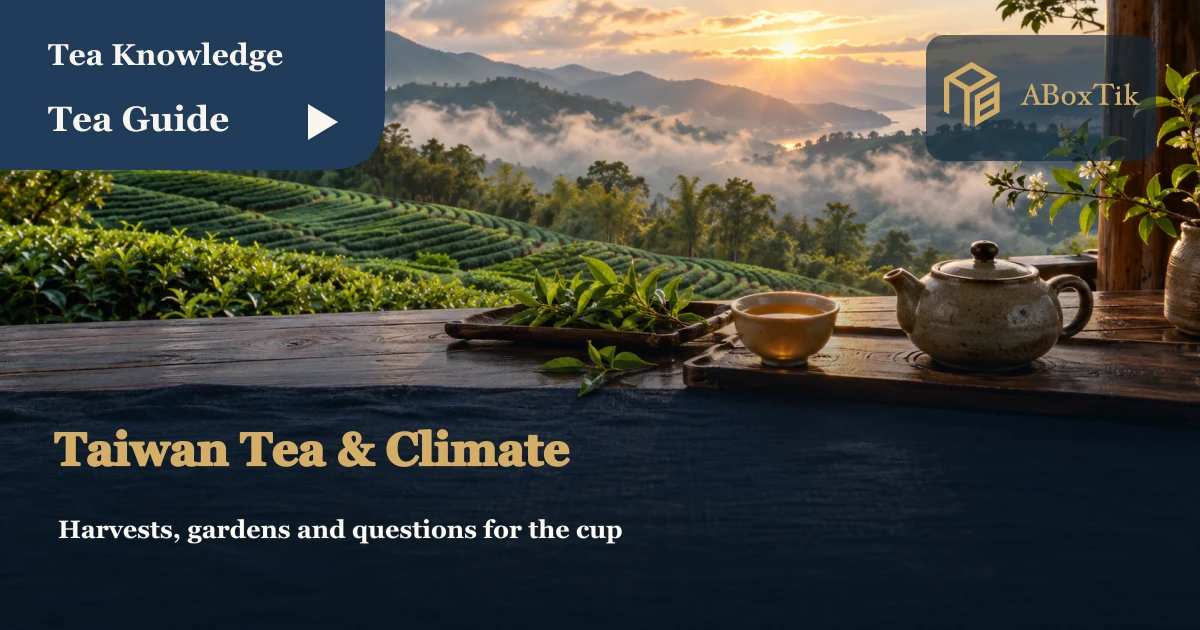
Behind a season of tea are the timing of the rain and the people caring for the plants when it does not arrive.
Climate change and Taiwan tea are connected through growing conditions, particularly water and seasonal patterns. Drought can slow shoot growth, reduce harvests and increase pressure from certain pests or diseases. Flavour still depends on cultivar, place, harvest and processing; one hot spell cannot predict a single outcome for every Taiwanese tea.
If you worry about the future of a favourite spring tea, begin with smaller questions: what happened to this batch, how did the garden respond, and what is in the cup? Your kettle need not take a second job as a climate forecaster for those questions to be useful.
Keep a season’s weather separate from a long-term conclusion
A hot day or a dry harvest season is a specific event. Climate change concerns longer-term shifts and risks. When reading a report, identify its location, date and observation period before applying it to another tea garden or year. A local loss does not establish the same result everywhere.
The Tea and Beverage Research Station’s 2023 spring-drought notice described uneven, delayed or stalled budding in some water-stressed regions and suggested responses for that situation. It is a dated example of how water shortage affects growth. Its seasonal forecasts should not be treated as forecasts for this year or the next harvest.
Read Taiwan’s diverse tea landscapes and the high-mountain tea introduction for context. Elevation, location, water access and management differ. Gardens sharing a green patch on the map do not necessarily share the same growing conditions or ability to respond.
Water matters in its timing as well as its total
A yearly rainfall total cannot explain every garden’s access to water when shoots are growing. The drought notice describes slow or stopped budding where water is insufficient, with leaf loss and dried branches possible in more severe cases. Harvest decisions must therefore respond to the actual state of the plants.
The station’s June 2025 management advice also discusses drainage during seasonal heavy rain and advance preparation for water management. Water shortage and waterlogging are different problems. A consumer can understand those broad concerns without treating one monthly bulletin as an instruction calendar for every garden.
Read the year, season, region and batch together when considering a harvest name. Our winter-picked and winter high-mountain tea comparison separates two commonly confused terms. Extra winter shoots have their own conditions; their presence alone does not measure climate change or guarantee a larger harvest under warmer conditions.
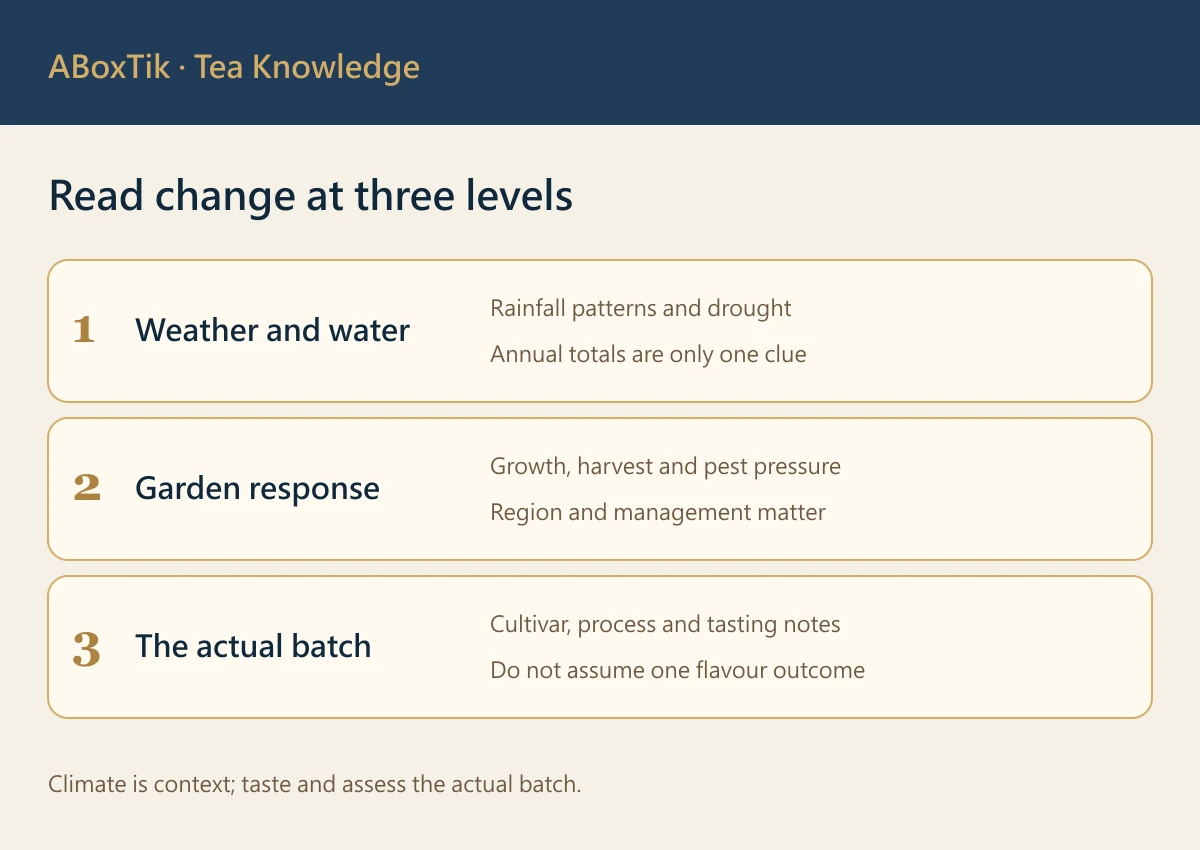
Ask which pests and which conditions are involved
Drought can affect plant condition directly, while official guidance also identifies certain pest and disease pressures associated with dry conditions. The station’s drought material discusses problems including branch dieback; its spring notice identifies management concerns such as mites and leafrollers. Monitoring involves plants, moisture and particular organisms together.
That does not mean every pest increases whenever temperatures rise. Different organisms and locations have different conditions. A photographed leaf notch or yellow patch is not enough for an online diagnosis. On a garden visit, ask growers how they observe and manage the situation; identification and treatment depend on current local technical advice.
For buyers, useful questions concern the record of the raw material and the product information that can be checked. The tea-label guide offers a reading sequence, while whole and broken leaves explains why appearance is only one clue. One leaf need not stand trial on behalf of an entire garden.
Look for specific adaptation rather than a broad slogan
The station’s drought guidance includes maintaining irrigation equipment, ground covering, grass management and attention to weather information. Such approaches have conditions and practical limits. A garden’s water source and plant condition matter; a photograph of one measure does not establish that adaptation is complete.
Turn broad environmental language into questions with a scope: which garden, which practice, and which problem is it intended to address? Then ask for a concrete explanation. Tea’s carbon footprint concerns a different scale of information. Reducing emissions and responding to water shortage can be related, but one is not evidence that the other has been achieved.
A single tea package cannot carry every agricultural question. Growers, brands and drinkers have different roles. Clear source information, appropriate storage and using the tea already purchased are manageable starting points. If the effectiveness of a measure matters to your decision, ask whether comparable records exist over time.
Flavour differences need comparable information
Garden conditions influence raw material, and harvesting and processing continue to shape the finished tea. A difference between two years may involve cultivar, batch, oxidation, roast, storage or brewing as well. Two cups remembered differently cannot assign all those differences to climate. The oxidation guide and roasting process supply other relevant clues.
At home, keep a record rather than claiming a causal experiment. Write the tea name, batch, leaf amount, water, time and vessel before noting aroma and mouthfeel. The smelling guide and brewing sequence help organise an observation that can be repeated.
| Checkable details | Brewing conditions | Personal impressions |
|---|---|---|
| Region, cultivar, harvest | Leaf amount and water | One clear aroma word |
| Batch and source information | Temperature, time, vessel | Strength and texture |
| Reported seasonal conditions | Date and storage | Difference from last time |
The final field can describe a difference without assigning a cause. Keep the question open until the conditions align. A useful notebook is allowed to contain questions that do not graduate on the day they are written.
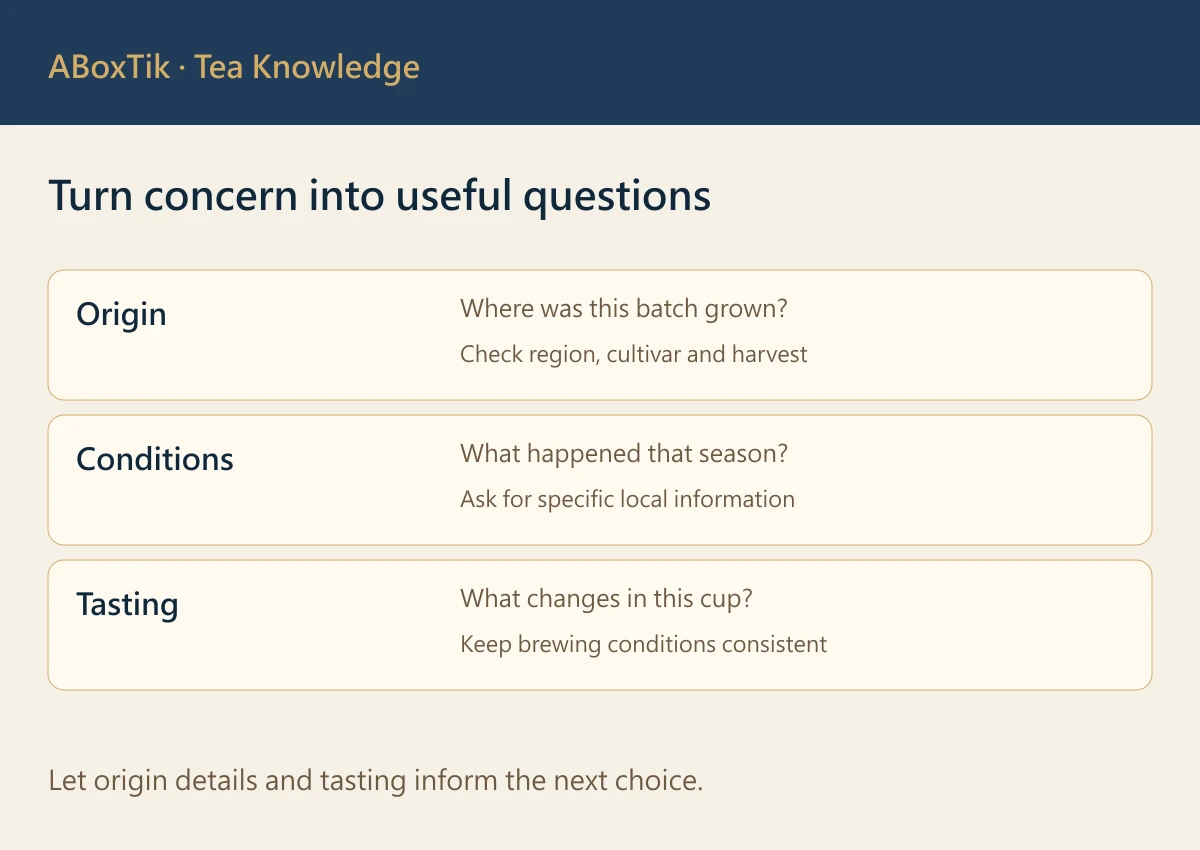
Make three practical, considerate choices
First, ask about the batch and its suggested brewing method. Second, choose a quantity that fits your drinking pace and store it carefully. Third, allow for batch variation without romanticising difficult growing conditions as a guarantee of better flavour. Tea still needs care, and agricultural risk need not become a dramatic sales story.
For everyday tea, use fresh and roasted styles to organise preferences, then check the current options in a four-oolong gift set or two-tea set. Tea style and format help narrow a choice; the actual product information still needs to explain its source and specification.
Bring an answerable question to a shared pot: what harvest information is stated, or shall we try the same cup again next time? Understanding a little more about the source and looking after tea already at home are concrete actions. When a concern feels very large, a small question with a clear answer can be a kind place to begin.

Follow ABoxTik: a cup’s details can bring a season’s care closer.
See the care behind each season of tea
Tea’s story includes more than mist and aroma. Water, soil and growers’ daily decisions belong in it too. Learning about those conditions can deepen enjoyment without making every cup feel heavy.
Add one line about the source before your next brew. Clear questions give the real work behind a season a little more space at the table.
Related reading
- Separate winter tea harvest terms
- Explore processing and flavour
- Choose from clearly described tea styles
Sources
- Tea and Beverage Research Station: spring drought response, 2023
- Tea and Beverage Research Station: drought and foehn-wind guidance
- Taiwan Quality Tea: June 2025 production-management guidance
Sources checked 18 October 2026.