
Tea Mixology
Two-Person Tea Mocktail: Honey Red Oolong & Berry Design
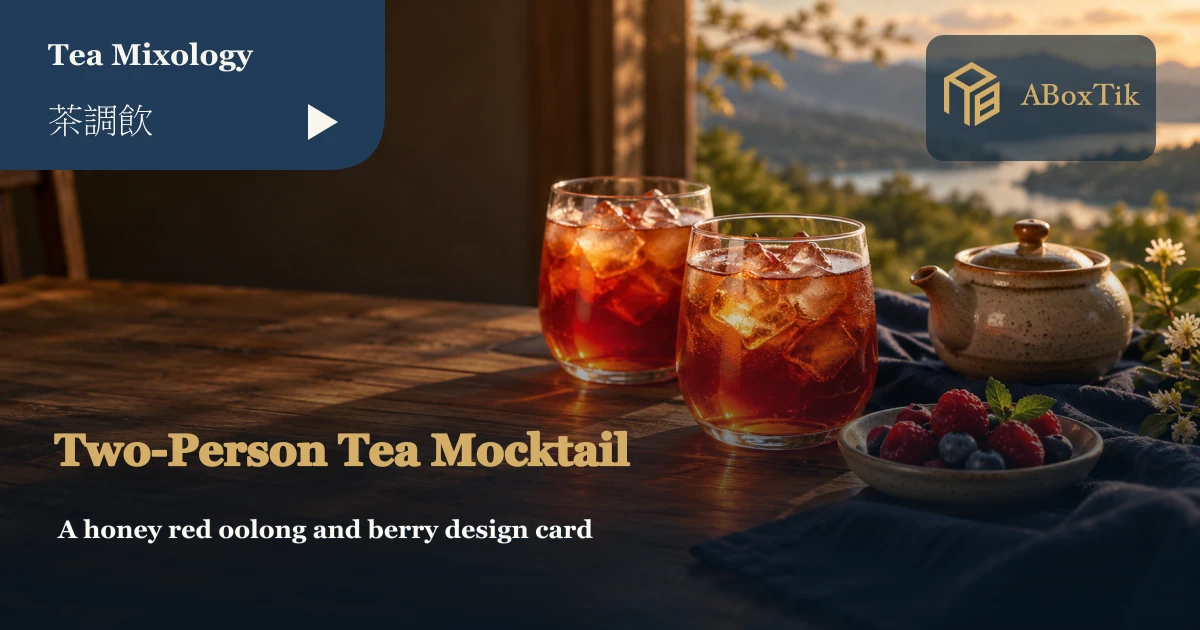
Two glasses do not need the same preference; they only need the same thoughtful starting point.
For a two-person tea mocktail, share a honey red oolong base, then compare berry acidity, sweetness, ice and optional sparkling water in separate glasses. This proposed design method is ready for small trials and a blank record card, with room for both people’s preferences.
Make a tea you already recognise, then taste and note it in small portions before mixing. One person may want the berry note brighter; another may want honey red oolong to stay in the foreground. Both preferences can begin with the same tea base. The guide below maps tea, acidity, sweetness, melting ice and the order of sharing.
Start with four jobs: tea, acidity, sweetness, and ice
A shared non-alcoholic tea drink becomes easier to design when each part has one job. Honey red oolong gives the drink its tea identity. A berry ingredient may bring aroma, acidity, sweetness, and water at once. A sweetener can soften a chosen edge. Ice lowers temperature and gradually adds water. Calling every component simply delicious makes the next adjustment impossible to locate; giving each one a job makes the conversation quieter and more useful.
For two people, choose one question for a round, such as whether berry acidity obscures the tea. Keep the other conditions as steady as practical. One person can prefer a brighter fruit direction and the other a gentler one without either glass becoming the official answer. The useful part of sharing is not forced agreement; it is having two careful observations of the same starting point.
The Tea and Beverage Research Station notes that water temperature affects tea liquor. That is enough reason to meet the tea before asking it to support other ingredients. Begin with a familiar brewing method and a simple aroma observation, following the information for the tea in hand. Record both observations clearly, then choose one concrete change for the next round.
Let honey red oolong be a tea base, not fruit’s background music
Taste the unmixed tea first and write one line about what you hope to keep. It might be a ripe-fruit direction, a honeyed suggestion, a fuller texture, or simply a calm note that suits the evening. It does not need to sound like a professional tasting sheet. A sentence you both recognise gives the berry component a clear place to enter later.
For two glasses, divide a prepared tea base into small tasting portions before building the drinks. Start with the package guidance or a brewing approach you know, then note the actual tea, water, temperature, time, and straining method. Honey Black Oolong introduction can help separate product information from this evening’s observation. Those are different records, and it is helpful to let them remain different.
If honey red oolong is not available, do not force a near name or a random substitute into the plan. Save the card for another day, or practise the same method with a familiar Taiwanese tea. Taiwanese tea’s landscape and craft offers a wider starting point for understanding what a tea brings to the table. A good worksheet can wait for the right ingredient.
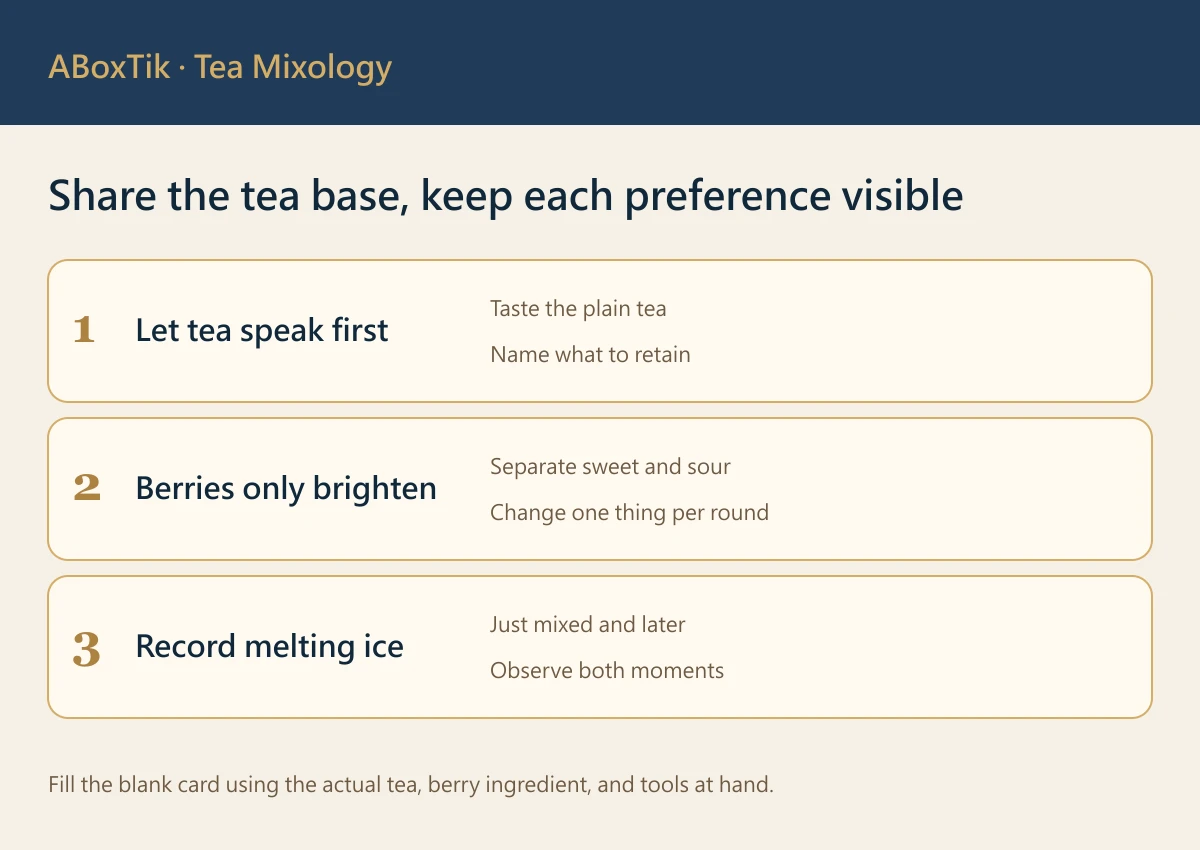
Bring in berry acidity as a direction, then let each glass make a small turn
Berries may arrive as fresh fruit, purée, juice, or another clearly labelled non-alcoholic ingredient. Those forms do not bring the same acidity, sweetness, water, or aroma. Read the label and look at the actual material before choosing what this round will observe. If the berry ingredient is already sweet, the sweetness column may stay blank. If it is particularly sharp, give it a smaller role first. Fruit does not need to do every job in the glass.
A useful two-person comparison keeps the tea base and ice conditions shared, then lets one berry-related variable differ. You might hold one glass at a quieter fruit direction while the other explores a slight shift, or notice how the same ingredient presents at a different point in the mixing order. Record the actual amounts along with berry form, tea strength, ice and glass shape, so a preferred direction can be repeated.
Smell before tasting, then write separately whether the tea remains audible and where the berry note appears. If acidity takes over, pull back only that component on the next round. If sweetness and fruit are all that remain, revisit the tea base first. Aroma observation and notes can offer vocabulary, but a polished phrase should never outrun what was actually noticed.
Use sweetness to refine an edge, not to retake the tea base’s exam
Sweetness can tempt us to solve acidity, bitterness, thinness, and uncertainty all at once. Usually it solves only part of one of those questions. Combine the tea and berry direction, smell, and taste before deciding whether sweetness belongs in the next comparison. If it does, make it the one new variable. This protects the drink from the familiar spiral of adding sweetness and acidity together until nobody knows what changed.
The two glasses may finally take different paths. One person may want a rounder impression and the other may want a cleaner, brighter line. Record those as preferences after the basic tea-and-berry relationship is understood; neither preference needs to be promoted as correct. Shared tea can accommodate two opinions without needing a winner.
If the original tea is distinctly bitter or astringent, do not ask sweetness to cover the entire situation. Review brewing conditions, leaf amount, and steeping time first. Observing tea bitterness and astringency gives a useful next step. Keeping sweetness in its own lane leaves more room to hear both tea and fruit.
Include melting ice and optional bubbles in the second half of the drink
Ice is not merely decoration for a cold drink. It changes both temperature and water content as time passes, so it changes the relative impression of tea, berry, and sweetness. For a two-person trial, use a similar ice type and filling approach in both glasses, then note what happens just after mixing and after a short rest. Changing tea, fruit, ice, and glass all at once makes for a lively memory but a poor next-round clue.
If plain sparkling water belongs in the design, add it after the other ingredients and ice are in place, then mix gently. Bubbles are an optional role, not a requirement for tea. Comparing sparkling and still versions can reveal different impressions of aroma and acidity. Sparkling oolong design ideas offers another entry point, though it is not a numerical answer for this two-glass card.
Record the glass as well: opening shape, ice height, and room for a calm stir can change the actual experience. Check that liquid and ice sit comfortably before pursuing a photograph. A tablecloth is already employed; it does not need a second career as a liquid-absorption test.
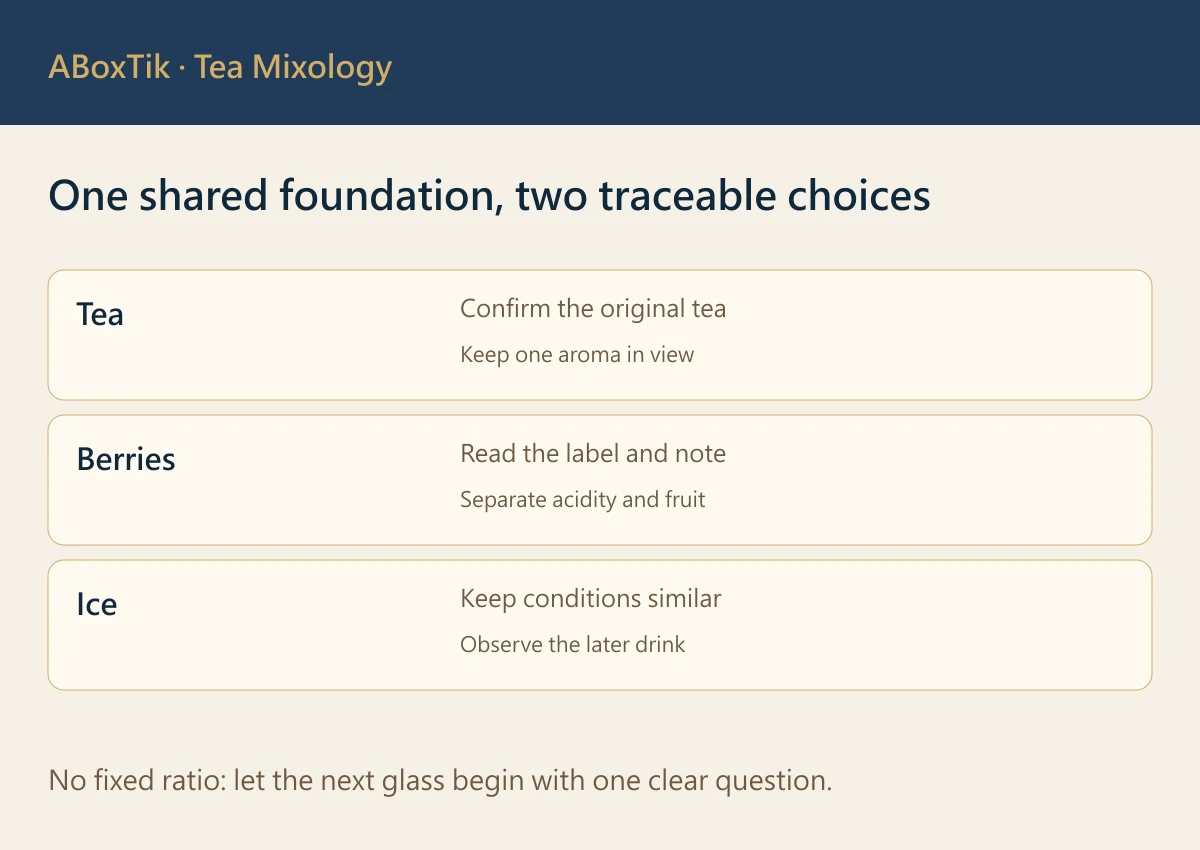
Share in two stages: confirm the common base, then keep personal preferences visible
When one tea base serves two people, let each person taste it before the design begins. Name what this round is comparing and what will remain unchanged. Divide the shared foundation between the glasses, then let berry or sweetness choices take their individual turns. The aim is not identical drinks. It is differences with a visible origin.
Take turns naming one welcome feature and one thing to revise next time. ‘I want the tea to stay clearer’ or ‘I want the acidity later’ gives a more practical next step than a verdict of good or bad. If the gathering wants to return to tea alone, brew a Taiwanese tea selection first and decide about mixing later; the product page and package information remain the source for a specific item.
A round does not need a formal result announcement. One person may return to plain tea while the other continues with berries; both choices belong on the card. A tea mocktail’s modest pleasure is turning ‘I do not know’ into ‘next time, I want to change only this.’ Plan any remaining ingredients around the actual need, and let the conversation stay open rather than become a scorecard.
A blank two-glass worksheet is more useful than a borrowed answer
Fill the card using the actual tea, berry ingredient, tools, preparation conditions and people present. If one person wants to begin alone, one preference column is enough. Choose a single adjustment for the first round, then decide whether it deserves a second round. That reveals more than changing four things at once.
The record is not an audit of a drink. It simply saves the next gathering from guessing. Note material labels and conditions so the two of you can tell whether a difference came from tea, berries, ice, or preference. For a broader non-alcoholic structure, see the non-alcoholic tea mixology guide. This page stays focused on shared foundations and individual choices.
| Record | Shared foundation | Glass A preference | Glass B preference |
|---|---|---|---|
| Tea aroma or texture to retain | ______ | ______ | ______ |
| Tea, package details, and brewing conditions | ______ | ______ | ______ |
| Berry ingredient and label | ______ | ______ | ______ |
| One adjustment in this round | ______ | ______ | ______ |
| Ice, bubbles, and glass conditions | ______ | ______ | ______ |
| Just mixed / after resting | ______ | ______ | ______ |
| One change for next time | ______ | ______ | ______ |
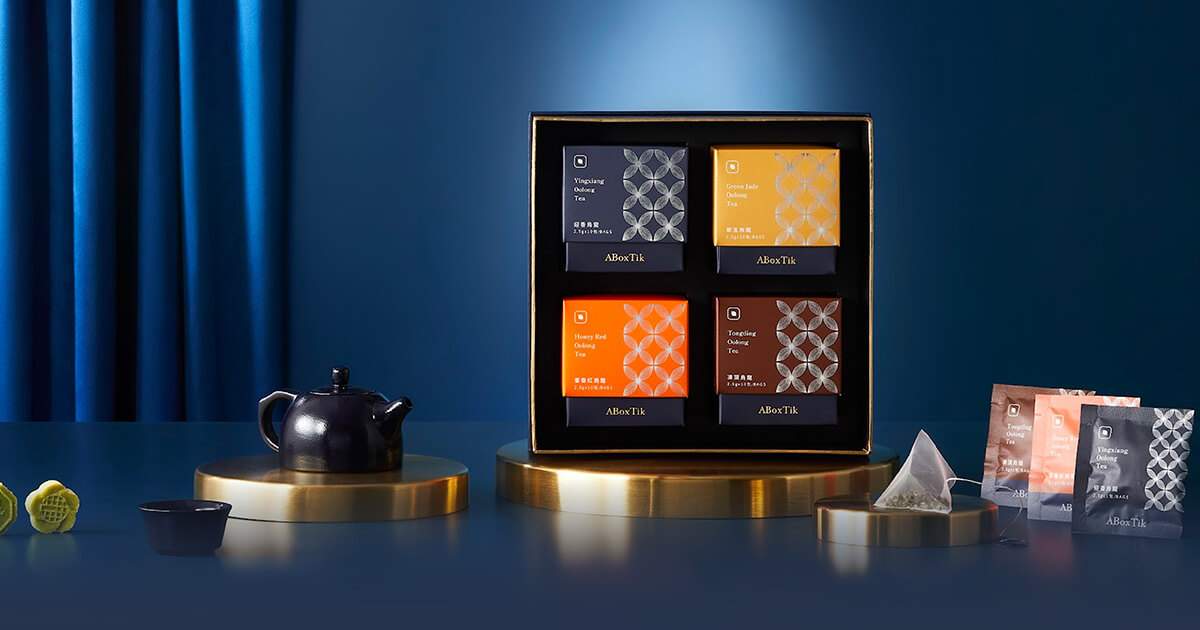
Explore tea with ABoxTik
Let the next glass begin with one clear question
A two-person tea mocktail does not need a fixed ratio to prove harmony. Brew honey red oolong into a tea you recognise, then let berries, sweetness, and ice each answer one question. Two preferences can still begin from the same good tea.
ABoxTik believes a quiet observation is more useful than rushing toward a perfect answer. Leave the blank card on the table, and the next glass will not have to begin from a guess.
Related reading
- Read the non-alcoholic tea mixology guide
- Honey Black Oolong introduction
- Continue with sparkling oolong design ideas
Sources
- Tea and Beverage Research Station: Innovation in Taiwanese tea beverages
- Tea and Beverage Research Station: Effects of water quality and temperature on tea liquor
Sources checked 19 October 2026.