
Handmade Tea Set
Tenmoku vs Shino Tea Bowl: Glaze, Form and Everyday Use
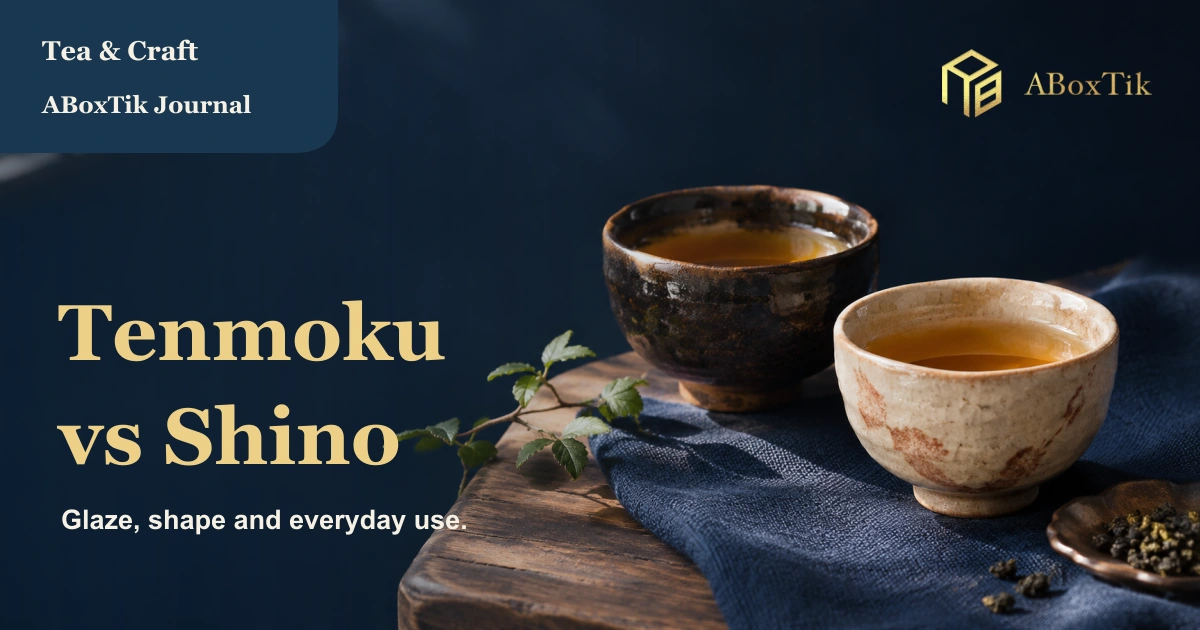
A Tenmoku vs Shino tea bowl comparison starts with the individual glaze, shape and intended use. The name gives you a direction to explore; current photographs, measurements and your own handling habits help turn that interest into a choice.
Liking both bowls is a perfectly reasonable starting point. A tea table does not need an annual champion. Work through the rim, foot, lighting and a few questions before deciding which piece belongs in your next cup.
Tenmoku vs Shino tea bowl: appreciation or everyday reach?
Name the occasion first: a quiet weekend looking closely at glaze, a small daily pour, or tea served to a friend. Appreciation may put changing reflections first; frequent use adds the rim, handling and cleaning to the decision. These wishes can overlap. Giving them an order simply helps when two attractive pieces ask for attention.
Look at a dark glaze for its reflections and contrast with the liquor; look at a lighter surface for its space and texture. These are ways to observe an individual work, rather than fixed personalities assigned to glaze names. The cup you actually pour and the shelf you actually use are part of the choice.
Do not turn historical names into fixed colour chips
The National Palace Museum’s black-glaze background helps explain why such wares matter in later Japanese tea culture; it does not define every contemporary Tenmoku bowl. Sakai and Gifu official material likewise shows several Shino expressions, not one universal white.
History is useful for vocabulary. The current photographs, maker description and your own use are what answer a buying decision.
Read form with the hand before the camera
Look for a comfortable place for fingers, a foot that suits the table and a rim appropriate to the way you sip. A dramatic opening in a photograph may have a different everyday feel. Ask how the measurements were taken and whether photographs show the current piece from more than one side.
The Traditional Chinese Shino listing describes an approximately 12cm mouth and 8.5cm height. Its general size field differs, so confirm the actual piece before using those dimensions for a shelf or planned tea setting. Ask separately about empty weight, capacity and care when those details matter; a shipping field does not answer all of them.
Use one familiar tea as a visual reference
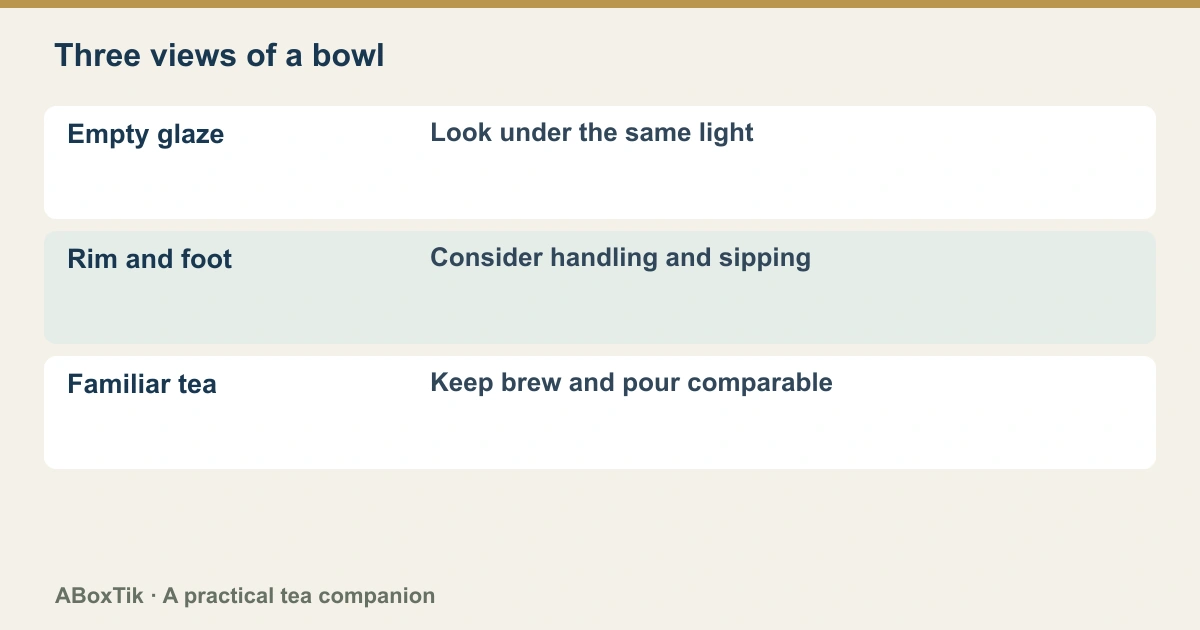
Prepare one familiar tea with the same brewing conditions and similar poured amounts. Begin with the empty bowls in one location, then add tea and look again. Move both to another light that you normally use. Record which details stay visible and where you would enjoy placing the bowl tomorrow.
The glaze and tea-colour observation guide offers useful vocabulary. Keep the question visual: what do you like seeing here? A photograph alone does not establish that one bowl has made the tea sweeter or fuller.
| Condition | Keep comparable | Note |
|---|---|---|
| Empty glaze | One surface and light | Which angle catches my attention? |
| Familiar tea | Same brew and similar pour | Can I see the liquor clearly? |
| Daily setting | Window and usual lamp | Where would I use this bowl? |
Ask about the individual handmade work
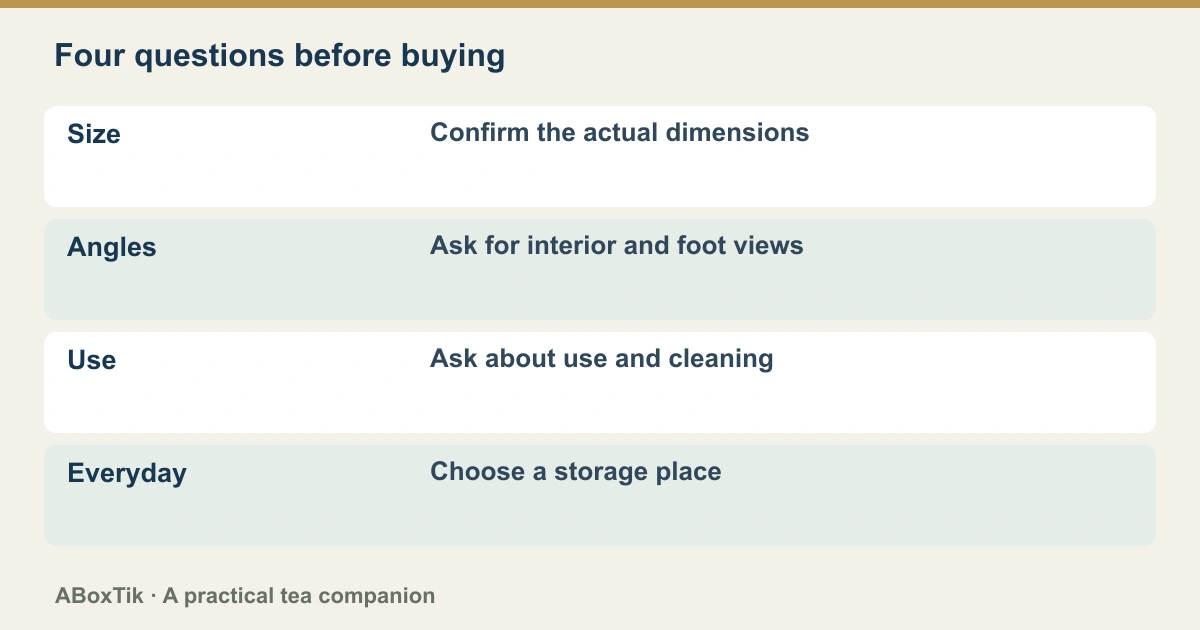
Use front, side, interior and foot photographs to examine the actual handmade work. If a particular texture would change the buying decision, ask about that exact area and its intended use. Sending a clear question about one feature is more helpful than asking whether every handmade variation is normal.
The handmade characteristics guide helps separate acceptable variation from a point to clarify. The maker and work research guide offers context. Looking closely and asking practical questions can coexist with appreciation; both prepare you for living with the piece.
Tenmoku vs Shino tea bowl: use the current collection
For current browsing, visit the teaware selection and read each listing for its stated maker, form and photographs. The Chinese examples in this comparison are a Zheng Shunren Tenmoku work and a Jerry Lee Shino bowl. Use the broader English collection to explore available work and confirm the exact piece with the shop if either example interests you.
A small-bowl name is not a capacity measurement, and a front photograph cannot show the whole form. Ask for the rim, foot, empty weight and practical care information that matters to your use. Compare how each piece answers the same job, rather than forcing different works into a single ranking.
Try an eight-minute purchase check
One minute for empty glaze, two for rim and foot, two for listed details, two for storage and cleaning questions, one for the seller question. This small sequence separates a real concern from a passing scroll.
If both bowls still appeal, choose one for the present use and keep the other as a future reference. Tea does not demand a final thesis.
| Check | Question to ask |
|---|---|
| Rim and foot | Could I see these from closer angles? |
| Dimensions | What are the actual mouth, height and empty weight? |
| Use and care | How is this particular work intended to be used and cleaned? |
| Storage | How were the dimensions measured and what comes with it? |
Move to history only when history is the question
For a wider context, read the Taiwan ceramic craft history guide. For a current purchase, return to the product page and the one detail that changes your decision.
A bowl can carry craft history and still be allowed a modest job: meeting a hand, a table and a small pour tomorrow.
A Tenmoku vs Shino tea bowl comparison ends with the work and the use you have in mind. Save one clear question about glaze, handling or dimensions, then return to the listing or seller. A bowl you want to reach for tomorrow already has a useful place at the table.
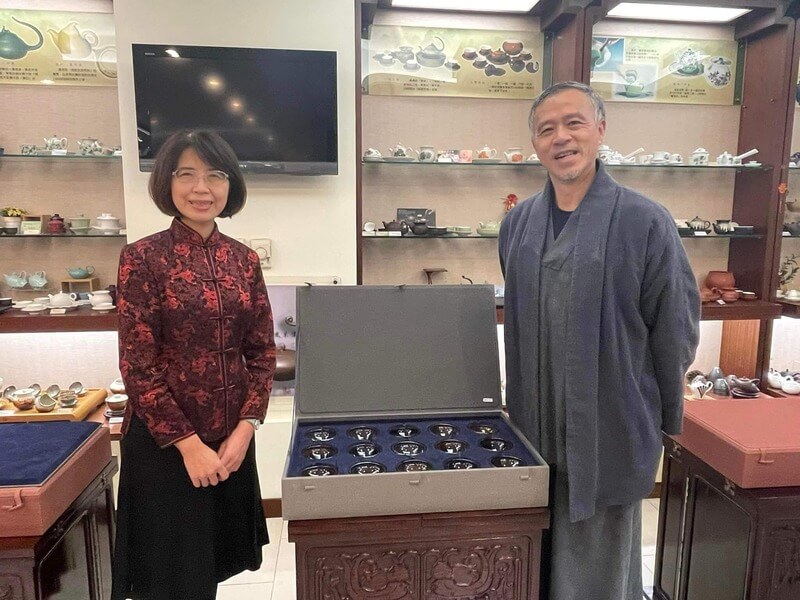
A quiet tea table can browse gifts, articles and current selections slowly; the bowl you want to reach for tomorrow rarely needs a dramatic audition.