
Tea Knowledge
How to Observe Tea Liquor in a Celadon Cup: Glaze, Light and Notes
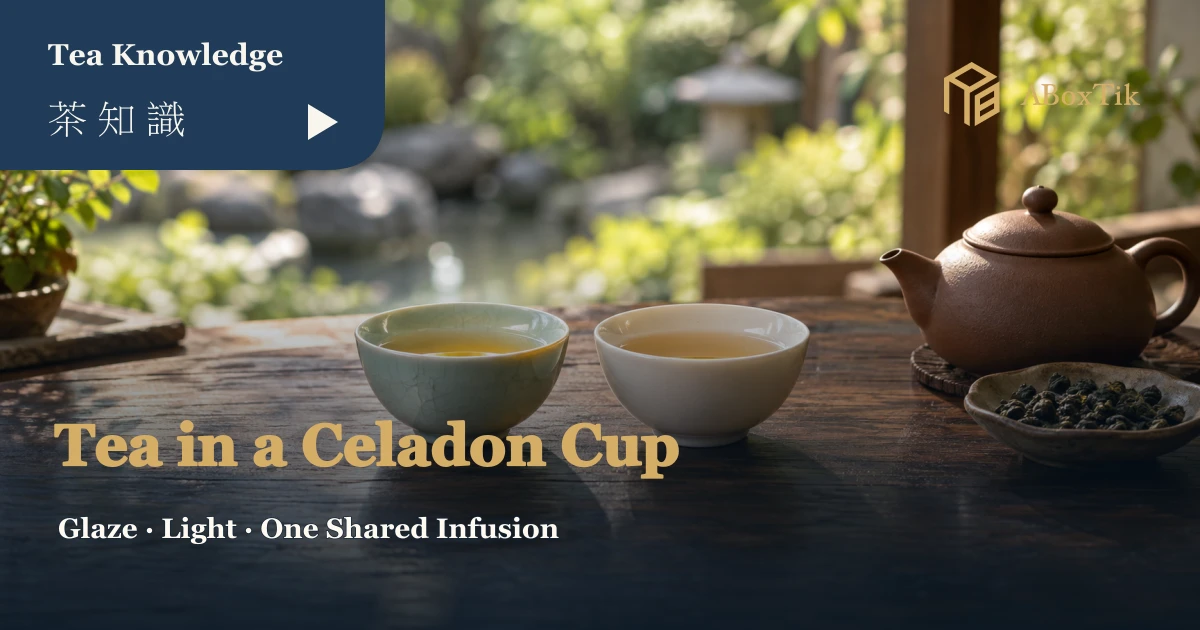
Celadon does not turn tea into a fixed answer. It gives light, glaze and this one infusion a quiet place to meet.
A celadon tea cup can help you observe tea liquor, as long as you treat it as a viewing condition rather than a quality judge. Put the same oolong in white porcelain, celadon and a dark cup and your eye receives different contrast. Daylight, table colour, the interior glaze and the amount of tea all join the conversation. The useful starting point is one familiar tea, with the light and serving volume kept steady.
If you are wondering whether white porcelain is the only “correct” choice, take the pressure off. A white or pale interior is convenient for seeing small changes in liquor colour, but it is not the only way to enjoy tea. Celadon offers its own colour, reflection and hand-feel. For a broader material overview, see our porcelain brewing guide; if the brewing vessel itself is still undecided, begin with gaiwan versus teapot.
Where does celadon’s colour come from?
The Museum of Fine Arts, Boston’s CAMEO materials database describes celadon as an iron-containing grey-green glaze, made by firing iron oxide in a reducing atmosphere. That outcome belongs to the recipe and firing together, not to a single universal swatch. One cup may read blue-grey, another soft green, transparent or milky; even a closely related glaze may reflect light differently.
So do not ask a cup to prove that it is the “most accurate” before it has even met your tea. Its interior creates a coloured viewing environment, where yellow, amber or gold liquor meets reflected light. For Taiwanese ceramics in a wider context, visit our pieces on Yingge ceramics and Taiwanese ceramic craft. For any individual cup, the maker’s information on material, intended use and care is the useful detail to keep close.
Celadon tea cup observation: note three conditions
The tea can remain the same while its appearance changes. That is not a failure of your eyes; it is the room taking part. For a first observation, note three conditions, then keep the lighting and volume consistent:
- Glaze: look at the interior, not only the exterior. Is it more blue, green, grey or yellow?
- Light: choose soft window light or one consistent white lamp. Do not compare a window-side cup with a cup under warm overhead light.
- Cup shape and tea volume: opening, depth and fill level change the reflecting surface. Use similar volumes and note the water heights.
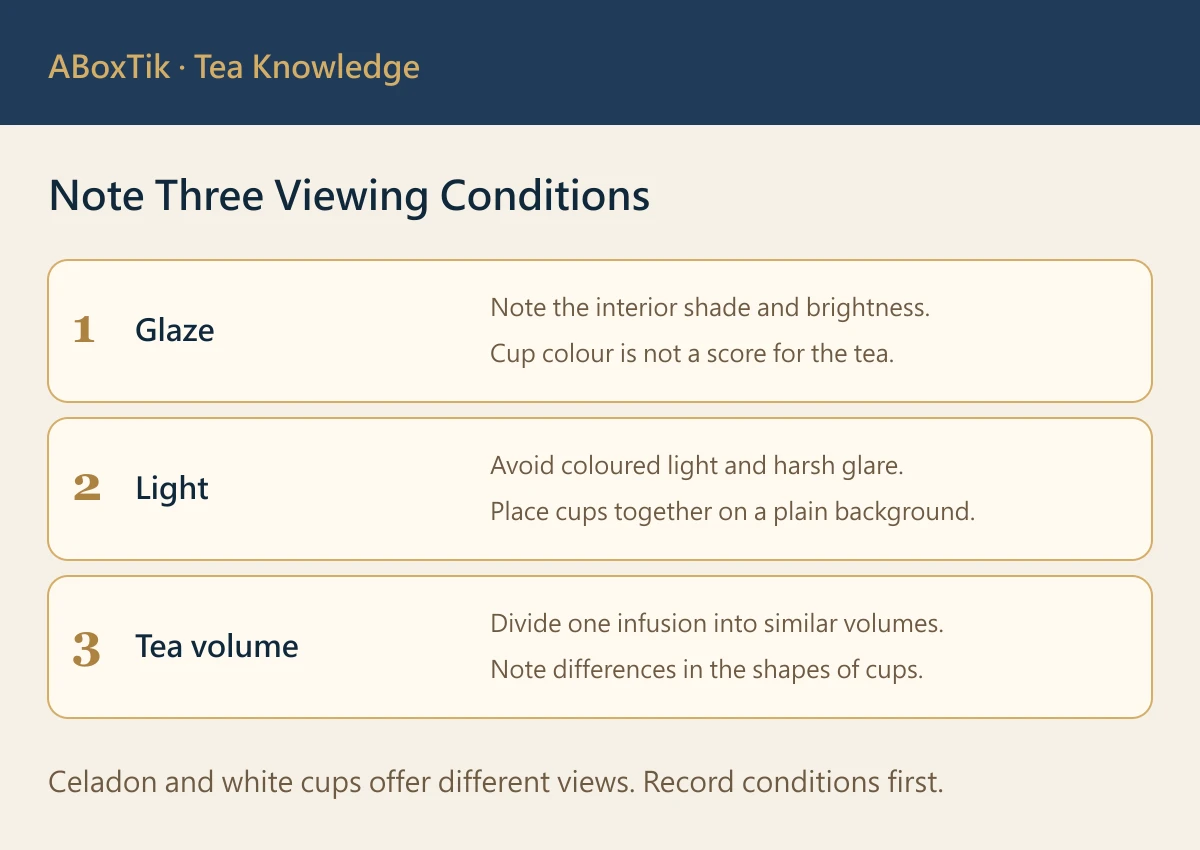
Background matters too. A white napkin, wood tabletop and dark tea mat can make one liquor look different. For notes, use a neutral light background, or use the same mat each time. This is not an attempt to turn an afternoon tea into a laboratory. It simply gives “this one looked brighter” a useful clue to return to.
Celadon or white porcelain: give each a job
The Taiwan Tea and Beverage Research Station’s sensory-evaluation introduction uses white porcelain cup sets alongside fixed leaf amount, water volume and infusion time. White porcelain is one part of a comparable procedure. At home, you do not need to copy the professional setup, but its principle travels well: make the conditions consistent before interpreting the difference. A pale interior is often convenient for reading colour; celadon lets you notice how a colour relationship shifts with light, angle and glaze.
For that reason, use a pale interior when you want an easy starting point for comparing two teas, and use a beloved celadon cup when you want to drink attentively in it. Neither needs to win. If you are making aroma notes as well, follow dry-leaf, hot and cooling aromas; darker liquor alone is not a quality score.
A calm same-infusion comparison
Let both cups receive the same infusion. Brew one familiar tea by your usual tea-brewing method, decant it completely into a serving pitcher, then divide it between a celadon cup and a clean, odour-free cup of similar capacity. Comparing the first cup poured with the last cup poured gives infusion and pouring order an unfair head start.
- Same tea, same brewing: use the same batch, water, method and close water temperature; preheat both cups the same way, or neither.
- Same volume and background: divide similar volumes from the pitcher and place the cups under the same light on a pale background.
- Write the observation: see hue and brightness first, then smell and sip. “Easier to see the colour” or “more comfortable rim” is plenty.
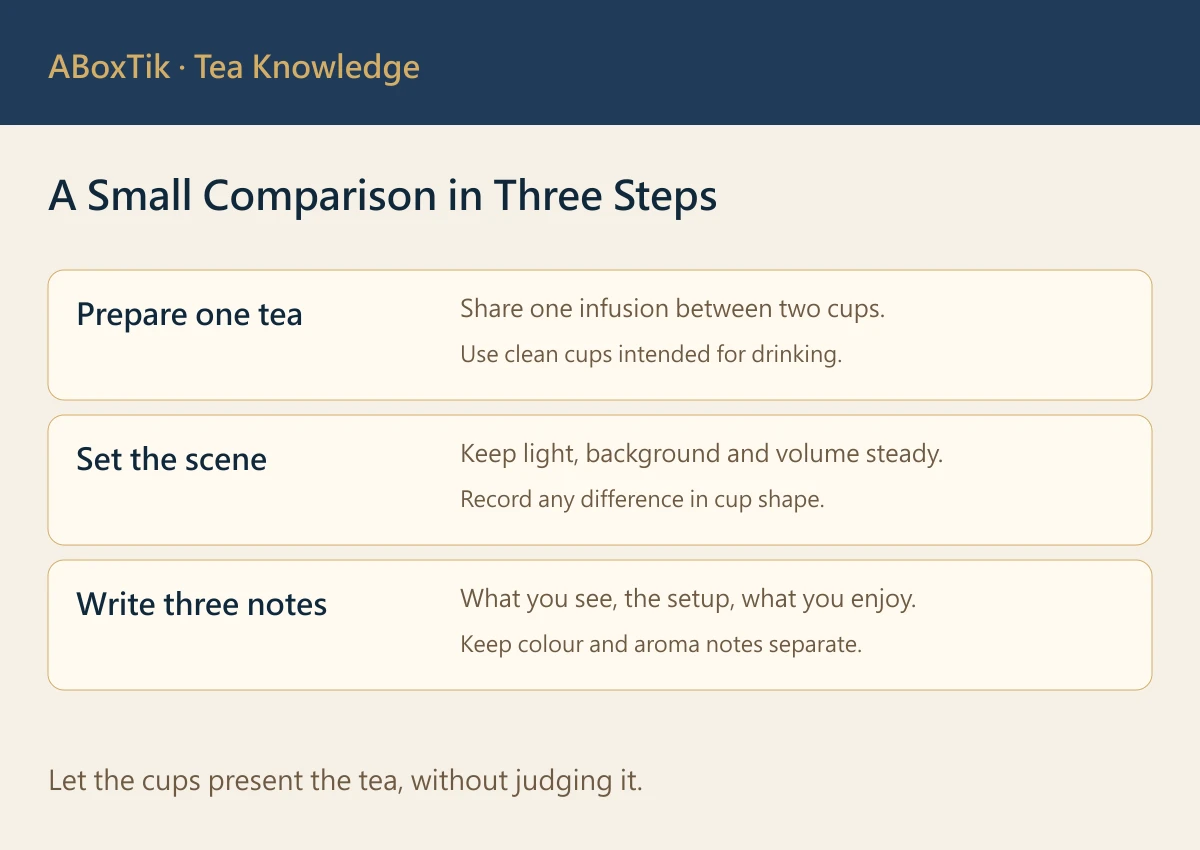
On a second round, swap cup positions. If the difference disappears, that is valuable information about the light. If it remains, record it without turning it into a ranking for every celadon cup or every tea. A good note belongs to this occasion and leaves room for the next one.
Choose a familiar tea for practice
There is no need to use a rare tea. A tea you have brewed a few times, with clear instructions, makes the kindest practice material. Lightly fragrant oolong, pouchong or black tea can all work; the goal is not to rank colours but to recognise how one familiar tea looks in one place. You might begin with Wenshan pouchong, Jinxuan oolong or Taiwanese black tea.
With a more roasted Dong Ding oolong, do not expect every cup to look equally bright. Start with its recommended leaf-to-water ratio, water temperature and steeping time, get to know the tea first, then let the cup join the comparison. Otherwise the cup may steal the tea’s lines.
Shape, crazing and cleaning deserve a second question
A daily cup is also about rim, capacity, grip and cleaning. A wide opening presents more tea surface to light; a deep cup changes fill level and shadow. Those are visual and practical experiences, not promises that one shape makes tea taste better. Test the grip with cool water before buying if possible; it can reveal the honest answer that a filled cup feels less steady than it looked in a photograph.
Craft reference material also notes that glaze cracks, matte surfaces and crazing need to be assessed through their actual condition and the maker’s instructions. If a surface is difficult to clean, chipped, flaking, cracked or persistently odorous, stop using it for hot tea and ask the maker. A photogenic story does not need to become a daily work assignment. Store tea away from light, moisture and odours with the help of our tea storage guide.
Leave the observation in daily life
Celadon’s charm may be less about certifying every liquor than inviting you to look a little longer. Keep one tea, one light and one background steady for a few sessions. You may learn when you reach for a pale cup to inspect colour, and when a celadon cup is simply the companion you want for a quiet afternoon.

Tea with ABoxTik: set the conditions down gently, then let one cup speak for itself.
For a next round with several familiar flavour directions, see the Classic Taiwanese Tea Set. You can also revisit gaiwan versus teapot for the relationship between brewing vessel and cup, or explore what makes Taiwanese tea special for the landscape and craft that come before the cup. A cup does not need to decide for you; it only needs to make the next brew feel unhurried.
Related recommendations
- Porcelain brewing guide: review glaze and shape for everyday use.
- Tea aroma guide: keep aroma and colour notes separate.