
Tea Knowledge
What Tea Goes with a Mid-Autumn Barbecue?
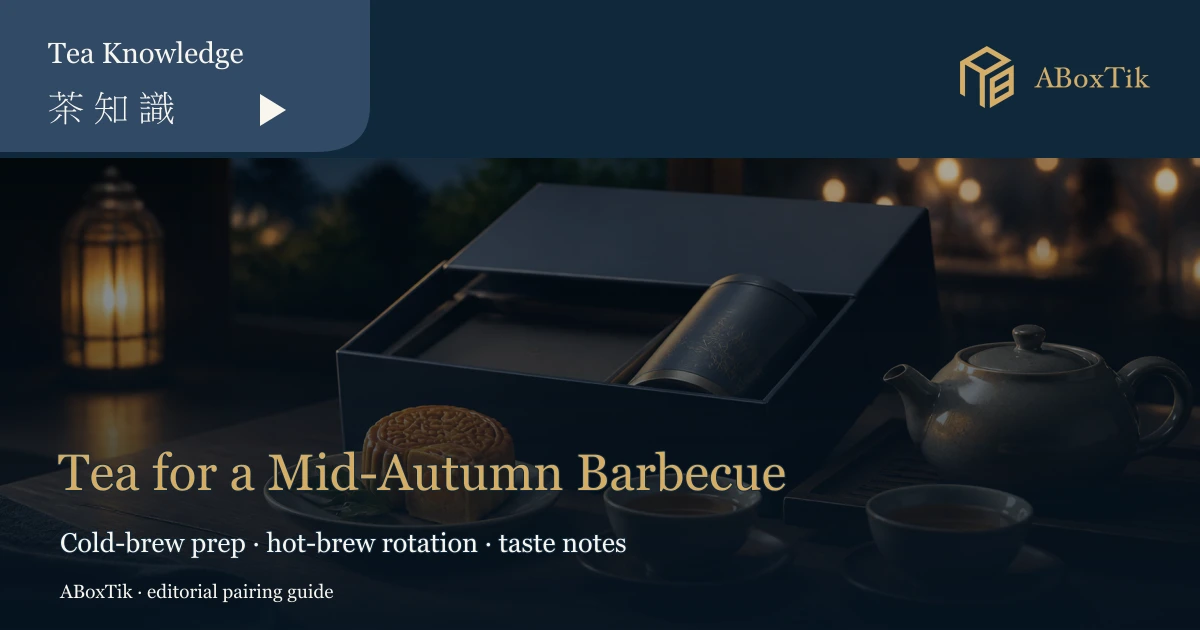
Before the charcoal is lit, let one bottle of tea wait quietly in the fridge. A barbecue table changes quickly; a small tea plan gives it a calmer rhythm.
Tea for a Mid-Autumn barbecue does not need one universal answer. Prepare one chilled option and leave room for one hot brew, then change the strength as grilled food, sauce and dessert arrive. In this guide, “cutting through richness” means only a personal taste impression: a guest may find the next bite clearer or fresher. It does not mean tea aids digestion, metabolism, weight loss, or food safety.
Taiwan’s 2026 Mid-Autumn Festival falls on September 25, subject to a pre-publication check against the official government work calendar. Looking for a present instead of a table plan? Read our Mid-Autumn tea gift box guide. This article has a different job: it is a practical drinking sequence for the barbecue itself.
Start with one cold brew and one hot-brew option
A cold brew can be ready as guests arrive, while a hot brew can be saved for the moment grilled aromas become the focus. Research from Taiwan’s Tea and Beverage Research Station shows that tea type, leaf-to-water ratio and cold-steeping time change the result. That is a reason to test a small batch first, not a reason to apply one ratio to every tea. Follow the instructions on the actual package when they are available, then adjust only one thing at a time.
Think in two lanes. A lighter chilled tea can accompany the first vegetables, seafood or conversation. A hot tea with a clearer roast profile can enter later with glazed meat or corn. If you have only one tea, start it light and make a later infusion a little fuller. This creates a comparison instead of making the whole evening taste like one strong cup.
Match the first cup to the food in front of you
| Food on the table | A useful starting direction | What to notice |
|---|---|---|
| Glazed meat, sweet-savoury sauces, corn | A medium-roast or roasted oolong | Does its warm roast note sit beside the grill aroma rather than cover it? |
| Seafood, mushrooms, vegetables | A fragrant oolong or lighter cold brew | Can you still recognise the ingredient before the tea becomes the main flavour? |
| Chilli, strong pepper, charred edges | A lighter cup and plain water between bites | Instead of using stronger tea to fight intensity, give the next bite a reset. |
These are editorial starting points, not laboratory pairing results or a ranking of teas. Sauce, cooking level, tea roast, water temperature and the people at the table all change the outcome. Our tea aroma guide can help separate notes such as roast, floral aroma and sweetness without turning a taste observation into a health claim.
Prepare cold brew for the trip: label the time and keep it cold
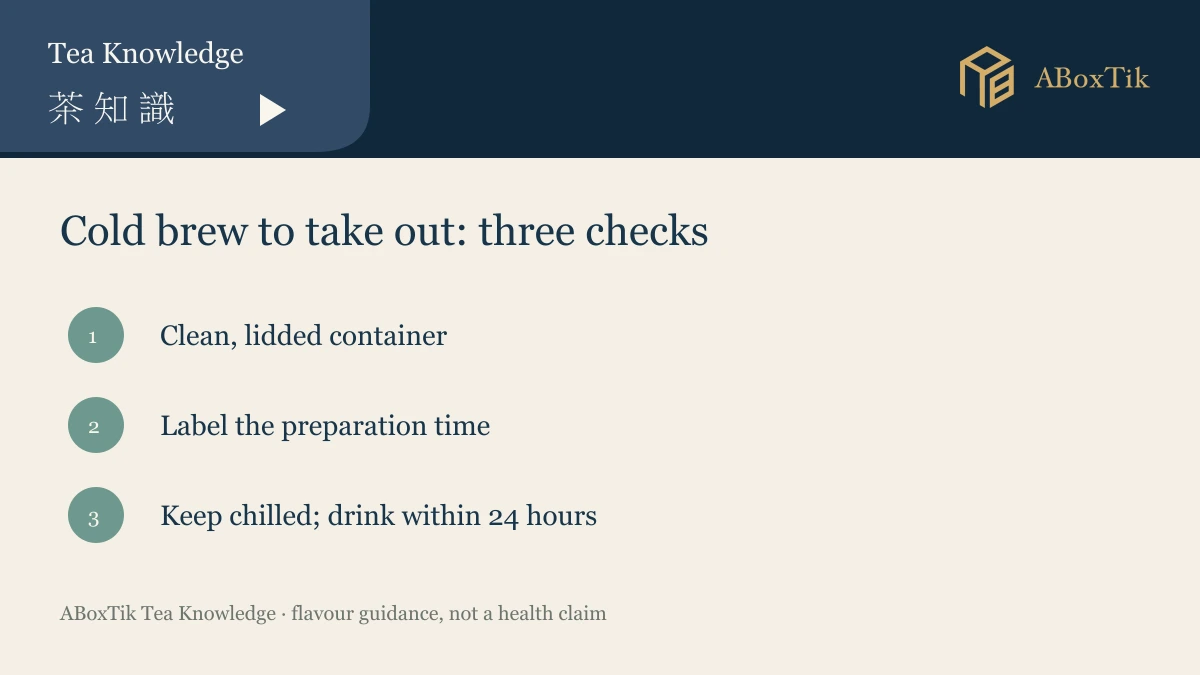
Use a clean, lidded container and drinkable water. Chill the tea, label the preparation time, and carry it in a cooler rather than leaving it in outdoor heat. Tea-station material notes that longer steeping changes both extraction and flavour. Its public cold-brew guidance, carried by Taiwan’s agricultural knowledge service, advises against drinking cold-brew tea after 24 hours. For a cautious home routine, make only what you expect to drink, keep it chilled, and finish it within 24 hours. Do not drink it if its storage history or smell is uncertain.
Tea is not a food-safety control. Raw and cooked barbecue foods, cold storage and thorough cooking need their own care. Keep cups, kettles and drinking water away from the area used for raw food. For a basic cold-brew entry point, see ABoxTik’s cold-brew tea guide; instructions on the tea you actually buy remain the priority.
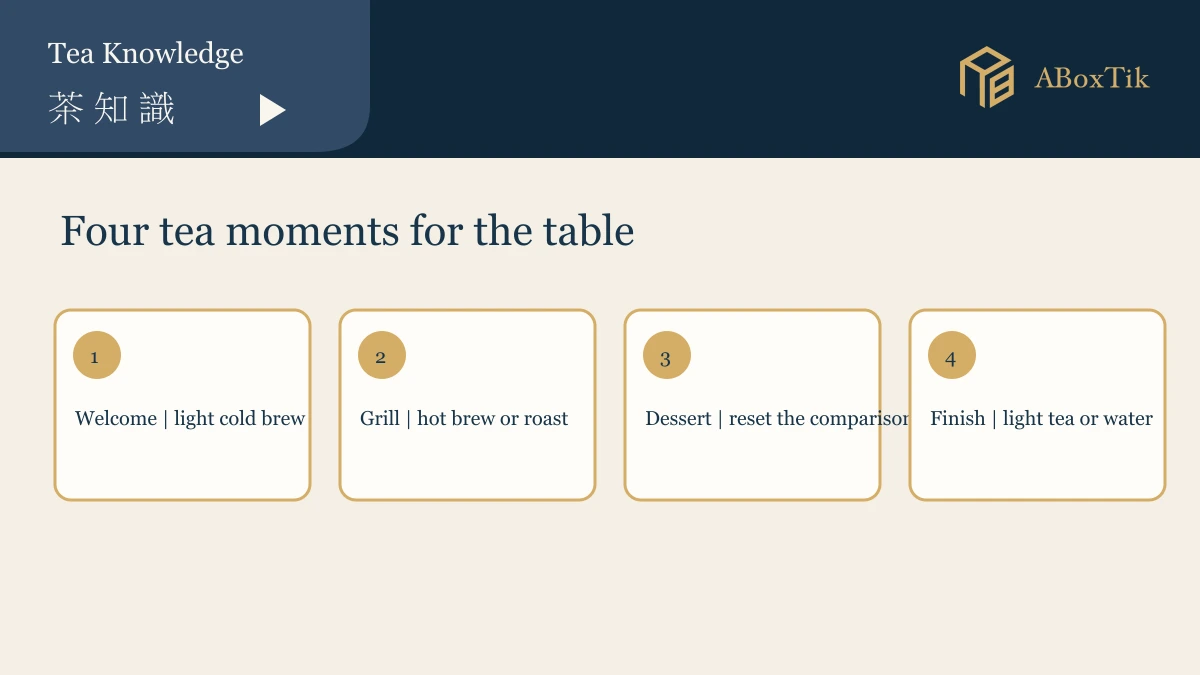
Use four tea moments, not one fixed rule
- Welcome: pour a light cold brew so everyone can taste the tea on its own.
- The grill arrives: make the hot brew or a more defined infusion, starting with one bite and one sip.
- Dessert and mooncakes: reset the comparison. Mooncake fillings have a different dominant flavour, so use our mooncake and tea guide rather than applying the meat pairing unchanged.
- The finish: return to a lighter cup or plain water and ask what people would happily drink again.
The sequence is flexible. A picnic may have one kettle, a small patio may have no formal service, and some guests may only want a chilled drink. The two questions that still work are simple: did the tea hide the food, and did the food make you want another sip? They are enough to make the next gathering easier to plan.
The night before, one hour before, and after you arrive
The night before, make a small cold-brew test in a clean container, label its preparation time, and pack hot-brew tea separately. One hour before leaving, check the cooler, clean cups, drinkable water and a bag for used tea. Put the cold brew where it can stay cold and be reached first. After arriving, keep that bottle in the cooler and set hot water, cups and brewing tools away from the raw-food area. This is a service plan, not a substitute for proper storage and cooking of barbecue ingredients.
Three tea directions give guests a useful, observable comparison. A fragrant oolong lets you notice whether vegetable or seafood aromas remain visible. A medium-roast oolong tests whether roast and grill notes feel balanced. A tea with a ripe-fruit direction can be held for a sweet-savoury sauce later in the meal. Region, cultivar and processing affect the cup, so use the Taiwan tea regions guide, oolong oxidation and processing guide, and Taiwanese tea overview as context—not as a promise that every tea will taste the same.
Choose convenient service, not unnecessary complexity
For an outdoor or shared meal, prioritise clean service, easy portioning and a repeatable method. Individually packed tea can be useful where cups and brewing tools are uncertain; loose leaf works well when someone has a familiar pot and hot water. Serving tea without sugar also makes it easier to compare the food and tea as they are. If guests want sweetener, juice or another drink, use a clearly marked separate container rather than mixing batches in one pot. For tool choices, see gaiwan versus teapot; for aroma vocabulary, read the floral tea aroma guide and tea withering guide.
Questions about barbecue tea
Can tea really “cut through grease”?
We use that phrase only for a subjective flavour impression. Tea is not presented here as a digestive, metabolic or weight-management tool.
Is cold brew always less bitter?
No. Tea, ratio, time, water and storage all matter. Test a small batch and follow the product’s directions.
Can one tea work with both barbecue and mooncakes?
It can, but the best comparison may change once sweet pastry becomes the main flavour. Treat dessert as a new tasting moment.
Leave yourself a useful note for next time
The most useful barbecue tea is not necessarily the strongest or most expensive. It is a tea you know when to serve, how to store, and why people enjoyed it. Test a small cold brew, keep room for a hot cup, and note the food before it, the food after it, and the tea people wanted to revisit. Those details are more useful than a fixed answer next Mid-Autumn Festival.
Related recommendations
- Whole-leaf tea bag guide: a format reference for simple shared service.
- Cold-brew tea guide: revisit the basic chilling and brewing steps.
- Premium Taiwanese Tea Bag Gift Box: check current product contents; supply and price are determined by the live page.
Sources
- Taiwan Directorate-General of Personnel Administration: 2026 work calendar (accessed 2026-09-10; recheck before publication)
- Tea and Beverage Research Station: optimal cold-brew conditions for different teas (accessed 2026-09-10)
- Agricultural Knowledge Service: making cold-brew tea (accessed 2026-09-10)