
Tea, Tea Knowledge
Cold Brew Tea Ratio: Tea Bags, Loose Leaf and Fridge Timing
What is cold brew tea? We always use boiling water to brew the tea. However, although people want to enjoy an elegant moment, they lose interest instantly when the weather is hot in Taiwan. Eventually, they will wait for the hot tea to cool down. At this moment, you may be wondering whether tea can be made cold.
Conceptualisation forever evolves by solving the problem of meeting individual demands, or simply by introducing some added comfort, and the creation of cold brew tea is no different. When the sun has just risen, a cup of cold brew tea can relieve the discomfort felt by many on a humid morning.
This guide keeps the familiar method while making the ratio and fridge timing easier to use. For the cold brew tea ratio, 1:100 is a lighter starting point and 1:50 is a stronger official reference condition. In both cases, the ratio means grams of dry tea to millilitres of water. Begin with clean equipment, potable water and immediate refrigeration, then adjust the flavour one variable at a time.

Tea tips: cold brew tea
How do you cold brew tea, and how long should it stay in the fridge?
Since we have mentioned cold brew tea, many people have had a lot of questions, such as how to make a cup of cold brew tea, how to measure the time, and what the ratio of making a cup of cold brew tea is. In fact, there is not a definitive way of making a cup of tea, and little to no experience is required to produce an excellent cup. As long as the taste of the tea is favourable to individual preference, it can be considered a good cup of tea.
Steeping time changes with leaf form, tea-to-water ratio and temperature, so four to eight hours is not a universal answer. Under the Taiwan Ministry of Agriculture reference conditions of whole-leaf tea, a 1:50 ratio and 4°C refrigeration, the representative timings are four hours for green tea, eight hours for high-mountain oolong and ten hours for black tea. Set a timer, taste when it rings and remove the leaves when the flavour is right; your alarm clock is a more dependable brewer than the length of a night’s sleep.
| Whole-leaf reference | Time at 4°C | What to do next |
|---|---|---|
| Green tea | 4 hours | Taste, then remove the leaves if balanced |
| High-mountain oolong | 8 hours | If needed, extend in short, measured steps |
| Black tea | 10 hours | Remove leaves, keep refrigerated and drink promptly |
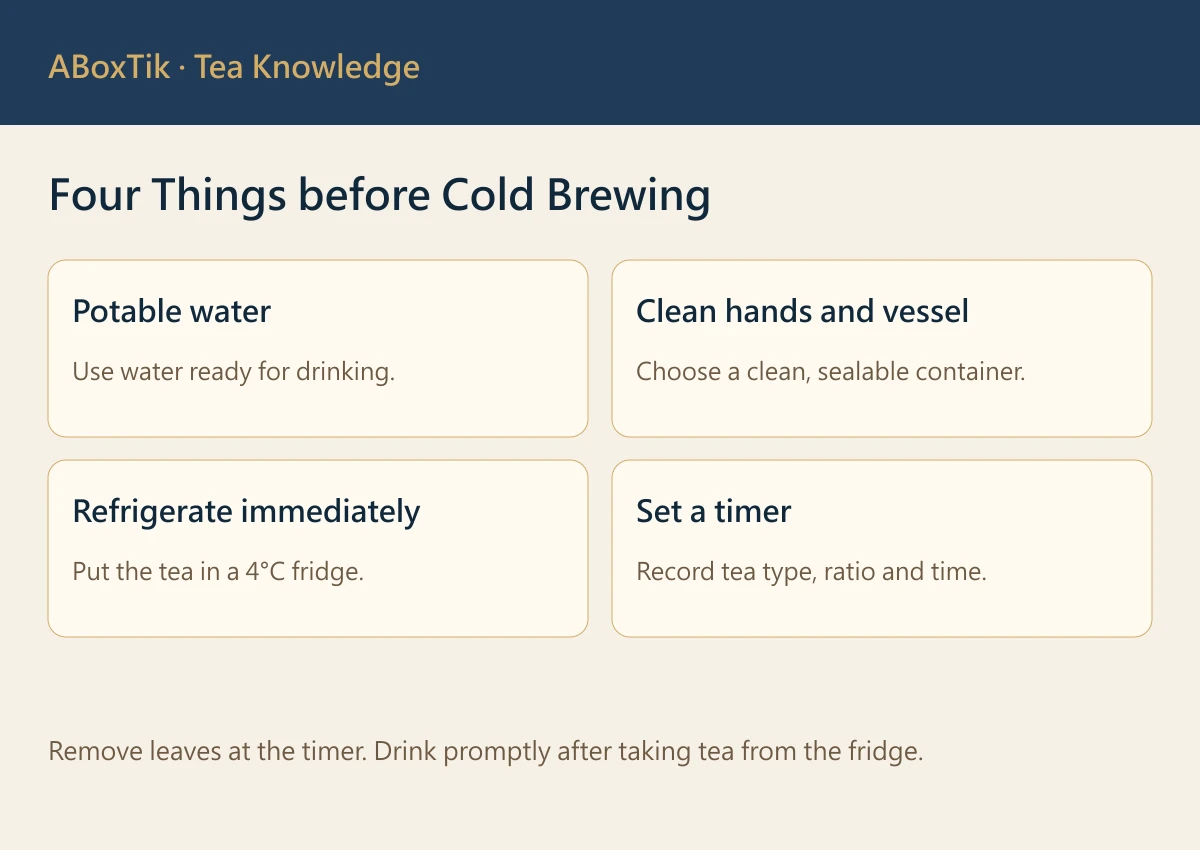
These are starting conditions for particular whole-leaf teas, not an optimum for every loose leaf or tea bag. Use potable water, clean hands and a clean sealed vessel, then refrigerate immediately. Warmer surroundings can speed microbial growth, so leaving a brew out overnight is not a useful shortcut. Drink it promptly after taking it from the fridge, and discard it if the aroma, acidity or appearance suggests spoilage.
Explore the features of the six major tea types.
⚑ Read More ⚑
Chinese Tea Culture: Six Tea Types and the Origin of Tea
“Where there’s tea, there is hope.” — Wing Pinero

Start with the volume in your bottle
1:100 and 1:50 are starting points, not rival winners
Indeed, when people are making cold brew tea, the most important section is the water ratio to tea. For instance, if you are cooking half a pot of ingredients, an added tablespoon of salt is perfect. Conversely, if you only add half a tablespoon of salt to the same pot, it will be slightly underseasoned. Once the ratio is written down, the next bottle becomes an adjustment rather than a guessing game.
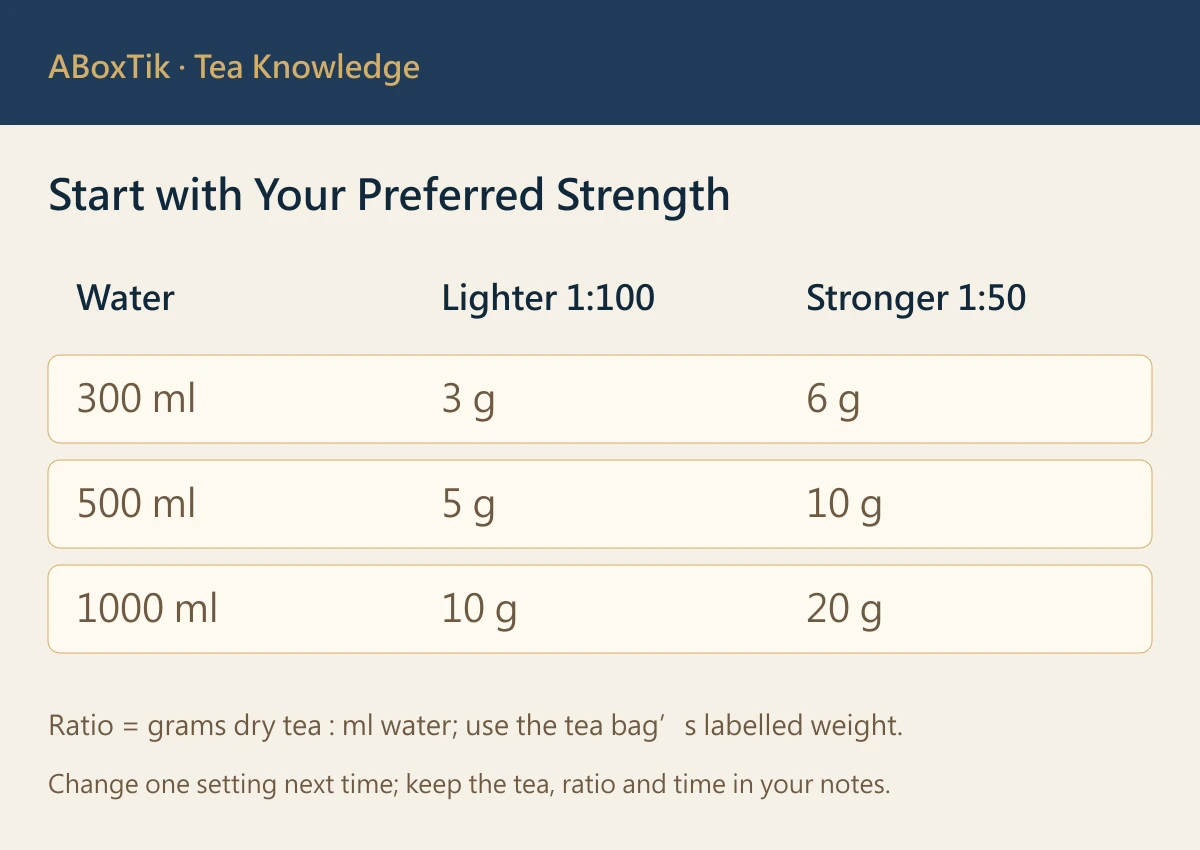
A consumer cold-brew record held by Taiwan’s National Cultural Memory Bank gives 1% tea, or 1 gram of dry tea per 100 millilitres of water, as a lighter starting point. The Ministry of Agriculture reference uses whole-leaf tea at 1:50 and 4°C for a stronger starting point. Because the source conditions differ, neither should be promoted as the single best ratio.
| Water | Lighter 1:100 start | Stronger 1:50 start |
|---|---|---|
| 300 ml | 3 g dry tea | 6 g dry tea |
| 500 ml | 5 g dry tea | 10 g dry tea |
| 1000 ml | 10 g dry tea | 20 g dry tea |
For tea bags, calculate from the declared net weight of dry tea rather than assuming a universal bag count. A 2.5 g bag with 250 ml of water is simply a 1:100 arithmetic example; if the bag contains another weight, recalculate from its label. Record tea, weight, water and time, then change only one item in the next bottle.

Tea bags or loose leaf?
Choose by weight, leaf space and convenience
At this time, many people have a question: there are many tea bags and loose tea leaves on the market, but when I make cold brewed tea, is it better to use cold brewed tea bags or loose tea leaves? Basically, both options are great. The purpose of cold brew tea bags is convenience, as the leaves are easy to remove when drinking. There are also many tea lovers who buy their own strainers to pack loose tea and make their own tea bags.
Even when a bag and loose tea use the same grade and tea type, cup character may differ with leaf cut, room to expand, actual weight and steeping time. Read the weight on the label and give the leaf enough water and space. Convenience and control are the real trade-offs; neither format wins every bottle.
“Love and scandal are the best sweeteners of tea.” — Henry Fielding
A simple method
Prepare it before bed, but let the timer take the night shift
Preparing tea in the evening and finding a chilled bottle the next day is a lovely small pleasure. Sleep length, however, is not a brewing schedule. Choose the timing for the tea and ratio, set a timer and remove the leaves when the planned interval ends.
The steps are simple:
- Check the grams of dry tea and choose a 1:100 or 1:50 starting point.
- Use a clean vessel and potable water, seal it and refrigerate immediately.
- Set a timer for the tea type, taste and remove the leaves; next time, adjust either ratio or time.
What flavour sounds good today?
Which teas can you cold brew?
People who have knowledge of tea know there are many different types of tea leaves. They vary in appearance, including strips and tightly rolled shapes, and the degree of roasting can be light or heavy. Each batch of tea will vary with subtle environmental changes, so what kind of tea is recommended for cold brew? Many teas can be explored this way. Begin with a clean, fresh product that has been stored well, then choose by the flavour you want: brisk and light, floral, roasted or fuller-bodied.
Preference can change with a meal, the weather or simply the mood of the day. Leaf shape and roast can also change how long a brew needs. Keep a note of the tea, weight and time, and the next bottle will have a clear direction. For a wider view of variables, revisit our tea brewing and water guide; after opening the pack, the tea storage guide helps keep the dry leaf ready for the next batch. If you enjoy the cup, it has already done its job.
⚑ Read More ⚑
How to Brew Tea in Four Steps
A Guide to Decaffeinated Tea

Cold or hot: which cup are you in the mood for?
How do cold brew and hot brew differ?
What is the difference between cold brewed tea and hot brewed tea? Apart from the methods of making tea, what else does it affect? The release of tea compounds is affected by temperature. In terms of taste, cold brewed tea can be described as gentle, delicate and sweet, while hot brewed tea tends to have a more fragrant and unrestrained taste. The result still depends on the tea and the complete set of brewing conditions.
Tea flavour is not a simple story in which three compounds each control one sensation. Temperature, time, dry tea weight, water volume, leaf form and processing all influence extraction together. Cold brewing can produce a softer style, but it does not guarantee a fixed composition and does not make tea caffeine-free.
Caffeine and timing
Sleep is not decided by cold versus hot alone
People respond to caffeine differently. Cold brew tea is not decaffeinated, and intake also depends on the amount of tea, total serving volume, steeping time and tea itself. Anyone who knows they are sensitive can begin with less tea, a smaller serving and an earlier drinking time, then adjust from personal experience rather than treating one brewing method as a sleep guarantee.
⚑ Read More ⚑
How to Brew Tea: The ABoxTik Tea Series
Six Herbal Tea Ideas
“We are like tea; we don’t know our own strength until we’re in hot water.” — Sister Busche
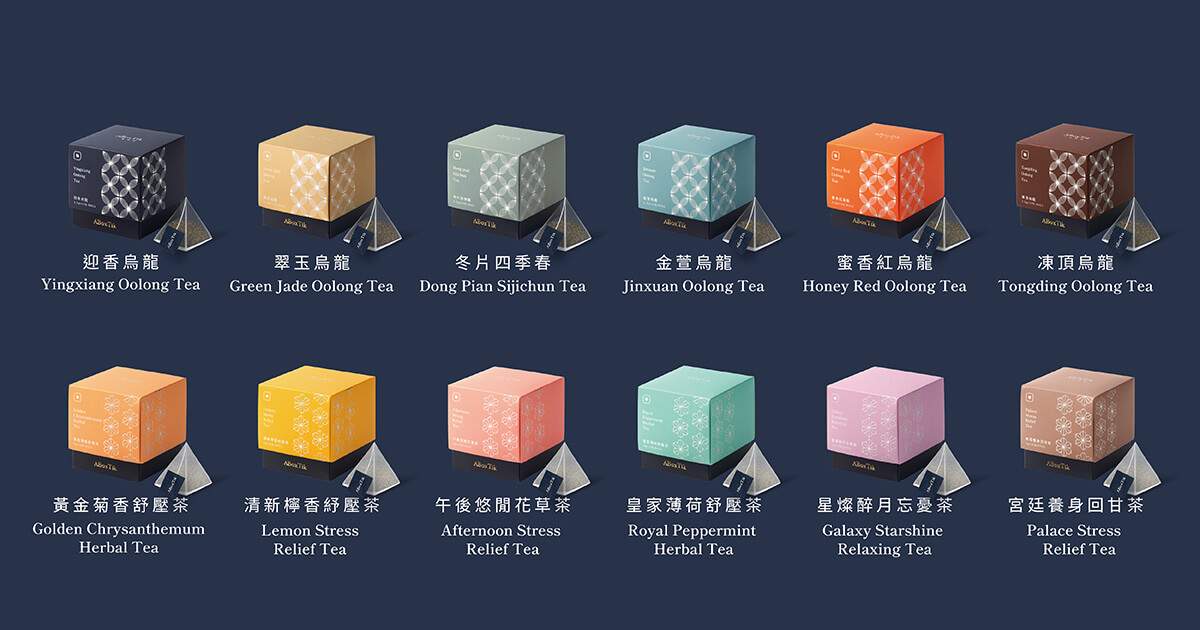
ABoxTik talks tea knowledge with you
ABoxTik is a brand that wants to push tea to the boutique. Now we can see specialty coffee and manor wine to have spread around the world as boutique commodities, so why not tea? The production and taste of Taiwanese tea are not inferior to other high-quality products. Thus, our ambition is to gain recognition for Taiwanese high-end tea, so that a thoughtful tea gift can become part of everyday enjoyment.
In addition, if you want to know about tea, you are also very welcome to continue to follow us. We will continue to update the knowledge about tea here, as well as the little anecdotes about tea for everyone. Come and become a tea master with us!
Our gentle recommendations: begin with our guide to pyramid tea bags if convenience matters, or choose a familiar tea from the Taiwan tea collection. The Jinxuan Oolong page is one place to check the tea and pack details before making a small 300 ml comparison batch.
Sources
- Taiwan Ministry of Agriculture Food and Agricultural Education Platform: Cold-brew tea guide (updated 25 May 2026; checked 14 October 2026)
- Taiwan Cultural Memory Bank: Cold-brew tea for everyday preparation (checked 14 October 2026)
- Taiwan Ministry of Agriculture: Is cold-brew tea safe? (published 14 December 2017; checked 14 October 2026)
- Agricultural Knowledge Portal / Tea and Beverage Research Station: Storing cold-brew tea (expert reply 17 July 2024; checked 14 October 2026)