
Tea Knowledge
How to Reuse a Tea Gift Box
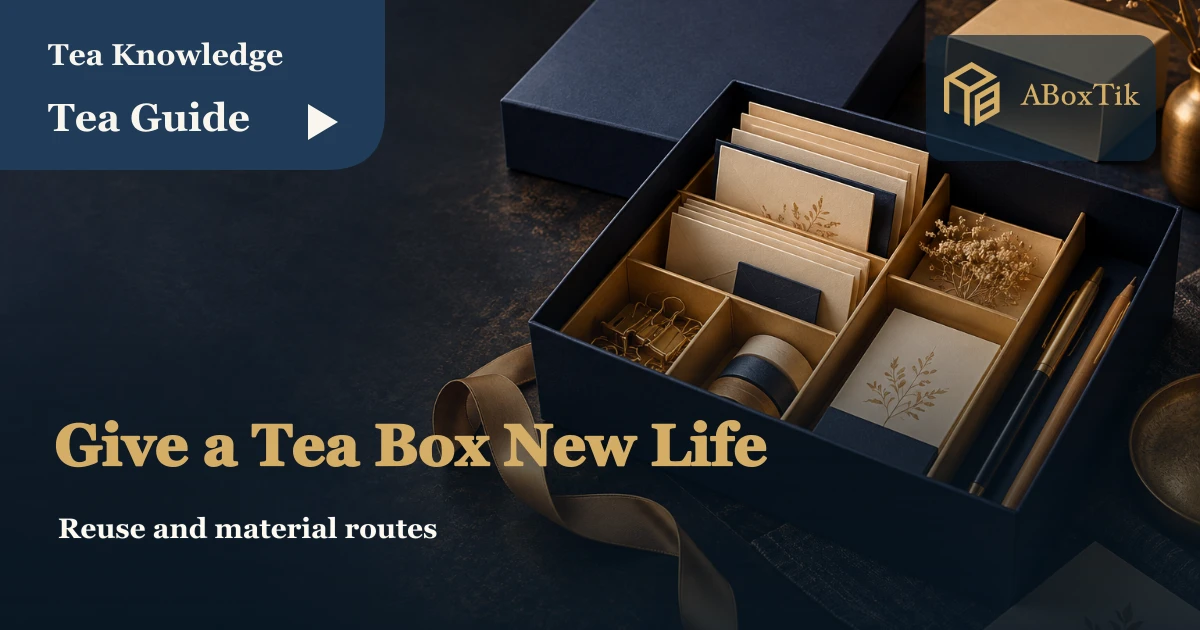
Give the box a useful job, and leave daily life a little more room.
Reuse a tea gift box only after checking that it is dry, clean and structurally sound. Match its size to stationery, cards or a display; otherwise separate readily removable parts and follow local material rules. An attractive outer box does not automatically provide a moisture seal or a direct food-contact surface. Tea still belongs in suitable inner packaging or an appropriate food container.
It is understandable to keep a beautiful box after finishing the tea. But if three boxes already live in the cupboard under “useful someday,” the fourth may need a clearer job description. Finding a task you actually have today is more practical than arranging an indefinite retirement for packaging.
Separate the outer box from the packaging that protects tea
A gift may include a rigid box, sleeve, bag, insert, ribbon, magnetic closure and inner tea packs. Those parts do different work. The outer structure presents and supports the contents; an inner pack may provide the seal. Photograph the original arrangement and retain ingredient, lot, storage and date information that is still needed. Tidying the box should not accidentally remove the tea’s identity.
The tea research station’s storage guidance discusses moisture, oxygen, light, temperature, time and foreign odours. Pouring loose tea into a thick-looking presentation box does not resolve those conditions. Keeping unopened suitable inner packs in the box is different, but still requires the product’s storage directions and an appropriate location. The outer box is not a universal storage certificate.
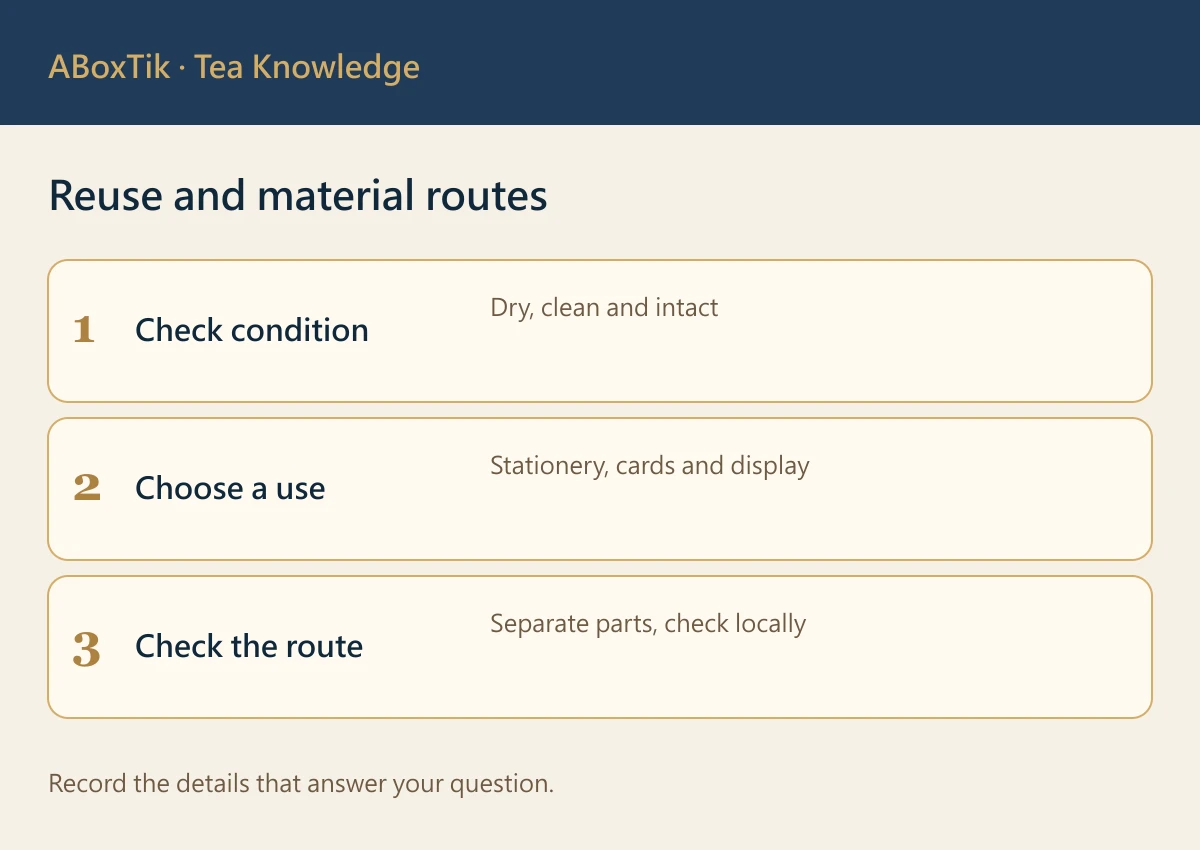
Check condition, structure and an actual need
First look for dampness, dirt, distortion or persistent odour. Then check whether the base, lid and dividers can support the intended objects. Finally ask whether a drawer really needs a compartment, or whether you are reluctant to part with the box. Letting unsuitable packaging go does not reject the kindness of the original gift.
Do not soak a paper box simply because you want to clean it. Use a method appropriate to the material and maker’s guidance. Visible mould, contamination, persistent dampness or structural failure makes a poor candidate for daily desk storage. Fragrance is not a remedy for an unwanted smell. Reuse begins with suitability for the next task.
Five modest jobs for things already at home
| Use | Arrangement | Check first |
|---|---|---|
| Stationery | Sections for pens, erasers and notes | Size and base strength; store sharp items appropriately |
| Cards and photos | A simple index by occasion | A dry location; important originals need suitable preservation |
| Tea-table accessories | Dry cloths or small unused items | No wet utensils placed directly inside |
| Desk display | A card or light object | Stable position away from water and heat |
| Another non-food gift | Explain that the clean outer box is reused | Original tea wording must not misidentify the new contents |
Measure the drawer or shelf before keeping the box. Try removable dividers without immediately gluing them in place. A reversible arrangement is easier to change later. If objects fit, can be reached and return easily, the storage is already doing useful work. Every eraser does not require a formal moving-in ceremony.
Keep a suitable barrier around food and tea
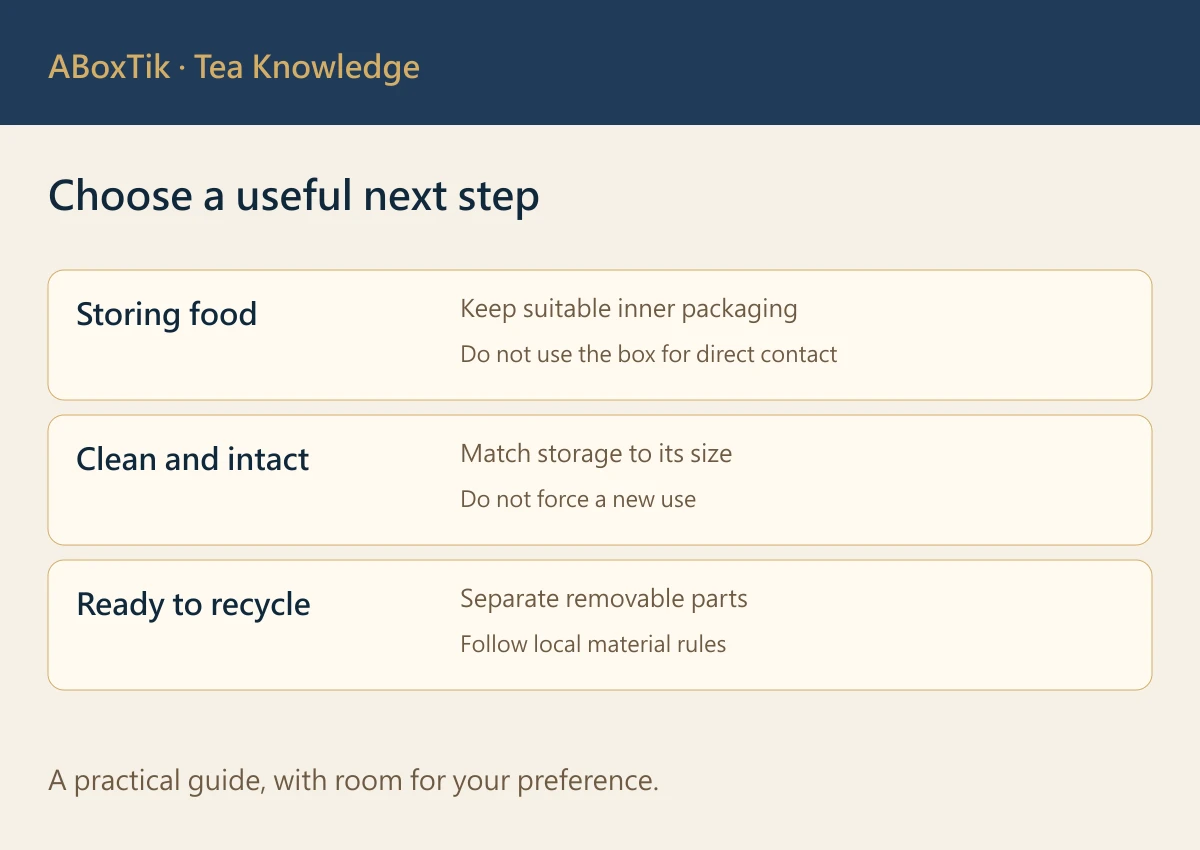
A paper appearance does not identify coatings, inks, adhesive or intended contact use. Without clear suitability information, treat the outer box as an outer box. Do not place loose tea, biscuits or sweets directly against it. To group tea bags, retain suitable intact individual packaging and relevant labels. To portion loose tea, choose a container intended for that purpose, then use the box for organization if helpful.
Having originally contained tea does not mean every surface was designed for direct contact. Ask the supplier about the specific component’s material and original use. Food-contact suitability, preservation performance and recycling destination are separate questions. None answers the other two. The tea-storage guide covers the everyday preservation side.
Keep display and alteration simple
A lid can support a card display and the base can hold dry objects, provided the arrangement stands securely. Avoid steam from a kettle, splashes and nearby heat sources. Do not turn a paper gift box into a candle holder, lampshade or support for hot utensils. Saving a storage purchase is useful; giving the tea table a fire-drill assignment is rather more ambitious.
If cutting or separating parts is necessary, use suitable tools and avoid risky disassembly for a tiny piece of metal. Components that do not separate readily can remain together while you ask the collection service. For a family craft activity, the adult should manage tools and detachable small parts. Magnetic closures are not casual toys. A simple reuse is more likely to remain useful.
Match the material with the local collection route
Ordinary paper, designated paper containers and other composite structures should not be assigned to one stream by appearance alone. New Taipei’s official guidance asks residents to separate paper containers from ordinary paper. The useful principle is to check the accepted category and method locally. That page is neither a worldwide collection manual nor a material certificate for an individual tea box.
Separate easily removable handles, ribbon, independent inserts and sleeves where practical. Read material markings and photograph uncertain parts for your local service. Do not assume all composite paper containers are unrecyclable simply because they include plastic. Equally, a recycling symbol does not guarantee that every collection system accepts the item. The component and the current local route need to match.
Respect another person’s space when passing a box on
Offer a clean box with a clear description of its condition and possible use, allowing the recipient to decline. Clearing your cupboard should not become their new assignment. If wrapping another gift, identify the new contents clearly so the original tea name does not mislead. Handle obsolete dates and private delivery details appropriately before passing the packaging to someone else.
For corporate gifts intended to offer a useful second life, consider dimensions, removable parts and information placement during design. Review a physical sample rather than asking every recipient to perform a complicated conversion later. The paper-craft packaging guide considers materials and structure; the gift-box buying guide starts with the recipient. Reuse adds a possible function after the original protective job is satisfied.
Give one box a job and the cupboard some room
Choose one clean, intact empty box, measure it, assign a real task and test retrieval with the actual objects. If it has no suitable job, check its disposal route and let it go. Reuse does not require preserving every box, and two uses alone do not establish a carbon saving. The practical outcome is an avoided unnecessary purchase or an arrangement that works better.
When choosing another tea gift, begin with the current contents, specifications and packaging information for the Classic Taiwanese Tea gift set. Choose tea and quantity first, then consider the box’s next chapter. Tea enjoyed in daily life and packaging with a useful role make a comfortable continuation of the original gift.
Related reading and tea choices
Sources
Sources checked: 25 October 2026.