
Tea, Tea Knowledge
Top 6 Tea Storage Tips: Maximize Freshness and Shelf Life!
Tea is one of the most popular beverages in the world, and has been consumed for thousands of years, both medicinally and as a beverage. From a historical point of view, the demand for tea has changed the world and is ubiquitous in people’s lives. But in daily life, how should tea be preserved for a long time?
If you’ve ever brewed one of your favourite teas and been disappointed to find out that the taste has changed, improper storage of the tea may have something to do with it. What exactly is the best way to store tea, and how to extend the shelf life of tea?
Careful storage helps protect tea aroma and flavour. Keep the product information and follow its storage directions; freshness cannot be inferred from a container alone.
Do you know the caffeine in tea?
How Long Can Tea Leaves Be Stored, and Do They Go Bad?
How long tea keeps depends on the tea, packaging, storage and whether it has been opened. Follow its labelled expiry and storage directions rather than a universal number of months.
Tea can deteriorate through moisture, heat and other storage conditions. Aroma alone does not establish safety. Do not drink tea that is mouldy or otherwise questionable.
⚑ Further Reading ⚑
Chinese Tea Culture: Origins of the Six Tea Categories
Preserved tea is a time capsule of flavors, each leaf encapsulating the essence of a season, a harvest, and the whispers of distant plantations. Unveil the jar, and let the fragrant nostalgia of preserved tea transport you to moments frozen in the amber of time.
How to Preserve Tea Leaves?
6 Ways to Preserve Tea Leaves
1. Avoid Exposure to Oxygen – Tea Leaf Preservation
Tea leaves without proper sealing can lead to oxidation and darkening of color. The best method for tea leaves is to use a vacuum sealer to prevent contact with oxygen. However, consideration must be given to the fragility of leaves, as delicate leaves may turn into crumbs under vacuum sealing pressure.
Sealing doesn’t mean the absence of air; it isolates external air from tea leaves. To address the issue of crumbs, the best method is to add nitrogen into the bag. Nitrogen prevents oxygen from entering and creates a soft cushion for the tea leaves. If vacuum sealing is not feasible, the simplest preservation method is to use a tin can, which is why loose tea is often sold in tin cans.
2. Keep Tea Away from Heat Sources – Tea Leaf Preservation
In addition to oxygen, tea leaves should be kept away from heat sources, as heat accelerates oxidation and compromises the flavor. Ensure that the storage space for tea leaves is not too close to windows or stoves, as sunlight or heat from the kitchen gas stove can affect tea flavor.
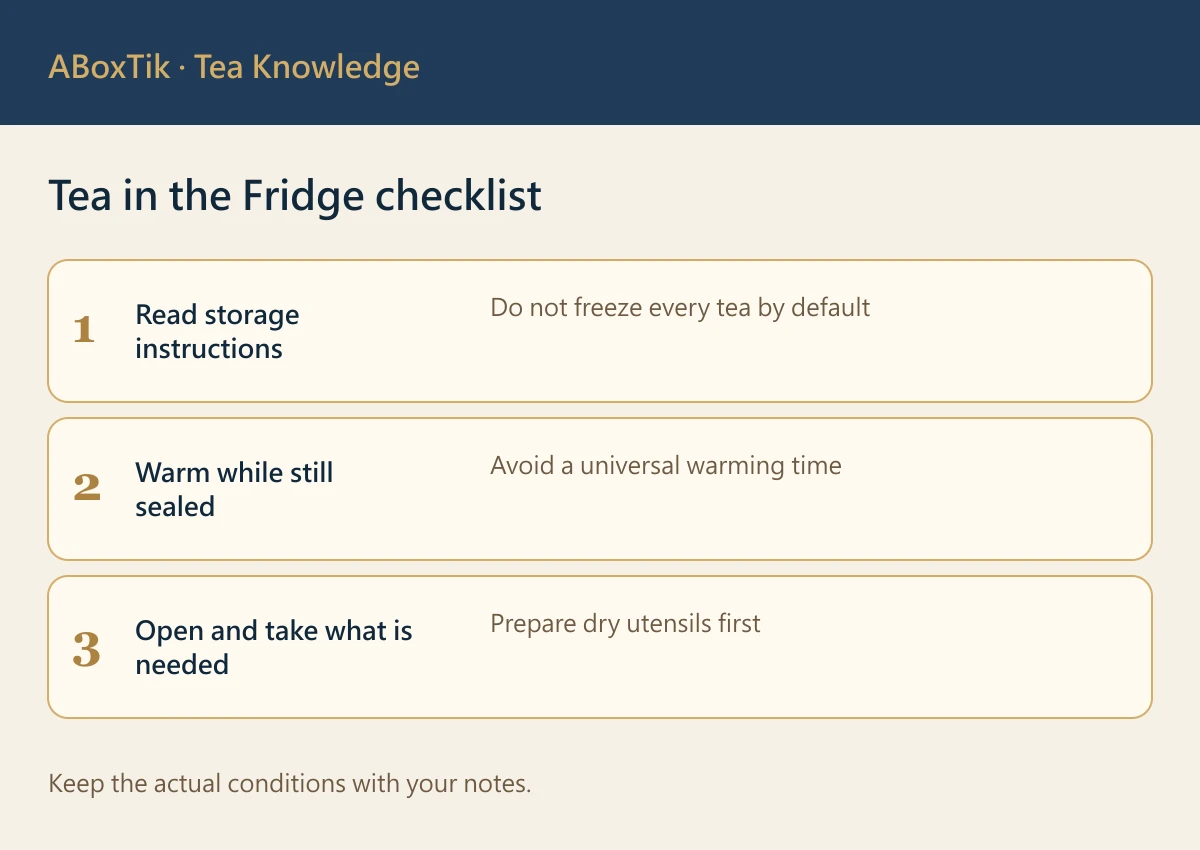
Refrigeration is not a universal requirement for every tea. Where suitable cold storage is used, keep the pack sealed while it returns close to room temperature before opening, to reduce condensation on the cold tea. Follow the product directions.
3. Avoid Storing Tea Leaves in a Damp Room – Tea Leaf Preservation
While storing tea leaves near a heat source is detrimental, placing them in a damp environment is also not advisable. Tea leaves easily absorb moisture from the air, and storing them in a humid space can diminish the taste after brewing. The best way to keep tea leaves dry and flavorful is to store them in a sealed container, and you can also add a desiccant to increase the dryness of the container.
⚑ Further Reading ⚑
Advantages of Pyramid Tea Bags? Top 5 Differences in Tea Bag Tea Brewing
4. Avoid Placing Tea Leaves in Bright Places – Tea Leaf Preservation
Brightness is a factor to consider when storing tea leaves. UV rays in light can cause changes in tea leaves, leading to an unpleasant metallic taste in the tea. It is strongly recommended not to store tea leaves in transparent glass jars, as light can adversely affect the taste. Be sure to store tea in non-glass containers or in a dark place.
5. Avoid Storing Tea Leaves in Strongly Scented Places – Tea Leaf Preservation
Due to the porous nature of tea leaves, the flavor of tea is influenced by the surrounding environmental odors. Storing tea leaves in strongly scented places can compromise the aroma of the tea. When storing, carefully choose the material of the tea container, as new rubber and plastic containers can leave very unpleasant odors on the tea leaves.
6. Fill the Storage Container with Tea Leaves – Tea Leaf Preservation
If you enjoy drinking a lot of tea, you can try filling the entire box or can with tea leaves. Although it may not sound very smart, it is a very useful way to preserve tea leaves. Filling the entire container can reduce internal air and prevent unpleasant odors from entering the surroundings. If you want to extend the shelf life of tea leaves for a long time, the best method is to vacuum seal the tea leaves and store them in an opaque box.
⚑ Further Reading ⚑
Cold Brew Tea Method, Perfect Time Ratio for Easy Cold Brew Tea!
Preserved Tea, a time capsule of flavor, where each leaf holds the whispers of sunlit fields and the secrets of earth-kissed gardens. Unveil the preserved essence with every steep, and let the tea leaves unfold a story that transcends time, a taste that echoes through ages.
Tea Classroom – Preserved Tea
Which Container is Best for Storing Tea Leaves?
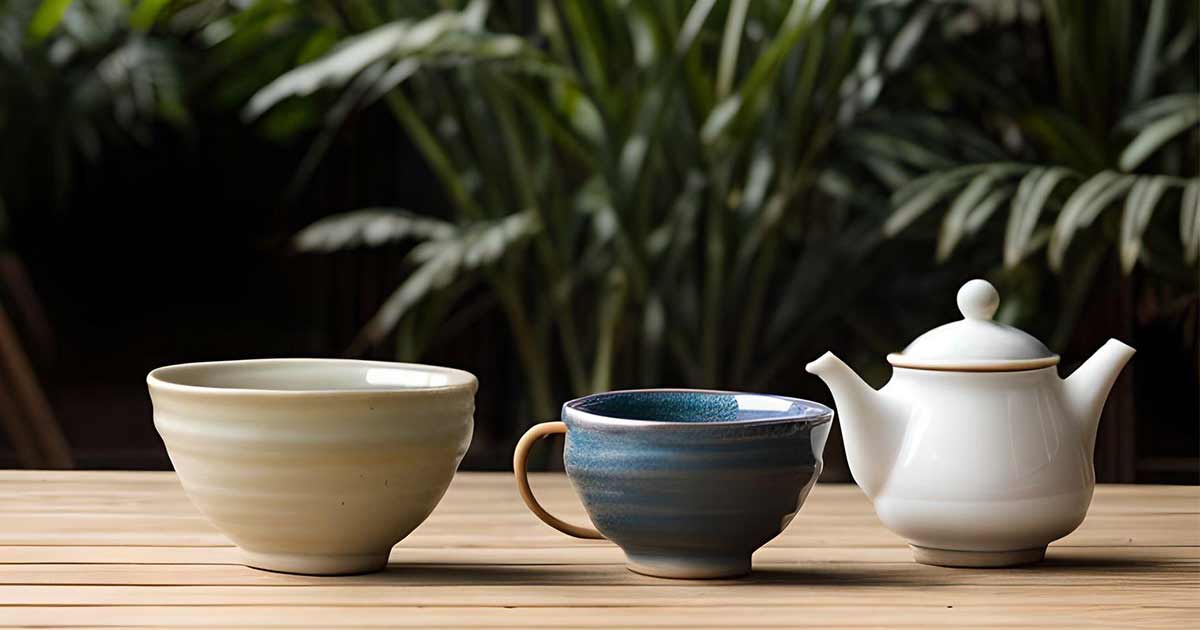
Look for a tightly sealed, opaque container that prevents any air from entering, such as a tin or stainless steel canister. Many varieties of tea leaves are already packaged in containers of this type, so you may consider keeping them. After finishing all the tea, clean the container, let it air dry, and then allow it to naturally air out to remove any odors before reusing it.
⚑ Read More ⚑
Top 10 Best Decaffeinated Teas & Benefits
Herbal Tea Caffeine Free? 10 Q&A About Herbal Tea
Does Tea Expire?
Dry, sealed storage does not guarantee indefinite drinkability. Flavour change and product condition are separate questions; retain the labelled expiry and storage information.
Tea flavour can change with time, but tea type alone does not establish a safe storage period. Check the actual product, packaging and storage history.
Some teas are produced for controlled ageing, which is different from forgetting an opened packet in a damp cupboard. Do not use smell, extra leaf quantity or longer brewing as a way to establish safety.
⚑ Read More ⚑
How to Brew Tea? ABoxTik of Tea Series
[2025] 6 Best Herbal Tea of 2025 – Premium Herbal Series
Can a tea tin live in the kitchen? Check the spot while cooking
A kitchen is not automatically unsuitable, but the chosen spot needs protection from heat, steam, cooking fumes, strong odours and sunlight. An empty cupboard may behave very differently during dinner preparation than it does on a quiet morning. The tea tin does not need a front-row seat at the stove’s busiest performance.
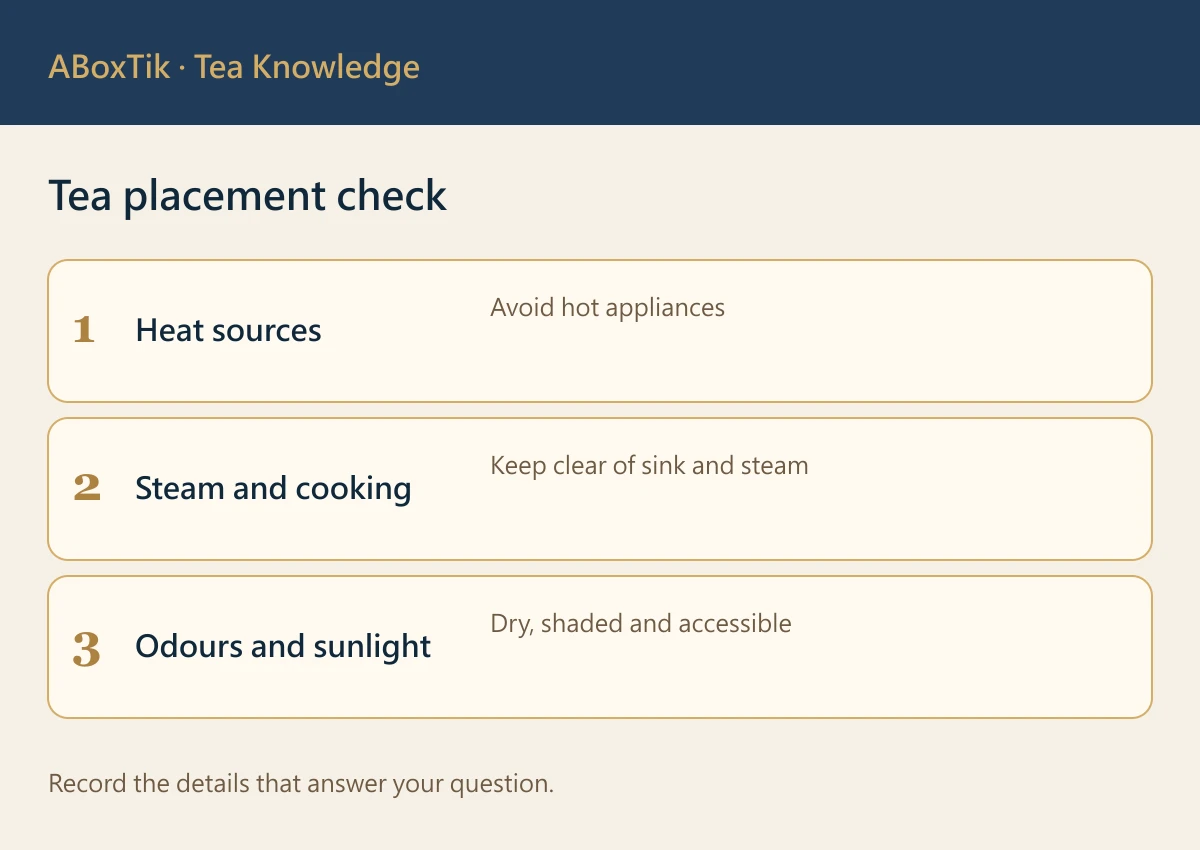
| Possible location | Check in use | Better direction |
|---|---|---|
| Near a stove, oven or warm appliance | Does the area warm noticeably during operation? | Find a dry spot away from heat |
| Sink, washing or steam route | Can droplets or steam reach the open storage area? | Avoid dampness and dripping routes |
| Beside spices or cleaning supplies | Do other odours greet you when opening the cupboard? | Separate strongly scented items |
| Window or transparent display | Does sunlight reach it at another time of day? | Use suitable light-blocking packaging in a shaded spot |
| A dry, neutral indoor cupboard | Can you reach and reseal the tea easily? | Keep original information and a manageable open quantity |
A seal helps; it cannot repair the whole room
TBRS identifies moisture, light, temperature, oxygen, time and absorbed odours as important storage factors. A tight lid does not make a hot appliance or spice shelf an ideal neighbour. Where the original inner bag provides suitable protection, resealing it as intended before placing it in a container also helps retain the product information.
If the kitchen offers no suitable location, look elsewhere indoors for a dry, shaded, neutral-smelling cupboard. Accessibility matters too. A place where you can close the bag properly is more practical than one requiring three saucepans to be moved every time you want tea.
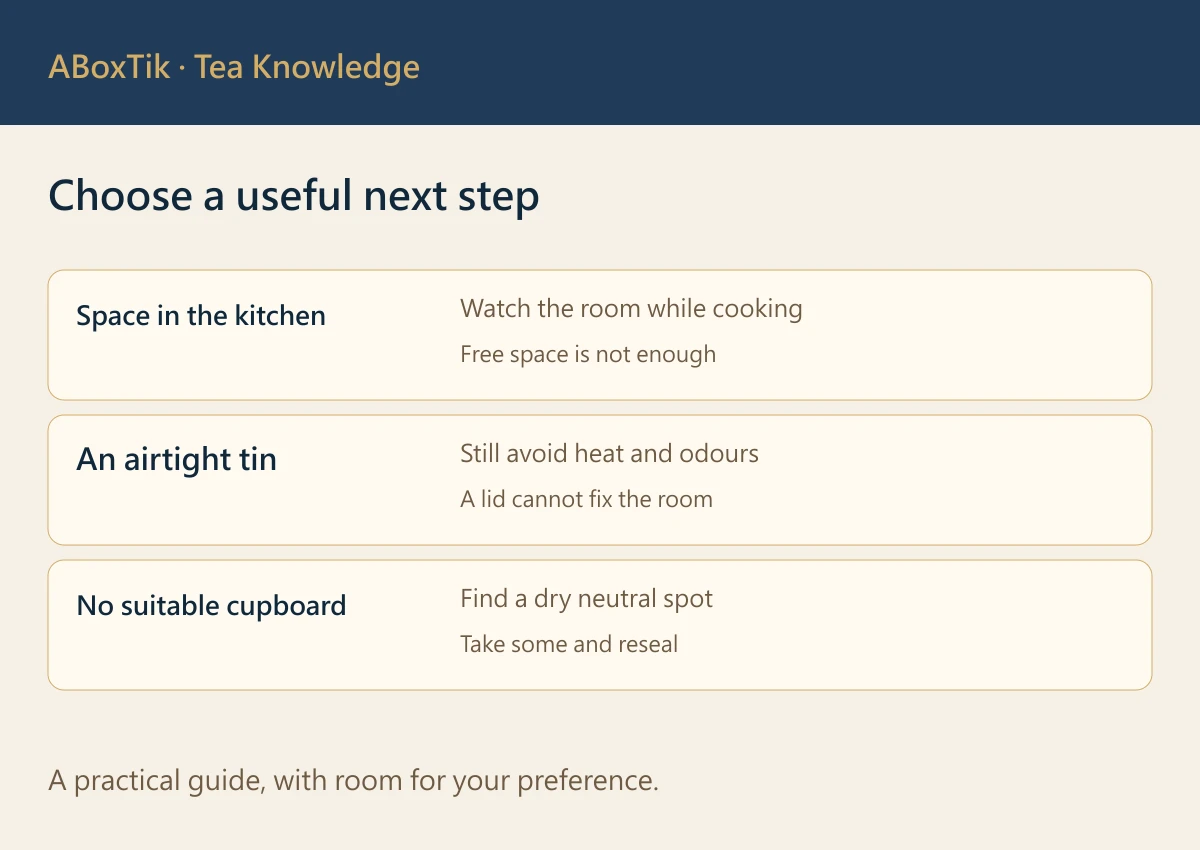
Tonight, check whether the tin sits on the route taken by cooking steam. If it does, give it a quieter address. Storage care supports the tea; it does not extend a labelled expiry date. Damp, mouldy or questionable tea is not something to rescue by steeping it longer.
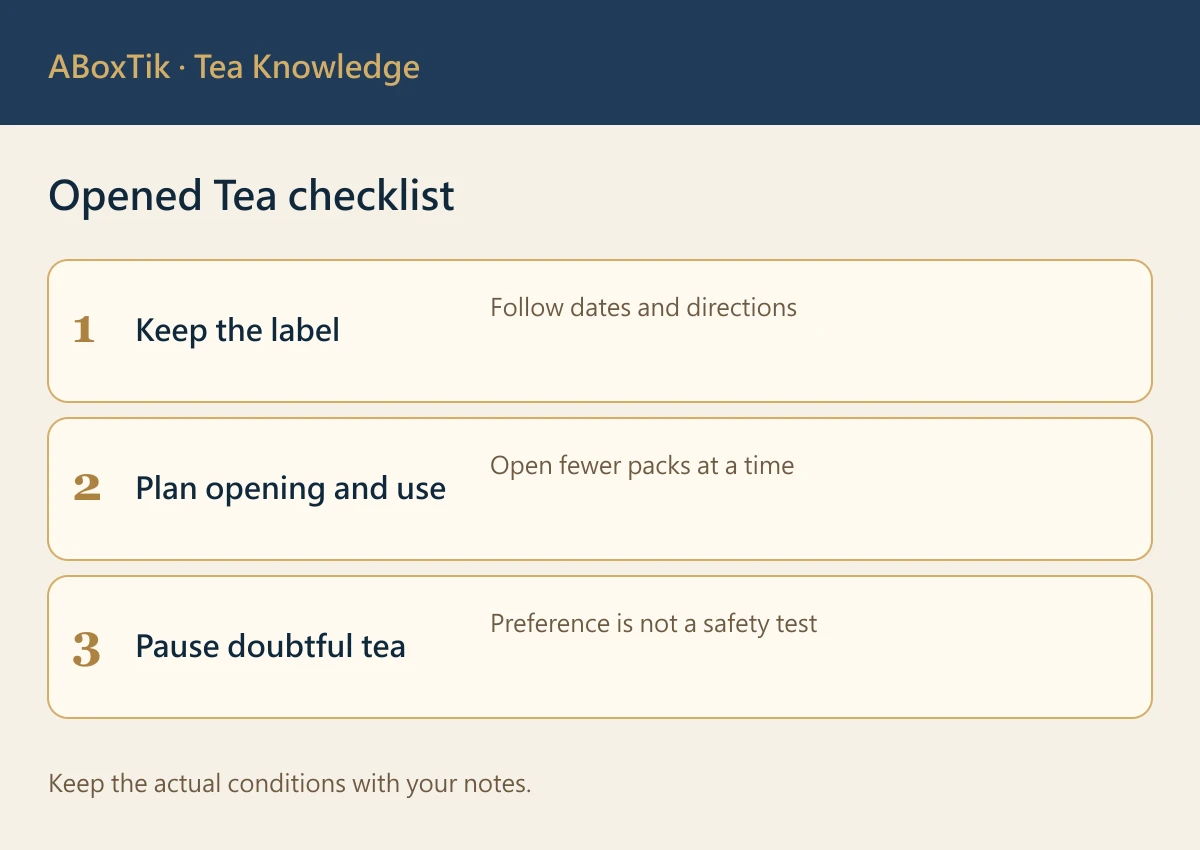
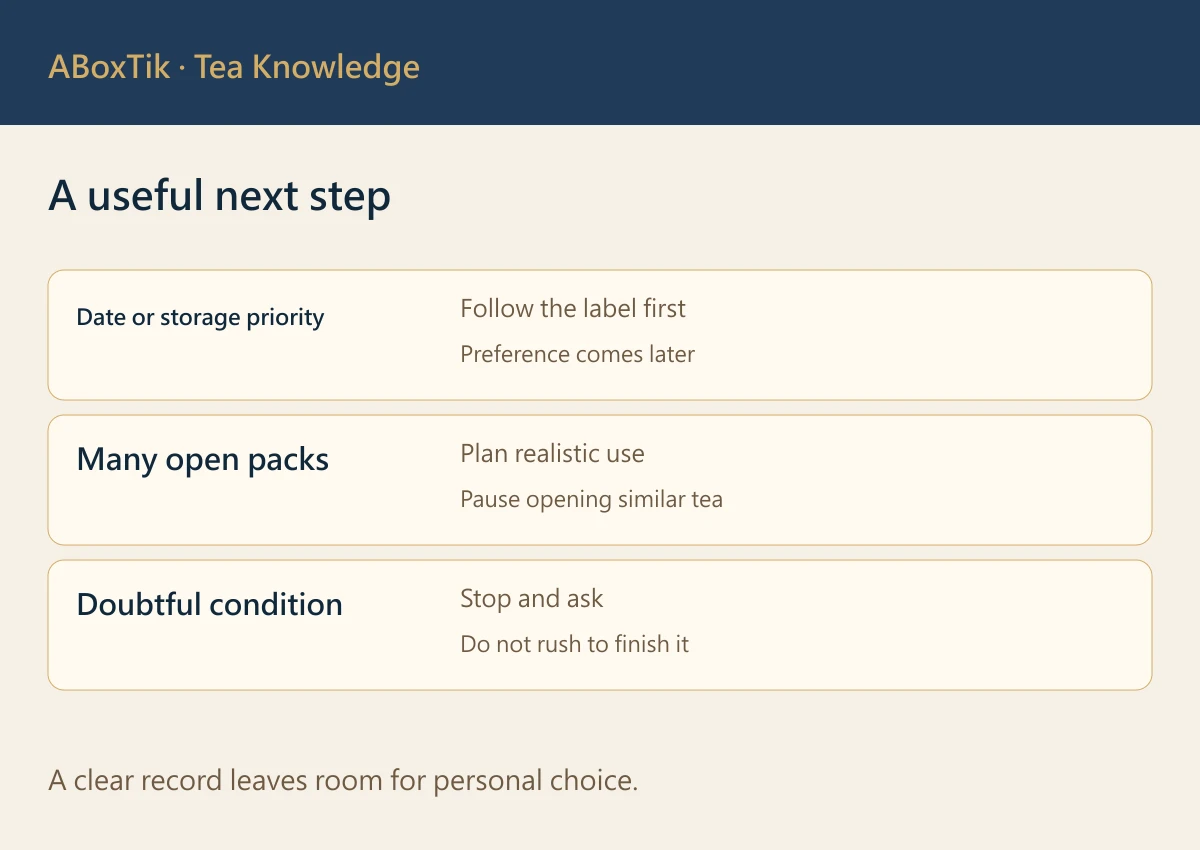
For several open packs, separate product directions from drinking order
Do not arrange every packet by a rule such as “black tea lasts, green tea goes first.” Read each product label, opening history, packaging condition and supplier guidance before planning what to use soon. Opening tea is not a competitive event; fewer active packs can be easier than maintaining ten parallel tea calendars.
| Field | Record | Use in planning |
|---|---|---|
| Dates and storage directions | Original label and special conditions | Follow them without inventing an extension |
| Opening date | Known date, or mark it unknown | Understand history without a universal after-opening deadline |
| Remaining amount and frequency | How much is left and how often you brew | Plan realistic use before opening another similar pack |
| Package and condition | Closure, damage, dampness or doubtful changes | Pause and ask about doubtful tea; do not put it in a rush-to-finish queue |
| Flavour preference | What you want to drink soon | Choose a rhythm among teas suitable for use |
You might keep the roasted tea intended for weekday breakfast and the lighter tea planned for a weekend comparison within easy reach, while storing the others according to their own directions. This is a use plan, not a fixed safety period for either style. A labelled date or storage requirement takes priority over preference.
If sharing is welcome, retain product information and opening history, and ask whether the recipient actually wants the tea. Do not give away doubtful tea or treat reheating as proof of suitability. Choose two packs you expect to use soon and give each a real occasion. Fewer packs working at once can make the cupboard a calmer place.

A storage information card for a tea gift
When a gift of tea arrives, its storage information can travel with it. Read the original packaging and product directions before choosing which inner packet to open; unopened individual packets can stay sealed, even for the photograph.
| What to note | How to pass it on |
|---|---|
| Tea name and ingredients | Use the original label and keep each inner packet identifiable. |
| Where the original date and batch appear | Keep the original information; do not alter the date or add an origin absent from the label. |
| Packaging and storage directions | Distinguish the outer box from sealed inner packets and follow the product’s own directions. |
| Delivery or handover date and supplier contact | Keep the original pack and contact details available for questions. |
If packaging is damaged, damp or otherwise suspect, stop using the product and contact the supplier. Follow each product’s own storage directions and dates rather than setting one universal period after opening. For several open packets, see the opening-date and label guide.
Follow ABoxTik
Where to Buy Premium Tea Leaves? ABoxTik of Premium Tea for the Finest Tea Series
Choose tea for its flavour and the enjoyment of brewing it. Store it as directed in suitable packaging, and keep the product information accessible.
Taking tea out of cold storage: keep warming and daily use separate
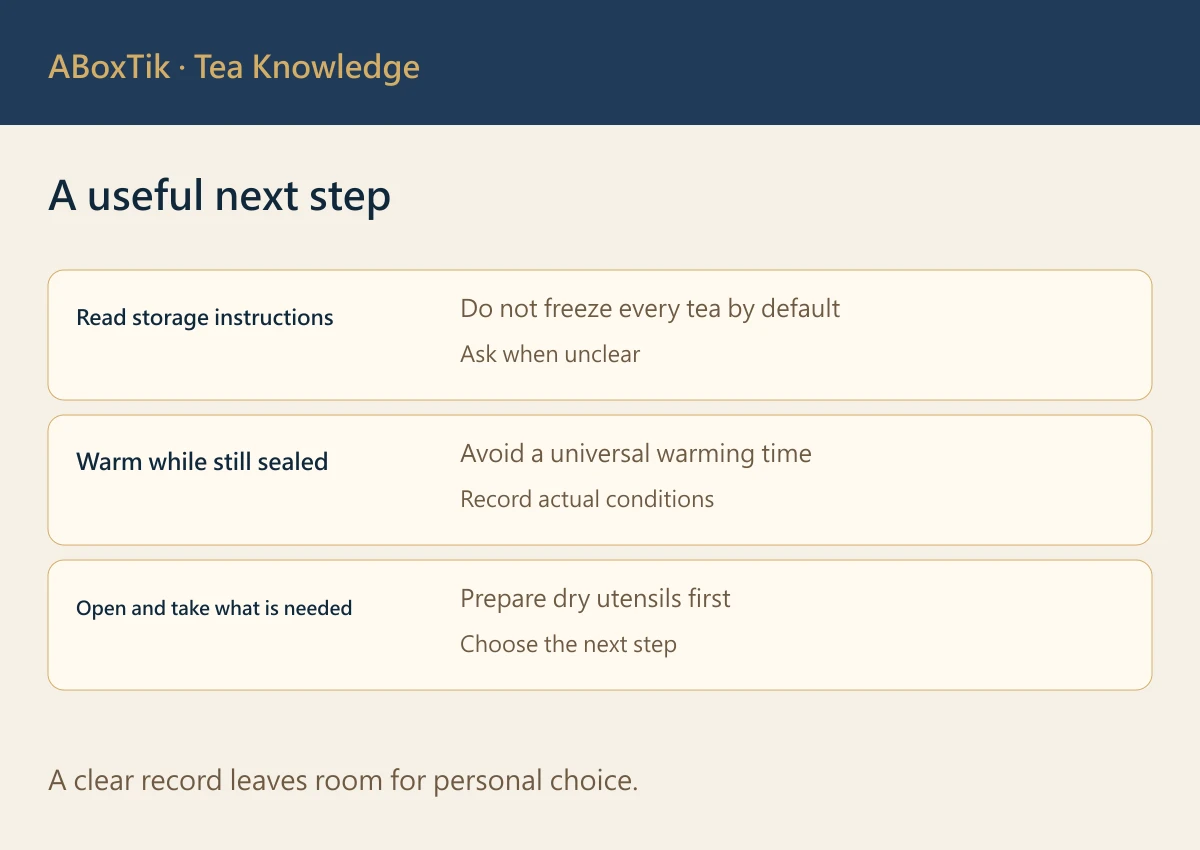
Check the actual product’s instructions before refrigerating or freezing dry tea. Low temperature is not a universal new home for every tea. Taiwan’s Tea and Beverage Research Station discusses cold storage together with moisture-resistant, light-blocking, odour-free packaging. The Kyoto Prefectural Tea Industry Chamber advises allowing unopened chilled tea to return to room temperature before opening. Keep each recommendation’s product and opened-package conditions attached.
| Stage | What to check | Next action |
|---|---|---|
| Before choosing storage | Product instructions, seal status and use frequency | Choose an arrangement for this particular pack |
| On removal | A sealed pack, dry exterior and an odour-free place | Keep sealed until the whole pack approaches room temperature |
| Before opening | Product guidance and the pack’s condition | Avoid a universal number of minutes; prepare dry utensils |
| After taking tea | Opened-product instructions and the closure | Reseal and store as directed for this product |
Opening the bag repeatedly to check progress defeats the purpose of keeping it sealed. Nor does the whole pack need a daily commute between fridge and table. Ask about smaller packs if that suits the amount you use; any portioning should be done in dry conditions with labels retained. Keep exterior droplets away from tea and the opening.
Cold storage does not extend the printed date or repair damp tea. Stop using tea with dampness, mould or a concerning condition and ask the supplier. Start by reading one pack’s directions and planning its next use, rather than chilling the entire cupboard at once.
Sources
- Tea and Beverage Research Station: tea storage
- Kyoto Prefectural Tea Industry Chamber: choosing and storing tea
Additional sources checked: 30 October 2026.