
Tea Knowledge
Tea Tasting Scores or Notes
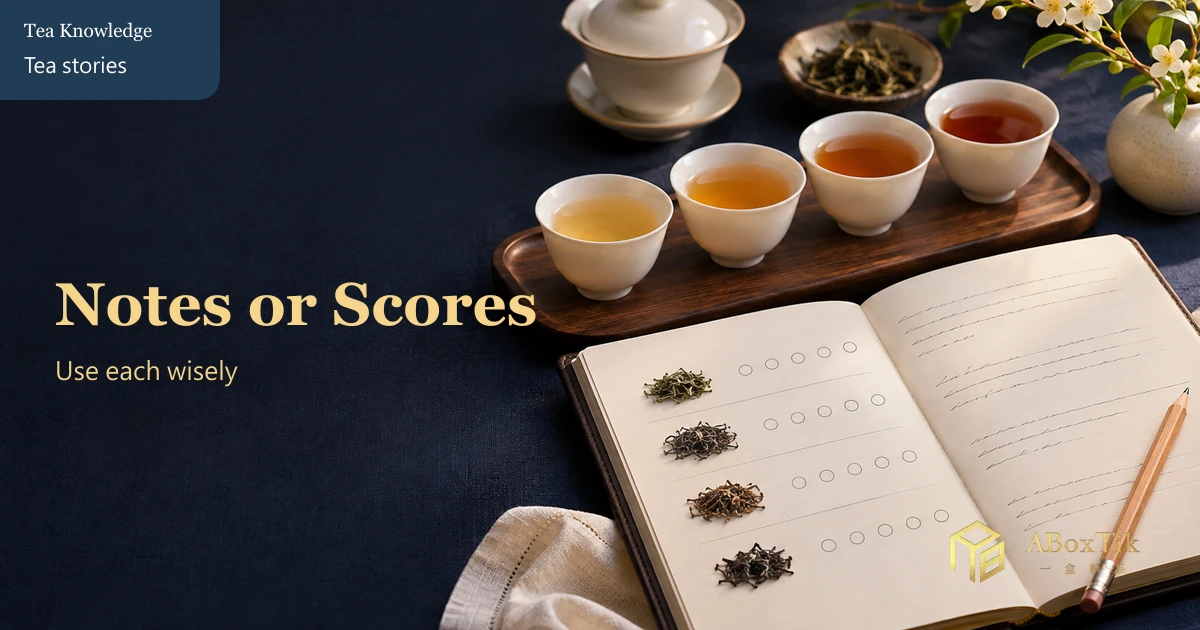
Choosing between tea scores and tasting notes becomes easier when the audience, purpose and method are clear. This guide turns a tasting-score sheet into a practical score-purpose comparison. There is no need to find an impressive answer immediately. Put what is known, what is pending and what happens next on one page. That small courtesy prevents the next person from solving a mystery during the busiest part of the day.
Create checkable fields
Record the date, version, product or batch, then add the quantities, materials, equipment, dimensions, languages and owners that matter. Mark each item confirmed, pending or not applicable; an empty cell should not quietly become approval. Beside every important fact, note whether it came from a package, supplier, authority or observation and when it was checked. A concise record can still show which question each fact answers.
Compare one point at a time
When a comparison is needed, hold the other conditions as steady as practical and change one variable. Put two or three options side by side and write their use, advantage, limitation and next action. Do not let the word best do all the work. If a trial, document or current specification is missing, list it as a check and arrange a small test or ask the responsible party before making a larger commitment.
Keep story and evidence separate
A photograph, name, flavour description or brand story can be a useful clue, but each supports a different conclusion. Origin, processing, safety, environmental, rights and partnership claims should return to applicable labels, records and primary sources. Keep the jurisdiction, date and conditions of official information visible. Evidence from one place, product or study should not be stretched to every case simply because the sentence sounds convenient.
Run a handover test
Give the sheet to someone who was not part of the earlier discussion. Ask that person to find the purpose, current version, completed items, next action and owner. If the answer requires three follow-up questions, simplify the order or remove duplication. For an exception, isolate it where appropriate, record what happened and send it to the right person rather than inventing a missing answer under time pressure. It is a useful note to your future self.
Questions that prevent confusion
Must every detail appear publicly? No. Readers need relevant product and use information; personal data, internal lists, quotes and undecided versions belong elsewhere. Can one photograph or phrase replace documentation? It may begin a question but rarely finishes it. Pause when food safety, law, copyright, testing, environmental claims or high-value collecting is involved and the available evidence is not enough.
Leave a clear next step
After the score-purpose comparison is complete, assign an owner and review time to every pending item, then archive outdated versions. Continue with a related ABoxTik guide and another practical article, checking current labels and actual needs. A checklist is not there to make tea bureaucratic; it lets the thoughtful details survive a busy day.
Put the sheet into a real situation
Start with one realistic example that contains no unnecessary personal data. Record the use case for a tea scoring sheet, the current version, the relevant sample or batch and the decision that must actually be made. Give the score-purpose comparison to a colleague or household member and ask that person to complete one lookup or comparison without an explanation. Note where the reader pauses, which term needs clarification and which fact appears in the wrong place. This is not a test of the reader; it is a test of whether the record can work on a busy day.
In the second revision, keep necessary fields, remove repeated reminders and move the most error-prone step closer to the beginning. Every pending item should have a source, owner and review time. If there is no owner, do not quietly present the item as complete. Separate records from different batches, versions or conditions instead of combining them into one answer that looks neat but no longer describes a single case.
Write the judgement as repeatable steps
Use the first attempt as a baseline, change one condition in the second, and decide after that whether another comparison is useful. Put photographs, aromas, names and stories in an observation column. Put labels, documents, measurements and primary official information in an evidence column. Both columns can help, but neither should impersonate the other. When a result applies only to a place, date, vessel, product or trial condition, write that scope beside the conclusion rather than hiding it in a distant note.
Before closing the task, ask four questions. Which decision does this record support? Can the reader reach the original source? Does each limit sit near the related conclusion? Can another person repeat the process? When all four have an answer, archive the older version. It sounds like one extra step, yet it prevents many small episodes of “I thought you knew” and turns considerate service into useful detail.
One final check: keep the record with the real object
Before handover, storage or use, compare the sheet with the actual item once more. Check the name, version, quantity, date, language and owner. If information will be separated from its original package, keep the necessary details with the item in a form the next person can find. When a condition changes, update the master version and tell the person taking over. Finish with a short result and one next adjustment, so this experience becomes a useful starting point rather than a page everyone remembers seeing but nobody can find.
Choose the decision before choosing the score
A score is useful only when everyone knows what it is meant to decide. A personal notebook may answer “Would I enjoy this again?” A purchase comparison may ask which sample suits a defined use. Quality control may check whether a batch stays within an agreed profile. A competition has its own rules and weights. Mixing those purposes creates a very precise-looking number that answers no clear question—an impressively dressed-up shrug.
| Use | What the number can do | What words should keep |
|---|---|---|
| Personal tasting | Show preference at that moment | Brewing conditions, aroma, texture and why you liked it |
| Compare two samples | Summarise agreed attributes under the same conditions | Where they differ and whether the difference matters |
| Team quality check | Flag movement from a defined reference | Lot, date, assessor, method and the observed deviation |
| Public claim | Nothing by itself | Method, scope and evidence; do not turn a private score into an award |
Write scale anchors before tasting
If using a five-point intensity scale, define the endpoints and the middle. For example, 1 can mean “not detected under this method”, 3 “clearly present” and 5 “dominant”. Do not let 5 quietly change from “strong” to “excellent”. ISO 4121 provides guidance for quantitative response scales in sensory assessment; it does not make one scale automatically correct for every tea project. Record whether the number describes intensity, quality, preference or confidence.
Let notes explain movement
Beside each score, add one short observation: “floral aroma clear when hot, fades after cooling”, “astringency builds at the sides of the tongue”, or “roast note covers the fruit cue”. The Taiwan Tea and Beverage Research Station describes tea evaluation through appearance, liquor colour, aroma, taste and infused leaf, with criteria and weighting depending on tea type and purpose. That is a helpful reminder that the category comes before the total.
Keep leaf amount, water, vessel, temperature and timing as consistent as practical when comparing samples. If a condition changes, write it down instead of pretending the two numbers sit on the same ruler. Blind or coded samples can reduce name and price cues when the purpose warrants it, but a home notebook does not need to imitate a laboratory to be useful.
A score-and-note card that can be repeated
- Purpose and samples: ______.
- Brewing method and date: ______.
- Attributes and scale anchors: ______.
- Score plus one observation for each attribute: ______.
- Overall preference, if relevant: ______.
- What changed, what stayed uncertain and what to repeat: ______.
After two sessions, review whether two people interpreted the anchors similarly. If not, revise the wording before averaging anything. Keep raw notes even when you calculate a total; the total is a signpost, while the notes are the map that helps you find the cup again.
Sources
TBRI — introduction to tea sensory evaluation · TBRI — sensory evaluation competency programme · ISO 4121 — quantitative response scales