
Tea Knowledge
Tea Gift Identification: Help a Household Tell Multiple Boxes Apart
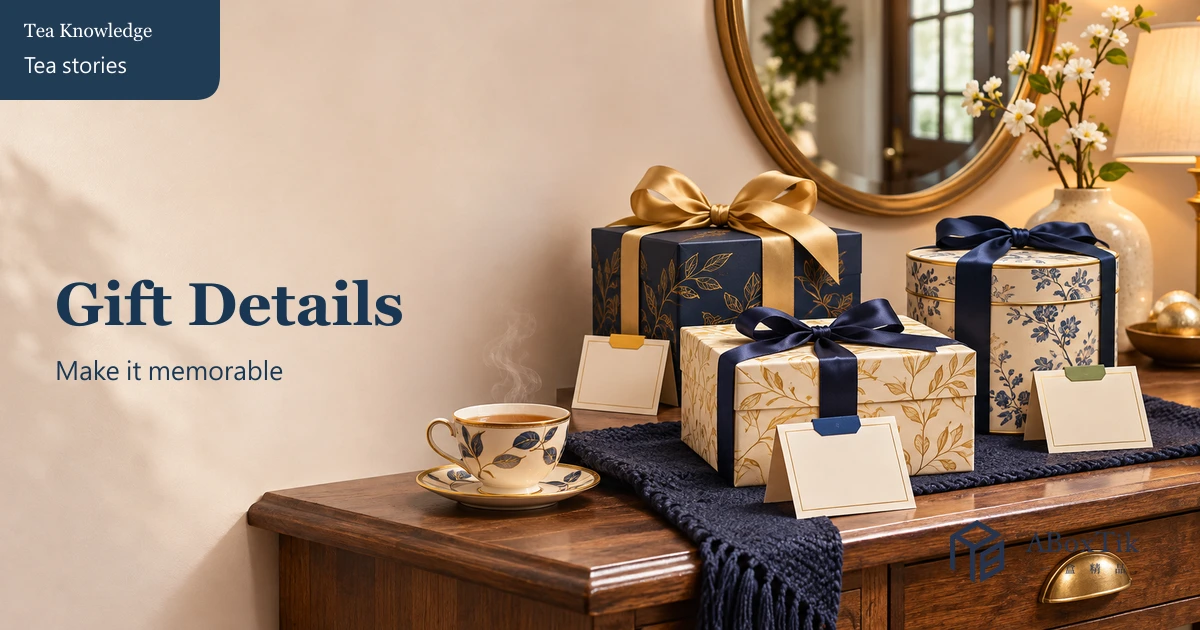
Start with what the household needs to know
When a household receives several boxes of tea, a little tea gift identification can make each one easier to enjoy. Put a readable tea name on the box, identify the giver and occasion on a card, and keep brewing information in the same place in each gift. The aim is simple: someone opening the cupboard can find a tea without turning the search into a family guessing game.
Think beyond the moment of presentation. A gift bag may be put away, a box moved to a shelf and individual packets carried to another room. Information that stays with the tea is more useful than a message printed only on a bag. Before adding labels, look at what is already there and keep the original product information clear.
Give the box one clear job
The outside should help a person recognise the tea. Use the product’s actual tea name, with a short distinguishing mark if several different teas will look alike. Choose a legible size and enough contrast against the box. The mark should be visible when the box is picked up or stored on a shelf; it does not need to dominate the design. If the existing name is already clear, another identical label adds little.
Use a consistent approach for matching boxes and distinct names for different selections. Colour can help, but relying on two similar shades alone may be confusing under different lighting. Put the boxes at ordinary cupboard height and step back. Can a family member find the requested tea without opening every lid? That small test is often more useful than adding decoration.
Let the card carry the personal message
A card is the natural place for a greeting, the giver or organisation and the occasion. “Happy Mid-Autumn Festival, from the Chen family” tells a fuller story than initials alone. Where several people are giving together, a shared signature keeps the message easy to understand. A few thoughtful lines are enough; the card does not have to become a second product label.
Place it in a consistent, easy-to-find position inside the lid. When preparing several gifts, match each card to its intended recipient before the box is closed. If the card sits inside an envelope, make the intended name clear without covering the tea name. Read the card once as though several weeks have passed: would the recipient still know who sent the gift and why?
Keep brewing information close to the tea
Place the tea name and preparation guidance on an easy-to-keep card or the original packaging. Use the same position in each box so the household learns where to look. Water quantity, temperature and steeping time should follow the information supplied for that actual tea. When one gift contains several teas, make the relationship between each tea and its instructions clear. Give the text room to breathe; readability matters more than fitting every idea onto one side.
Consider what happens when an inner packet leaves its box. Can its tea name still be recognised, and can the card be kept nearby? If the original packaging already answers those questions, preserve it rather than covering useful details. After brewing, a household can make its own note about a preferred strength and adjust the next cup to taste.
Try a household test before handing gifts over
Arrange several finished gifts together and invite someone who did not pack them to do three things: find a particular tea, identify the giver and locate the brewing guidance. Watch where they pause, then ask which word or position was unclear. This is a test of the package, not the person’s memory. Similar boxes can confuse the organiser too, especially when the presentation bags have already disappeared into a cupboard.
Repeat with a familiar storage situation. Remove the bags and place the boxes on a shelf with only their sides visible. Can the tea name still be found? Once a box is opened, is the personal card easy to notice? If a step needs explanation, try changing the position, text size or distinguishing mark before writing a longer paragraph. A small adjustment can make a generous gift easier to use.
Share only the information needed for delivery
The outside of a box usually does not need a recipient’s full contact details or other personal information. For a group delivery, an internal list can use group codes while the detailed handover information is shared with the people responsible for the delivery. Manage the list after handover according to the organisation’s existing practices. External markings should help the gift reach the right place and remain easy to identify.
A more personal message can sit inside the box or an envelope. Check names and forms of address before packing, and match the card to the correct household. For a larger batch, a simple box-by-box check is often calmer than trying to reconstruct the plan at the last minute.
Choose the tea and the information together
Begin with the occasion, the intended household and the product information, then plan the card and handover. If the recipients will use another language, prepare the tea name and brewing guidance in that language and check them against the actual product. Ask the supplier about details that are unclear rather than filling a gap from memory.
Thoughtful identification does not require an elaborate system. A remembered message, a recognisable tea name and a clear starting point for the next brew can make a gift feel welcome long after it arrives. Explore the related guides below when comparing gift formats or preparing information for an international recipient.
Related reading
One final check: keep the record with the real object
Before handover, storage or use, compare the sheet with the actual item once more. Check the name, version, quantity, date, language and owner. If information will be separated from its original package, keep the necessary details with the item in a form the next person can find. When a condition changes, update the master version and tell the person taking over. Finish with a short result and one next adjustment, so this experience becomes a useful starting point rather than a page everyone remembers seeing but nobody can find.
Separate the legal label, household marker and gift card
Do not cover or rewrite the product name, origin, ingredients or other required information on the original package. Taiwan FDA’s labelling guide and consultation examples show that repacking, mixed-origin tea and origin decisions have their own rules. A household sticker only helps someone find the right box; it does not replace the product label. When an item or source is uncertain, keep the original package and ask the supplier.
A three-layer system works well: put the tea name and one clear marker on the front, a batch or opening cue on the side, and the giver, occasion and brewing note on a card inside. W3C contrast guidance is useful for checking legibility, but it is not a statutory tea-package size rule. Test the boxes under ordinary indoor light, from the side of a cupboard and in a phone photograph. If another family member still has to guess, move the label or strengthen the contrast before adding a tiny novel.