
Tea Knowledge
Slow Teapot Pour: How to Time Filling, Steeping and Decanting
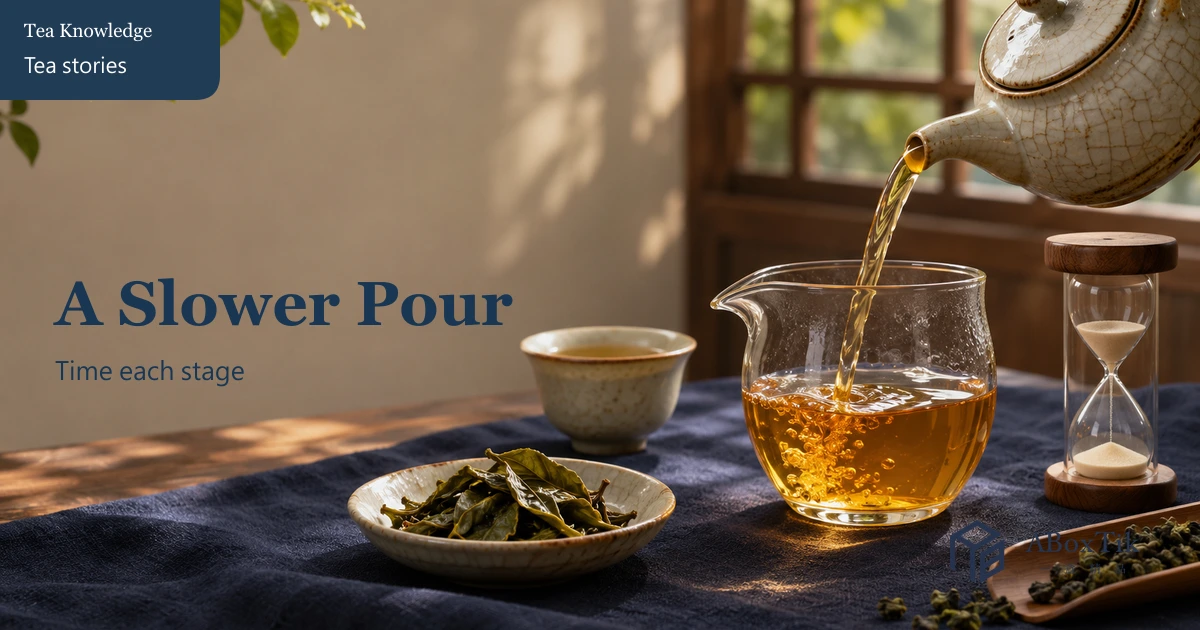
The timer says the same number of seconds, yet one pot tastes stronger than another. The difference can hide in the pour: while the last drops are still in the pot, the leaves have not pressed pause. Record filling, resting and decanting separately, then change one condition at a time.
Record three stages
Write down the time from the start to the end of filling, from the end of filling to the start of the pour, and from the start of the pour until the pot is mostly empty. Record tea amount, water amount and temperature, vessel and leaf condition too. Some people start a timer when water first touches the leaves; others start after filling. Either way, use the same reference point when comparing and state it clearly.
Why the final cup may taste different
Water remains in contact with leaves during decanting. When pouring directly into several cups in sequence, each cup can receive liquor from a different moment. A heat-safe, adequately sized fairness pitcher can collect the liquor before gently mixing and serving. Take care with a hot spout, vessels and steam.
Inspect the vessel before changing the steep
Once cool, check whether leaf fragments or expanded leaves obstruct the filter. Consider the lid, spout and capacity, and follow the maker’s cleaning instructions. Do not force a tool into a hot pot. Timing a pot of plain water can provide a reference for the vessel, although water alone cannot fully reproduce the flow once leaves expand.
Adjust one thing at a time
On the first round, follow the package guidance and record the three stages and your impressions. On the next round, keep the tea amount, water and temperature similar, begin pouring a little earlier, then compare. If the cup still does not suit you, consider leaf quantity, room for expansion or a different vessel. Changing everything at once makes the cause harder to see.
An example for the time card
Suppose filling takes 10 seconds, resting takes 35 and decanting takes 20. The record is 10 / 35 / 20, or 65 seconds from the beginning of filling until mostly empty. This is arithmetic for a note card, not a universal recipe. Next time, try a 30-second rest with the other conditions as similar as practical and compare aroma, bitterness, astringency and preference.
Common questions
Does a slow pour mean a defective pot? Not necessarily: design, expanded leaves and obstruction can affect flow. Must every drop be forced out? Prioritise a stable, safe pour and adjust for the vessel and leaves. Must every infusion use the same timing? Leaf condition changes between infusions, so record and adjust each round.
Compare from the same starting point
A timer can start when water first touches the leaves, when filling ends or when a lid is placed on the pot. Choose a point you can repeat and write it down. “Rest for 35 seconds after filling” and “start pouring 35 seconds after water first touches the leaves” use the same number but do not describe the same exposure. Comparisons are more useful when the reference point stays consistent.
A phone stopwatch with lap markers can record the start of filling, the end of filling, the start of the pour and the point when the pot is mostly empty. The aim is a repeatable personal reference, not an identical millisecond for every drop. A brief note about water remaining in the pot can help explain a later difference.
Observe the filter and room for leaves
Rolled or long leaves can expand and interact with a filter or spout. After the pot has cooled, observe whether leaves collect near the outlet, then clean according to the maker’s instructions. Do not force a tool into the spout. If adding a strainer or accessory, check that it fits the vessel and does not obstruct a safe pour.
To compare two vessels, time the same amount of plain water in each as an initial reference. When brewing tea, keep the tea and its amount and the water amount similar, and record the three stages separately. A plain-water test describes the empty vessel on that occasion; expanded leaves and their position can change the actual flow, so do not promise that every tea will pour at the same speed.
Make shared cups more consistent
If a heat-safe pitcher has enough capacity, collect the infusion, gently mix and then divide it among cups. Each cup then comes from the same combined liquor. Without a pitcher, a person may pour into cups in small rounds, provided the action is stable and does not spill. Record the method and choose the one that is comfortable and safe; a dramatic high pour is not required.
If the first infusion feels too strong, review the timing origin, decanting duration and whether expanded leaves slowed the spout. Next time, begin pouring a little earlier while keeping other conditions similar. Write down the combination if you like the result. The leaves have changed by the next infusion, so observe again rather than treating one number as a rule for every round.
Turn one tasting into a controlled comparison
Before brewing, write a compact baseline: vessel, dry-leaf amount, water amount, water temperature and the chosen timer start. Then add the three time marks. After tasting, describe what you actually noticed—perhaps aroma faded sooner than expected, the middle of the sip felt brisk, or the finish stayed drying. “Too strong” is useful as a first reaction, but a few sensory words make the next adjustment much easier.
For the second trial, change only one controllable item. If decanting took 25 seconds and the cup felt heavier than you wanted, begin the pour slightly earlier while leaving the leaf, water and vessel alone. If the flow itself was erratic, solve that variable before shortening the rest. This is tea, not an escape room: you do not win extra points for changing five clues at once.
Separate a home recipe from a sensory-test method
ISO 3103 describes a standardised preparation of tea liquor for sensory tests. Its purpose is repeatable comparison under a defined method, not a promise that one recipe is the tastiest choice for every Taiwanese tea or every household. At home, the practical lesson is narrower: define the conditions before comparing samples and do not quietly move the timer’s starting line between trials.
A three-stage card can therefore sit beside the producer’s brewing guidance rather than replace it. Start with the package or maker’s recommendation, record what happened in your own vessel, and adjust gradually. When serving other people, say which method you used instead of presenting a personal result as a universal rule.
A calm safety pause
Hot liquor and steam can cause scalds. Keep the pouring path clear, use vessels and pitchers intended for hot drinks, keep handles away from an edge and do not reach into a hot pot to clear a filter. If children are nearby, place hot drinks well out of reach. The NHS identifies hot liquids and steam as causes of scalds; this safety reminder is separate from any flavour advice.
Explore next
Gaiwan and teapot · Steeping time
Sources
Taiwan Tea and Beverage Research Station · ISO 3103:2019 — tea liquor for sensory tests · NHS — burns and scalds