
Tea Knowledge
Tea Temperature from a Hot Water Dispenser: A Simple Brewing Log
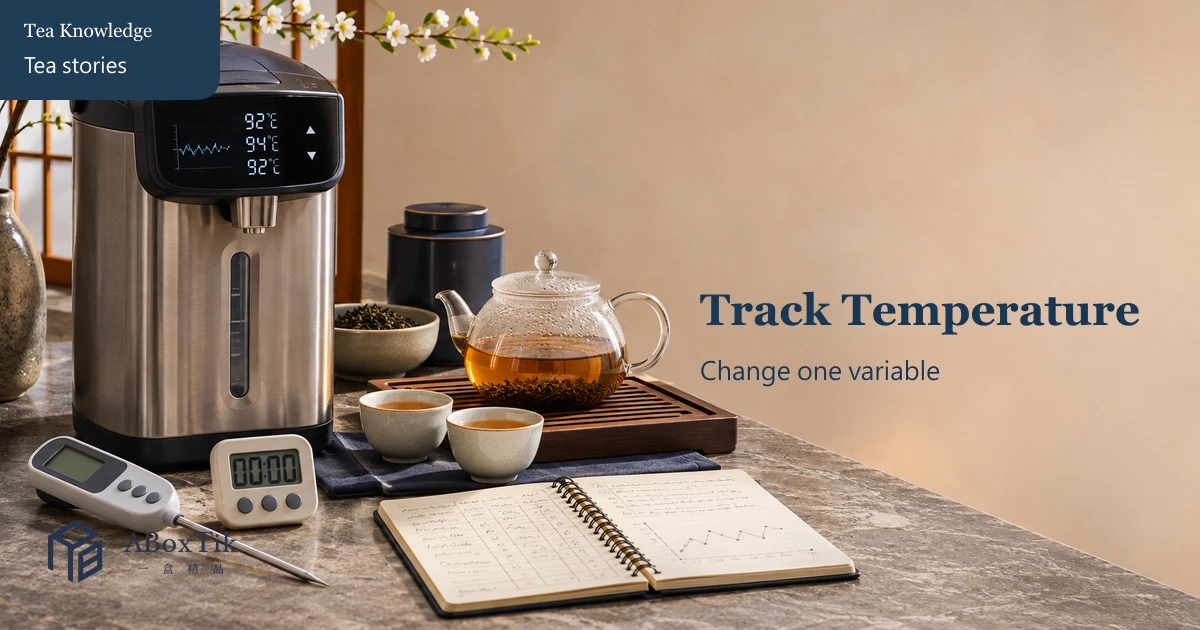
Record first, then decide what to change
If the hot water dispenser tea temperature seems to vary, begin by recording the selected setting and the place and time of each actual measurement. Keep the tea quantity, water quantity, vessel and steeping time consistent while comparing cups. A setting describes the mode chosen on the appliance; a reading taken elsewhere describes the water at that location and moment. There is no need to assume the two numbers are identical.
Choose a familiar tea and prepare it twice using the same method. When the cups taste different, write down what happened and any readings. The log is not an examination: a few consistent notes turn “today tastes different” into something useful to investigate next time.
Make a practical equipment log
For each brew, record the date, tea and batch, dispenser setting, measured reading, measurement location and time. Add tea quantity, water quantity, vessel, whether it was preheated and how timing began after pouring. Finish with steeping time, a short taste note and the single change planned for the next cup.
For example, use the same tea, quantities and cup in the first two rows. Put the setting and reading in separate columns; beside the reading write “measured in a jug after dispensing” and the time waited. Use your own actual numbers rather than treating an example as a recommended temperature. If no measurement was taken, leave the reading blank and mark it unmeasured instead of copying the setting.
Separate the setting from the reading
The display tells you the selected appliance setting. By the time water has left the spout, entered a container and reached the thermometer, the measurement conditions may differ. Note whether the reading was taken in a measuring jug, the brewing vessel or another place, and how long after pouring it was taken. Thermometer method and accuracy affect comparisons too, so follow its instructions.
For a useful comparison, use the same thermometer and vessel, a similar water quantity and the same measurement timing. If readings jump unexpectedly, first review the method and equipment instructions. Stop using an appliance that shows signs of a fault and arrange a qualified inspection; do not open it for an improvised repair.
Keep the tea and vessel conditions steady
When comparing temperature, start with the same tea, tea quantity, water quantity, vessel and steeping time. A scale and measuring jug make the amounts easier to record. Without precise tools, use the same spoon and cup and note that method. The result need not pretend to be laboratory data; consistency still makes a home comparison more informative.
Record whether the vessel was preheated. If the cup, water volume or tea batch changes, note that separately because each can affect the experience of the brew. Keep the log near the equipment if another household member makes tea too. A shared note is a kinder handover than asking someone to guess how yesterday’s cup was made.
Change one thing at a time
Make a baseline cup with the usual method, then change only the factor being explored, such as the dispenser setting. Keep the other steps as similar as practical and record both the reading and the taste. If the difference is unclear, repeat the same pair of conditions before changing the tea quantity or shortening the steep as well.
Use words that make sense to you: light, more aromatic, more bitter or just right. Tea and your own perception can vary, so a single cup need not settle the question forever. Circle the combination you prefer and try it again another day. The goal is a repeatable routine that suits the household, not a competition for the most elaborate spreadsheet.
Handle hot water safely
Hot water can cause burns. Place a stable, heat-safe vessel on a level surface, dispense slowly and avoid overfilling it. Follow the thermometer’s instructions and keep hands away from hot water and steam. When moving a hot container, watch for other people, children and pets, and wait until it can be handled safely.
If unsure whether a vessel or thermometer is suitable for hot water, check the manufacturer’s instructions first. If the dispenser leaks, releases unusual steam or otherwise behaves abnormally, stop using it and follow its service guidance. There is always time to finish the log after the equipment has been checked.
Save a routine worth repeating
After several entries, choose a combination you enjoy and save the setting, tea-to-water quantities, vessel and timing together. When trying another tea, begin with the product’s own brewing guidance, make one or two fresh entries and adjust to taste. A new tea does not have to inherit every setting from the previous one.
A clear record helps different people in the household reproduce a favourite cup without suggesting there is one answer for everyone. The related guides below offer further ways to think about steeping time, water temperature and brewing in an insulated container.
| Date / tea | Setting | Reading / place / time | Tea / water / vessel | Steep / taste / next change |
|---|---|---|---|---|
| Fill in | Fill in | Fill in | Fill in | Fill in |
Related reading
One final check: keep the record with the real object
Before handover, storage or use, compare the sheet with the actual item once more. Check the name, version, quantity, date, language and owner. If information will be separated from its original package, keep the necessary details with the item in a form the next person can find. When a condition changes, update the master version and tell the person taking over. Finish with a short result and one next adjustment, so this experience becomes a useful starting point rather than a page everyone remembers seeing but nobody can find.
When readings disagree, check the measurement before blaming the tea
Research from Taiwan’s Tea and Beverage Research Station shows that water quality and temperature can change tea-liquor performance. That supports recording the conditions, but it does not make the dispenser display the exact temperature reaching the leaves. If two runs differ sharply, repeat the same water volume, vessel, outlet position and reading time. Note preheating, consecutive draws and probe depth too. The more consistent the log, the less likely the tea is being framed for a measurement problem.
NIST notes that even good thermometers can drift or read incorrectly after mechanical shock, thermal shock or configuration errors. A household check may follow the manufacturer’s instructions, but a quick ice-point or boiling-point experiment is not a formal calibration certificate. Ask a qualified service provider when accuracy or repair matters. Hot-water safety still comes first: stop if the vessel is unstable, the dispenser leaks or steam behaves abnormally.
Keep one blank control row in the log as well. On a normal day, record the familiar tea with the usual vessel and method before changing anything. That baseline makes a later adjustment easier to interpret and keeps a single surprising cup from becoming household folklore.
Repeat the baseline whenever the machine, thermometer or vessel changes.