
Tea Mixology
Fruit Purée or Juice in Tea? Compare Texture and Serving Workflow
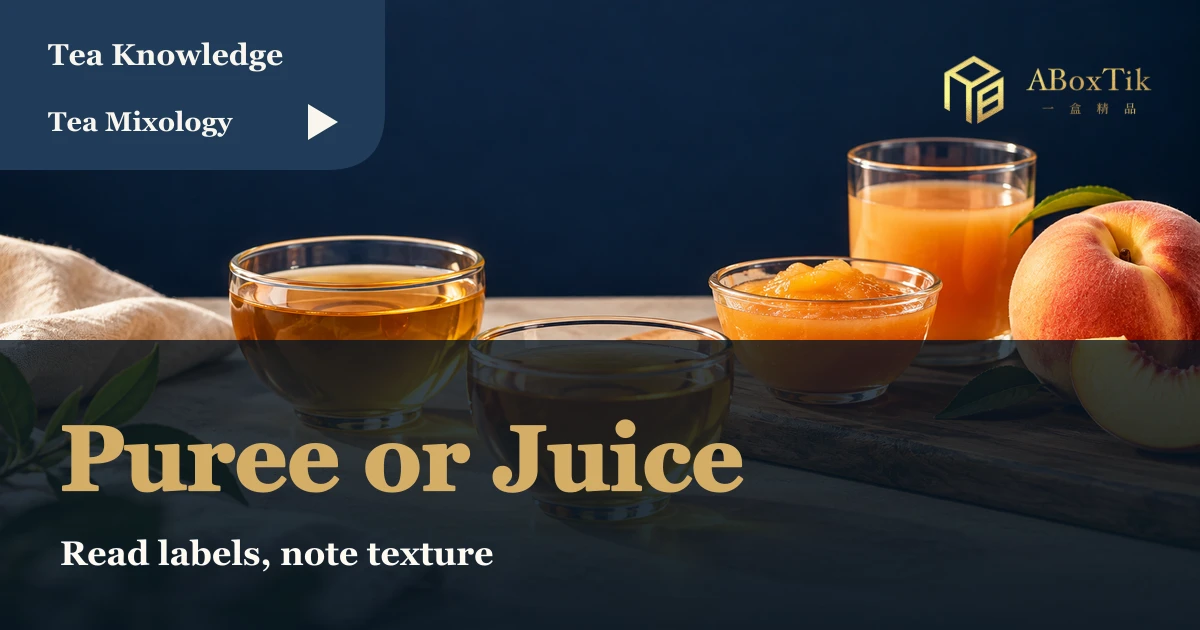
Give tea and fruit room to share the glass.
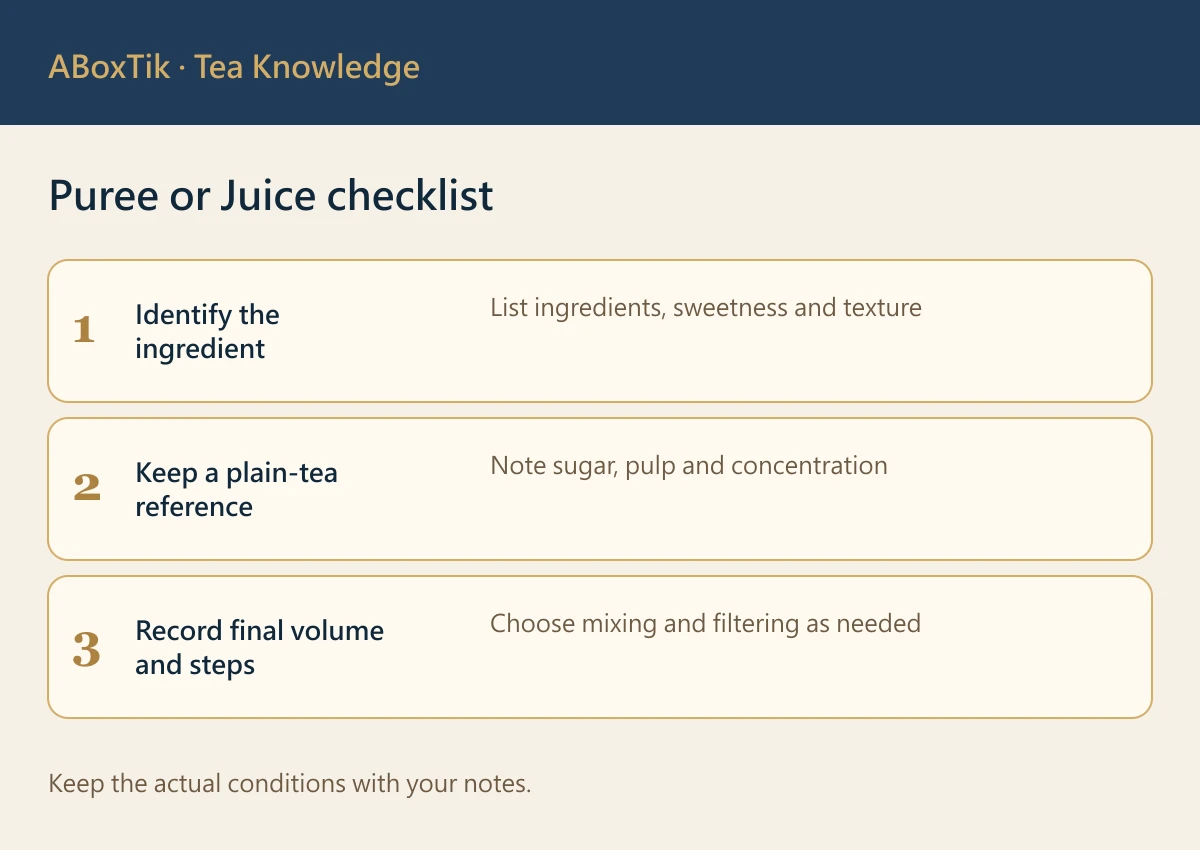
Fruit purée and juice can both add fruit character to tea, but their forms differ. Purée often retains more fruit texture; juice may be more fluid and can also contain pulp. The ingredients, sweetness, acidity, concentration and texture of a particular product must be read from its label and observed in use. A name alone cannot predict the finished drink. Start with the tea character and texture you want, then compare small amounts and record the process. Keep plain tea as a reference and record actual quantities and observations, so a preferred version is easier to revisit.
A glass does not have to feature every fruit at once. If you want to notice the tea, reserve a small taste of the plain tea as a reference. If a fruit texture is the point, consider how the chosen purée fits the cup, utensils and occasion. Giving each ingredient a clear role makes it easier to decide what to change next.
Read the product, not just the category name
A purée is generally fruit processed into a soft or pulpy form. Products vary: check whether the one in your hand contains added sugar, water or other ingredients, and whether the texture is smooth or contains pieces. Juices also vary in their labelling and can be clear or pulpy. For a fruit drink, read its ingredient list rather than assuming it has the same composition as another juice. Keep the product name, ingredients, net contents and preparation and storage instructions with your notes.
A homemade fresh-fruit preparation and a commercial product may behave differently. A conclusion about one brand is not a conclusion about every purée or juice. If anyone has an ingredient preference or needs to avoid an ingredient, let them read the full label and make their own choice. “Fruit” does not replace an ingredient list, and familiar packaging does not tell you everything about its contents.
If using fresh produce, prepare it with clean equipment and follow applicable product directions. The US Food and Drug Administration recommends washing fresh produce under running water and not using soap or detergent on it. Follow the actual product’s handling and storage instructions for ingredients that need particular care.
| Comparison field | Check for purée | Check for juice |
|---|---|---|
| Ingredients | Fruit, added sugar and other ingredients | Product name, ingredients, sugar and pulp information |
| Texture | Thickness, particles and whether stirring is needed | Flow, pulp and any settling |
| Use | Mixing, suitable cup and serving utensils | Mixing, total liquid and space in the glass |
| Instructions | Opening, use and storage guidance | Opening, use and storage guidance |
| Preference | Whether a fruit texture is welcome | Whether a more fluid drink is preferred |
Taste the tea and examine the fruit separately
Choose a familiar tea and prepare it according to the package. Record the tea name and batch if known, leaf and water amounts, temperature and steeping time. Separate the leaves from the tea, taste a little of the plain tea and write down the aroma and strength you want to retain. Then look at each fruit ingredient on its own: its label, consistency and flavour. Avoid starting with the assumptions that purée must be sweeter or that juice must be more acidic.
A purée’s solids may make a drink appear thicker. Juice adds liquid and may change how concentrated the tea seems. The result depends on the actual product, amount, tea base and mixing method. Record “tea seems lighter,” “fruit is more noticeable” and “there is fruit texture” as separate observations. Colour can be enjoyable to note, but it cannot replace a taste or an ingredient label.
The baseline tea also gives you an early decision. If the plain tea is already too strong or astringent for your taste, adjust its preparation first. If it is comfortable on its own and changes after the fruit is added, keep that reference and investigate the fruit and total amount. One reference cup can save the next several rounds from becoming a guessing game.
Design two small comparisons
To compare purée and juice, choose products in a similar fruit direction with ingredients as clearly stated as possible. Divide tea from the same prepared batch into matching cups. Record the amount of each material, total liquid or weight, order of addition, mixing method and tasting time. Even two products made from the same named fruit may differ in sugar, acidity, pulp and concentration. Your notes can describe those two products; they cannot establish how all purées and juices behave.
| Round | What to prepare | What to record |
|---|---|---|
| Baseline | Plain tea on its own | Tea aroma, strength and the feature to retain |
| A | Freshly measured tea base with purée | Product label, amount, texture and preference |
| B | Freshly measured tea base with juice | Product label, amount, texture and preference |
| Next round | Begin with the preferred cup | Choose one adjustment and record the actual conditions |
A measuring cup is helpful if you want to repeat the result. If you do not have one, describe the container and the method you used rather than inventing a precise measurement. Use fresh small portions for the next round; do not keep adding ingredients to one glass and only afterwards try to remember how much went in. The card keeps actual quantities beside personal observations, so the next round can begin with the conditions you preferred.
You might ask one clear question per round: “Can I still notice the tea aroma?” or “Do I enjoy the fruit texture?” Trying to answer aroma, sweetness, cost, colour and perfect presentation simultaneously makes the result harder to interpret. A second question can always have its own small cup later.
Think about texture and serving
If a fruit texture is desirable, consider whether the chosen purée mixes easily with the other materials, whether it needs stirring again and whether the selected cup and utensils make serving comfortable. If a simple flowing drink is the priority, a juice may be a useful option, but check whether that particular product contains pulp or settles. Both categories include many products; the one in your hand is the relevant example.
Ice and other liquids change the amount in the glass and may change perceived strength over time. For a comparison, note the ice, serving time and total amount. If one cup contains ice and another does not, their differences cannot all be attributed to fruit form. Leave enough space in the glass for the contents and any gentle mixing, and follow the instructions for any equipment used.
For a group, consider keeping some plain tea available. Someone may not like the fruit ingredient or may prefer to decide about sweetness separately. Ask about preferences before serving and keep the ingredient information accessible. A simple choice can be more considerate than preparing one large jug and assuming every guest wants the same thing.
Include labels, utensils and cleanup in the plan
Prepare the fruit ingredients, tea base and cups according to their respective instructions. Use clean equipment for the materials and keep packaging until the ingredients and use directions have been checked. If a product requires refrigeration or another storage condition, follow its label. Opening and use periods should be assessed from the particular product instructions and circumstances, not from one fixed number copied from an unrelated brand.
If you are preparing drinks for friends, explain which fruit ingredients were used and invite people to choose. Different people may notice different amounts of fruit texture, acidity or tea aroma. Each person can write a short observation before discussing it. “I like this lighter mouthfeel” and “I prefer the cup with more fruit texture” are both useful answers; the table does not have to appoint a fruit champion.
Small portions also make the practical workflow easier to evaluate. Note whether the material pours, needs stirring, clings to a utensil or leaves pulp in the cup. These are observations of that product in that setup, not claims that one category is always easier. The best workflow is one the person preparing and the people drinking can repeat comfortably.
Change one thing next time
If the fruit seems to cover the tea aroma, a later round can adjust the fruit amount while recording the resulting total. If the mouthfeel is not what you wanted, inspect the product’s texture and the mixing method before changing the tea as well. If the plain tea tasted comfortable but the mixed cup seems dilute later, look at the added liquid, ice and drinking time. A note about what changed is more useful than trying to fix every variable in one pour.
If you decide that a particular fruit ingredient is not for you, the experiment has still answered a question. Keep the plain tea, try a different current product or return to a familiar drink. There is no need to add more sugar or fruit simply to make a comparison feel complete. A small, repeatable decision is enough.
Let tea and fruit share the glass
To continue exploring, start with current information for a familiar Taiwanese tea and the design ideas in the non-alcoholic tea mixology guide. Confirm the actual tea, fruit ingredients and equipment for your own occasion. Purée and juice do not have to compete for a universal first place. The useful choice is the one that gives the tea, the fruit and the person drinking it a comfortable place in the glass.

Related reading and tea choices
Sources
- US FDA: Selecting and Serving Produce Safely
- Tea and Beverage Research Station: Introduction to tea sensory evaluation
Sources checked: 30 October 2026.