
Tea Mixology
Christmas Warm Tea Drinks: Three Design Guides and Trial Sheets

A warm cup gives a winter conversation somewhere to pause. Let the tea, fruit and spice take turns, begin with a small trial, and leave one honest sentence for the next round.
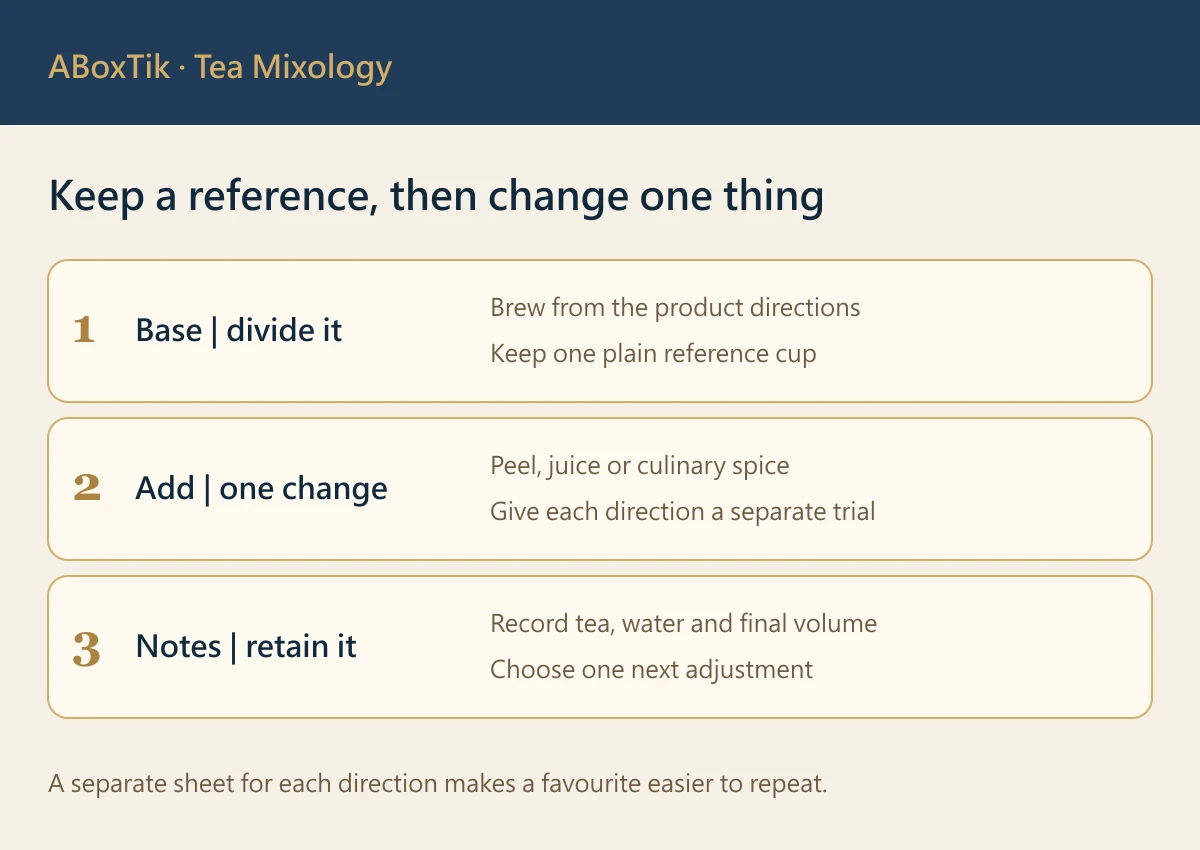
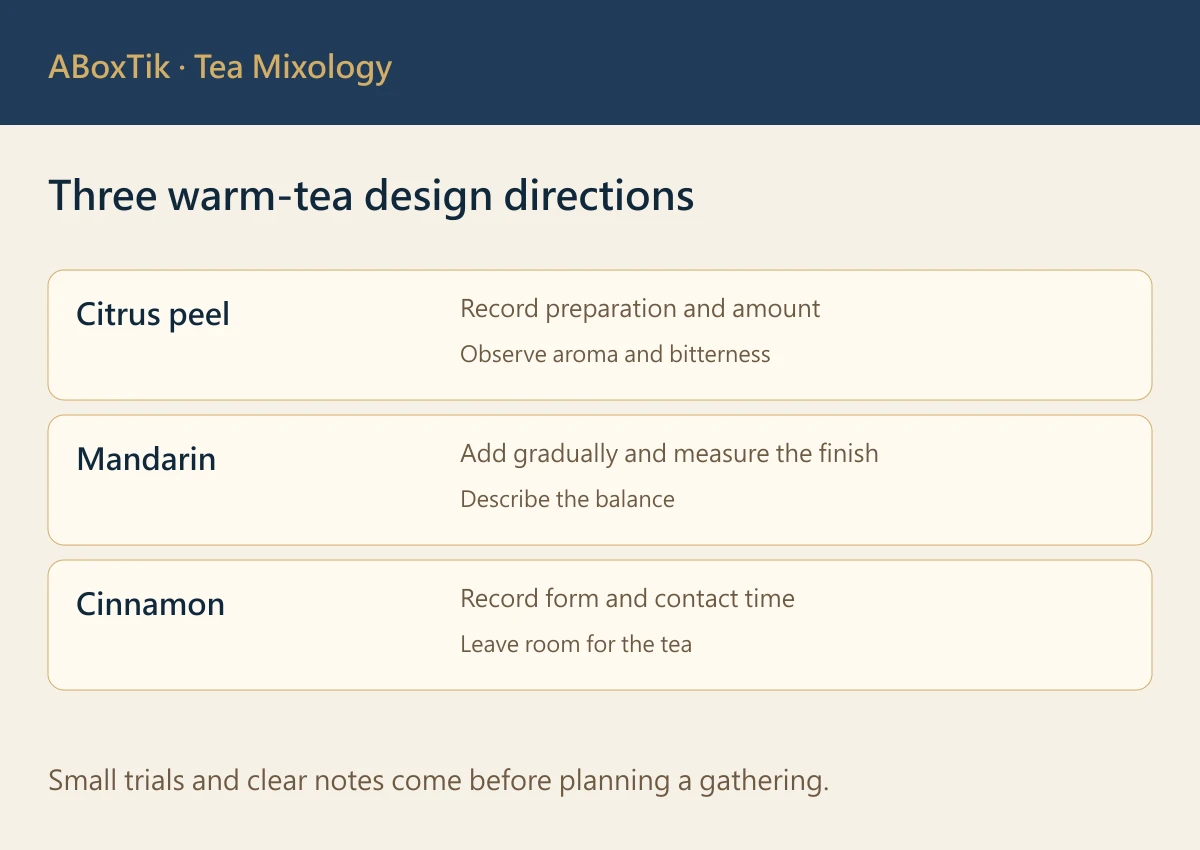
Christmas warm tea drinks can begin with black tea and follow three design directions: citrus-peel aroma, mandarin balance and cinnamon spice. Brew the selected tea from its own instructions, divide it into small samples, change one ingredient at a time and record the finished volume. The design cards below work with a fill-in trial sheet, so a preference can become a repeatable small batch before a gathering.
A first attempt can attract an orange, a cinnamon stick, some sugar and the entire festive mood at once. The cup becomes surprisingly busy. Keep one plain tea as a reference and give each addition a turn. The non-alcoholic tea mixology guide offers a broader framework; here the task is a manageable warm-drink trial without unpacking the whole spice cupboard.
Christmas warm tea drinks start with a plain reference cup
Read the tea name, ingredients, brewing directions and the capacity of the intended cup. The Tea and Beverage Research Station’s black-tea introduction describes differences associated with cultivars and processing. Choose a tea worth drinking on its own, rather than assuming every black tea will respond identically to additions. Keep the tea’s natural aroma description separate from ingredients actually put into the drink.
Use the product’s tea quantity, water, temperature and steeping directions as the starting point. Separate the leaves after brewing, then divide the same tea into small portions. Smell and taste the reference first, with three short fields for tea flavour, aroma and strength. Steeping-time notes and the aroma-observation sequence can help organize the order.
Measure with a marked jug or a suitable scale, and record the actual units. If a household spoon is used, identify that spoon in the notes. The extra detail is a favour to the next attempt: a cup that can be repeated is more useful than remembering that a little of something went in. Keep the first trials small before planning quantities for guests.
Direction one: citrus peel, with aroma and tea in separate notes
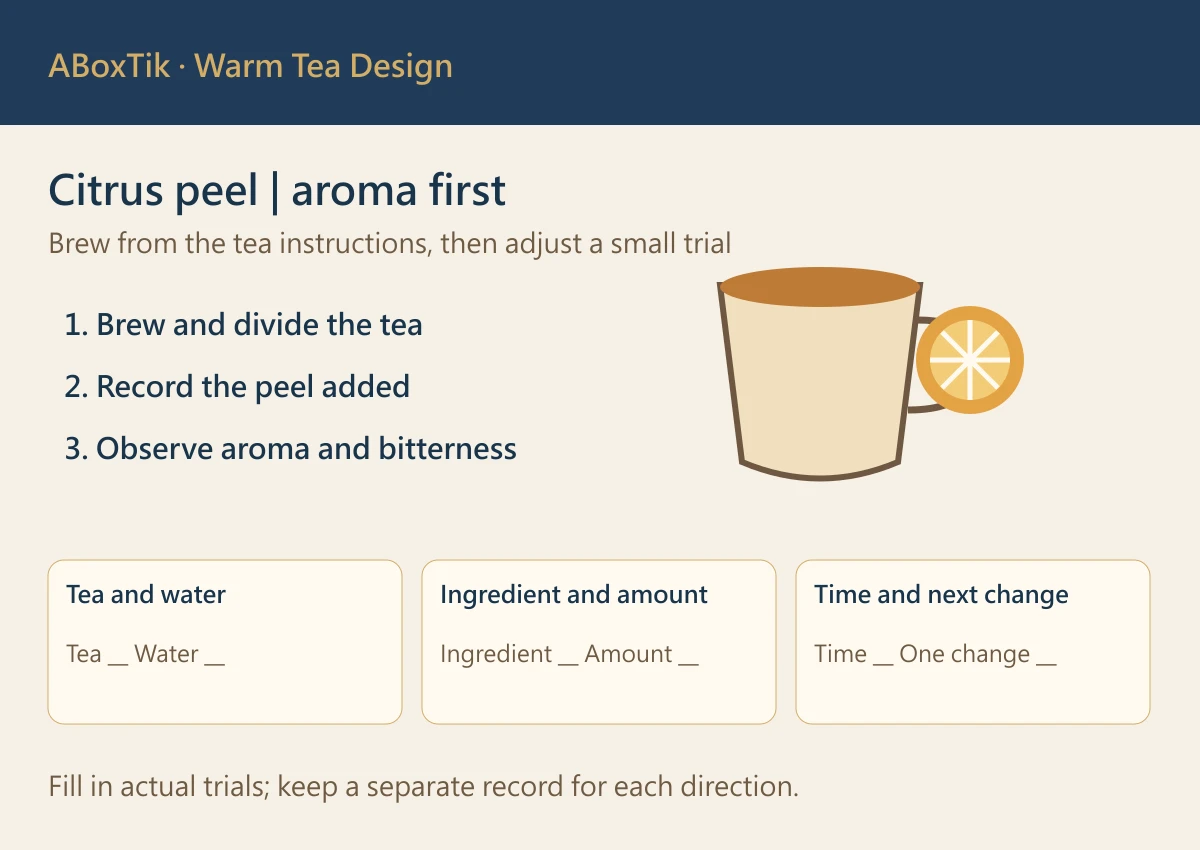
Choose citrus intended for eating and prepare it appropriately, including washing. Use a small amount of outer peel for the first trial and record the fruit, preparation, quantity and contact time together. Compare a plain portion with the peel addition before introducing juice or sweetness. That arrangement makes the change easier to describe.
Ask whether the peel aroma is welcome, whether the tea remains clear, and what bitterness or finish needs attention. A next-round note might reduce peel quantity or shorten contact time; choose one. The bitterness observation guide can help with vocabulary. More peel does not automatically make a drink more festive. A little space in the flavour can be hospitable too.
Direction two: mandarin juice or flesh, with a measured finish
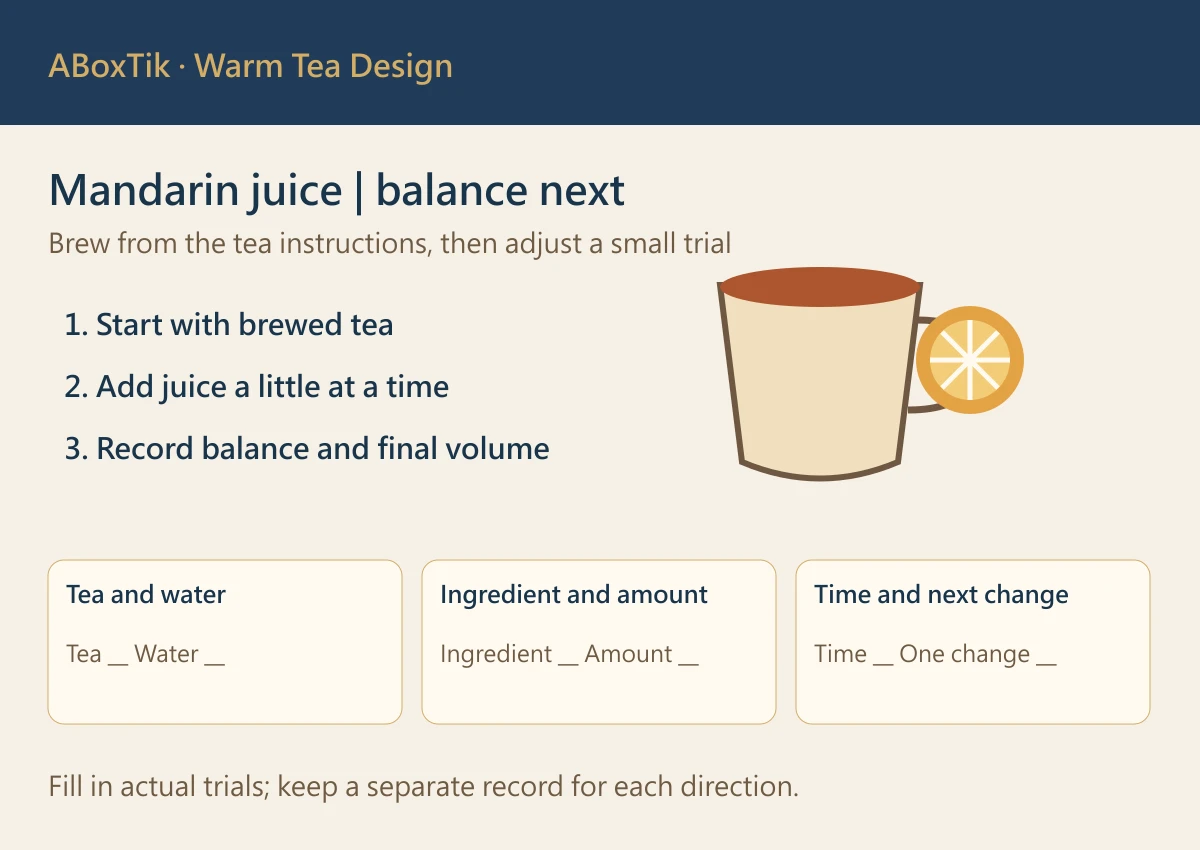
Specify whether the addition is juice, fruit flesh or both. Record the citrus used and how it was prepared, then add a little at a time to a divided portion of brewed tea. If sweetness needs adjustment, note the impression before sweetening and use a separate round for that change. Keeping the steps distinct makes the next decision easier.
Measure the final drink after additions, rather than treating the original tea-water quantity as the finished volume. Note whether fruit pieces are decoration or intended to be eaten, and whether the cup makes that comfortable. The astringency guide and aftertaste observations offer further words. Sour, bitter and drying sensations deserve different entries; a note saying only unusual leaves the next attempt a rather mysterious brief.
Direction three: cinnamon spice, with room for the tea
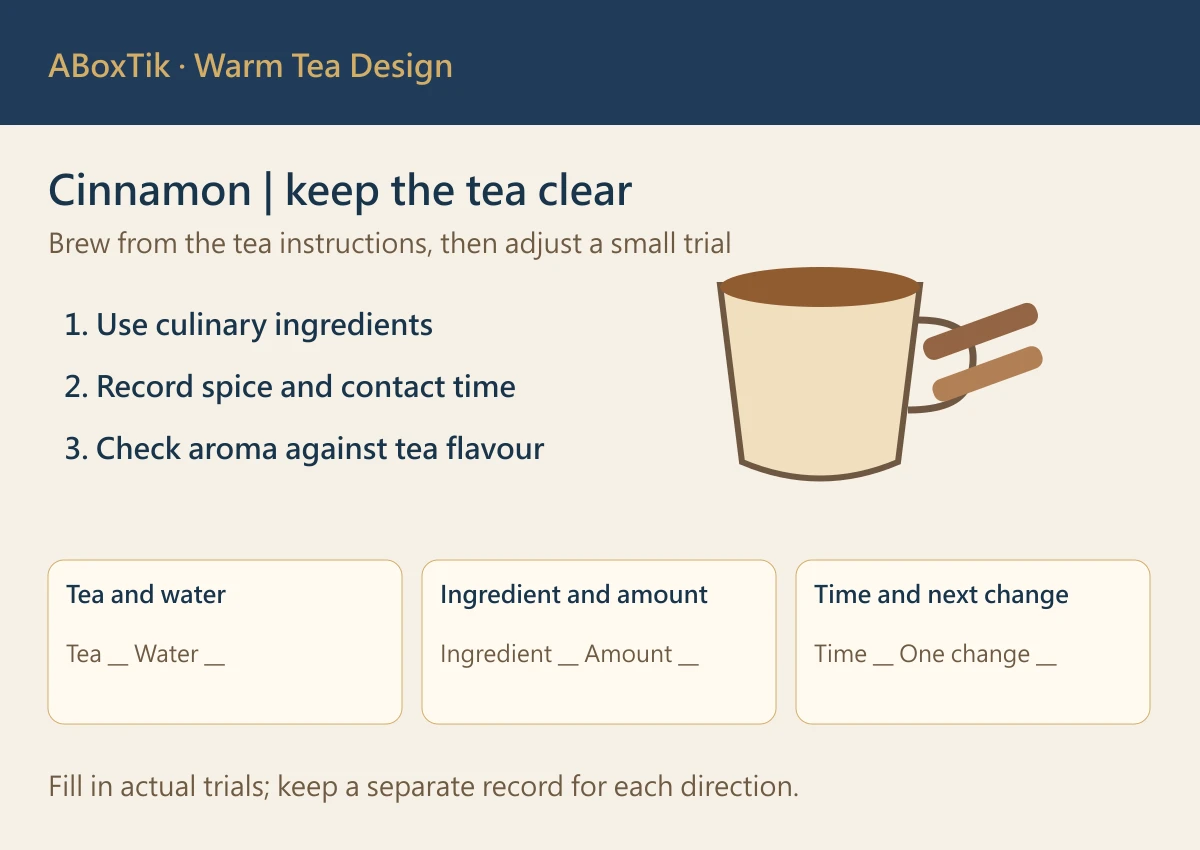
Select clearly identified culinary cinnamon or another culinary spice, starting with one at a time. Record its form, amount, addition method and contact time. A stick and a powder create different practical questions about removal, sediment and cleanup. Try a small tea portion first, then decide whether this direction should later meet either citrus idea.
Ask whether the spice is dominating and how the impression changes as the cup cools. Those questions are more useful than aiming for maximum intensity. The warming and roasted aroma vocabulary concerns sensory impressions; actual added ingredients still belong on the ingredient card. Clear names help everyone at the table understand what is in the cup before choosing.
Keep one trial sheet for each design direction
Start a separate sheet for every direction. Fill in the reference conditions and then the change. Write none when no sugar, ice or other addition was used, so an empty field does not become a guessing game later. Include the vessel, finished volume and the sensations actually observed. Notes from two points in the same cup can occupy separate lines instead of being compressed into one score.
| Record | This trial |
|---|---|
| Direction and date | ____ |
| Tea, batch and leaf quantity | ____ |
| Water, temperature and steeping time | ____ |
| Citrus or spice, form and amount | ____ |
| Sweetener, ice or other additions | ____ |
| Addition method and contact time | ____ |
| Cup capacity and finished volume | ____ |
| Aroma, tea flavour, balance and texture | ____ |
| One change for the next round | ____ |
Repeat a successful small trial from its notes before increasing the quantity. Keep the ingredients and handling steps in the larger record too; an impression from one cup does not promise the same result from a pot. The festive non-alcoholic tea design article offers another way to think about planning. The useful lesson is recording decisions, rather than copying another drink’s appearance and assuming its brewing method is interchangeable.
Make hosting easier with clear choices and familiar cups
Ask whether a friend would prefer plain tea, citrus aroma or less spice. Keep a manageable alternative when an ingredient is unwelcome. Write down actual ingredients, choose suitable heat-resistant cups, and check that serving and drinking are comfortable. Reseal dry tea after taking a portion, following tea-storage guidance, and handle the other ingredients appropriately. Plan freshly made drinks for the current occasion.
The invitation can be gentle: would the next cup be better with more tea character or more fruit aroma? Put the answer on that direction’s sheet and change one item next time. No one has to name a professional aroma descriptor or finish three samples to qualify as helpful. A plain reference cup is also a perfectly considerate choice.
If the table would enjoy other Taiwanese teas on their own, read the flavours in the classic Taiwanese tea four-box selection. The two-box tea gift set provides fewer box choices to consider. Keep those tea selections and their own directions separate from the three black-tea design trials. A little card becomes more useful when it follows the particular tea being brewed.

ABoxTik|Try the aroma slowly, and leave the gathering warmly unhurried.
Let Christmas warm tea drinks begin with a useful little card
Complete one direction’s small trial before deciding to prepare the other two. Keep plain tea available, with room for friends to choose. For everyday tea options, examine the current contents of the tea bag gift set, or read about Taiwanese tea and its craft. A familiar flavour is a comfortable starting point for the next conversation.
At the next gathering, ask each person for one sentence: keep this part, and adjust that part next time. The cups do not need to produce matching answers. If they help a conversation feel more natural, the festive tea has already found a useful place on the table.
Related reading
- Non-alcoholic tea mixology: separate the base from the change.
- Aroma observation: give a trial a few specific words.
- Tea storage: look after the starting point for another cup.
Sources
- Tea and Beverage Research Station: Black Tea
- Tea and Beverage Research Station: Tea Packaging and Storage
Sources checked 15 October 2026.