
Tea Knowledge
Same Tea Region, Different Cultivars: A Practical Way to Choose
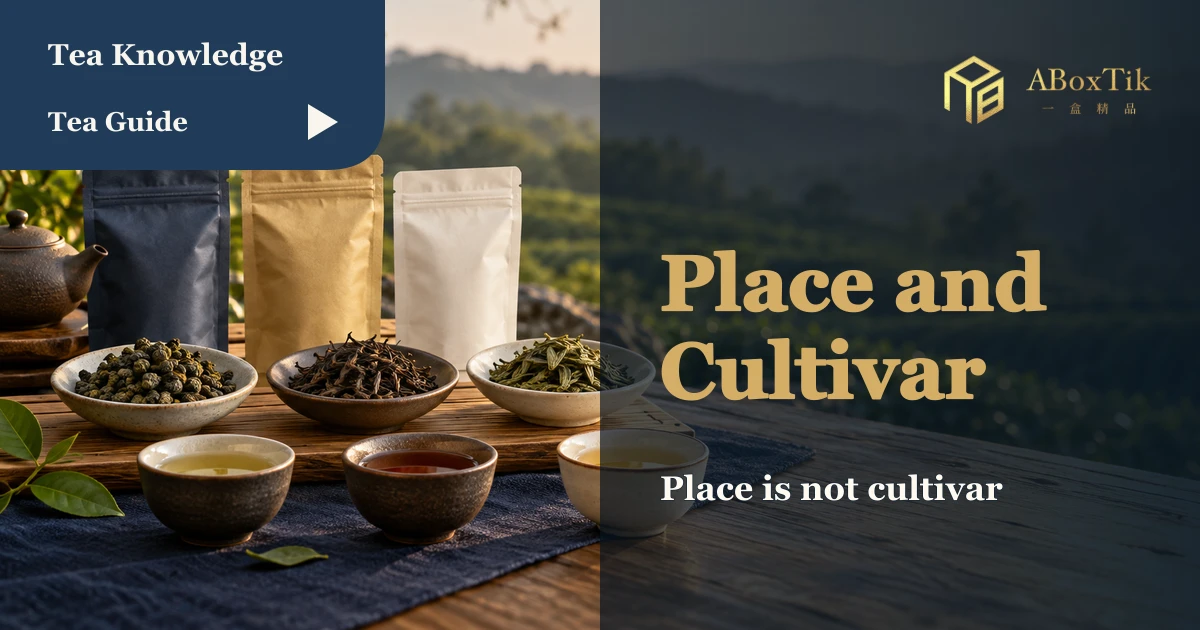
A place opens the door; cultivar and craft offer more clues.
A tea-growing region can contain more than one tea cultivar. The place name tells you where a tea comes from; the cultivar gives another piece of its identity. Season, processing, roasting, batch and brewing also shape the cup. To move beyond choosing on the place name alone, look for two teas from the same clearly described area, with known cultivars and reasonably comparable processing. Note what you enjoy. The result is a comparison of the teas in front of you, not a permanent ranking of every tea from that region or cultivar.
A label can read like an address, a name and a job title all at once: a place, Jinxuan or Qingxin, and oolong. Separating these fields makes the next question easier. The place describes a growing or production context; a cultivar identifies the tea plant; the tea style describes a processed product. They often travel on one package, but they do different jobs.
Give place, cultivar and tea style their own boxes
| Information | What it helps answer | What it cannot establish alone |
|---|---|---|
| Region | Where the tea is reported to come from | That all teas from that place taste alike |
| Cultivar | The identity of the tea plant | That every batch has one guaranteed aroma |
| Tea type and processing | How the leaf was made into a tea | The complete history of a batch from its name alone |
The word oolong can appear in a cultivar name as well as a tea-style description. Ask which meaning is intended if the label is unclear. Taiwan’s Tea and Beverage Research Station publishes cultivar descriptions and information about suitable processing styles. These are useful introductions, but a general cultivar description cannot predict every sensory detail of one particular batch. Think of it as a starting point for a conversation with the tea, not a script the cup must read aloud.
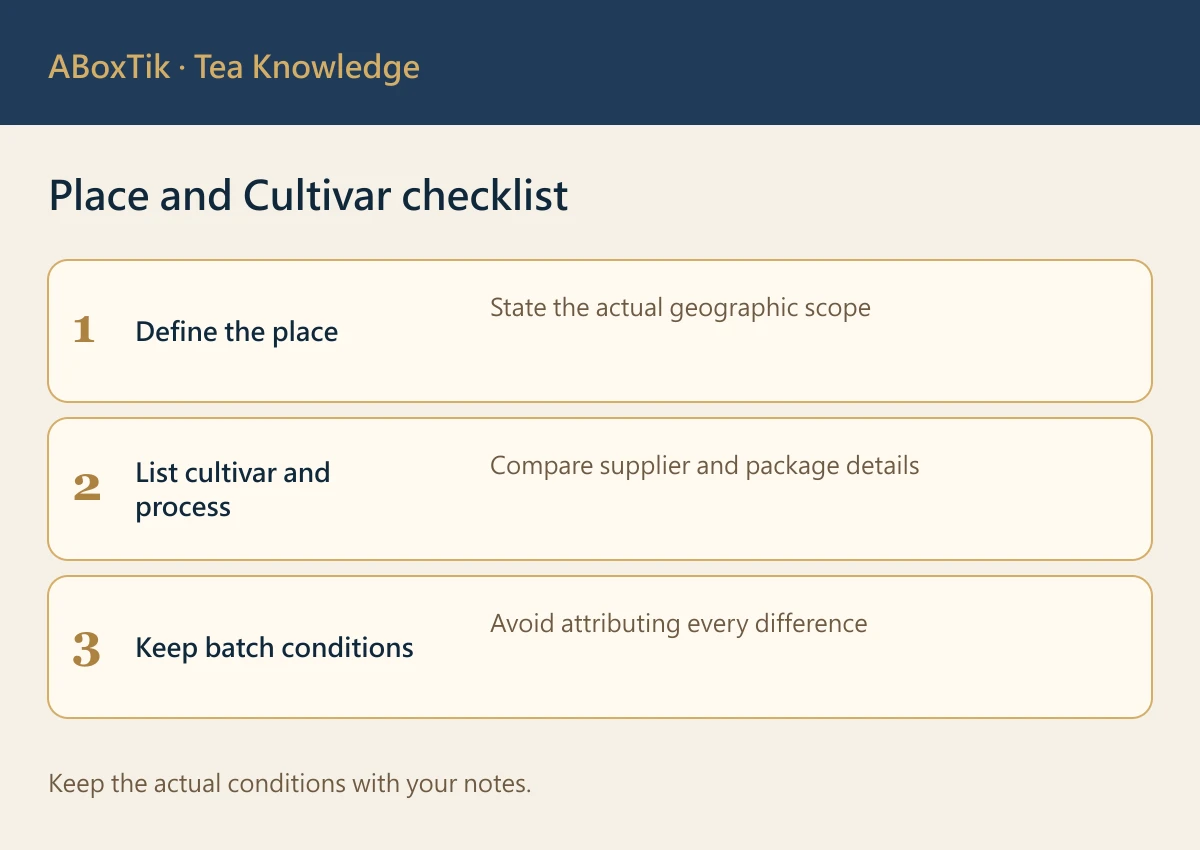
Keep the region clear and choose two teas
First ask what “same region” means in the listings. A named county, township, mountain area and individual garden do not necessarily describe the same scale. Then look for the cultivar, harvest season or batch, tea style and roasting direction. If one tea is lightly finished and the other heavily roasted, you can still compare which finished product you prefer. You cannot attribute the difference simply to the cultivar, because the processing has changed too.
Perfect matching is not required for an enjoyable tasting. The useful habit is to put known differences on the table and leave unknown fields blank. Two labels with the same mountain name may conceal different gardens, growing conditions, makers and harvest dates. Those details do not make the comparison worthless; they help you describe what it can and cannot answer.
A concise question to a seller might be: “I would like to compare two cultivars from the same area. I usually brew with __ and enjoy __ aromas. Could you suggest small quantities with a similar processing direction and share the region, cultivar, season or batch, roast and brewing guidance?” A thoughtful answer may include differences as well as similarities. That is useful information, not a flaw in the recommendation.
| Comparison field | Tea A | Tea B |
|---|---|---|
| Stated area and its scale | __ | __ |
| Cultivar | __ | __ |
| Harvest season or batch | __ | __ |
| Tea type and roast | __ | __ |
| Suggested leaf, water and time | __ | __ |
| Information still to confirm | __ | __ |
Round one: brew each as recommended
For the first round, follow each product’s or maker’s directions. Record the vessel, water source, leaf and water amounts, temperature and steeping time. Then write aroma, strength and mouthfeel separately. This round asks a practical question: “Prepared in a familiar way, which finished tea do I enjoy?” Different directions are acceptable as long as the notes do not hide them.
A useful observation might be “A seemed floral and clear; B felt warmer and sweeter to me today.” That sentence belongs to this preparation and this drinker. It does not prove that all tea from a cultivar has the same profile, nor does it make one cup objectively superior. If the tea feels too strong, try changing one parameter, such as time, during a later session and record the change.
There is no need to identify a particular flower to make a worthwhile note. “Aroma is clear, medium strength, and I would choose it again” is a perfectly serviceable description. Leave space for uncertainty. A tea table does not need to become an examination hall, and the person who uses the most elaborate vocabulary does not automatically have the most useful answer.
Round two: hold brewing conditions steady
If there is enough tea, use fresh portions for a second round. Keep the vessel, water source, leaf-to-water ratio, starting temperature and timing approach consistent, and compare the resulting cups. Fresh portions matter because reusing the first leaves would bring their earlier steeping history into the next comparison.
The same brewing settings make a comparison easier to describe, but they may not be the best preparation for both teas. Different leaf forms can open and extract at different rates. After recording the observation, return to the method that produces a cup you enjoy. Fair comparison is a tool for learning; it does not have to become the only way the tea is ever prepared.
Even when the region and harvest season match, other factors remain: the particular garden, cultivation decisions, leaf material, producer and processing. If A seems more floral than B, the comparison does not isolate cultivar as the cause. A second batch or a conversation about the producer’s records can broaden the picture, but one afternoon’s tasting cannot settle the character of a whole region.
Separate observations from explanations
A three-column notebook can prevent a useful impression from becoming an oversized claim. Under “background,” list the fields confirmed by the label or seller. Under “observation,” describe what was smelled and tasted under the stated brewing conditions. Under “next question,” write what you would like to investigate, such as whether another batch shares a similar direction.
For example, “Both are labelled from the same township; A is Qingxin and B is Jinxuan” is background only if the labels actually say so. “I preferred A after it cooled” is an observation. “Would another producer’s A have a similar cooling aroma?” is a next question. None of these statements requires guessing which step caused the difference. It is perfectly acceptable for the last column to contain several question marks.
Avoid treating familiar flavour words as promises. Some cultivar descriptions mention characteristic tendencies, but the tea in a package has passed through a particular season, garden and processing path. A name associated with a floral or creamy note does not ensure everyone will perceive that note in every tea. Ask for the current product’s description and let your own cup add another piece of information.
Make the comparison useful for buying again
After tasting, save the package name, batch information if available, the method you used and one or two observations. On a return visit you can say, “I liked the gentle aroma in this batch and brewed it with this ratio; is there a current tea in a similar direction?” That gives a seller more to work with than “the mountain tea I bought last time,” especially when several teas share the same place name.
If the two teas were quite different in roast, you can choose one of two next steps. Keep comparing the finished styles because the practical choice is between those products, or seek a pair whose roast directions are closer because you want to explore the cultivar question. Both are reasonable. Write down which question you are asking before shopping, and the labels become much easier to interpret.
Let the place name open the conversation
Start with a region that interests you, learn two cultivar names and keep one brewing note. That is enough for a first comparison. To explore a particular cultivar, read the Green Jade oolong guide; to understand why a mountain name alone does not establish quality, read the guide to high-mountain tea. Each question fixes a different part of the picture.
At ABoxTik, current tea descriptions and product details can help you choose a starting point; confirm the cultivar, region and processing information for the specific teas before treating them as a comparison pair. A place name can invite curiosity without having to tell the entire story by itself. Give the cultivar and the maker a place in the conversation, and let the cup have the last, personal word.

Related reading and tea choices
Sources
- Tea and Beverage Research Station: Cultivar characteristics
- Tea and Beverage Research Station: Qingxin oolong
Sources checked: 30 October 2026.