
Tea Knowledge
How to Choose a Tea Kettle: Capacity, Material and Temperature
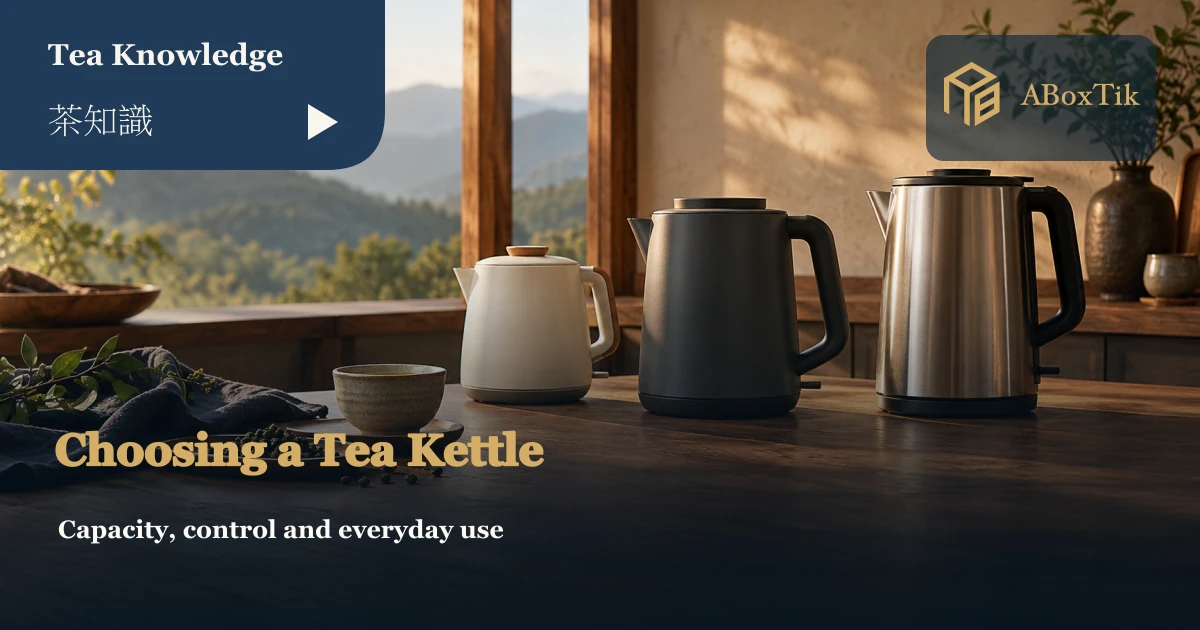
A practical kettle need not become the tea table’s main character; it only needs to prepare water steadily when needed.
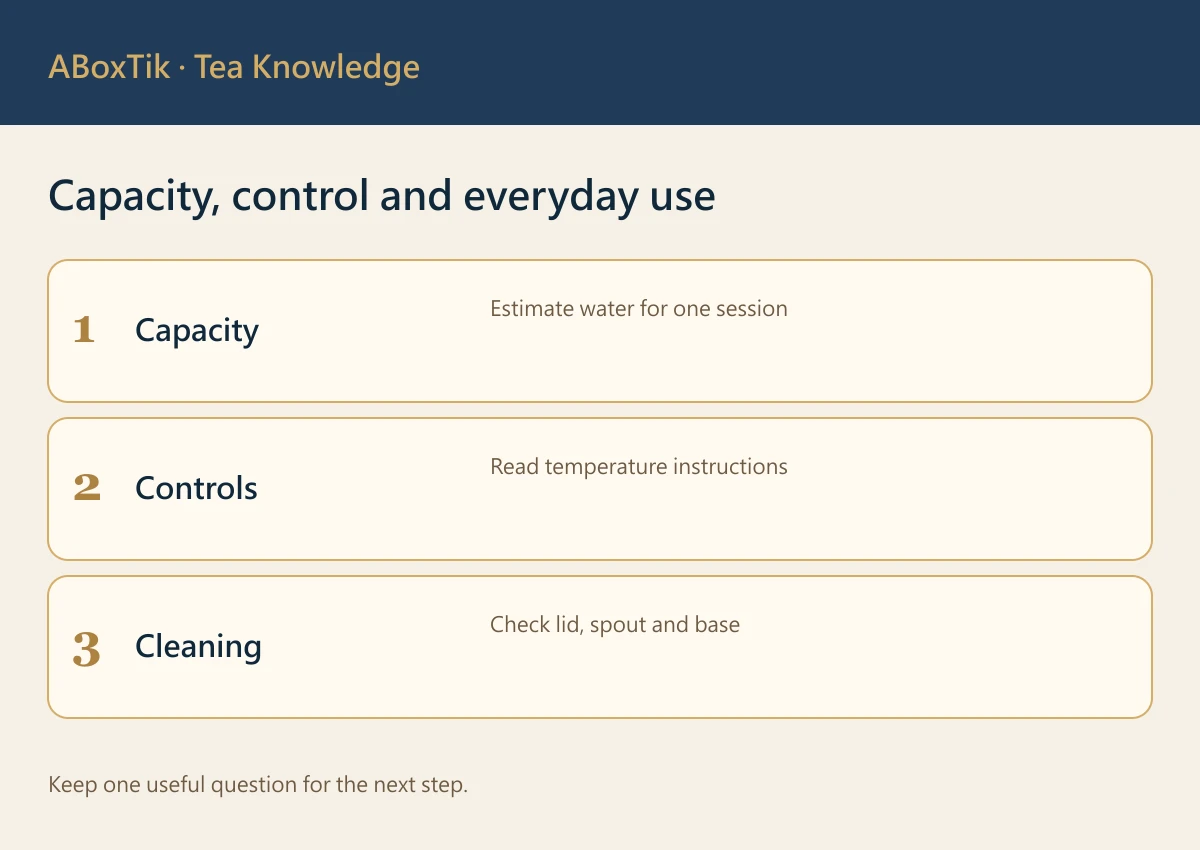
Choose a tea kettle by one real session’s water use, the need for temperature control, comfortable pouring and cleaning, then confirm product markings and suitable electrical conditions. Largest capacity, most modes or the most discussed material do not automatically suit everyday life.
Set out the cups and pot you use, calculate approximately how much water one tea session needs, then choose a compatible capacity and operation. Keep a short list of capacity, handling and cleaning needs beside the product information; it makes the choice much easier to explain.
Choose capacity by water used in one real session
Begin by separating one-person mugs, a small pot for two, and continuous service for several people. List water for brewing, pre-warming and refilling in one actual session, then find a capacity range. Capacity is a use plan, not a measure of hospitality; two people do not need a full large kettle for every cup.
Capacity also becomes weight once water is added. Read the product’s minimum and maximum water guidance, then consider handle, lid and pouring movement. A refill point may serve several people more comfortably than the largest possible kettle. Mug brewing, fairness pitchers and a home tea station use water differently, so map the route from kettle to vessel to cup before deciding where the kettle should sit.
Choose temperature control around the teas actually brewed
If several tea styles are brewed and repeatable settings matter, a kettle with clear temperature display and operation may be useful. If a familiar product guide is followed most days, a simpler model may be sufficient. Tea and water temperature is a starting point, not a single setting that a cultivar name can impose on every finished tea.
A displayed setting, the water inside the kettle and the temperature after pouring into a vessel are different observations. Record the method and equipment when comparing results. Temperature control supports steadier operation; it does not automatically place every infusion at its best. Read actual instructions for keep-warm, reheating and automatic shut-off rather than assuming a symbol means unattended operation.
Read stainless steel, glass and plastic parts as a whole design
Compare materials through the structure that contacts water, the weight, cleaning needs and manufacturer guidance. Stainless steel, glass and other materials come in different designs, so a material name alone cannot predict durability, impact resistance or daily performance. Lid, seal, spout and base deserve the same attention.
Glass can make water level easy to see, while still requiring protection from impact and unsuitable temperature changes according to its instructions. Other materials also need model-specific care. Teaware materials concerns brewing vessels; an electric kettle has a heating structure of its own. If safety, testing or coatings are mentioned, verify the actual model information instead of relying on a broad advertising phrase.
Lid, spout and cleaning often matter more than another mode
Check whether the lid opens easily, the opening can be cleaned as instructed, the spout gives the pour you need and the handle suits your grip. A measured stream for brewing and a large refill are different tasks. Anyone who wants a fine pour should examine the real spout design, not only a long-spout photograph.
Before cleaning, disconnect power and wait until the kettle is in a suitable state to handle according to its instructions. Bases and electrical parts are not ordinary cups for soaking. Follow manufacturer guidance for descaling materials and frequency; internet shortcuts should not be applied to unknown materials. Brewing water information helps keep water questions separate from equipment questions. Keep the base stable and the cord away from walkways and splash zones.
Use a comparison table that gives every function a purpose
A useful purchase comparison asks how many people and infusions need water, whether several temperature settings are genuinely used, whether a filled kettle can be poured steadily, and whether cleaning and electrical requirements suit the home. Functions are valuable when they answer one of these questions, not when they merely enlarge a specification list.
| Item | Real question | Information to verify |
|---|---|---|
| Capacity | How many people, rounds and how much water? | Minimum, maximum and usable volume |
| Temperature control | Are different settings used often? | Range, display and keep-warm instructions |
| Pouring | Can it be used steadily when full? | Weight, handle, spout and lid |
| Cleaning and power | Does it fit the home? | Voltage, wattage, care and support |
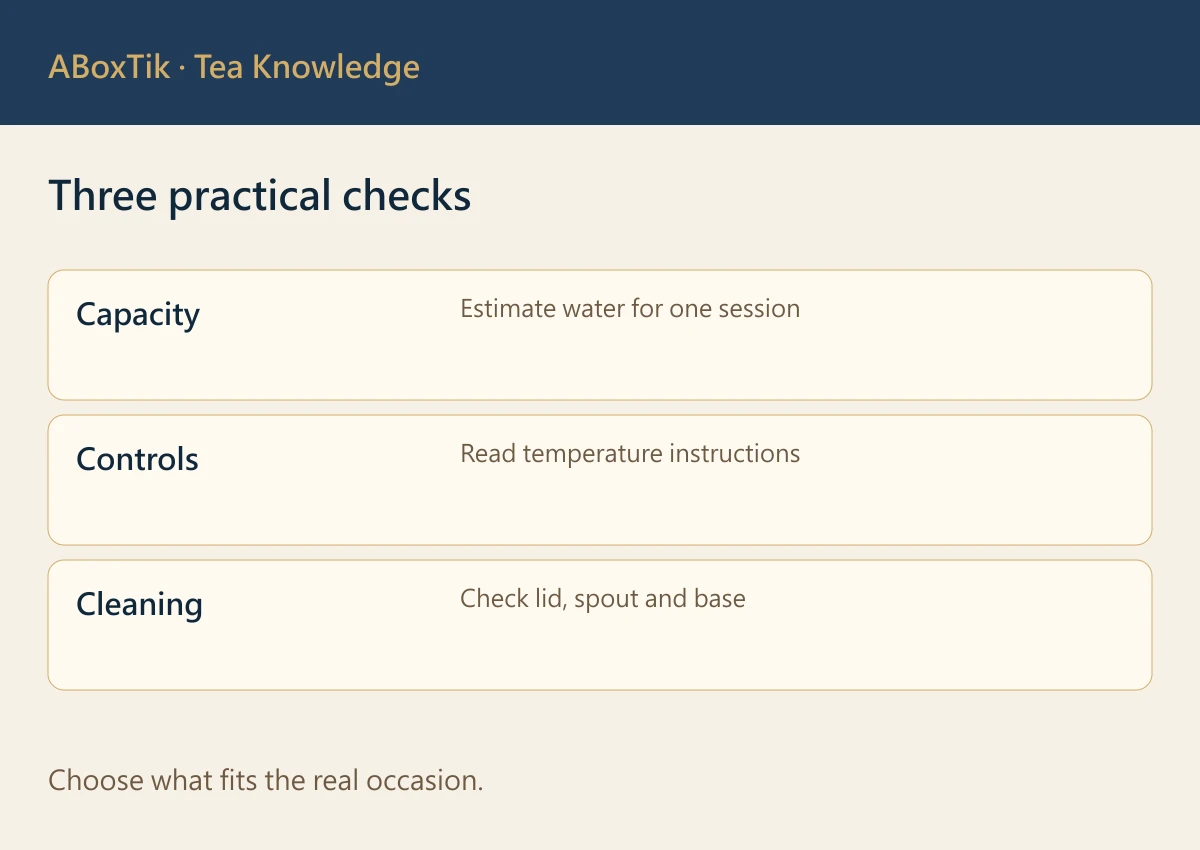
Bring the table to two models, leave missing data blank and ask the supplier. Do not score by function count or import another tea table’s equipment list into a different home. Counter space, hands and frequency of use all deserve their own answer.
Keep first use and everyday boiling to basic arrangements
Taiwan’s Bureau of Standards, Metrology and Inspection advises filling a rapid-boil kettle within its water-level marks, avoiding use above the maximum level and never energising it empty. Read the model instructions, verify suitable voltage and wattage, avoid opening the lid arbitrarily while boiling, and keep hands clear of steam and hot-water paths when pouring.
For first use, follow that model’s cleaning and operation directions. Do not add tea, sugar, milk or other ingredients to a kettle designed only for water. Brew tea in suitable equipment while the kettle prepares water; clear roles simplify cleaning too. Keep a note of kettle settings beside steeping time and whole-leaf tea bag guidance. Tea bag formats and multi-tea selections should be chosen for their actual instructions and contents, not to justify a new kettle.
Steel, glass or ceramic: give the water and tea a common starting point
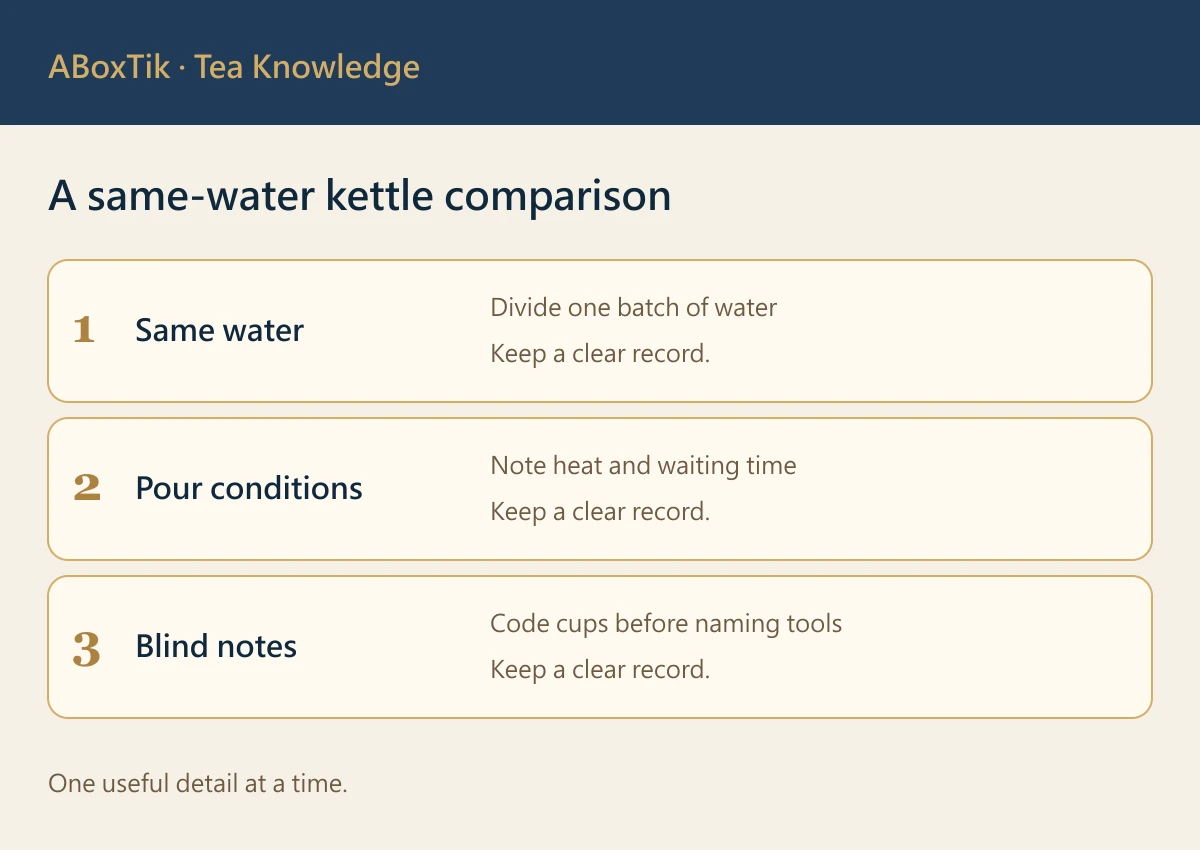
To explore whether a kettle changes a cup, compare one batch of drinking water, one tea and similar actual pouring temperatures before interpreting the result. Cleaning, odor, pouring and heat loss also deserve attention. Material names help describe equipment; they do not place steel, glass and ceramic on a ready-made flavor podium.
Start with equipment already available and suitable for use under its manufacturer’s instructions. There is no need to buy three kettles for an afternoon comparison. A water-only kettle still holds only water, with tea brewed separately. For ceramic equipment, confirm the intended heating method rather than asking an attractive photograph to authorize a new job.
| Item | Keep comparable | Record separately |
|---|---|---|
| Water | Divide one batch of drinking water. | Original odor and standing time |
| Cleaning | Follow each model’s instructions and check residual odors. | Do not impose one cleaning remedy on every material. |
| Pour conditions | Measure at one consistent location and record waiting time. | Settings, kettle water and cup temperatures differ. |
| Tea and vessels | Match lot, leaf dose, water volume, time and cups. | Pour speed and draining action |
| Impressions | Write coded-cup notes before revealing equipment. | Aroma, body, drying and preference |
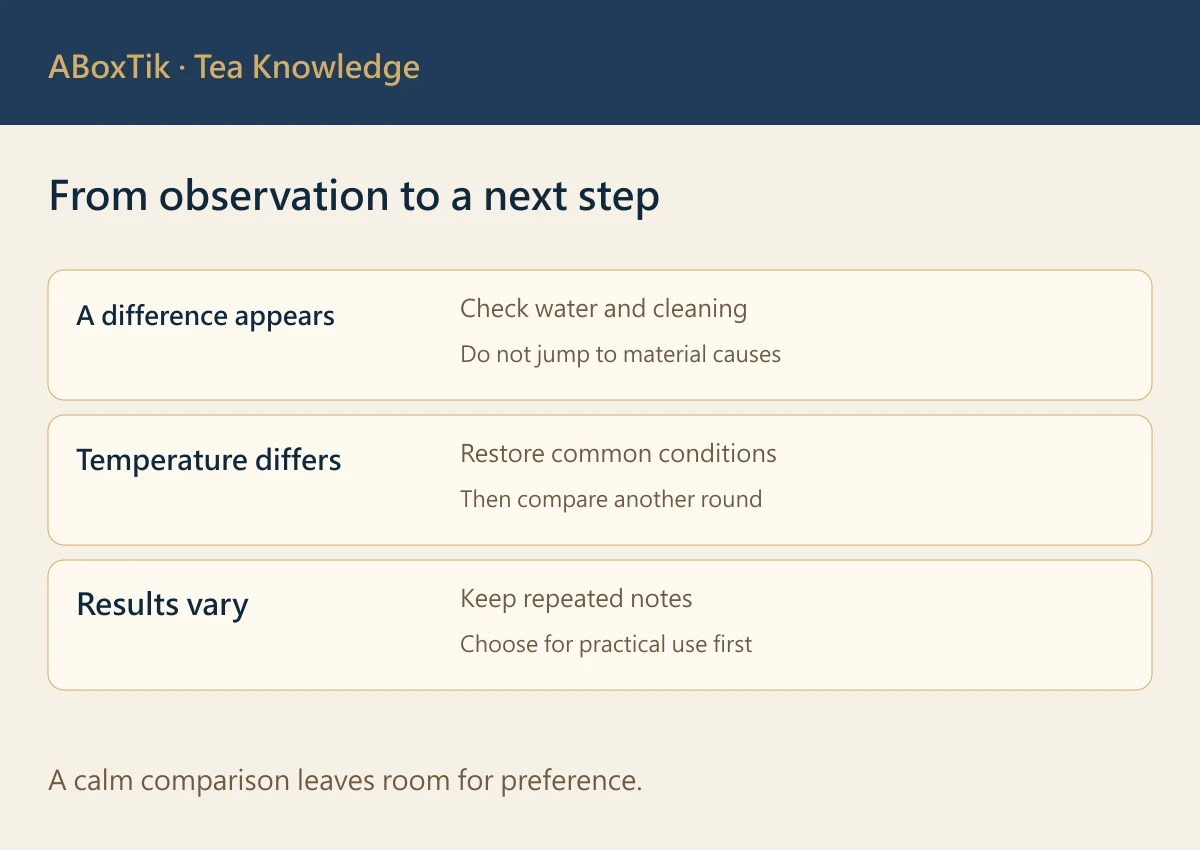
Keep repeatable differences in proportion
If one cup seems more aromatic, first check water temperature, waiting time and tea consistency. If an odor appears, investigate the source water and cleaning condition. One comparison cannot assign every difference to a material, and it does not establish health or migration conclusions. The brewing-water guide and water-temperature guide help keep those variables distinct.
Change cup codes and tasting order before another round using the same notes. If a preference does not recur, “no consistent difference this time” is a useful finding. The expensive kettle does not need a sympathy vote. Capacity, grip, temperature controls and maintenance may still be the practical reasons to choose it.
Give equipment a daily job rather than a champion’s title
Glass makes water levels visible, steel comes in many constructions and weights, and ceramic pieces need individual material and heating instructions. None of those labels alone establishes impact resistance, heat retention or better tea. A steady pour and manageable cleaning are questions that return every day.
Choose one small inconvenience to solve: insufficient capacity, awkward pouring or complicated controls. Bring that answer back to the selection table. It gives the purchase a clearer purpose than searching for a supposedly superior tea material. When each tool has a sensible role, the person drinking the tea has less work to do.
Follow ABoxTik
Let a kettle make the tea table easier to use
ABoxTik hopes equipment brings daily ease: a stable lift, understandable instructions, clean maintenance and a fit with the teas you brew. Specific needs make buying less busy than following feature names.
Continue with Taiwanese tea terroir and craft while the kettle quietly completes its work. The main character can remain the cup you want to drink slowly.
Related reading
Sources
- Bureau of Standards, Metrology and Inspection, Tainan Branch: Rapid-boil kettle selection and use
- Tea and Beverage Research Station: Water quality and temperature effects on tea liquor
Sources checked 21 October 2026.