
Tea Knowledge
First Taiwanese Tea Tasting: Five Styles to Explore
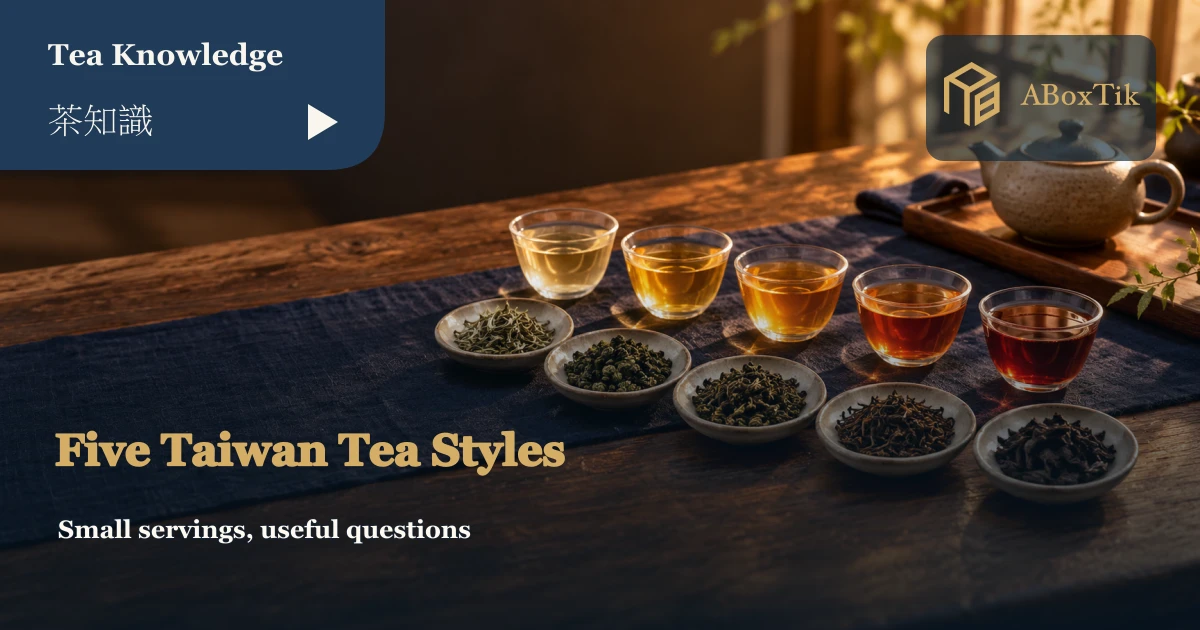
A first Taiwan tea tasting can be welcoming without bringing the whole mountain to the table.
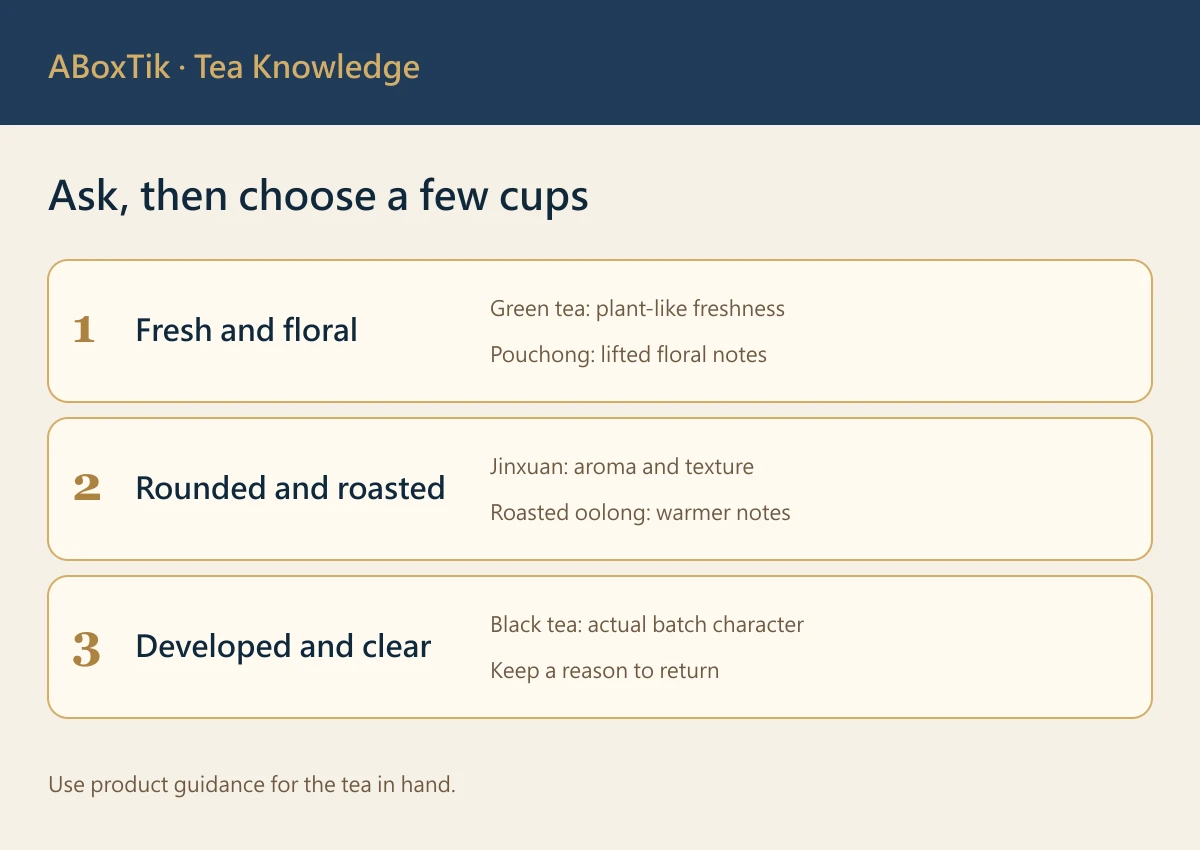
For a first Taiwanese tea tasting, begin with five understandable directions: fresh green tea, floral pouchong, rounded Jinxuan, roasted oolong and developed black tea. Choose two or three small servings according to the guest’s interests. These styles open a conversation rather than prescribe a taste for any nationality.
Ask whether a lighter or stronger cup, flowers or warmer notes sound appealing. Give the tea name and a simple brewing explanation, then let the actual cup do some of the introducing. There is no final exam at this tea table.
Choose a flavour direction before teaching every tea name
Origin, cultivar, process and product name can all arrive in one introduction. Offer a familiar direction first, then add the name and source that the packet actually confirms. The guest can connect the words with a cup rather than trying to memorize a map before drinking.
Tea categories explains processing, while Taiwan tea regions covers geography. Keep those questions separate. A tea can have a cultivar name and an origin name without either one being a complete description of flavour.
Ask what the person already enjoys: freshness, flowers, roast, ripe fruit or a fuller texture. If they are unsure, offer two small choices and see where the conversation goes. Their passport need not fill out the preference card for them.
This five-style map is an editorial way to begin comparing. Material, processing, batch and preparation still affect each cup. Follow the actual product guidance and leave room for a preference that surprises both the host and the guest.
Fresh green tea: a first look at plant-like character
For someone curious about freshness, young leaves or a bright plant-like direction, Taiwanese green tea can be a useful first comparison. Ask for the first familiar association, then ask whether the liquor feels light or has a fresh savoury impression. There is no need to nominate one plant that everyone must find.
Green tea processing background provides background for a northern Taiwanese green tea. Read the actual origin, cultivar and processing information rather than treating a shared tea name as a promise of identical flavour. Introduce the confirmed source in one sentence and personal aroma associations in another.
If the first cup feels astringent, review preparation before deciding that the guest dislikes all green tea. Bitterness, astringency and strength can turn “not quite for me” into a specific observation. A later brew can change one condition within the product guidance and ask the question again.
Floral pouchong: give aroma an understandable place
Pouchong can introduce a clear, lifted floral direction. Smell first, then taste and notice what changes as the cup becomes comfortably warm. A floral association describes an impression; it does not automatically mean flowers were added. The actual ingredient list answers the ingredient question.
Tea-region geography adds place and craft, while an aroma sequence distinguishes dry leaf, cup aroma and impressions during drinking. If a friend says only “fragrant,” that is already a useful opening. Ask whether the impression is lifted or warm rather than asking them to name a rare flower.
A first introduction need not involve a full specialist set. A clean, odour-free vessel with a practical way to separate leaves from water can begin the conversation. More information about the region or making can follow when the guest wants it. Let curiosity determine the length of the explanation.
Rounded Jinxuan: describe the impression, then the cultivar
Jinxuan can be a starting point for someone who enjoys a gentler, rounded impression. Some batches may suggest creamy or floral associations, but the cultivar does not require every cup to present the same note. Keep the sensory association separate from actual ingredients and read the product information.
Jinxuan as a cultivar explains one kind of name. Tea mouthfeel and strength observation helps make “soft” or “rounded” more specific. Ask whether the tea has weight on entry and whether it seems to move evenly through the mouth. Everyday words are enough.
For a gift, think about how the recipient will prepare the tea. Whole-leaf tea bags and two-box tea-bag gifts offer formats to compare. Check the current contents rather than assuming every mixed set includes Jinxuan. A clear brewing note helps the friendly first cup become a second cup at home.
Roasted oolong and black tea: compare two warmer directions
For someone interested in roast, grain or warmer aromas, select a roasted oolong as another direction. Light and roasted Taiwanese tea helps explain the contrast. Roast intensity is not a quality ranking, and actual material, processing and preparation remain part of the result.
A Taiwanese black tea offers a separate comparison: perhaps ripe-fruit, sweet-aroma or another cultivar-specific outline. Red Jade is one cultivar example, not a description of every Taiwanese black tea. “This batch reminds me of…” leaves a useful opening for another person’s association.
For a guest who drinks coffee, ask whether roast or fuller texture is the part they enjoy. Do not assume that liking coffee automatically requires a deeply roasted tea. A light floral tea may be an enjoyable discovery too. The person trying the tea keeps the right to choose the unexpected cup.
Arrange a small tasting that stays comfortable
| Direction | Starting style | A useful question |
|---|---|---|
| Fresh | Green tea | What plant-like or fresh impression arrives? |
| Lifted | Pouchong | Do aroma and the sip connect? |
| Rounded | Jinxuan | Is aroma or texture the attraction? |
| Roasted | Roasted oolong | Do the warmer notes feel comfortable? |
| Developed | Taiwanese black tea | Which cup invites another sip? |
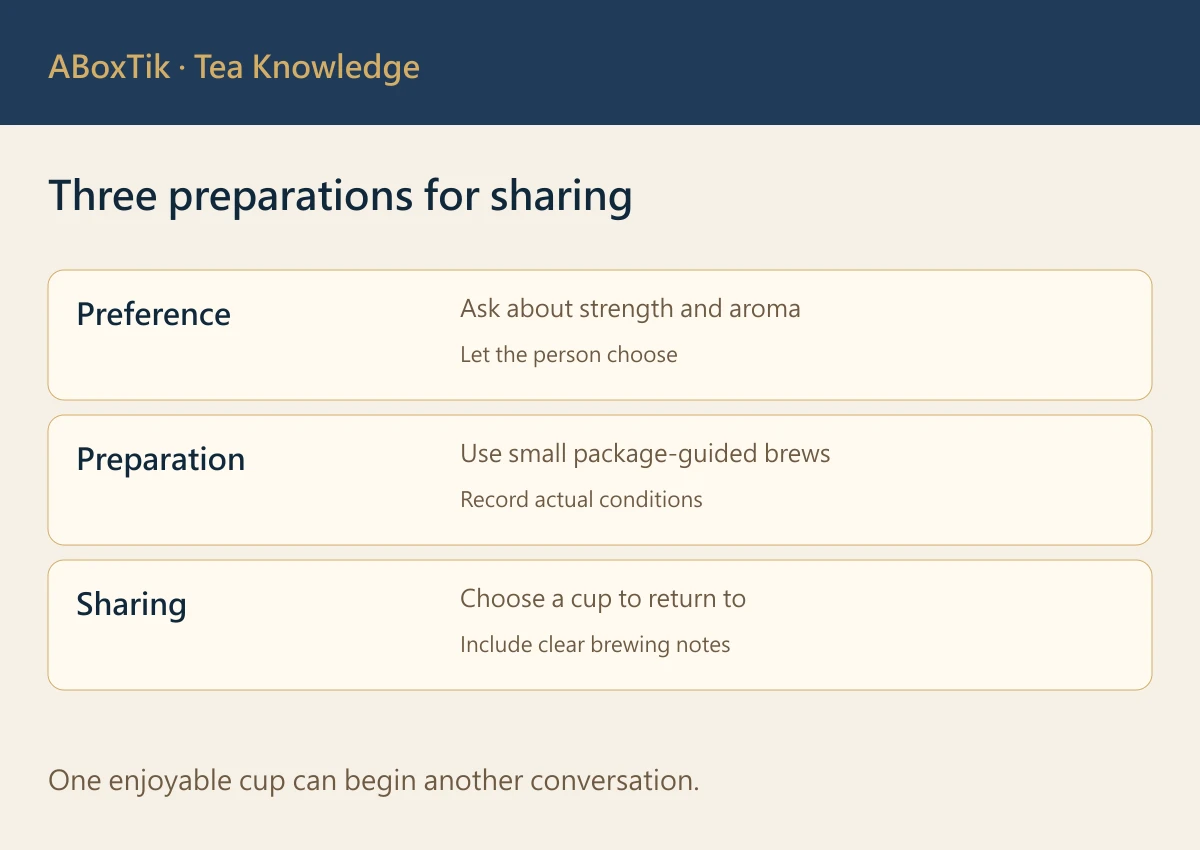
Two or three teas are enough for a first round. Prepare each according to its packet, label the cups simply and keep a note of the conditions. Beginning with a lighter impression before a more forceful one can be useful, but tasting order can also change an impression. Reverse the order another time if a cup was difficult to understand.
Introducing Taiwanese tea in English provides language tools. The present guide concentrates on which styles to start with. At the end, invite the guest to choose one cup they would like again and supply that tea’s simple brewing and storage guidance. The useful knowledge travels home with the leaves.
Small servings also make it easy to pause or leave a cup unfinished. Keep water available and let the conversation breathe. If choosing a Taiwanese tea selection or a mixed tea-bag gift, read the current contents and serving format.
Write the preferred tea and the reason in a short note: “floral aroma, lighter brew” is enough. A follow-up tasting can explore one neighbouring direction rather than restart the entire map. The first round succeeds when a person has an understandable way to choose the next cup, not when every tea has been given a score.
Beyond oolong: a first-round map of Taiwanese tea choices
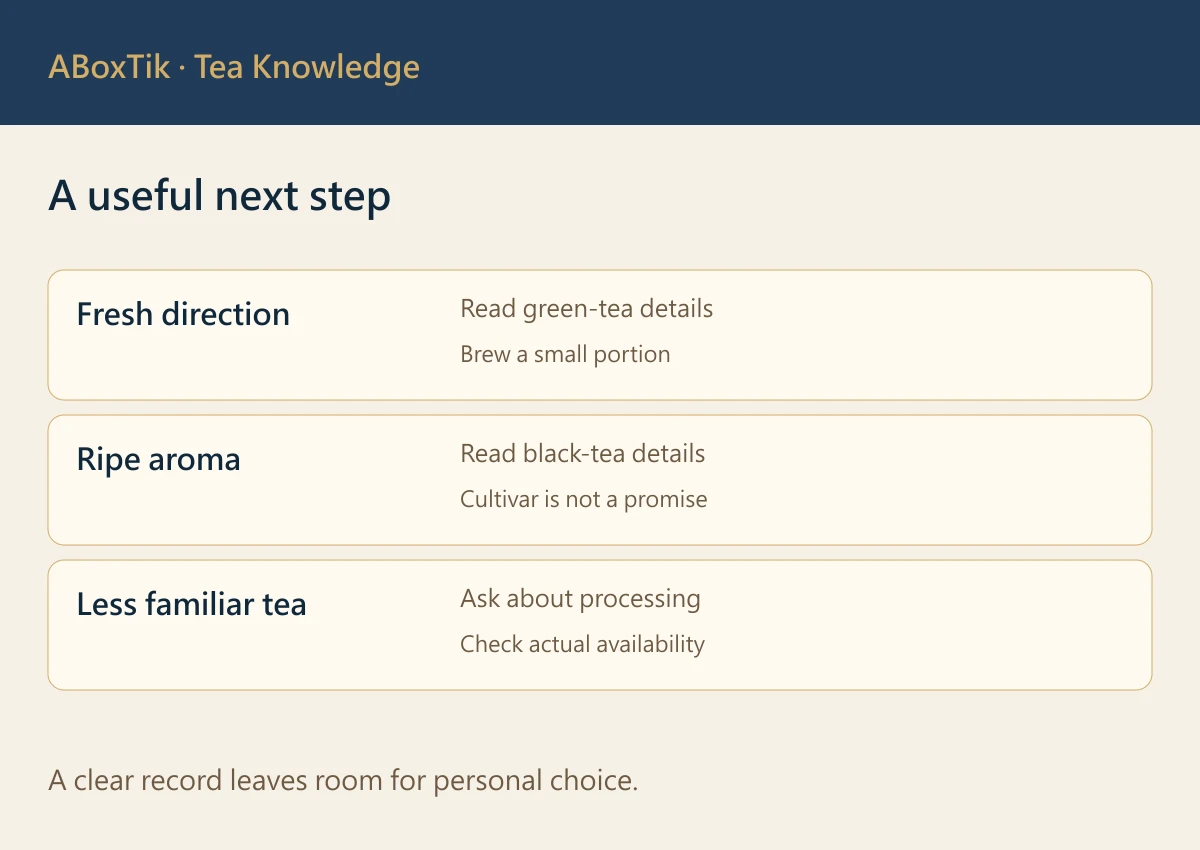
If you want to explore Taiwanese tea without starting with oolong, put green and black tea on a small choice map. Taiwan’s Tea and Beverage Crop Research Station explains tea categories through processing. They are not interchangeable labels inferred from liquor colour. Baozhong, Oriental Beauty and red oolong belong within the partially oxidised tea discussion; a red colour or the absence of “oolong” in a familiar name does not turn a tea into black or green tea.
Taiwanese green tea can be approached through examples such as Sanxia Biluochun and Longjing. For black tea, separate cultivar, growing area and processing style. Ruby is a cultivar clue; honey-like is a sensory description. Less common processing styles and newly bred cultivars deserve their own actual product information. “New” does not establish a new tea category or current availability, and a cultivar number alone does not tell you how that batch was processed.
| Starting direction | Check first | A question for the first cup |
|---|---|---|
| Taiwanese green tea | Origin, cultivar, processing and brewing directions | Do the vegetal impression and strength suit me? |
| Taiwanese black tea | Cultivar, source and the actual product description | What fruit, floral or other association comes to mind? |
| A less familiar processing style | Category, ingredients, availability and use directions | Am I exploring a process or choosing an everyday cup? |
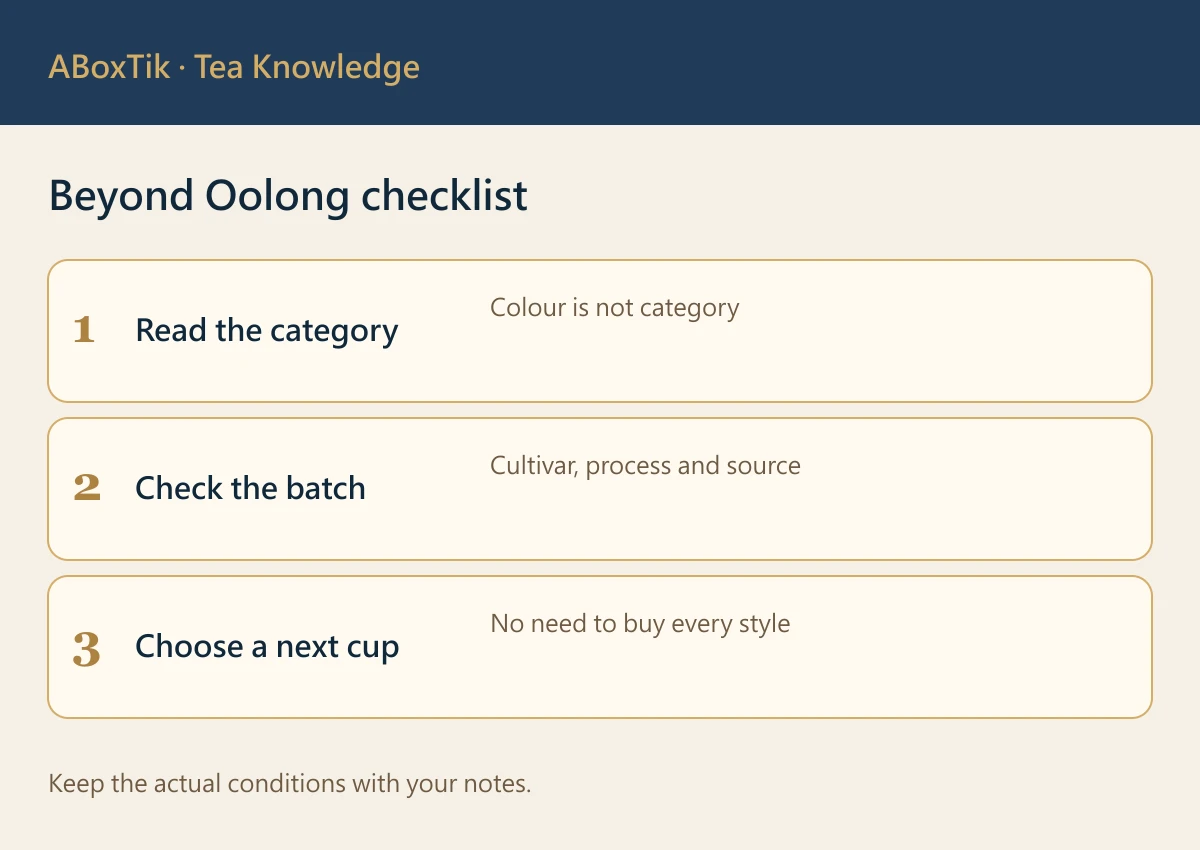
Two teas make a useful first round: one familiar direction and one you are curious about. Brew small portions using each product’s guidance, then record aroma, taste and texture separately. An arbitrary long, hot brew is not a fair starting point for every tea. Different results need not become a national ranking; the table can be interesting without asking the cups to audition.
Keep the name and repeatable brewing details of whichever tea you would happily make again. That information makes the next choice easier. The map need not lead everyone back to oolong, and exploring tea does not require buying every category at once.

Follow ABoxTik
Let the first cup invite the next shared moment
At ABoxTik, we think a first Taiwanese tea tasting can be informative and easy at the same time. Open with a familiar flavour direction, then allow a friend’s own impressions to add the detail.
When comparing Taiwanese tea gifts, consider the tea, equipment and simple preparation together. A cup someone wants to brew again is a very good beginning.
Related reading
Buying your first tea: put flavour, quantity and cost on one sheet
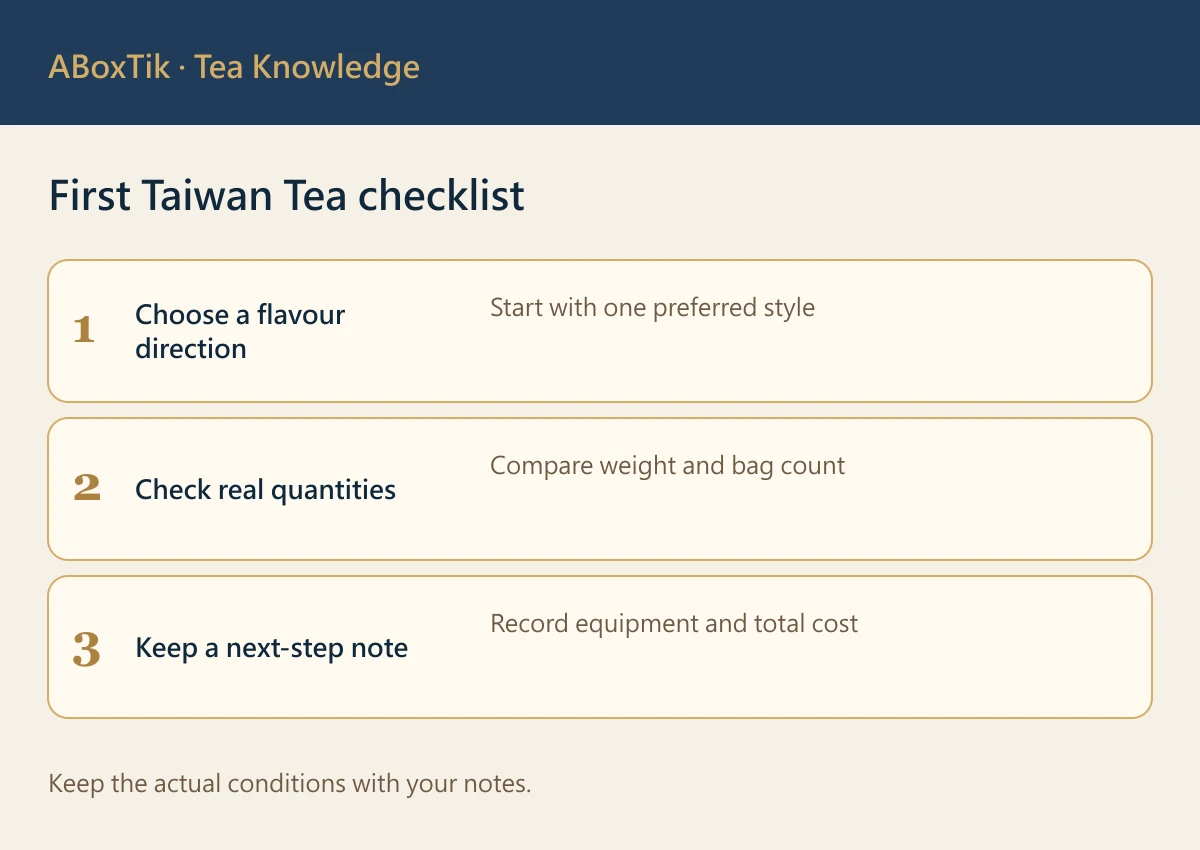
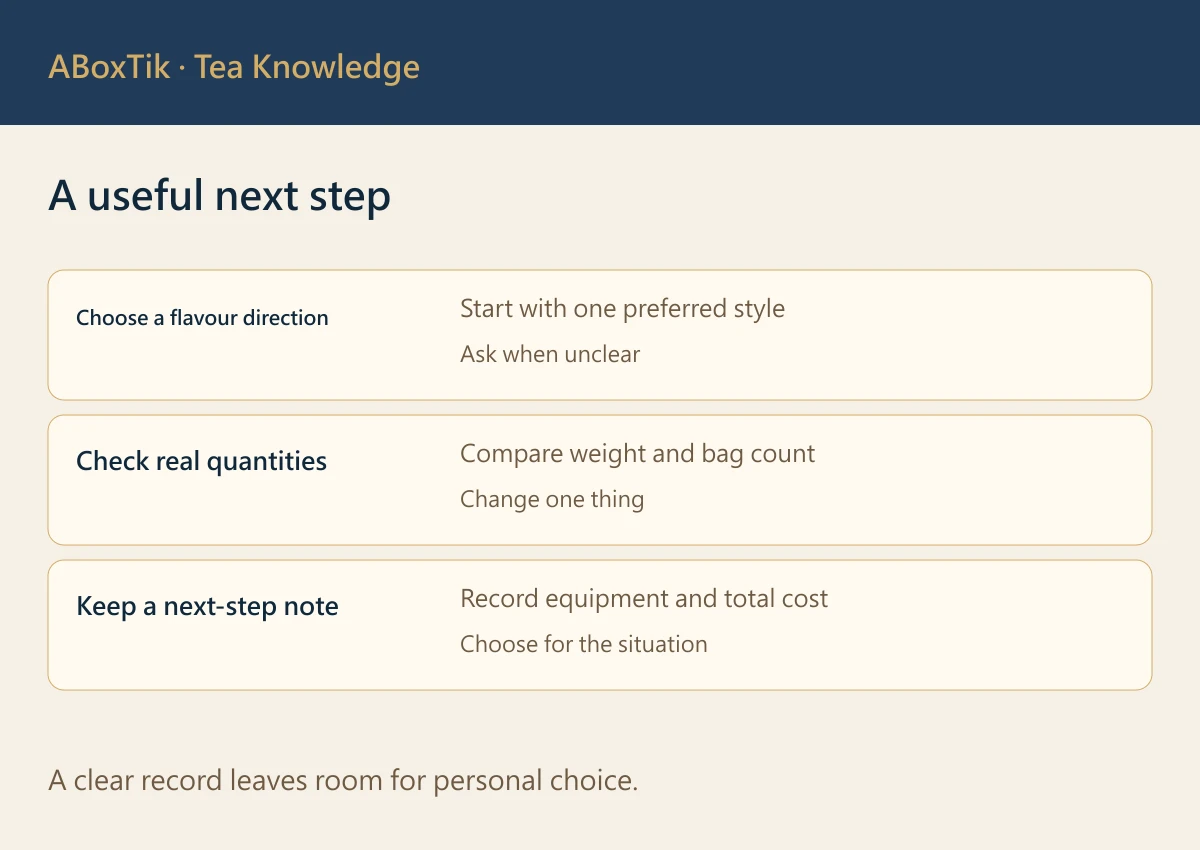
The style map helps identify a direction. Before ordering, add one practical question: how will this portion be used? Choose one familiar or interesting style, check bags or loose leaves, net weight, bag count and preparation instructions, then compare the actual total cost. A first purchase does not need to include every style. Your cupboard can postpone becoming a department store.
| Field | Check | Decision |
|---|---|---|
| Flavour direction | One selected light, roasted or other style | Keep the one you most want to try again |
| Equipment | Usual cup volume and leaf removal | Choose a format you can prepare as directed |
| Actual quantity | Net weight, bag count and routine | Do not compare by box size |
| Total budget | Tea, necessary equipment and delivery | Start with a manageable affordable portion |
If a seller offers tasting or smaller portions, ask about the current options rather than assuming free samples are available. Otherwise, one suitable product is enough. Afterwards, retain the tea name, preparation, one thing enjoyed and one change for next time. If the first cup is too strong, revisit preparation before rejecting an entire style. The budget supports a routine you would like to repeat; it does not need to prove expertise.
Sharing Taiwanese tea with someone who prefers a cold drink
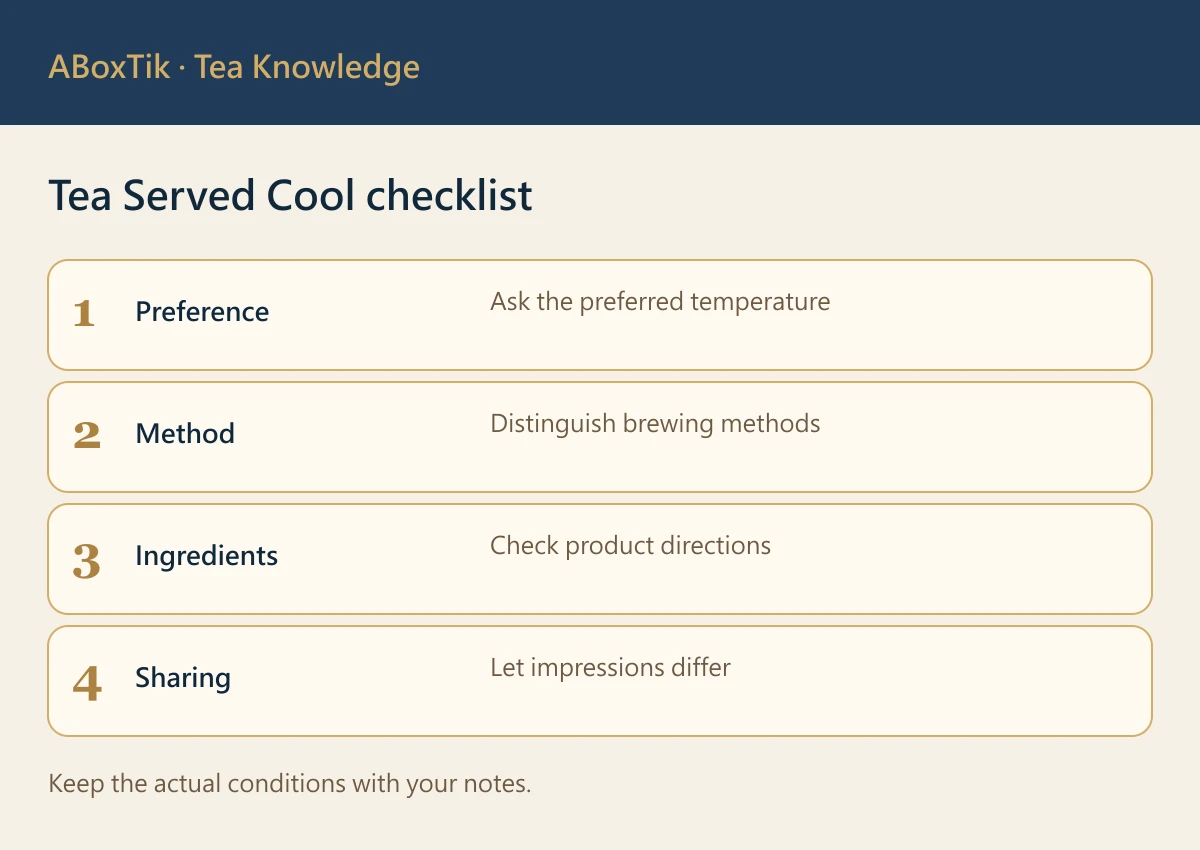
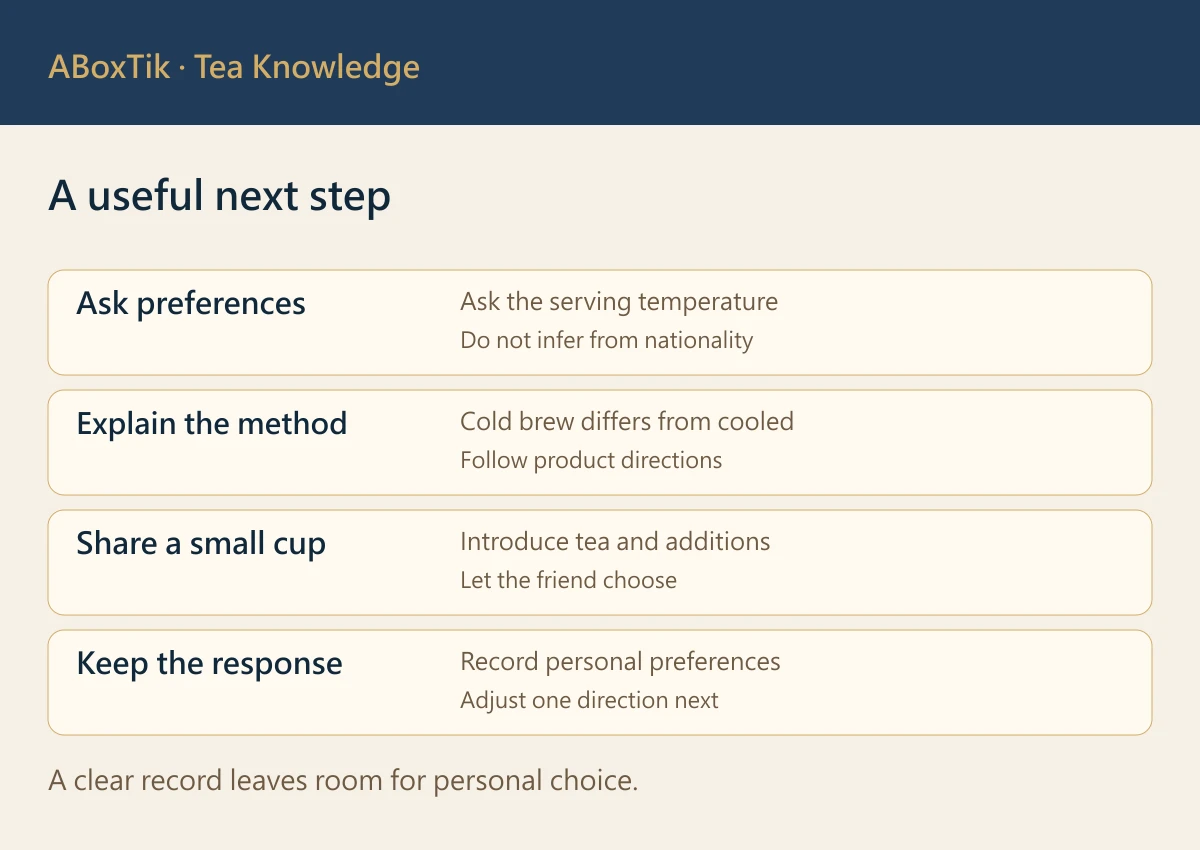
Ask first whether your guest likes a chilled drink, ice, room temperature, or simply prefers tea that is not very hot. Then ask about flavour and strength. Temperature is a personal preference; nationality cannot answer the question for the guest. There is no need to make a hot cup the compulsory first lesson. A small serving at a comfortable temperature, with a clear tea name, ingredients and brewing method, gives the conversation a useful beginning.
| Ask | Arrange | Record afterwards |
|---|---|---|
| Chilled, iced or room temperature? | Offer a small serving in the preferred style; leave room for melting ice. | Serving temperature and ice |
| Floral or roasted direction? | Start with one clearly identified tea; add a second if comparison is welcome. | One note each on aroma and strength |
| Plain or with additions? | Check the ingredients and let the guest choose sugar or milk separately. | Additions and amounts |
| Drink now or take home? | Provide the tea name, preparation and storage information; confirm a suitable container. | Whether another cup would be welcome |
For a cold infusion, use a clean container and drinking water. Follow the tea’s directions or the starting conditions in the cold-brew guide, refrigerate after adding the leaves, and note the start time. Remove the leaves when the preferred strength is reached; keep the finished tea refrigerated and drink it promptly. If it will travel, arrange cold storage for the journey. “Cold brewed” is a method, not permission to leave a prepared drink at room temperature for an extended period.
Hot-brewed tea served over ice is a separate route. Record the brew and the amount of ice, because melting ice changes the final volume and can change how strong the tea tastes. Do not compare one cold infusion with a diluted hot brew and declare a universal winner. For a first meeting, one clearly described preparation is easier to discuss than a table full of unexplained bottles. If the guest would like to compare later, retain the tea and change one preparation detail at a time.
An introduction can be short: “This is Taiwanese oolong, served chilled. Would you like a small taste?” If the package identifies the growing area, add that information; leave unknown details for a later check. “Would you prefer it with ice?” gives the guest an actual choice. If someone describes a floral or fruity impression, treat it as an association and check the ingredient list separately before saying anything about additions.
If the first sip feels too light, note the cup size and whether ice has melted before deciding what to adjust next time. If the guest does not enjoy tea, offer water or another drink without turning the moment into a campaign for three more pots. A preference is useful information. The Taiwanese cold-brew style guide offers further options, and introducing Taiwanese tea in English supplies short phrases. A thoughtful invitation leaves the next choice with the person holding the glass.
For a take-home invitation, write the actual tea name and preparation date on the container, then agree how it will be kept chilled until the guest arrives home. If that cannot be arranged, share the dry tea and its instructions instead; the guest can prepare a fresh serving when convenient.
Sources for this addition
Sources
- Tea and Beverage Research Station: Taiwan tea flavour wheel
- Tea and Beverage Research Station: Sensory assessment introduction
Sources checked 19 October 2026.