
Tea Knowledge
How to Introduce Taiwanese Tea in English
One clear English sentence is enough to let a cup of tea begin its journey.
Introducing Taiwanese tea in English does not begin with memorising a full aroma dictionary. With an overseas friend, guest or gift recipient, the easiest order is simple: say what kind of tea it is, say where it is from, ask what they enjoy, then explain how to brew it. “This is Taiwanese oolong from Taiwan” is already a comfortable opening.
This guide puts English back into real conversation: helping someone understand the tea, taste it, and decide whether they like it. Names, origins, processes and flavours each have their place. A cup of tea should not have to sit through an English exam in its first minute.
Start with tea type and origin
Begin with a confirmed tea type and origin. “This is Taiwanese oolong” is a direct introduction; if the package states a growing area, add “It is grown in Taiwan” or “This one is from Nantou.” The Tea and Beverage Research Station’s English materials use names such as Paochong, Oolong and White-tip Oolong for Taiwanese speciality teas, offering a useful reference for official English usage.
When the growing area, cultivar or process is not confirmed, it is better to say “This is tea from Taiwan” and check the package than to turn a Chinese colloquial name into a supposed global standard. The six tea categories explain the relationship between tea type and process, while the Taiwan tea regions guide gives origin a fuller context. Clear provenance does more for a conversation than an impressive but uncertain sentence.
If someone asks, “Is it green tea?”, answer “It is oolong tea,” then add, “Tea types are described by how the leaves are processed.” If they would like more detail, return to the package information.
Describe aroma without suggesting added ingredients
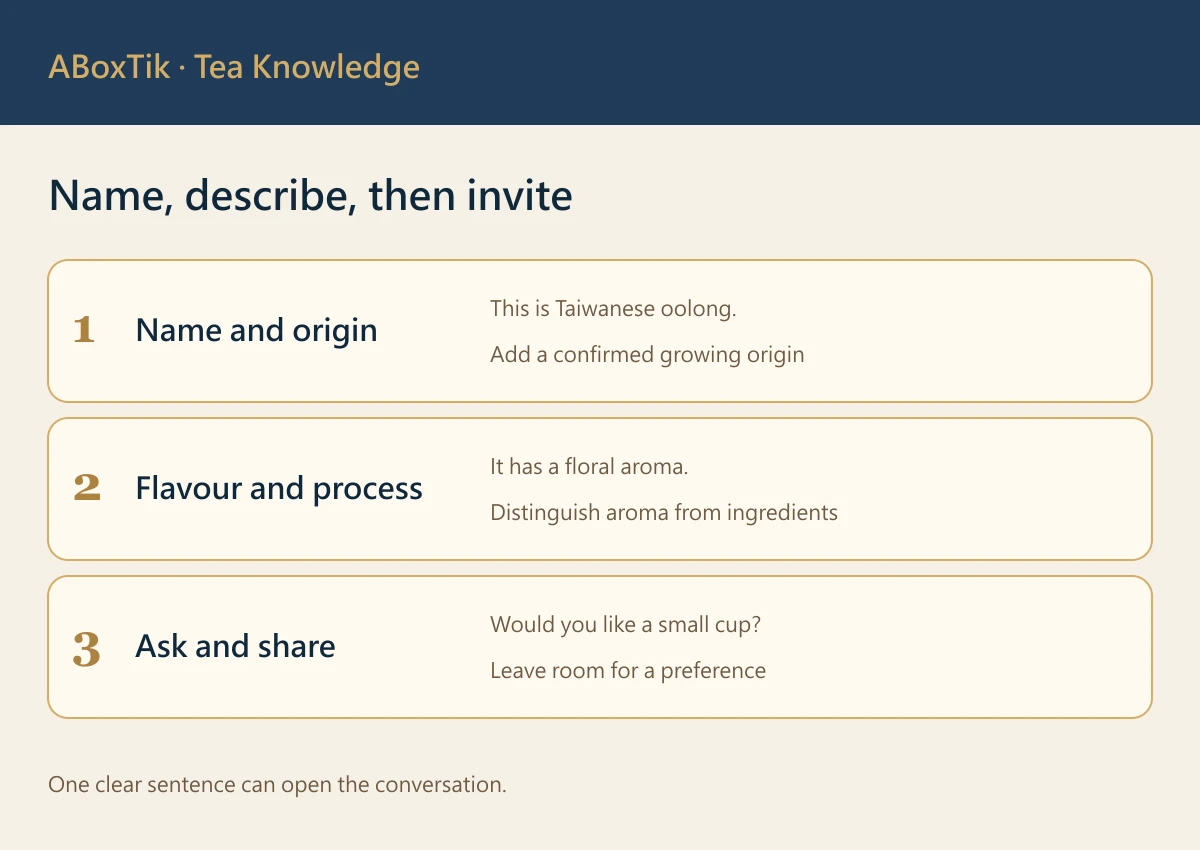
In English, words such as aroma, floral, fruity and roasted usually describe what we smell or taste. They do not automatically mean that flowers, fruit or sugar have been added. For a floral tea, “It has a floral aroma” is enough. If a first-time drinker may be unsure, follow with “It is not flavoured with flowers.” That small clarification leaves room for aroma to come from cultivar, origin and processing.
One broad direction—floral aroma, toasty note or gentle sweetness—followed by an invitation to taste is plenty. The tea aroma guide follows a sequence from dry leaves to the cup, and the foundations of tea flavour explains aroma and taste more fully. Let the sensation appear before trying to name it.
“What do you notice first?” is easier to answer than a request for orchid, honey, peach and three mysterious mountains. “Fresh” or “warm” is already a good beginning. If someone enjoys the cup or finds it too strong, “Would you like to try it a little lighter?” turns that honest response into a natural next step.
Black tea and red tea: follow the context
What is commonly called red tea in Taiwan is usually called black tea in everyday English tea communication. That is a customary English category name, not a claim that anyone has mistaken the colour of the liquor. Say “This is Taiwanese black tea.” If someone asks about the Chinese name, add, “In Chinese, we call this red tea because of the liquor colour.” The cup stays clear and the conversation stays relaxed.
Places have different naming traditions, so one English term need not become the only acceptable answer. The Taiwan Tea No. 18 guide offers flavour context for a distinctive Taiwanese black tea; for gifts, return to the current product information and brewing guidance. Tea cups do not need to choose sides.
Oxidation and fermentation are not the same shortcut
When people introduce oolong, oxidation and fermentation often appear in the same conversation. Fermentation has long been used in everyday tea writing; when describing the changes in leaves before fixation more precisely, oxidation is the useful term. “Oolong tea is partially oxidized” gives a clear place for oolong beside green and black tea without requiring a chemistry lecture at the table.
Roasting is a separate matter. “This tea has a light roast” or “It has a roasted note” describes a different part of the process and experience. A tea with roast aroma should not automatically be called more oxidized. The comparison of light and roasted Taiwanese tea separates those two lines in Chinese, while the re-steeping guide helps when the group would like another round. Precision does not mean saying everything at once; it means knowing which detail has been asked for.
Ask about preference before pouring
A good introduction is not a one-way presentation. Before pouring, try “Do you prefer something lighter or more roasted?” or “Would you like a small cup first?” The first helps identify whether someone leans toward a fresh, floral direction or a warmer roasted character. The second leaves room for choice. Both are more welcoming than announcing that someone will definitely love a tea.
For a lighter preference, say “Let’s start with a lighter brew.” For a fuller cup, “We can steep it a little longer next time” is simple and useful. Start with the package instructions, then adjust only one condition—tea amount, time or water temperature—at a time. The Taiwan tea steeping-time guide provides a repeatable starting point, so an English suggestion is followed by a practical cup of tea.
When someone does not know their preference, “We can try a small cup and adjust from there” is considerate. Tea is not a personality test, and a first sip need not define every future afternoon.
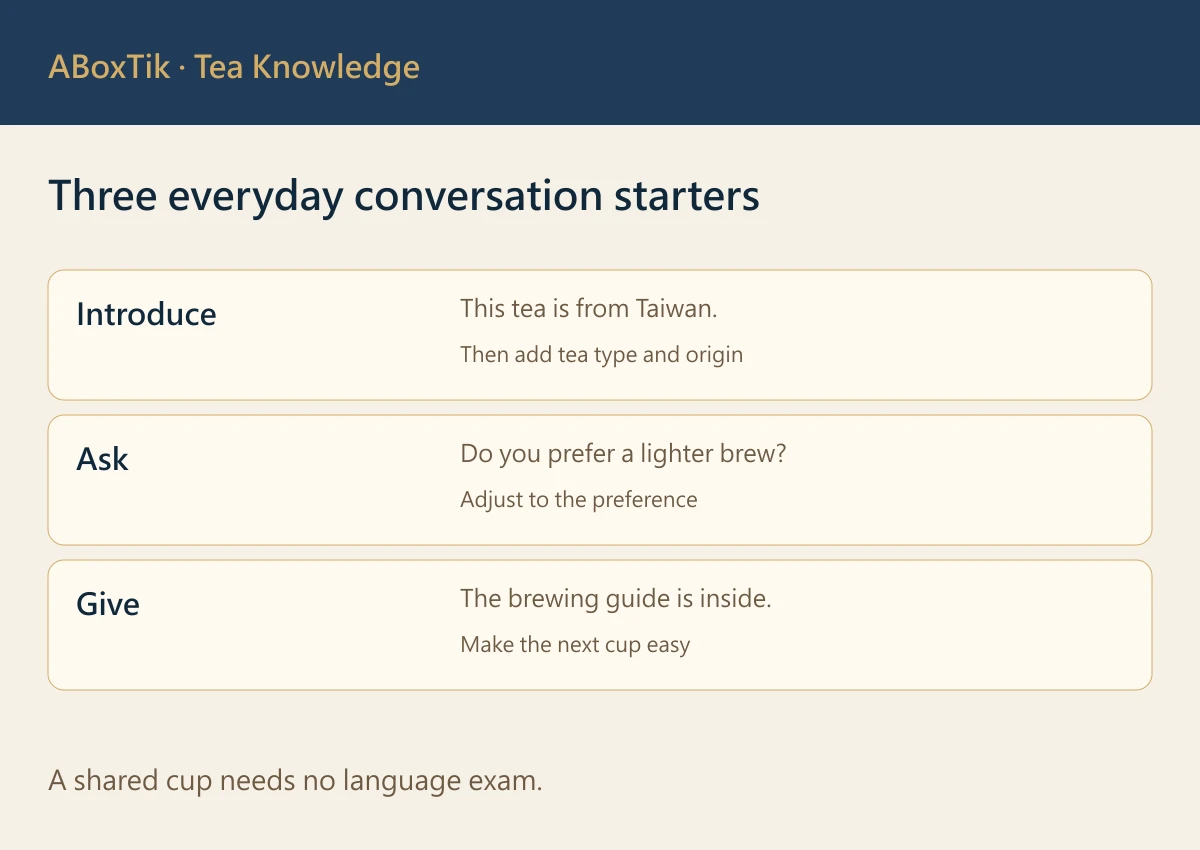
Bilingual conversation table: introduce, ask and give
These short exchanges leave room for a response. Natural English usually comes from saying one thing clearly, then waiting, rather than filling every silence with vocabulary.
| Situation | Natural English | Meaning and next step |
|---|---|---|
| First introduction | This is Taiwanese oolong. It is grown in Taiwan. | Then add the confirmed growing area from the package. |
| Talking about aroma | For a verified unflavoured tea: it has a floral aroma, but nothing has been added. | Separate an aroma impression from added ingredients. |
| Asking a preference | Do you prefer a lighter brew or a more roasted style? | Choose a direction or adjust the strength from the reply. |
| Giving a gift | The brewing guide is inside. Please enjoy it at your own pace. | Make the next cup easy for the recipient. |
For brewing, “Use the guide inside the box” is more dependable than reciting unverified fixed seconds. For a format that fits daily routines or travel, whole-leaf tea bags offer a useful introduction. With hot water and a little time, one cup can carry the conversation forward.
For an overseas gift, make the first cup easy
The most helpful English on a tea gift is not a long brand legend. It is three immediately useful pieces of information: tea type, origin and brewing guide. A card can say “Taiwanese oolong tea,” “Product of Taiwan” and “Brewing guide inside,” followed by “We hope this cup brings a quiet moment.” It is short, sincere and does not assume the recipient owns a complete gongfu tea set.
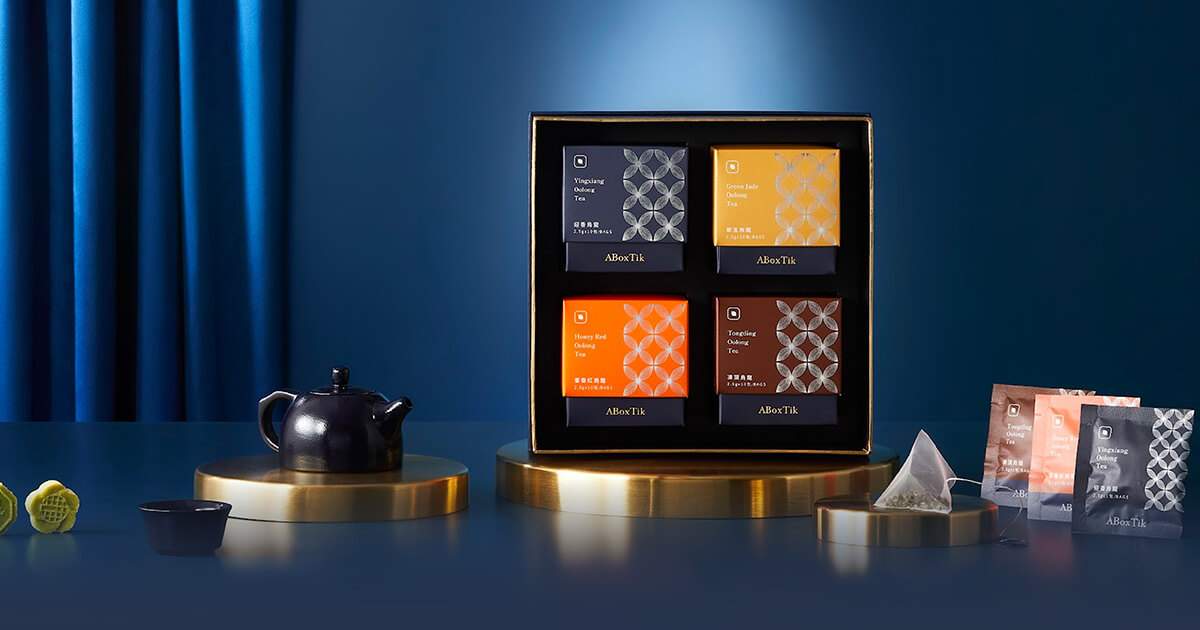
For someone who would enjoy comparing styles, the Classic Taiwan Tea Four-Tea Set offers several clear directions. For a more direct brewing format, the Two-Box Tea Bag Gift Set is easy to share. To start with a cultivar, see the current Jinxuan Oolong product information. Check the page for specifications, availability and contents before giving a gift; one careful look is often more thoughtful than another adjective.
If a card has room for only one line, “Enjoy this tea in your own way” works beautifully. It makes the spirit of sharing clear without presuming a particular vessel or habit. A tea gift does not need to translate every cultural difference; it only needs to leave a good possibility for the next time people sit down together.
Tea, oolong and Taiwanese tea: three layers in one introduction
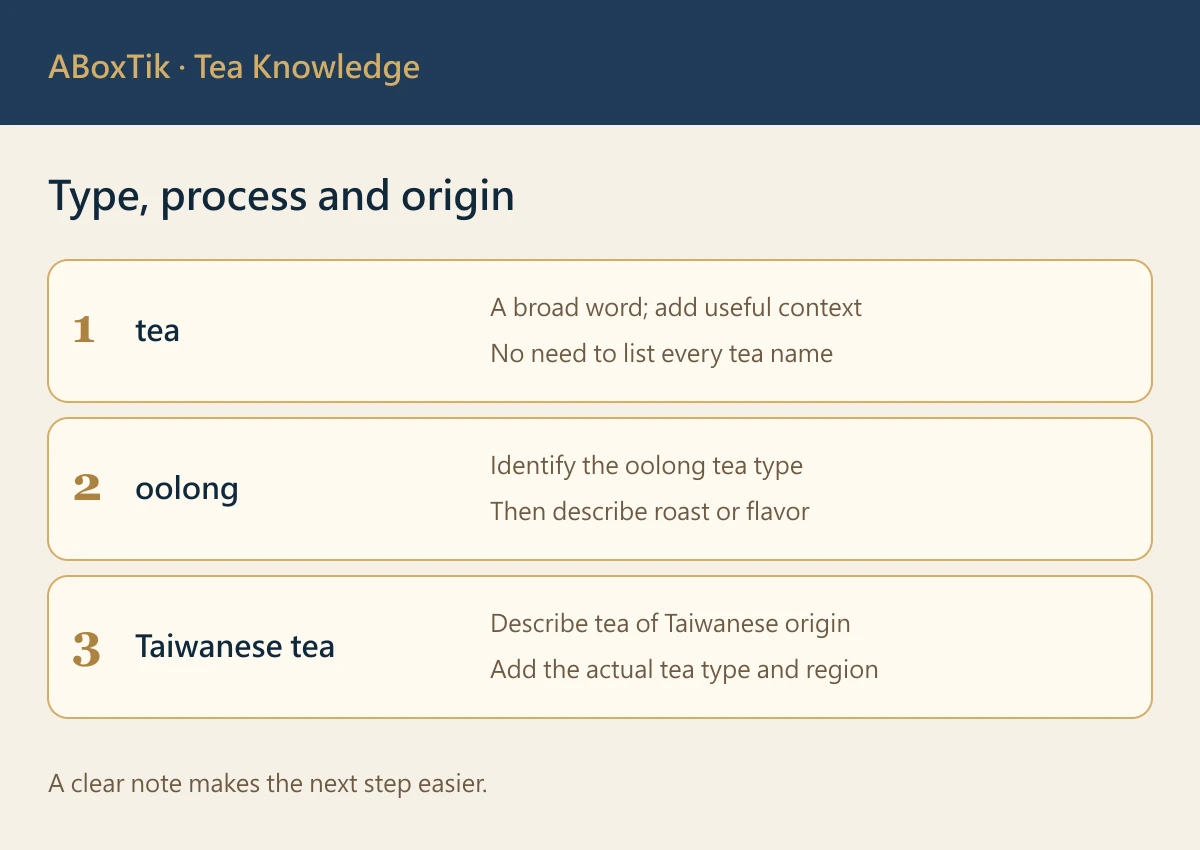
Tea is the broad word, oolong tea identifies a tea type, and Taiwanese tea here introduces tea of Taiwanese origin. These are not competing grades. Combine confirmed details: This is oolong tea from Taiwan. Add a specific region when the package supports it. Clear origin and type are more useful than naming an entire mountain range in one breath.
| Question | Possible sentence | Then add |
|---|---|---|
| What is in the cup? | This is tea. | It is oolong tea. |
| Which type? | This is oolong tea. | A supported roast or flavor description |
| Where is it from? | This tea is from Taiwan. | A region when confirmed |
| Type and origin together? | This is Taiwanese oolong tea. | Would you like a small cup? |
If the information establishes only Taiwanese-style processing, describe that style rather than automatically asserting Taiwanese-grown material. Conversely, black tea produced in Taiwan can be introduced as Taiwanese black tea; not every tea needs to become oolong for the introduction to work.
For a small card, give tea type, origin and brewing guidance separate lines: Oolong tea / Origin: Taiwan / Brewing guide inside. This illustrates information order; the wording must fit the actual product. Then ask, What do you notice first? The guest can have the microphone before the tea name delivers a three-minute speech.
Romanization or translation? Use three columns for an overseas tea card
A tea name does not require an absolute choice between romanization and literal translation. Keep the Chinese name, match the verified English wording on the package and add a plain explanation of tea type or style. This helps the recipient identify the same product later. Poetry can stay in the name while practical information provides a route back to the tea.
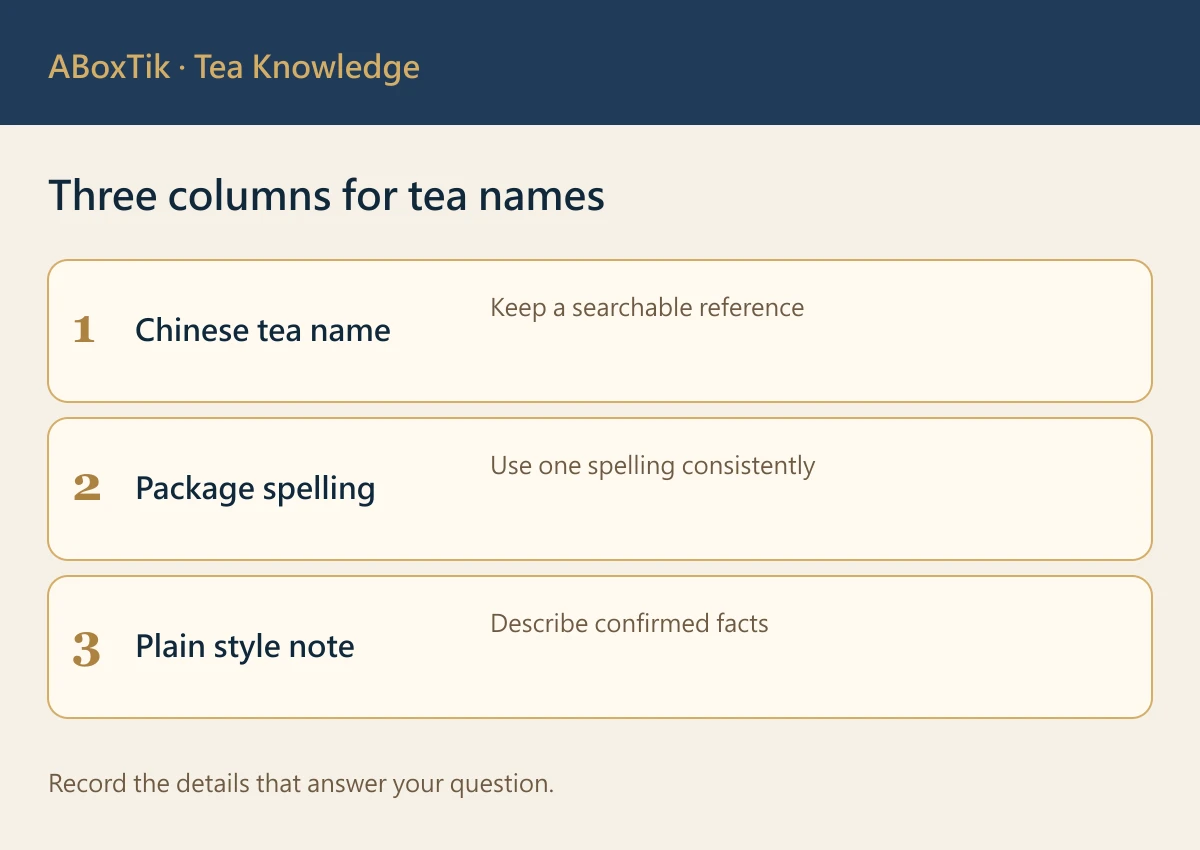
| Chinese name | Illustrative identifying wording | Plain explanation |
|---|---|---|
| 凍頂烏龍 | Dong Ding Oolong, following the actual package | A Taiwanese oolong tea; add roast details only when confirmed |
| 金萱 | Jinxuan, or the supplier’s consistent spelling | A tea made from the Jinxuan cultivar, if verified |
| 文山包種 | Wenshan Pouchong or Paochong, matching the package | A Taiwanese tea, with verified type and origin details |
These are examples of card organization, not a demand for every supplier to adopt one spelling. The TBRS English page itself uses forms including Paochong, Tungding and Chinhsuan. Historical usage and different transcription systems coexist. Keeping the card, package and product link consistent is more useful than holding an English renaming convention inside the gift box.
Keep the name, then explain what the tea is
A literal “Frozen Summit” alone may suggest an iced drink or frozen ingredient rather than identify Dong Ding tea. Similarly, a familiar milky aroma description for Jinxuan cannot establish either the presence or absence of dairy ingredients. Name, cultivar, flavour and ingredients are separate fields that need their own confirmation.
For a verified Taiwanese oolong, a short line can say, “This is Taiwanese oolong tea. Brewing directions are inside.” Keep the Chinese name and a product link too. If origin, cultivar or ingredients are unconfirmed, ask the supplier rather than filling the card with plausible-sounding claims.
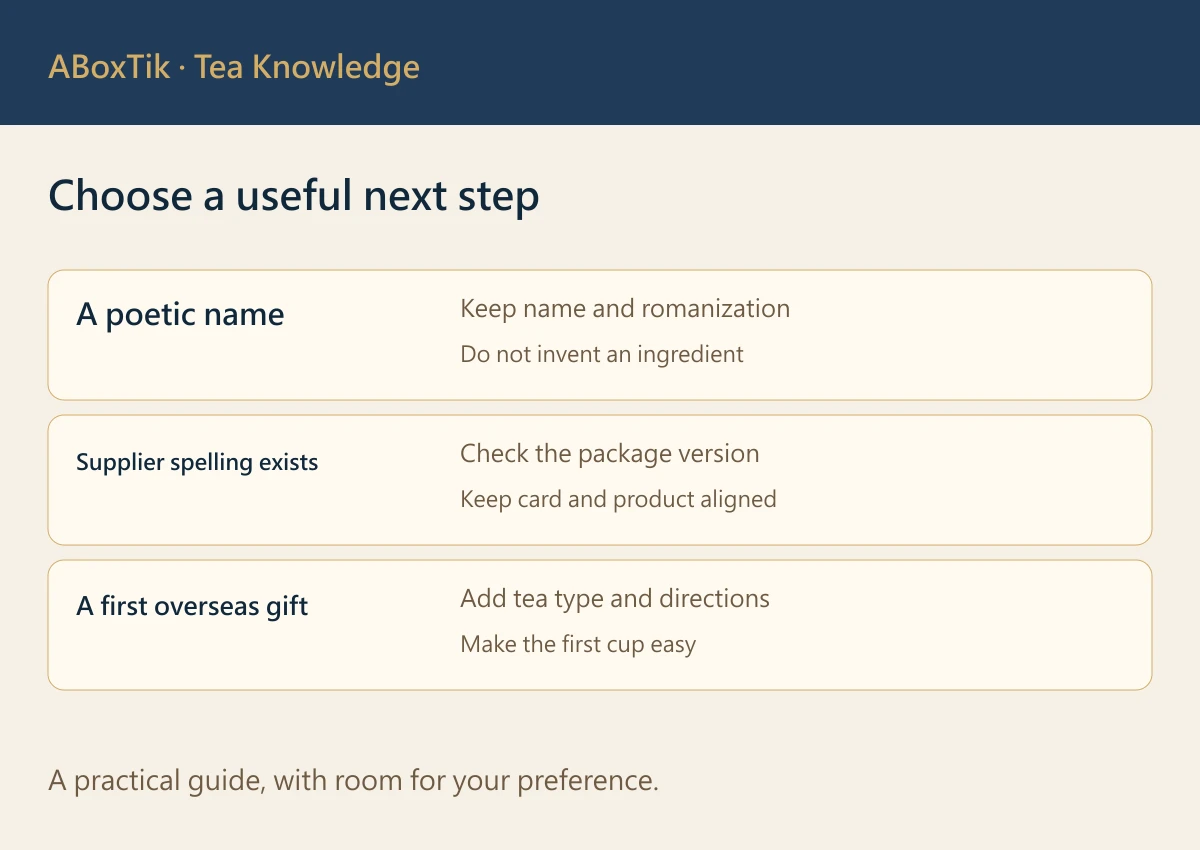
Read the card to someone unfamiliar with the tea. Can they tell what it is, find the same product and locate the brewing directions? If so, the remaining space can hold a warm invitation: “Please enjoy it whenever you have a quiet moment.”
Introduce origin in three English sentences, with one job each
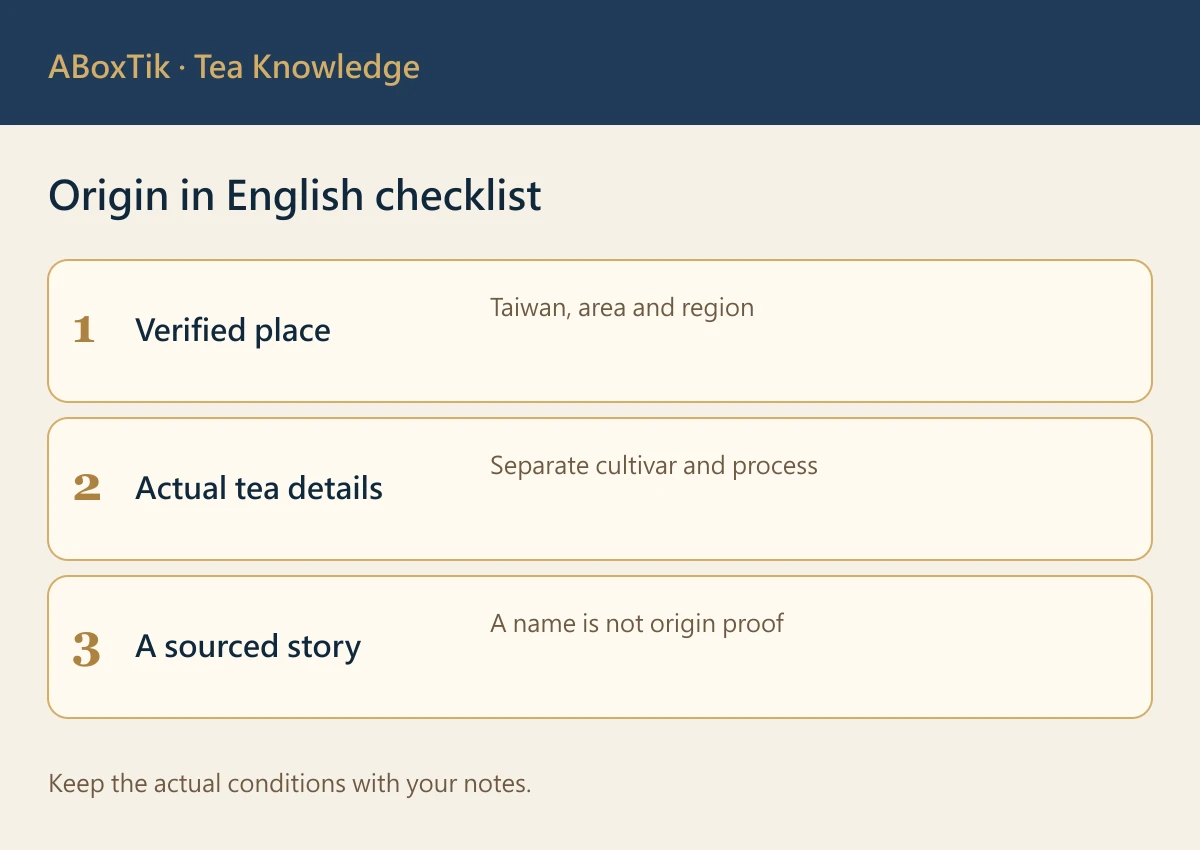
When introducing Taiwan tea to a visitor, clarity does not come from fitting every story into one paragraph. Separate geography, what the tea is labelled as, and your own invitation to taste. Name the checkable place first, then the tea information the package or record actually gives, and only then share the cup.
| Part | Sentence pattern | Check first |
|---|---|---|
| Geography | “This tea is from ___ in Taiwan.” | Does the record support that area? |
| Tea | “It is labelled as ___ tea.” | Does the name, type or process follow the package? |
| Invitation | “When you taste it, you may notice ___.” | Is it your observation, not a prediction for everyone? |
When a detail is not yet confirmed
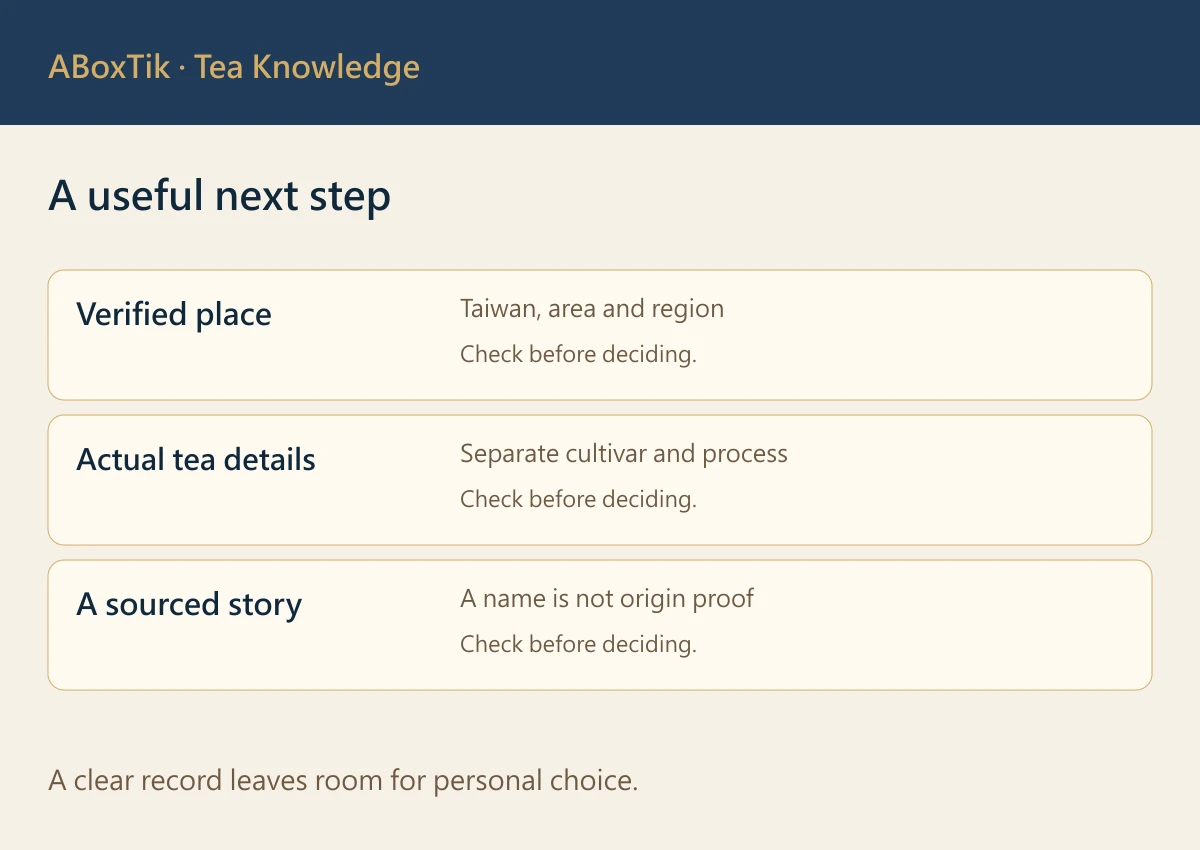
Use “The producer describes it as ___,” and keep the source, rather than joining mountain name, cultivar, process and quality judgement into one untraceable sentence. Tea Research and Extension Station English material supports basic context about Taiwan’s tea types and industry; it does not prove a precise mountain, garden or lot for one package.
Take one existing introduction and divide it into three sentences. Ask a friend which one names place, which one names tea, and which one is your experience. If they can follow the answer, the introduction has already set the tea down with good manners.
Follow a Box of Tea
Let one cup make English feel just right
At ABoxTik, we believe introducing Taiwanese tea need not turn each meeting into a display of terminology. Name the tea type and origin, share what you notice, then ask how the other person would like to drink it. Those few steps can help a cup be understood and shared with ease.
For the brand’s starting point in Taiwanese tea, visit About ABoxTik. If you are preparing a gift, seven questions before choosing a tea gift box help return attention to the way the recipient will actually use it.
Related reading
- Build a first Taiwanese tea map from four styles
- Learn how tea welcomes guests in Taiwan
- Start reading Taiwanese tea through origin information
Describing the same cup in another language
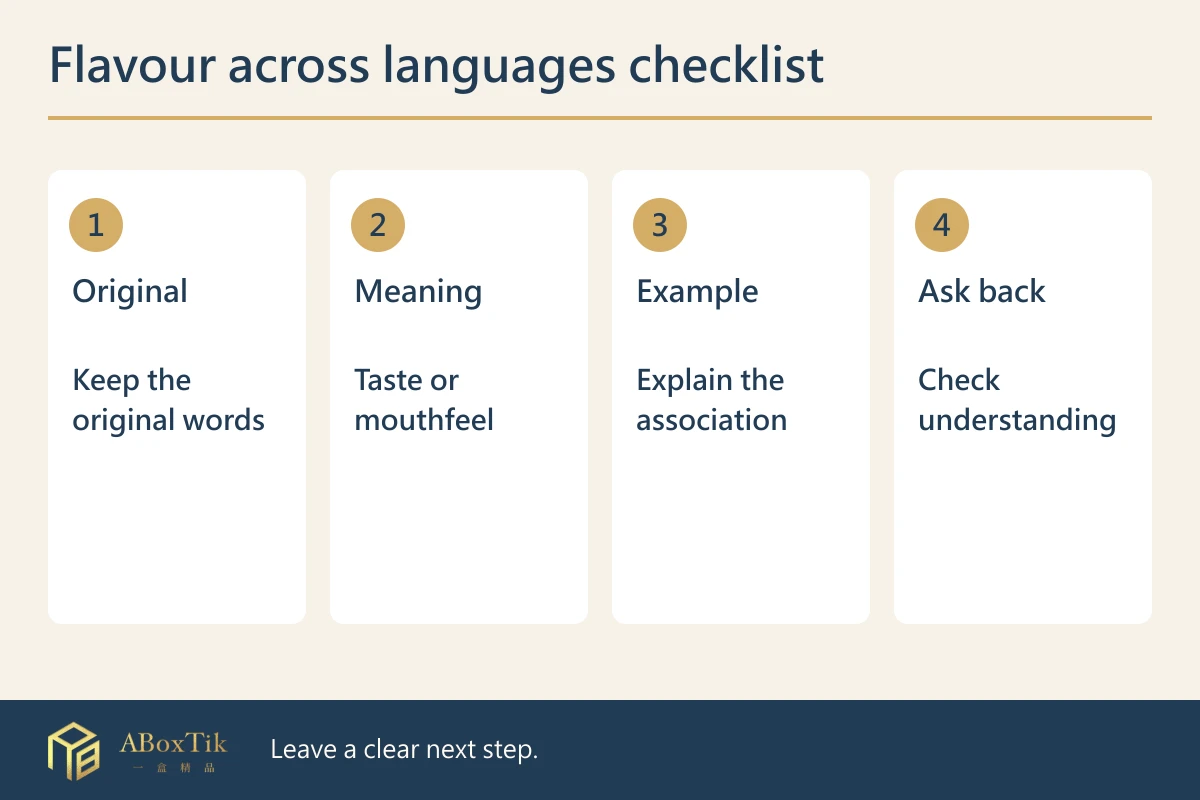
Start with the actual tea, preparation and your own observation, then choose words your companion can use. Depending on context, the Chinese phrase qingxiang might be explained as a light floral aroma or a fresh aroma. Neither is a mandatory one-to-one translation, and neither promises that everyone will smell flowers. If you mean a light texture, try light-bodied rather than adding an aroma you did not notice.
| What you noticed | One way to say it | A useful question |
|---|---|---|
| A flower-like smell | It has a floral aroma. | What does it remind you of? |
| A noticeable roast | I notice a roasted note. | Does it feel light or strong to you? |
| A light texture | It feels light-bodied. | Would you prefer a stronger brew? |
These are communication examples, not flavour promises for a specific product. Taste independently first, then ask what a word evokes. Different descriptions can sit alongside each other; a cup does not have to choose sides in translation.
Sources
- Tea and Beverage Research Station: Taiwan tea industry and tea classification
- Tea and Beverage Research Station: Taiwan Quality Tea Information System (English)
Sources checked 19 October 2026.