
Tea Set
Teapot Capacity: Measure the Water You Actually Use
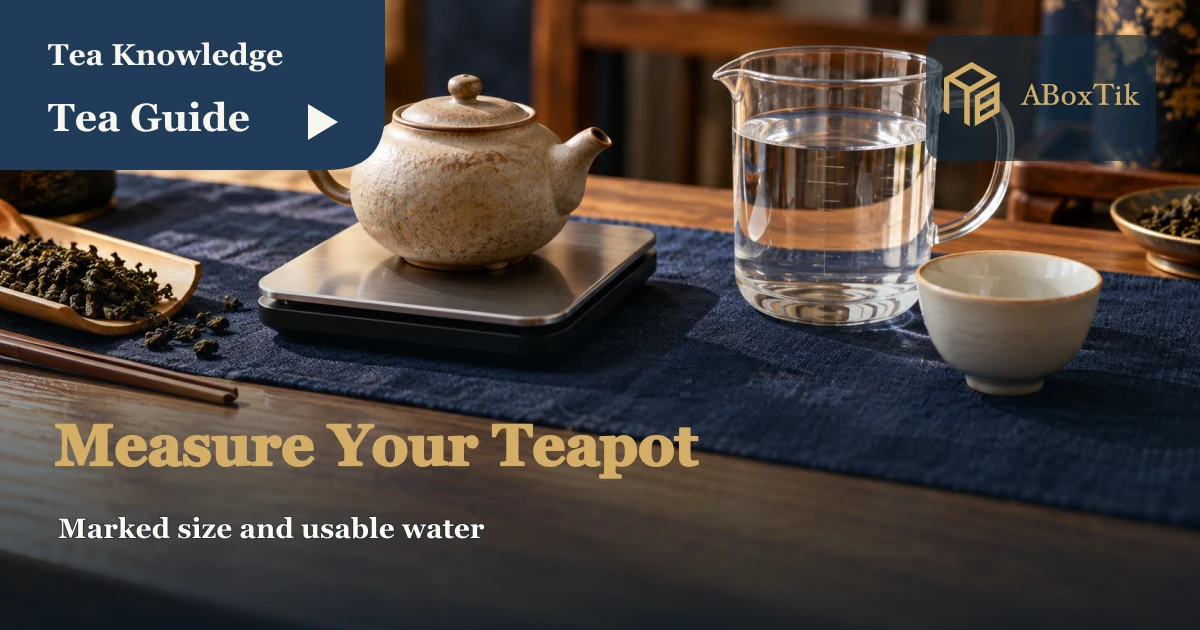
A clear measure of water makes a little more room for an unhurried pour.
A teapot’s usable capacity is the water you can comfortably use in normal brewing, not necessarily its brim-full specification. Use room-temperature water and a measuring jug, or approximate volume from water weight on a kitchen scale. Record an empty-pot working fill separately from the amount poured out. The aim is a repeatable record for everyday brewing.
Two pots both labelled 200 milliliters can behave differently when the lid goes on. Before making the pot argue with the measuring jug, check whether they are answering the same question: how much fits at the rim, or how much fits your normal routine?
Separate marked capacity, working fill and output
| Field | What to record | Purpose |
|---|---|---|
| Marked capacity | Original specification and seller’s method | Understand the stated size |
| Empty-pot working fill | Water at your normal filling level | Establish a daily baseline |
| Poured output | Water collected in the receiving vessel | Plan servings and note retention |
Lids, strainers, leaf space, fill height and pouring habits affect the amount used. Ask whether a specification includes the lid and strainer, and whether it refers to the rim or another level. A difference between two methods is a reason to align definitions before concluding that a product is incorrectly described.
The gaiwan and teapot comparison covers vessel choice; teapot brewing steps cover the pour. Here the task is narrower: establish measurements that help with everyday use, without ranking clay bodies or shapes.
Prepare room-temperature water and a stable surface
Gather a clean pot, clear room-temperature water, a receiving vessel large enough for the whole pour, and either a kitchen scale or a clearly marked jug. Put the scale on a dry, stable surface and check its capacity and units. Keep hot pots and boiling water off equipment not designed for them. Include the same lid and accessories each time.
NIST identifies one cubic centimeter as one milliliter and describes water density as approximately one gram per cubic centimeter. For ordinary room-temperature comparisons, water weight in grams can therefore provide an approximate milliliter figure. Temperature, scale resolution, clinging droplets and technique all affect the result. A whole-number display should not be mistaken for laboratory accuracy.
With a jug, place it level and bring your eyes to liquid level, following its scale and liquid-reading method. Holding it at an angle while making a heroic guess is entertaining but less repeatable. The goal is to reproduce a useful result next time.
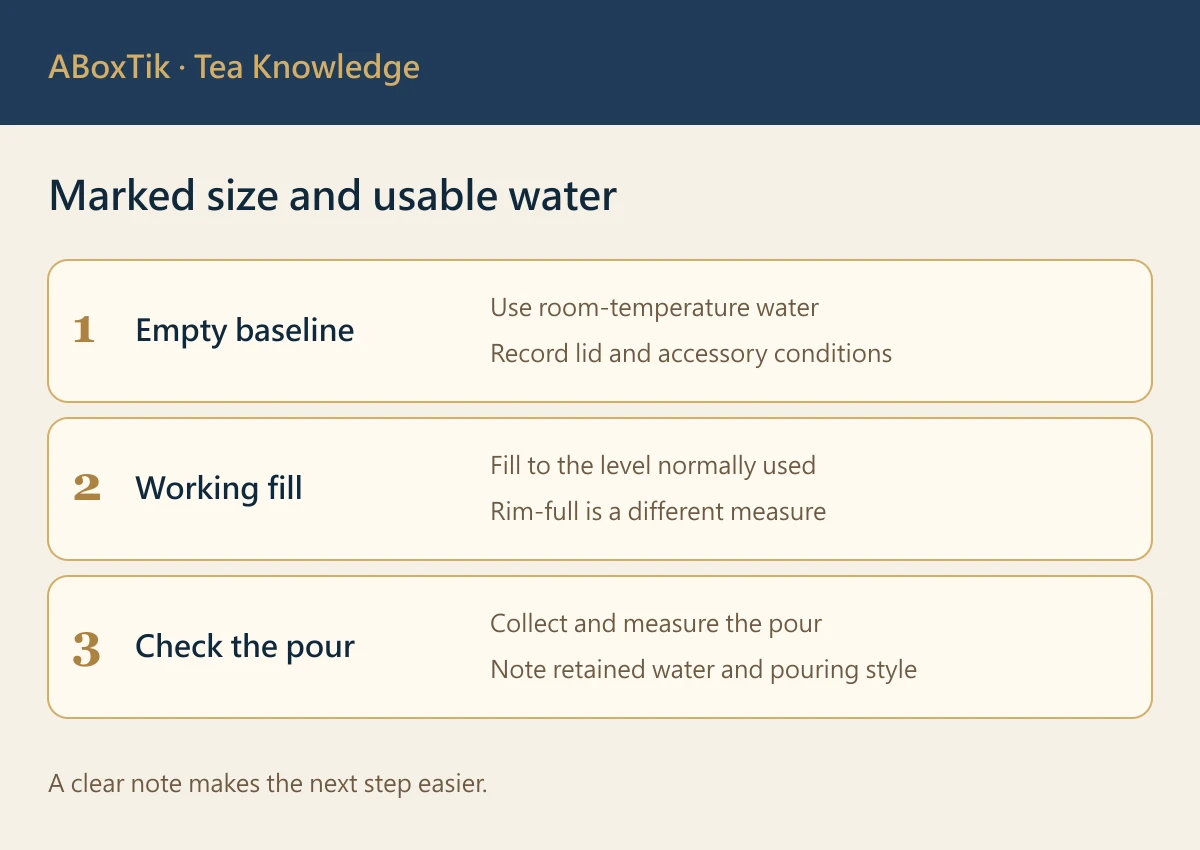
Measure the empty-pot working fill
- Identify the setup: record the pot, lid and strainer. Dry the outside.
- Establish zero: tare the empty pot on the scale, or record its empty weight and subtract later. Keep one approach.
- Add water: stop where normal lid placement, holding and pouring feel comfortable. Do not chase the brim.
- Record the level: note the approximate water volume and take a reference photo without marking or damaging the vessel.
- Repeat: empty the pot and try again using the same conditions. Investigate technique before interpreting a difference.
If you instead fill the pot and pour into a jug, retained water affects the result. That approach is still useful, but label the value as poured output rather than treating it as identical to the water initially added.
Measure output before planning the cups
Tare an empty receiving vessel, then pour from the working fill using your usual posture. Record the collected weight or volume. Notice retained water, dripping and any angle needed to finish the pour. Do not adopt an unstable grip or risk a sliding lid to capture a few extra drops.
Consider a hypothetical record: marked capacity 200 milliliters, working fill about 175, output about 168. The numbers describe different things and do not cancel one another out. Divide the actual output by your intended serving size to estimate cups, allowing a little margin for handling. These example numbers are not measurements of a product.
Tea cups need not be filled to the edge either. Two people drinking small tasting cups have different needs from two people using large mugs. Explore a practical tea setup with serving habits in mind, rather than buying the largest pot first and recruiting more guests afterward.
Once leaves go in, record the actual brew
Dry leaf occupies space; brewed leaf absorbs water and unfolds. An empty-pot baseline therefore cannot promise the same liquor output in every infusion. Rolled oolong changes considerably as it opens. The guide to rolled leaves explains why leaf shape needs its own context instead of being converted into one fixed scoop volume.
For actual brewing, follow the packet guidance and record dry leaf weight, water added, heat and time. When comparing two pots, align the leaf-to-water ratio and observe their pouring behavior. A slower pot or one retaining more liquor introduces another difference. Do not assign every mouthfeel change to material merely because the advertised capacities match.
Keep timing and brewing temperature clear too. Measuring capacity is a way to remove one guess from brewing, not a shortcut that makes the other conditions irrelevant.
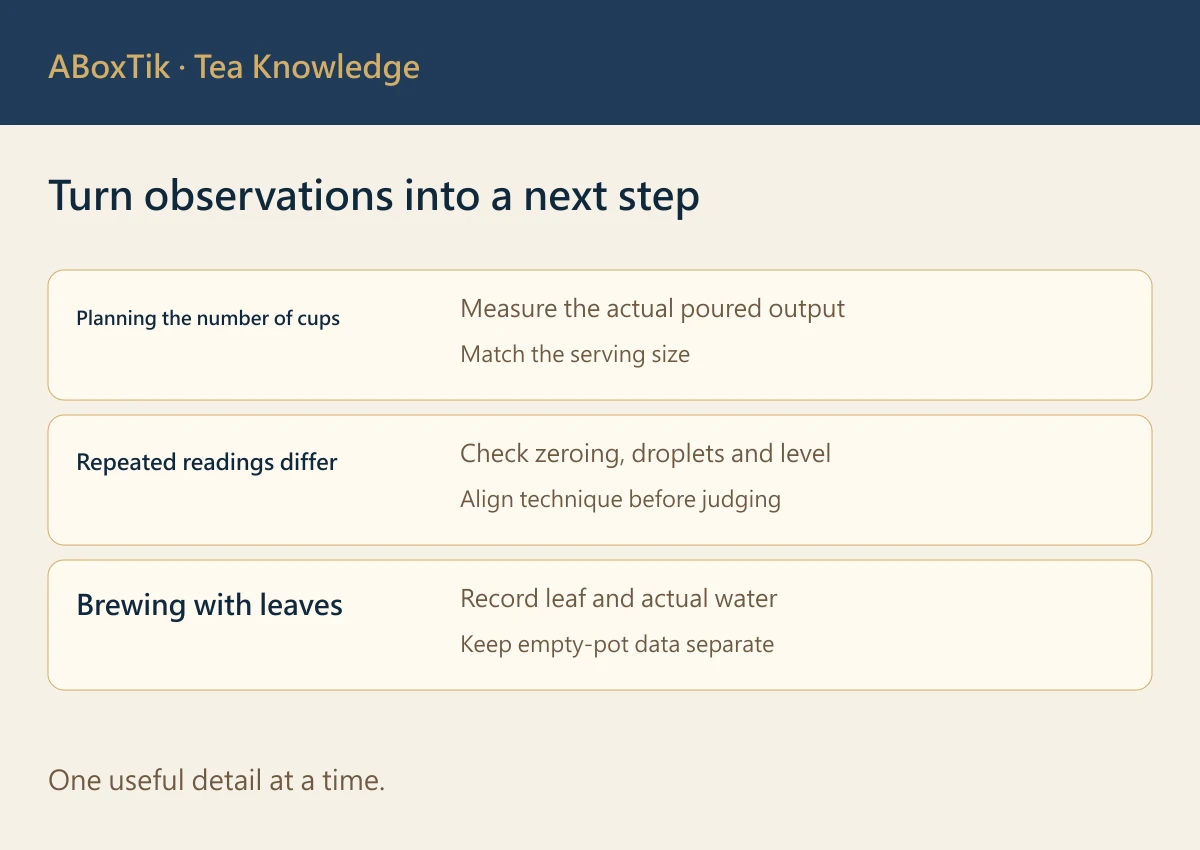
A reusable capacity record
| Field | Entry | Repeat consistently |
|---|---|---|
| Pot and specification | Name, marked size, seller’s method | Compare matching definitions |
| Accessories | Lid and strainer included? | Use the same setup |
| Working level | Room-temperature amount and photo | Use the same fill point |
| Output | Collected amount and retention | Use the same pouring habit |
| Actual brew | Leaf, water, time and liquor output | Keep separate from empty testing |
If repeats differ slightly, check zeroing, water on the outside and fill height first. If a substantial difference persists, show the seller the photos and method. “Here is how I measured it” invites a clearer answer than a bare claim that the number is wrong. Also ask about cleaning and intended use; teapot care offers a useful next step.
Follow ABoxTik: useful matters more than brim-full
A comfortable pot makes filling, pouring, sharing and cleaning easier. Understanding usable capacity helps tea fit the cups and people at the table. There is no need for an eyesight competition at every brew, or a last-minute surprise at the cup rim. Begin with the vessel already at home, then explore how Taiwanese tea and craftsmanship can become part of a repeatable daily ritual.

Related reading and tea choices
- Compare gaiwan and teapot use
- Classic Taiwan tea: choose a familiar tea for brewing notes
- Leaf expansion and brewing space
Sources
Sources checked: 24 October 2026.