
ABoxTik Tea, Tea, Tea Bag, Tea Knowledge
TTES No. 13 Green Jade Oolong: Cultivar, High Aroma and Winter Tea
TTES No. 13 Green Jade is a tea cultivar, not a promise that every cup will taste the same. Also called Cuiyu or Green Jade, it was bred from Hong Xin Gan Zhi and Tainung No. 80, named in 1981, and is listed by Taiwan’s Tea and Beverage Research Station as a high-aroma, small-leaf cultivar suited to pouchong and oolong tea. Its clear floral character is a useful starting point; origin, harvest, processing, roasting, storage and brewing still shape the finished tea.
For a floral Taiwanese oolong without having to guess from a romantic name alone, read cultivar, harvest and making method together. It is a small habit that makes choosing tea feel much calmer.
Green Jade’s identity: a cultivar with a documented lineage
Green Jade is the familiar name for TTES No. 13 (Cuiyu), a cultivar also known in the trade as line 2029 or “29 zai.” The Ministry of Agriculture’s Tea and Beverage Research Station records its female parent as Hong Xin Gan Zhi and its male parent as Tainung No. 80. It was named in 1981. The same official material describes it as a small-leaf, mid-season cultivar with high aroma, suitable for pouchong tea and oolong tea.
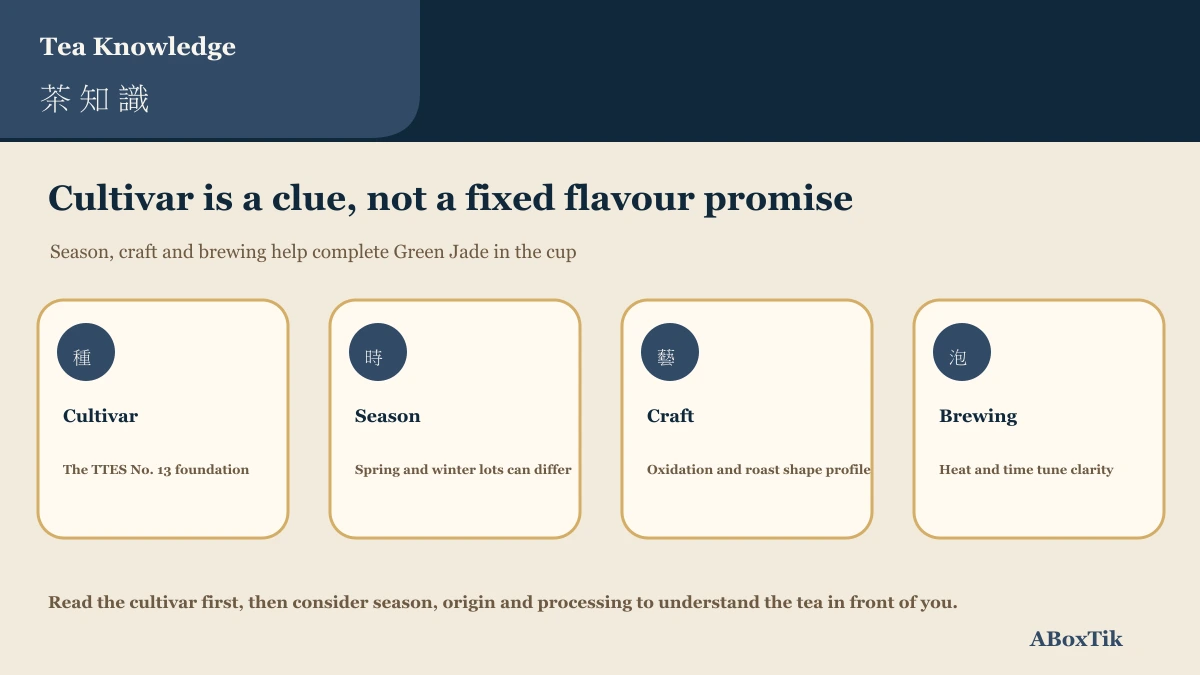
That is valuable information, but it is not a tasting note written in advance for every lot. A Green Jade from one garden and season can differ markedly from another after different leaf handling, oxidation, roast, packing or brewing. Cultivar is the beginning of the story, not its conclusion. This distinction leaves room for both the grower’s work and the drinker’s own observation.
What does “high aroma” mean in the cup?
Green Jade is often described with words such as bright floral, wild ginger lily, jasmine, osmanthus or fresh green notes. The research station’s cultivar description simply says that its aroma is high. The more specific flower names are sensory language: helpful for sharing an impression, but not guarantees that every bag or infusion will deliver the same note.
There is an easy, unhurried way to listen for the tea. Smell the warm liquor and lid first, take a small sip, then return to the cup as it cools. If the floral note feels quieter than expected, it need not mean the tea has failed. Water temperature, steeping time, time since opening, surrounding aromas and even the day’s sense of smell can all change what is noticed.
Why the cultivar is not the same thing as a tea style
The research station lists Green Jade as suitable for pouchong and oolong tea. Tea type is determined by making, not by cultivar alone. Withering, leaf agitation, fixation, rolling, drying and roasting can each guide the same cultivar in a different direction. A lightly oxidised and lightly roasted Green Jade may make its fragrant side easier to notice, yet “Green Jade always means light oxidation” would still be too simple.
Oxidation and roasting are also different axes. Oxidation happens earlier in processing; roast is a later heat treatment. A deeper roast does not automatically mean more oxidation, and a darker liquor does not prove either one. For a little more context, see ABoxTik’s guide to oolong oxidation and roasting.
Winter Green Jade: conditions matter more than a scarcity label
Dongpian is not simply another name for the regular winter harvest. Taiwan’s Agriculture and Food Agency explains it as tender growth that emerges again after winter tea has been picked, when a warmer winter combines with suitable rain or irrigation. It is associated especially with lower- and mid-elevation areas, and production is small and inconsistent. ABoxTik’s current Green Jade product page separately describes its own lot as growing more slowly during wider day–night temperature differences and lower relative humidity, with slightly higher oxidation used to build aromatic layers. That is a description of this product lot, not a universal formula for every dongpian or every Green Jade tea.
Whether winter leaves can be picked, how much is available, and how they taste depends on weather, garden location, plant condition and the maker’s decisions. For that reason, “rare” is most useful when it is tied to a named, traceable lot with current supply information—not as a reason to rush. When winter Green Jade is the goal, check the live product page for harvest details, specifications and stock. If those details are not shown, asking is more dependable than assuming.
A gentle way to choose Green Jade oolong
- Start with cultivar and origin. A label that states TTES No. 13 / Green Jade, origin and packing details gives more to work with than “floral” alone.
- Read the processing language. Fresh, light roast, ripe aroma and roast notes suggest a direction, not a laboratory scale.
- Keep lot information separate from cultivar information. Winter harvest, competition grade or limited quantity describe a lot; Green Jade describes the plant.
- Give a smaller pack or a first tasting room to speak. Personal preference deserves more weight than chasing one aroma word.
Green Jade and Jinxuan oolong are both Taiwanese bred cultivars, yet neither needs to be ranked above the other. Jinxuan is often discussed through its milky aromatic potential; Green Jade through its lifted floral direction. Both are still changed by place and processing. For the landscape behind those choices, visit the Taiwan tea regions guide.
Brewing: make space for the aroma to open
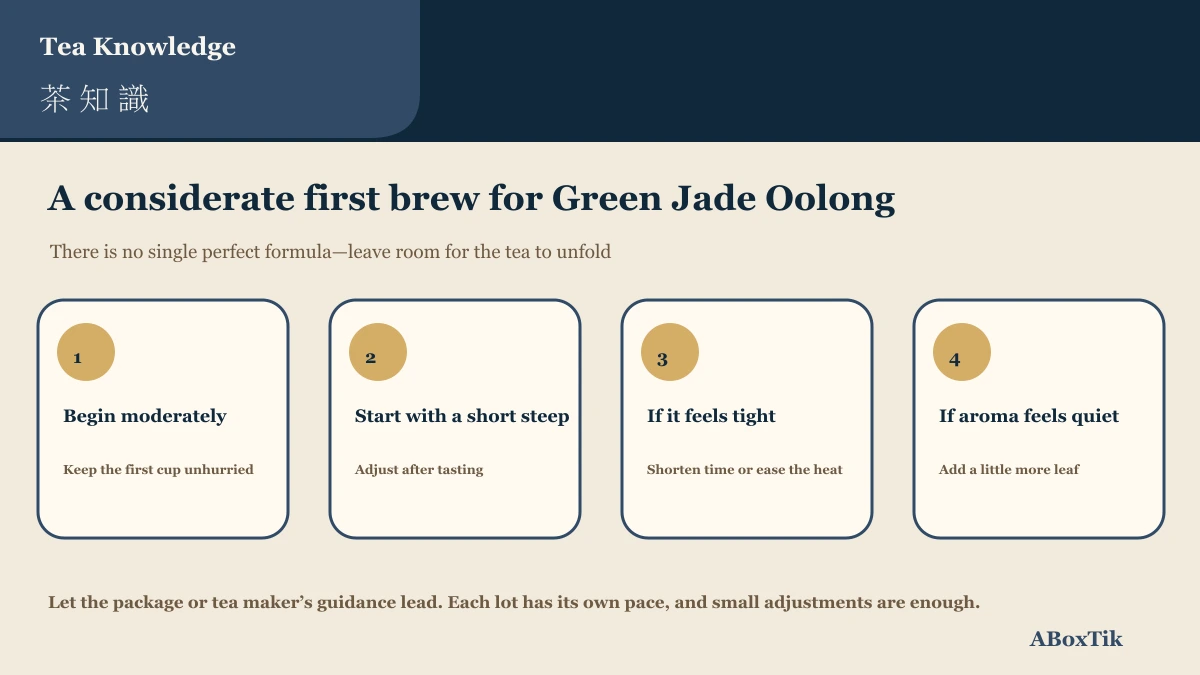
No single temperature or steeping time fits all Green Jade teas. Begin with the producer’s or package’s instructions. If none are supplied, start with a modest leaf amount and a shorter infusion, then change one variable at a time. If the tea feels too forceful, shorten the steep or reduce the temperature slightly; if it feels thin, extend gently. One considered adjustment is far more informative than changing everything at once.
Once opened, keep tea sealed, dry, away from light and away from strong odours. This is not a demand for perfection. It is simply a way to protect the details that made the first cup inviting.
Questions often asked about Green Jade
Is Green Jade oolong the same as TTES No. 13?
Green Jade is the common name for TTES No. 13. “Green Jade oolong” usually means oolong made from that cultivar. Processing, origin and lot information are still needed to understand the tea in hand.
Will every Green Jade tea taste of wild ginger lily?
No. High aroma is a cultivar tendency. Wild ginger lily and other flowers may describe particular lots, but are not a guarantee for every infusion.
Is winter tea automatically better than spring tea?
No. They arise from different seasonal conditions. Clean aroma, balance and clear information are more useful comparisons than harvest season alone.
Tea with ABoxTik: build a personal aroma map
Green Jade can be a graceful introduction to the floral side of Taiwanese oolong. ABoxTik’s Green Jade winter-tea details can change by lot, so current specifications, flavour wording and stock should always be confirmed on the live product page. There is no need to hurry; clear information makes a better choice.
For a considered comparison, begin here:
- Green Jade Oolong — check the current winter lot and specifications.
- Jinxuan Oolong — explore cultivar and processing together.
- Dong Ding Oolong — discover a more mature roasted direction.
Sources
- Tea and Beverage Research Station: TTES No. 13 (checked 2026-09-26)
- Tea and Beverage Research Station: cultivars suited to partially fermented tea (checked 2026-09-26)
- Ministry of Agriculture Knowledge Platform: the lineage of tea line 2028 (checked 2026-09-26)
- Agriculture and Food Agency: understanding dongpian tea (checked 2026-09-26)