
Tea Knowledge
Taiwanese Tea Hospitality: Hosting at Home, Work and Gatherings
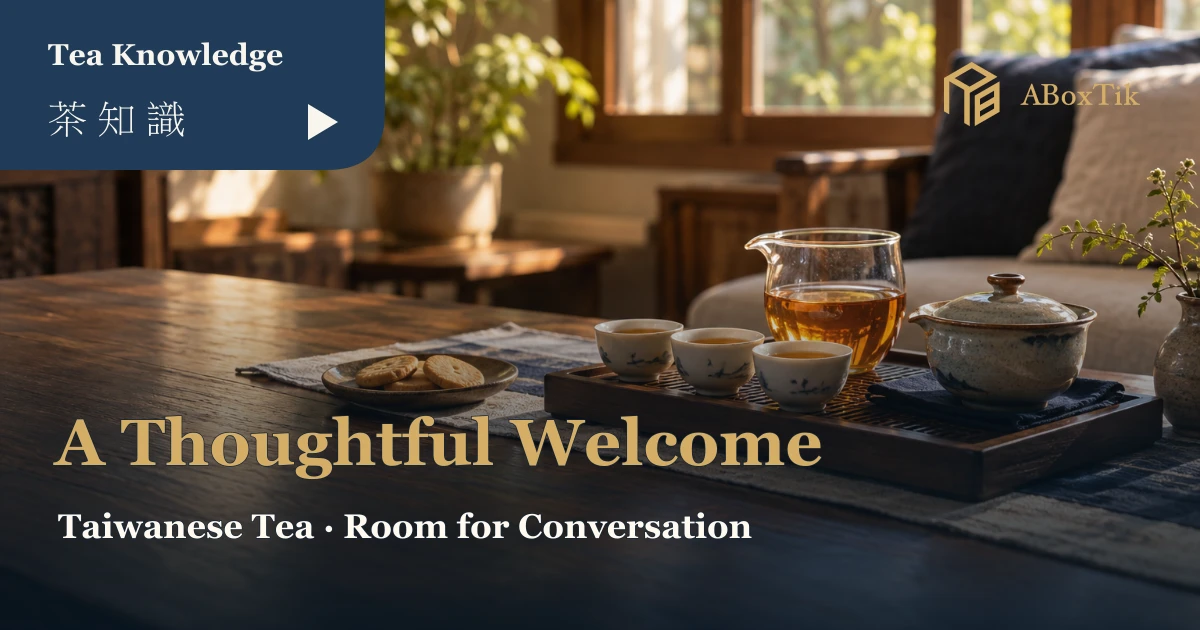
A cup answers thirst; a chair makes room for company. Introduce the tea slowly, adjust it together, and leave enough time to listen. A welcome can begin before the first infusion is ready.
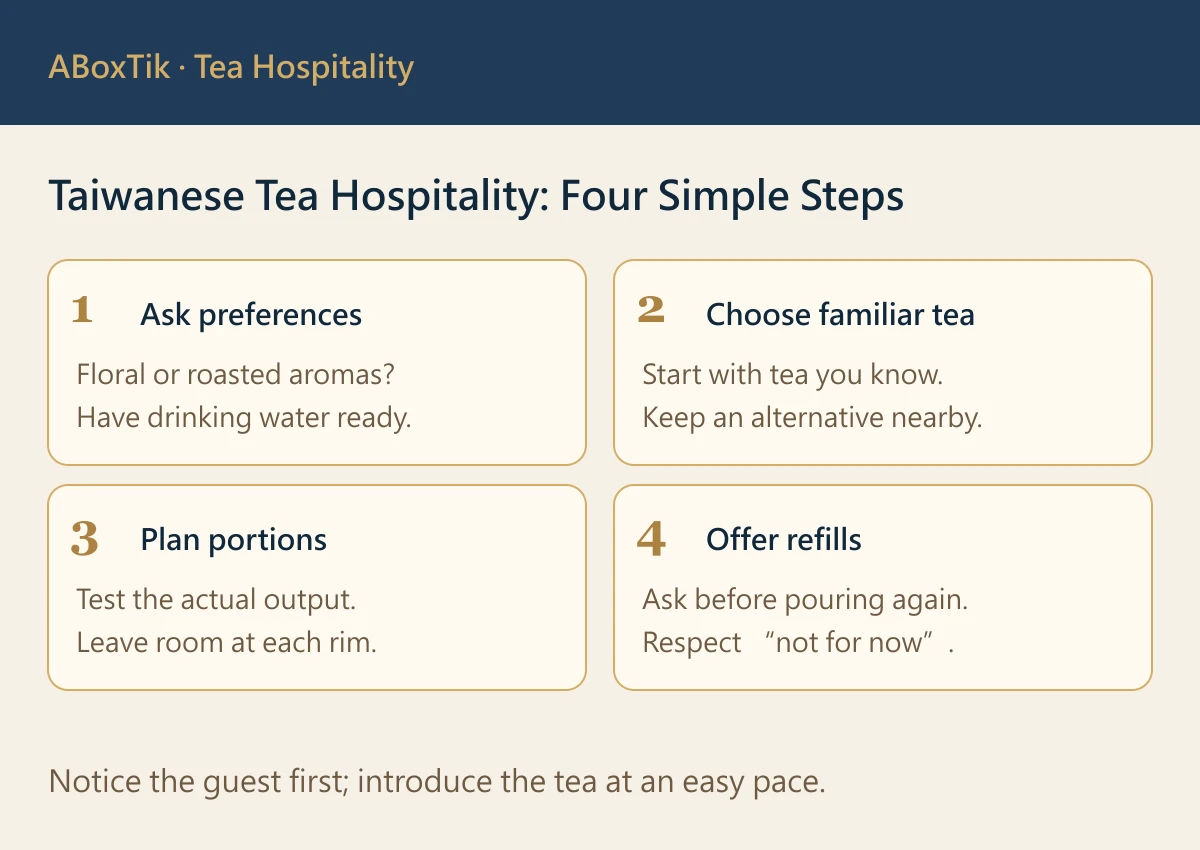
Taiwanese tea hospitality begins with a few manageable choices: ask what guests would enjoy, brew a tea you know, plan comfortable portions and offer refills rather than assuming them. At home, leave room for conversation. In a meeting, keep tea service unobtrusive. At a gathering, make different preferences easy to accommodate. A welcoming table does not require an elaborate set of tools.
If visitors are nearly at the door and the tea tray looks like a second to-do list, reduce the plan to one tea, clean cups and water. what makes Taiwanese tea distinctive offers background on the island’s tea traditions. Today’s practical aim is simpler: make the first drink easy to accept, adjust or decline. Friends have come to visit, not to examine a brewing certificate.
Taiwanese tea hospitality: what offering tea can express
Taiwan’s Ministry of Education dictionary describes hong-te, or offering tea, as serving tea respectfully. Its entry also mentions the older practice of leaving tea by roadsides for passers-by. The National Cultural Memory Bank records roadside tea offered to travellers and workers as a chance to drink and rest. Roadside sharing and hosting someone at home are different settings; both offer a useful reminder to notice the person before perfecting the presentation.
National Chengchi University’s teaching material on serving tea introduces hospitality in a Chinese cultural context. Such sources explain cultural background rather than establish a single rule for every Taiwanese household. The plans below are editorial suggestions for contemporary hosting. Families and workplaces have their own habits. For broader context, read Chinese tea culture; for brewing vessels and repeated small servings, use gongfu tea and Taiwanese brewing arrangements.
At home: offer two flavour directions, not a tea quiz
“Would you prefer a floral tea or something with a roasted aroma?” gives a newcomer an easier choice than asking for a cultivar or mountain region. Using ABoxTik’s descriptions, Yingxiang provides orchid and floral-fruity cues; Tongding offers brown-sugar and chestnut-sugar notes. These are descriptions of particular teas, not promises that every guest will perceive the same flavours.
Start with a tea that is familiar to brew and keep an alternative nearby. If guests are curious, offer the second direction later, using clean cups. There is no need to stage a six-tea tournament before everyone has taken off their coat. a four-flavour Taiwanese tea starter selection helps build a small flavour selection; fresh and roasted Taiwanese tea styles explains fresh and roasted styles without making either the compulsory hosting choice.
When the brewing reminder sounds, decant the tea or remove its bag or infuser, then return to the story. The leaves need not work overtime just because the conversation is good. Follow the particular tea’s instructions. first-infusion timing and oolong water temperatures explain adjustments; when a cup is stronger than wanted, change one variable on the next round instead of replacing tea, water and pot at once.
In a meeting: let tea support the conversation
First consider the visit’s length and the space available. A brief appointment calls for a different arrangement from an unhurried discussion. Keep laptops, papers and the route through the room clear. Choose stable cups and a fixed serving position. If the host is also presenting, arrange another person to help, or prepare individual tea bags and water before the meeting starts.
A short invitation is enough: “We have Taiwanese oolong and drinking water. Which would you prefer?” Water lets someone decline tea without having to explain a personal reason. Introduce the selected tea with its name and one flavour cue. If someone asks more, Taiwan’s tea regions supplies background. A long account of rarity or price can wait until it is relevant to the guest’s interest.
Offer another serving during a natural pause, asking before reaching towards a cup. Avoid crossing documents or electronics with hot tea. Follow the venue’s existing arrangements. A take-home gift is a separate decision: questions for choosing a tea gift helps consider the recipient’s equipment and preferences. Choosing a gift need not complicate the drink being served right now.
At a gathering: plan for different arrival times and preferences
People may arrive late, stay briefly or want only a small cup. Prepare one main tea, drinking water and a clear place for used cups. Keep snacks away from the hot-water station so that nobody reaches over a kettle for a biscuit. Identify pure tea, herbal blends and other drinks clearly; the colour of a cup should not be the ingredient list.
Repeated small servings and individual tea bags are both workable options. Choose according to guest numbers, equipment and who can supervise brewing. For dessert, try a modest serving before committing to a pairing. moon-cake and tea pairing illustrates how to think about sweetness and tea flavours, without suggesting that every celebration requires mooncakes. sparkling oolong tea provides an alcohol-free alternative for guests who prefer a cool drink.
A host can do less performing and spend more time sitting with everyone. If a small pot requires two rounds, explain that at the start: “We’ll serve this in two rounds; water is here as well.” A transparent arrangement is kinder than silently struggling to keep every cup full. Leave the tea within the rhythm of the gathering rather than letting it become the entire evening.
Before serving: test portions and the route to each cup
Use cold water to test how much the vessel actually delivers. As an illustrative plan, four people receiving about 50 mL each need around 200 mL of pourable tea for one round. This is portion arithmetic, not an etiquette rule. Leaves occupy space, and a pot’s labelled capacity is not necessarily its usable output. If the pot is smaller, serve two rounds instead of giving everyone a preview rather than a drink.
Leave room at the rim and a comfortable place to hold each cup. Set the pot and serving pitcher down securely before passing a drink. Arrange a cloth, a dish for used bags and hot water separately; keep cables outside the route to snacks. teapot materials helps compare materials, while the individual vessel’s care and heat instructions remain the practical starting point.
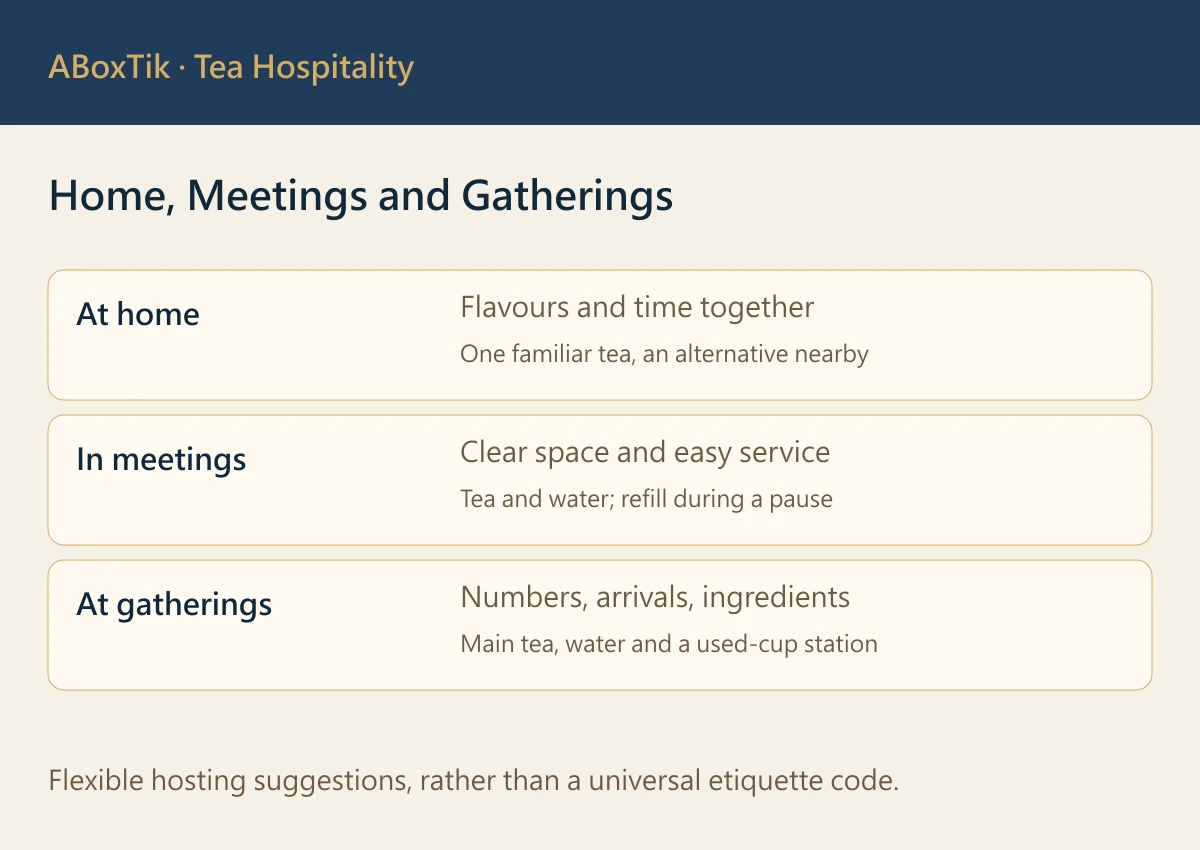
| Setting | Ask first | A manageable start | Refill cue |
|---|---|---|---|
| Home | Flavour and time available | One familiar tea, an alternative nearby | Ask after a round |
| Meeting | Schedule, space, serving help | Tea and water, a brief introduction | A pause in discussion |
| Gathering | Numbers, arrivals, ingredients | Main tea, water, used-cup station | The group’s actual wishes |
Three gentle questions that make a preference easier to express
- Choose: “Would you like to start with floral or roasted aromas?”
- Adjust: “How is the strength? We can make the next round lighter.”
- Refill: “Another little serving, or would you like water or a snack first?”
When someone says “not for now,” stop refilling. A choice feels welcoming when it is respected. Share a personal preference without asking the whole table to agree: “I enjoy the roasted aroma in this one. What do you notice?” Everyday words and a simple “I like this” are enough. smelling and tasting tea suggests ways to explore a cup without turning tasting into a vocabulary test.
A small hosting question: would the next visit suit A, one person brewing while everyone chats, or B, individual tea bags so the host can sit down too? Either can work. Think about who can supervise hot water and whether guests can easily request a change. Cups, tea, water, an infusion reminder and a clearing place form a useful five-item preparation check.
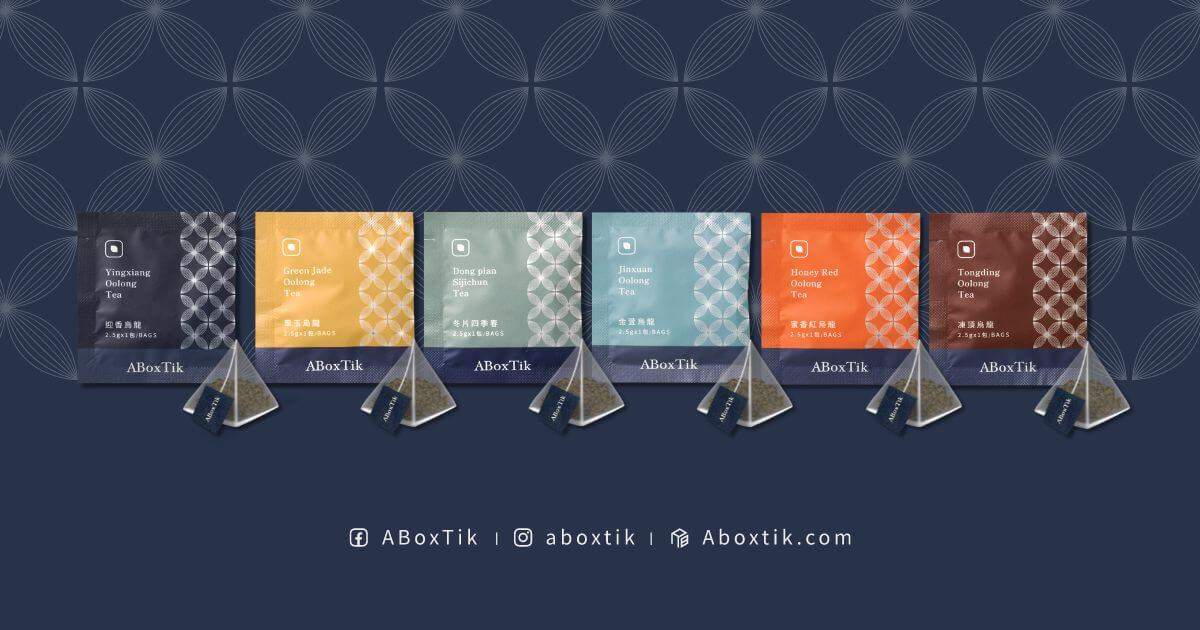
Follow ABoxTik · Let tea welcome the table, and leave time for the people.
Bring a thoughtful Taiwanese tea to the next visit
The useful habit to take from Taiwanese tea hospitality is to ask, listen and let a guest pause. ABoxTik’s two-box tea bag gift offers a way to begin with two flavour directions. four-box Taiwanese pure tea gift provides more pure-tea box positions; plan the amount to brew by actual guests rather than treating the number of boxes as a serving count.
For a group interested in different ingredients, consider a pure-tea and herbal assortment and check the selected contents individually. Learn about the brand through ABoxTik’s story, or bring the guest count, cup size and flavour ideas to the ABoxTik team. Prepare the water and cups first. Once someone has been invited to sit down, there is time to decide together what belongs in the next cup.
Related choices
- A starter tea selection for different flavour preferences
- Brewing vessels and a comfortable serving rhythm