
Tea Knowledge
Tea Gifts for Parents: Familiar Favorites and Something New
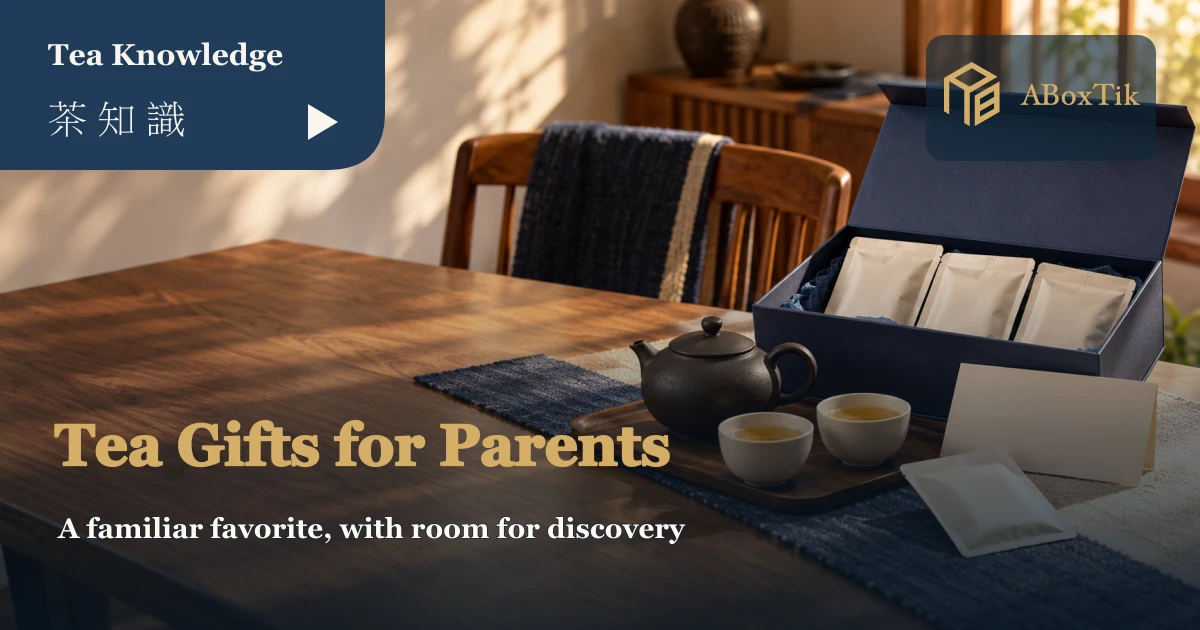
A box of tea need not say everything. Remember a cup they enjoy, leave a little room to discover another, and let the conversation continue.
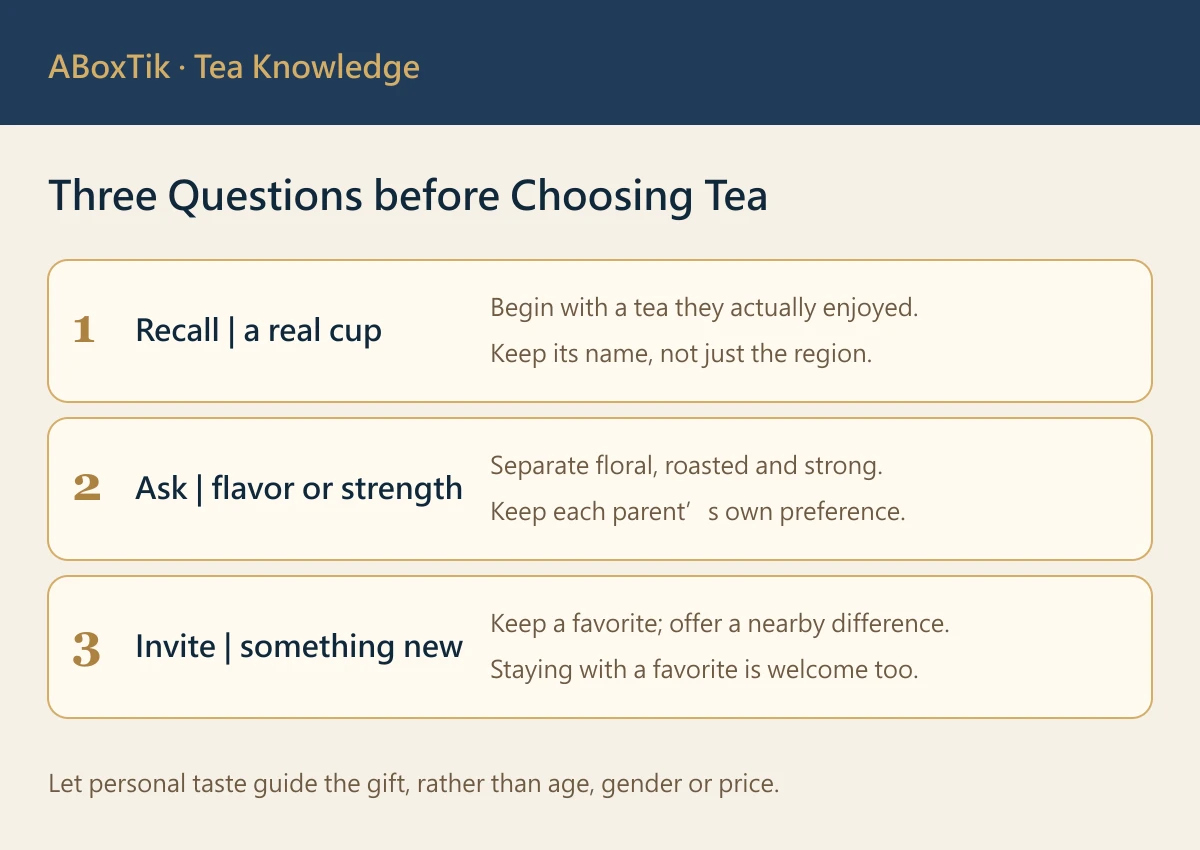
Tea gifts for parents begin with their own preferences: a tea enjoyed recently, a favorite aroma and a comfortable brewing strength. Keep one familiar direction and, if welcome, offer a nearby new flavor. A discovery can be an invitation rather than a replacement for the tea already in the cupboard. When parents have different tastes, choose along two separate lines instead of searching for a mythical tea that every parent loves.
The awkward part is sometimes the answer “anything is fine.” It may be politeness, or there may simply be no particular request. Start with a cup they actually drank. The question becomes easier without turning a visit into a family procurement meeting. For the wider choices around presentation and budget, use our tea gift-box guide. Here, the focus is the conversation before and after the gift.
Ask about a recent cup before asking for a tea name
“Would you enjoy that tea we had last time again?” is easier to answer than “What tea would you like?” If the answer is yes, ask what stood out: aroma, strength or the finish. If it is no, resist immediately upgrading the price. “Was it too strong, or was the flavor simply not your favorite?” offers a much more useful clue.
A parent need not remember a cultivar or growing area. With permission, look at the packet already being used and note the actual name and brewing guidance. Enjoying one tea from a region does not mean enjoying every tea sold under that region’s name. Our introduction to Taiwanese tea landscapes and craft provides background, while the choice can stay grounded in one real cup.
Separate “more fragrant” from “stronger”
One person means a clearer floral aroma; another means the warmth of roasting; a third wants a less watery cup. Those are different requests. Ask whether the preferred scent is floral or roasted, then ask whether the strength needs changing. One question at a time leaves room for an answer instead of presenting a list of ten unfamiliar names.
The Tea and Beverage Research Station’s flavor-wheel framework separates aroma, taste and mouthfeel. Borrow that distinction without making anyone learn a specialist vocabulary sheet. A few everyday words from the tea aroma guide may help. Then compare fresh and roasted styles to narrow the direction. The aim is a clearer preference, not the most technically impressive family discussion.
Keep a favorite and offer one nearby difference
A familiar tea makes the gift easy to begin; a new direction gives the next visit something to explore. Keep the difference manageable. Someone who enjoys fresh floral tea might compare another tea in that broad direction. Someone fond of roasted warmth may prefer a different expression within that style before moving to something very different. Ask first, rather than assuming surprise is always the main attraction.
| What you hear | What to keep | A next question |
|---|---|---|
| “I liked that floral cup.” | The actual tea name and preparation | Another floral direction, or the same tea again? |
| “I enjoy the roasted aroma.” | A roasted style already enjoyed | A similar aroma with a different texture? |
| “I only want the usual tea lately.” | The established favorite | Shall we leave a new tea for another visit? |
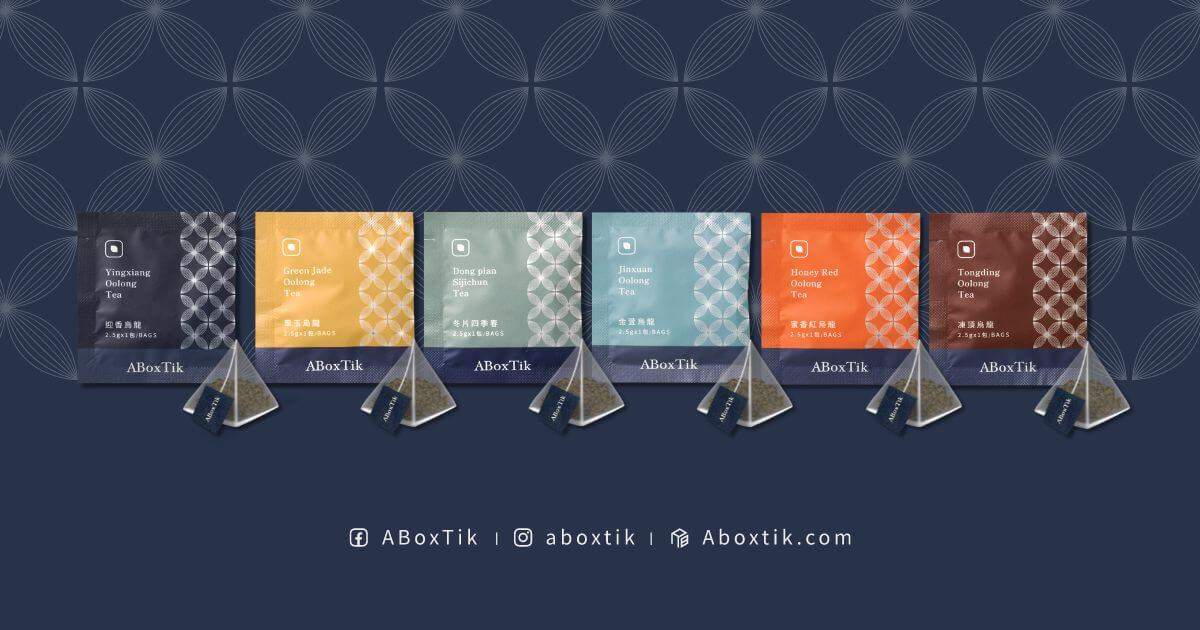
Use current product descriptions, such as the choices in the Classic Taiwanese Tea collection, when selecting. More spaces in a box do not require every space to contain a different flavor. Discovery should not become a cupboard full of homework. For the practical difference between box combinations, follow the mixed tea-bag gift-box guide rather than guessing from the word “assorted.”
Different preferences can sit at the same table
If one parent enjoys floral tea and the other prefers roasted notes, record those preferences separately. There is no need to find a compromise neither particularly likes. Choose a familiar direction for each and offer small shared tastes only if they are interested. Drinking the same tea is not a measure of family closeness; two different cups can share a very comfortable table.
If one parent does not drink tea, do not automatically substitute an herbal blend. Ask what they drink and whether they want this kind of gift at all. If they do, check the actual ingredients of each option. A floral aroma in pure tea is different from a blend containing flowers or herbs. And if the cupboard is already full, spending time together over existing tea may be the best next step.
Make the first cup with familiar equipment
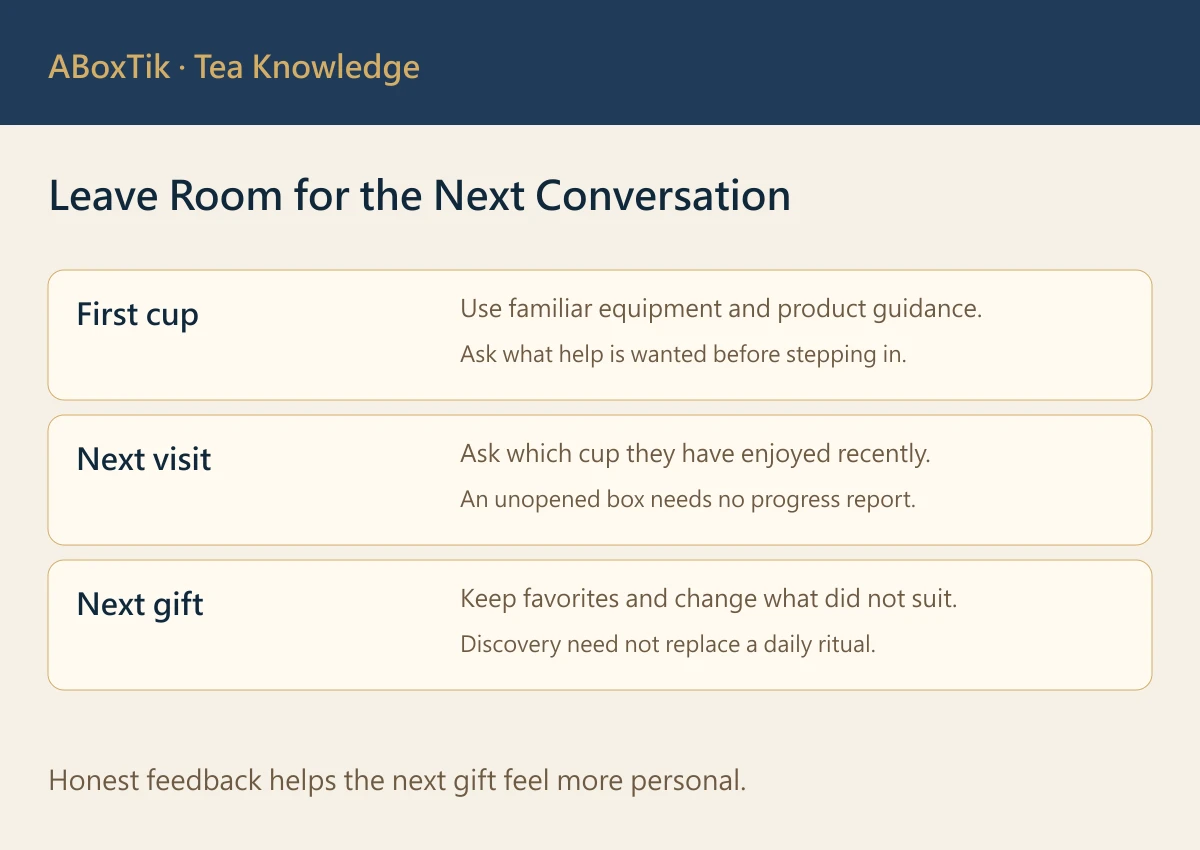
If there is time to brew together, begin with the cups or pot already used at home. Follow the product’s suggested leaf quantity, water volume, temperature and time. Ask what help is wanted before taking over. Someone with an established method may prefer to lead, which is an excellent opportunity to listen. The everyday brewing guide and steeping-time guide are there when a practical reference would help.
If the first cup is too strong, shorten the next infusion before insisting that this is how the tea is meant to taste. Find a comfortable strength, then discuss the aroma. For a household that already uses tea bags, follow the individual label and the guidance on whole-leaf tea bags. A gift does not need to arrive with a new equipment routine.
Try saying, “Let’s start with this time; if it is too strong, we can shorten it next round.” It leaves more room than “I chose this, so you will love it.” Honest feedback becomes easier when the receiver does not have to protect the giver’s feelings. That is useful information for both the next cup and the next gift.
Follow up with curiosity rather than a progress check
At the next visit, ask which tea they have reached for recently, which they would enjoy again, or whether a cup might suit a different brewing time. There is no need to count how many bags have been used each day. If the gift is still unopened, talk about life first. Tea can wait its turn without carrying an invisible deadline.
If the unfamiliar tea did not suit, keep that answer as a clue for next time. Offer another preparation only if wanted; otherwise return to the familiar direction. The useful outcome is not the number of correct guesses this time. It is knowing which questions help and making it comfortable to answer them truthfully.
Leave a place for the next visit
A familiar flavor, one welcome discovery and an unhurried conversation can make a thoughtful tea gift. For fewer choices to start with, explore the current options in the two-box tea-bag gift set. Move to a larger selection only when the extra choices would be enjoyed, rather than making the gift look fuller.
Keep unused tea sealed, dry, away from light and separate from strong smells, following its package instructions. Our tea storage guide offers more detail. Some care belongs on a card; some appears at the next visit, in a simple question: “The one you liked last time, or shall we try that other cup together?”
Related reading
For the people behind the tea, read the ABoxTik story together at the next visit.
Sources
- Tea and Beverage Research Station: Taiwan specialty tea flavor wheel and TAGs presentation
- Tea and Beverage Research Station: tea packaging and storage
Sources checked 2026-10-14.