
Tea Knowledge
Taiwan Tea Cultural Travel: A Guide to Reading Place

A tea region is not scenery waiting to be checked off; weather, work and welcome all find their way into the cup.
Taiwan tea cultural travel becomes more rewarding when the aim is not a longer list of place names, but a closer reading of landscape, work, explanation and the tea table in front of you. A few open questions can keep a visit from becoming a hurried series of photographs.
This is an observation-card guide: notice the land, listen for the work, read tea information, join a tea table with care, and take a few impressions home to brew with. It is not an itinerary. Check current access, bookings and local guidance directly for any specific place.
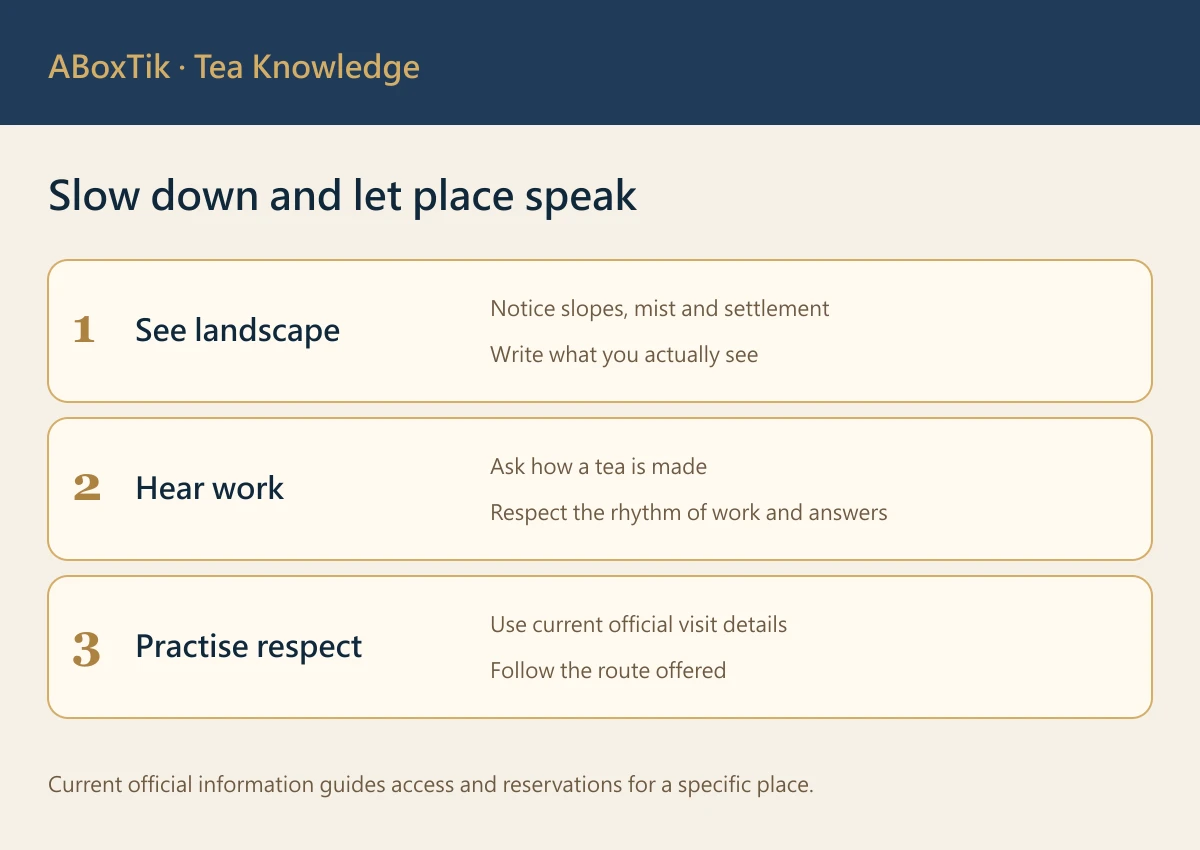
Read the landscape before naming the flavour
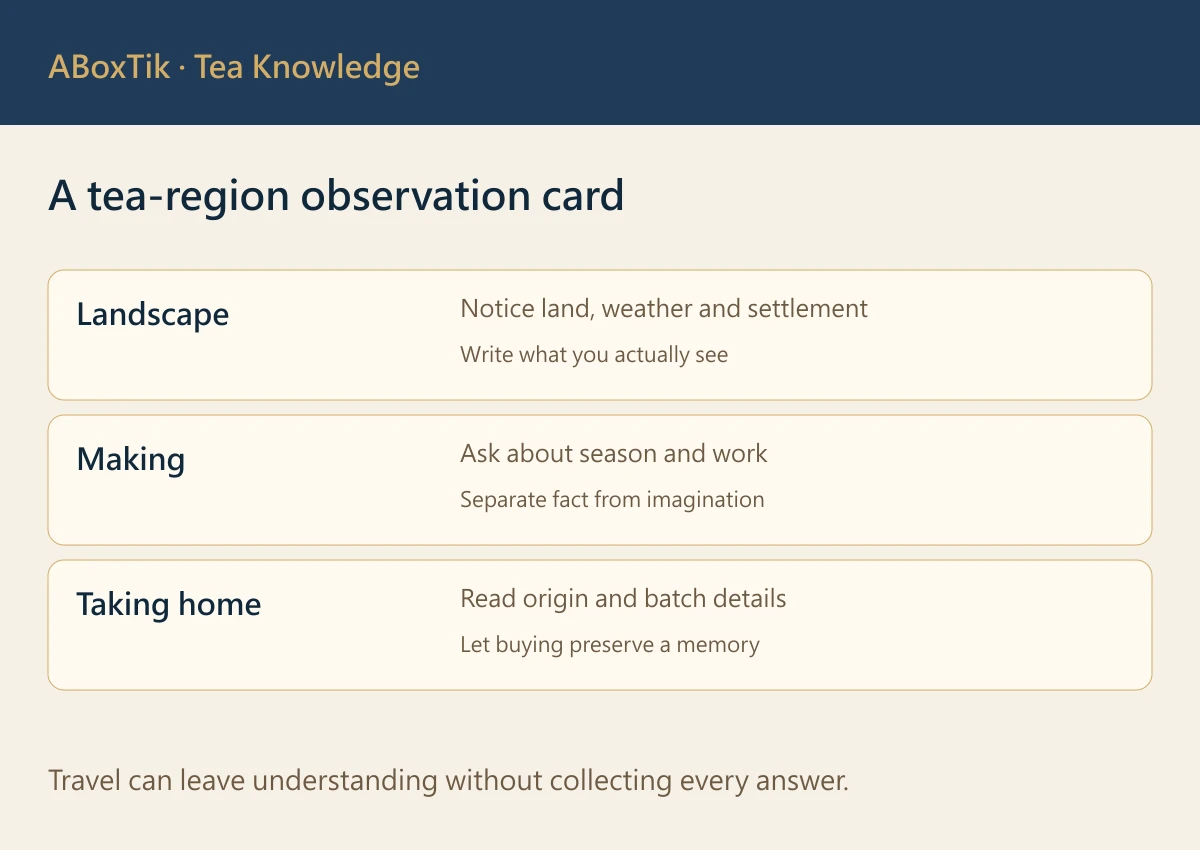
On arriving in a tea region, pause before assigning the tea a familiar description. Notice slopes, where mist settles, how settlements and roads meet the mountain, and what sits beside a tea garden. These are clues to a lived place, not a formula for predicting a cup. The Taiwan tea-regions guide gives regional context; your own notes can hold the details of this visit.
Try two columns in a notebook: “what I saw” and “what I imagine.” Afternoon mist is an observation; “therefore the tea must be sweet” is a thought to test later. Keeping them apart makes a region more interesting. A mountain has enough work to do without becoming a flavour guarantee for every photograph.
Listen for the work behind the leaf
When a grower, maker or guide speaks about tea, begin with one practical question: what has needed the closest attention this season? The answer may concern plucking, weather, withering, rolling, oxidation or roasting. Taiwan’s Tea and Beverage Research Station places origin, cultivar and processing together as useful context for tasting. One clear account of a step often brings a cup closer than a parade of superlatives; Taiwan tea: place and craft can help organise the terms afterwards.
Questions need not feel like an interview. “What can go wrong at this stage?” or “What change do you look for first once this batch is finished?” opens a real conversation. If someone is working or cannot answer, a thank-you is enough. Curiosity works best when another person’s labour is not treated as a performance on demand.
Use three fields: origin, cultivar and making
Read a tea name through three fields: where it comes from, which cultivar is used and how the leaf has been made. Origin offers a setting, cultivar supplies an ingredient clue, and processing explains the route into the cup. Together, they say more than a famous mountain name alone. The six tea types guide and high-mountain tea introduction help keep those terms in their separate places.
When a packet or menu is available, note verifiable details such as a batch, season, maker or brewing directions. Back home, use the same method with Green Jade Oolong, Dong Ding Oolong or Honey Red Oolong. Place becomes less of a mystery label and more of a shape made by several readable clues.
A tea table can show a local way of welcoming
Hospitality in tea regions does not follow one fixed ritual. One host may begin with the garden, another with water, a cup or the rhythm of brewing. Taiwan’s National Cultural Memory Bank records roadside offering of tea as a limited historical reference: tea could first meet a traveller’s thirst and need for rest. Keep that context lightly; it need not turn every offered cup into the same tradition.
At a tea table, first notice how tea is introduced, when cups are poured and whether questions are invited. Then join the pace offered. The Taiwan tea hospitality guide and Taiwan brewing rhythms and tools can carry that reflection into daily life. Useful manners are simple: understand the arrangement, ask gently and leave room for “not right now.”
Make sensory notes without hunting for a correct aroma
Give a cup three short moments: smell the dry leaf or cup aroma, take a small sip, then wait for what remains after swallowing. Use your own words—fresh leaves, fuller texture, a roasted finish. The aroma observation guide and aftertaste notebook offer vocabulary, not a required answer.
The same tea can feel different with a changed water temperature, strength or state of mind. Rather than asking whether you found the prescribed note, write one thing to check next time. That small blank space turns travel into an ongoing question, not an examination paper.
Let buying extend the understanding
If you would like to take tea home, first confirm its current origin, cultivar, style, storage and brewing information. The tea storage guide helps plan what happens after the journey, while first-infusion timing supports the first repeat brew. A small amount you can understand and drink is often a better travelling companion than a bag of unfamiliar names.
To compare a few directions at home, the classic Taiwan tea set places several styles on one table. Mug drinkers may prefer the two-box tea-bag gift, while the four-box mixed tea-bag selection offers more variety. Read current contents and brewing notes before choosing what will genuinely be used. A fuller suitcase does not automatically tell a fuller story.
Brew once more at home
Open your travel notes beside the kettle and revisit one clear fragment: mist moving across a slope, a maker’s pause when speaking about weather, or the way a cup was handed over. Brew with familiar equipment, not to copy the visit, but to compare today’s aroma with the impression you kept. The gaiwan and teapot guide can help choose a comfortable tool.
Local culture is not an exhibit that must remain where it was found. When origin is recorded clearly, tea is brewed with care and one good question is shared at the table, the visit continues. Next time a Taiwan tea appears, begin with “how was it made, and how is it being introduced?” Answers that arrive slowly often stay with the cup longer.

ABoxTik makes a cup of tea a gentle entry into reading place.
Carry an observation card into the next cup
Tea-region travel does not require collecting every origin or flavour. Notice one stretch of land, hear one piece of work, respect a tea table’s rhythm and keep one question for home; that is already a deep way of travelling.
ABoxTik hopes to return the clues of place to a cup worth sharing. Leave today’s notes beside the tea tin, and let landscape, work and welcome appear again with the next brew.
Related reading
- Read Taiwan tea through origin information
- Explore tea tables and hospitality
- Compare several Taiwan tea styles
Sources
- Tea and Beverage Research Station: introduction to tea sensory evaluation
- National Cultural Memory Bank: roadside offering of tea
Sources checked 19 October 2026.