
Tea Knowledge
Office Tea Bag Selection: A Practical Buying Guide
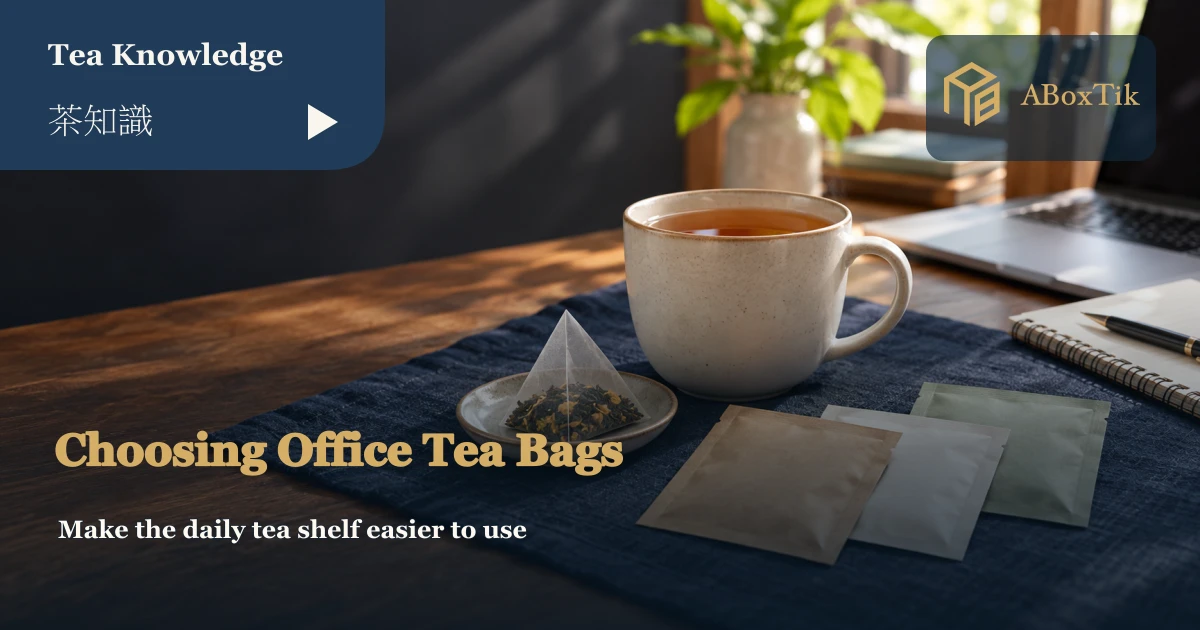
An office tea cupboard need not choose one favourite for everyone. Give each busy moment something easy to find, understand and finish.
Office tea bag selection starts with the working day: when people take a bag, whether the contents are clearly explained, and whether brewing can be finished when a meeting interrupts. Compare leaf format, product information and practical handling before buying a large quantity.
Choose a few understandable flavour directions, try a small first order and keep actual feedback. This purchasing guide helps each box earn a useful place in the cupboard without asking the buyer to become the whole company’s tasting judge.
Choose tea bags for the way people actually work
Office tea buying often begins with several perfectly reasonable requests. Someone wants a clear aroma, someone wants a cup before the next call, and someone opens a shared cupboard without knowing which box to choose. Start by separating the settings: an individual desk, a shared pantry, a meeting room or a working day spent moving between places. Each asks something different of a tea bag.
At a desk, easy removal and a place for the used bag may matter most. A shared cupboard needs clear tea names, ingredients and brewing directions. A meeting room benefits from a short choice that is easy to explain. Brewing and leaf-water separation covers equipment and interruptions; use those practical needs to inform the purchase.
Keep four fields on the buying sheet: who uses the tea, where, how easily the brew can end, and what must be understood from the box. This is less theatrical than a shelf full of tins, but tomorrow’s buyer will appreciate the clues. Tea is quite content without a dramatic entrance.
Look at leaf format and the handling it asks for
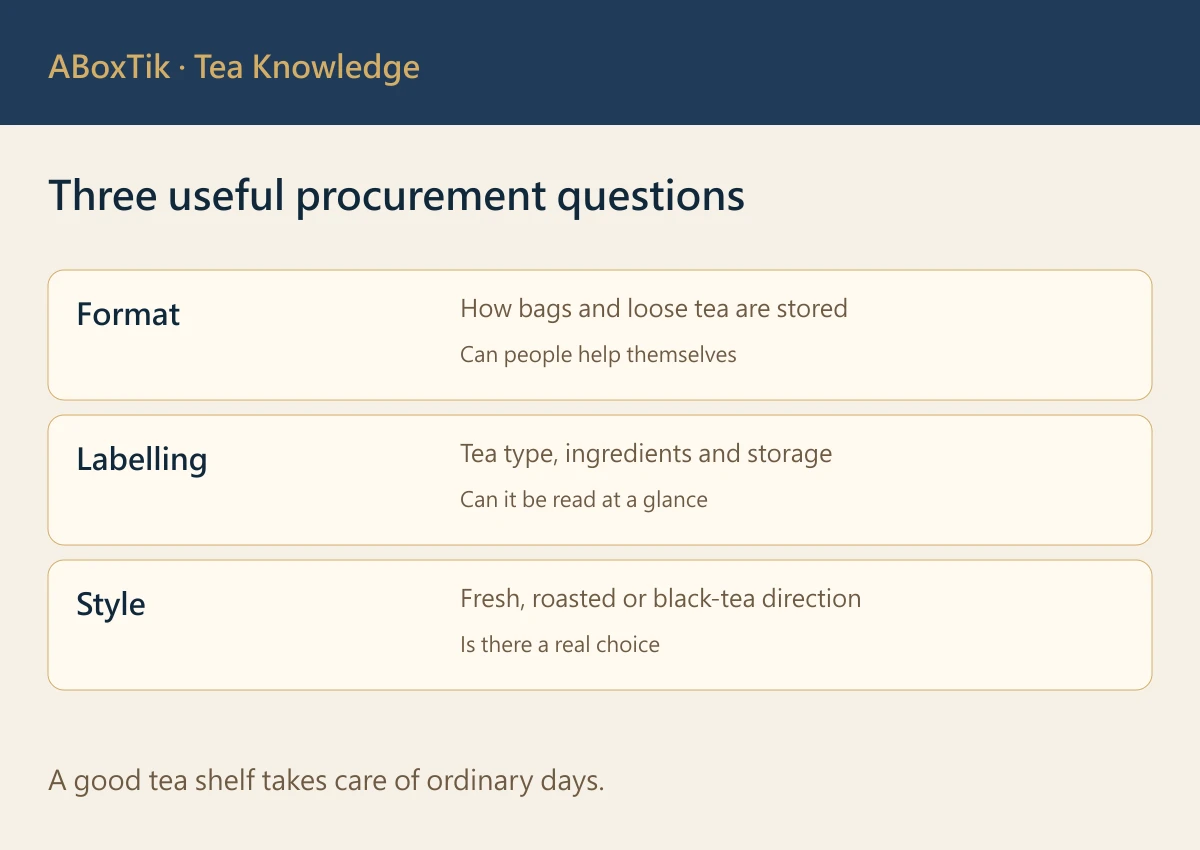
Tea bags come in different structures and leaf formats. Read the actual product’s description, construction and brewing guidance. Whole leaves, smaller leaf pieces and different bag shapes offer different handling and observation opportunities. A single “better” label does not explain which one fits a particular workplace.
Whole-leaf tea bags introduces one format, while pyramid tea bags explains another useful set of questions. Look at space for brewing, ease of removal and how the packet is opened and identified. Match those details to the equipment people really use rather than the equipment someone might buy one day.
If the workplace already has loose tea, infusers or thermoses, bags can be an additional option for meeting-heavy days. Loose tea can remain for quieter breaks. The aim is a cupboard that offers workable routes through different schedules, rather than making everyone choose a side in an imaginary tea debate.
Clear information makes sharing easier
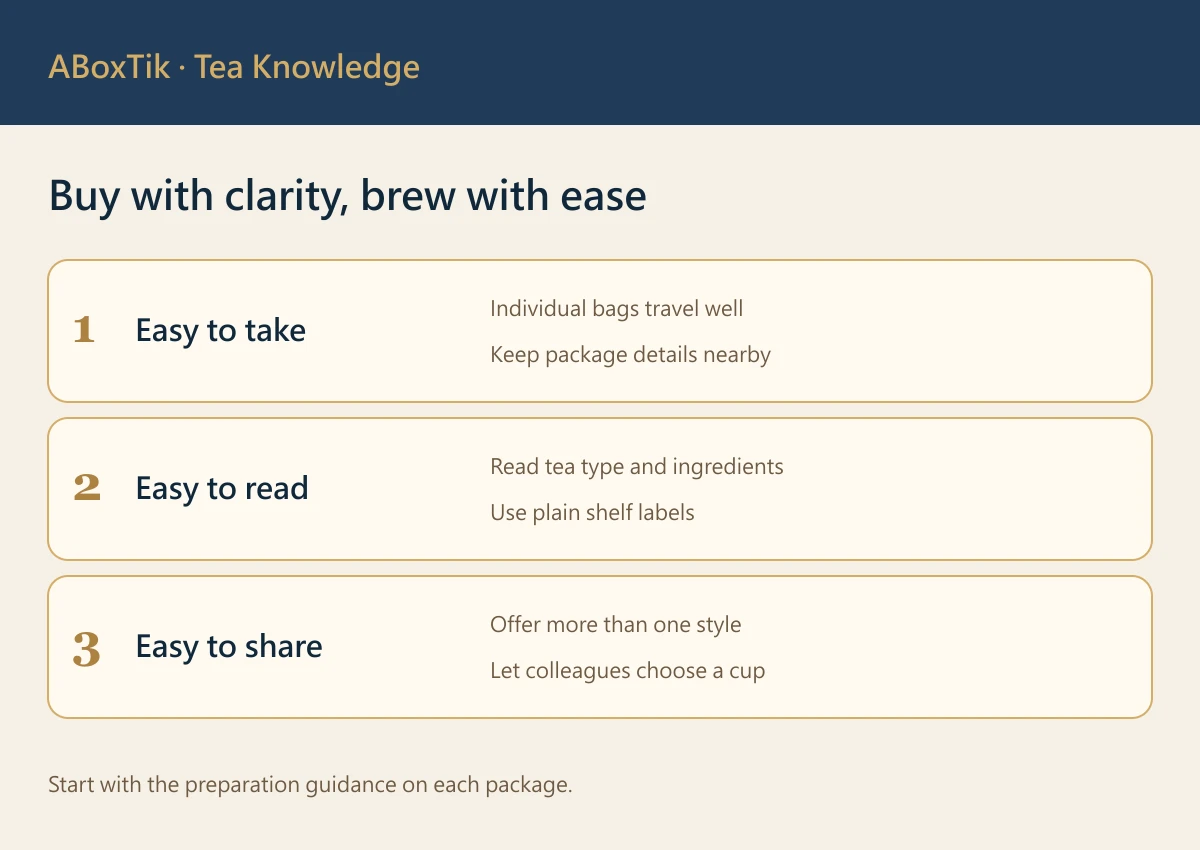
For a shared order, visible information does useful work. Check the tea name, ingredients, storage directions, brewing instructions and relevant dates on the actual packaging or current product page. With blends or added botanicals, distinguish an aroma description from an ingredient. A floral association in pure tea does not mean flowers were added.
Tea traceability and information provides a wider reading habit. For the cupboard itself, a few plain flavour directions can be enough: fresh, roasted, floral, or pure tea. Aroma observation and tea categories help turn vague preferences into words that colleagues can use without a technical vocabulary test.
Where someone has a specific ingredient preference, keep the current product information accessible. An internal purchasing sheet can record a question, but it should not replace the packet. People picking up a bag for the first time deserve to know what they are looking at, without having to find the person who placed the order.
Translate “less bitter” into a controllable choice
“A tea bag that is not too bitter” is a useful request when it leads to practical questions. Does the packet give a clear starting brew? Can the user remove the bag at a chosen point? Is there a cup and a small dish nearby? Tea, water temperature, contact time and preference all affect the experience, so the purchase should support adjustment rather than promise an identical result for everyone.
The Tea and Beverage Research Station discusses the influence of water temperature and tea type on tea liquor. Choose products with usable brewing information, then invite a first try based on that guidance. If the cup feels forceful, a later round can adjust contact time or another single condition rather than dismissing the entire box.
Bitterness and astringency observation and steeping time make feedback more concrete. A small “first impression” field can say fresh, strong, clearly aromatic or worth another try. That modest room to adjust is often more considerate to a busy colleague than a sweeping promise printed beside the kettle.
Try a small order with a few clear directions
A first team order need not become a huge catalogue. Choose a small set of flavour directions: perhaps a straightforward tea-led option, a lighter or floral direction, and a warmer developed character. These are starting comparisons, not a ranking. Read the actual contents and take account of the team’s responses.
Light and roasted Taiwanese tea helps compare two directions. Mixed tea-bag formats offers another way to organize choice. For a fixed team, a small varied trial can precede a repeat order; for visitors, make the explanation and handling especially clear.
Collect a few words after people have actually used the tea. “Fresh before meetings” or “clearer aroma in the afternoon” gives a useful next choice. Notice what is taken as well as what is praised: the format people return to may tell a different story from a beautiful box nobody opens. The buyer is gathering practical observations, not awarding a company-wide palate trophy.
Compare formats against the workflow
| Setting | Check first | First action after buying |
|---|---|---|
| Personal desk | Easy removal and clear directions | Prepare a cup and dish; try the packet guidance |
| Shared cupboard | Readable tea names, ingredients and flavour directions | Keep information visible and note first feedback |
| Meetings | A short, understandable choice | Offer a few directions without a lengthy interview |
| Mobile workday | Removal and cleanup fit the container | Check the container instructions before carrying tea |
Treat repeat brewing as another product-specific question. A second cup depends on the tea, serving conditions and preference. Follow package guidance where supplied, then record the actual experience. A universal number of infusions is not a useful substitute for those details.
Tea categories provides background, and a Taiwan tea starting selection can help arrange different styles. Each option should have a reason to be there. More boxes do not automatically make a more welcoming cupboard if nobody knows which one to open.
A ten-minute check before reordering
Before placing the next order, check which boxes were actually used, whether first-time users could understand them, whether ingredient questions were answered, and whether cups and dishes were available. Confirm whether the order is for everyday supplies, sharing or a gift. The same attractive package may serve those purposes differently.
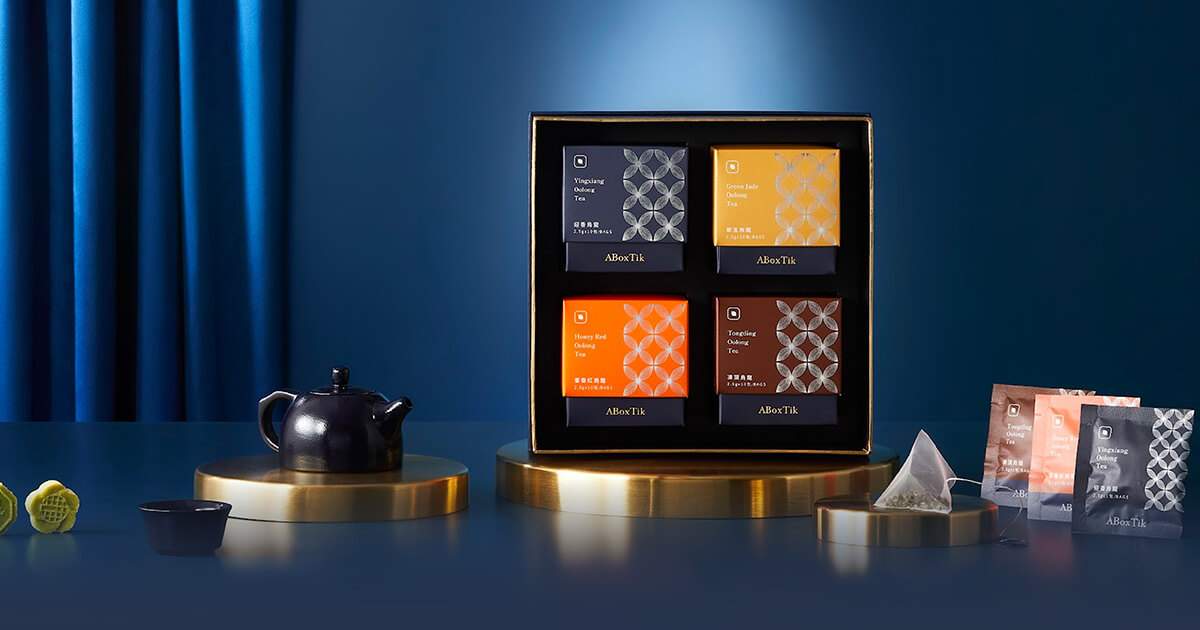
For current product formats, compare two-box tea-bag gifts, mixed Taiwanese tea-bag sets and a classic Taiwanese tea selection. Read the current contents and availability on the product page. Choose a format that fits the intended use rather than assuming that every set contains the same tea.
Finish the record with the order date, chosen directions, how the team used them and the next adjustment. It need not become a performance report for a tea cupboard. It simply gives the next person a starting point. That is often how a thoughtful workplace habit develops: someone has already left a useful clue for the next cup.
Follow ABoxTik
Leave an easy first cup in the cupboard
An office tea order can make room for different preferences without defining good taste for everyone. Care for the rhythm of use, clear information and an adjustable first brew, and colleagues can find a bag they return to.
ABoxTik values the details that help tea settle quietly into a working day. Start with a small comparison and keep a little evidence for the next order.
Related reading
- Understand whole-leaf tea-bag formats
- Turn bitterness feedback into a useful observation
- Brewing and leaf-water separation
Sources
- Tea and Beverage Research Station: Water quality and temperature
- Tea and Beverage Research Station: Cold-brew conditions across tea types
Sources checked 19 October 2026.