Tea Knowledge
Tea or Teaware Gift? Choose for the Recipient’s Routine
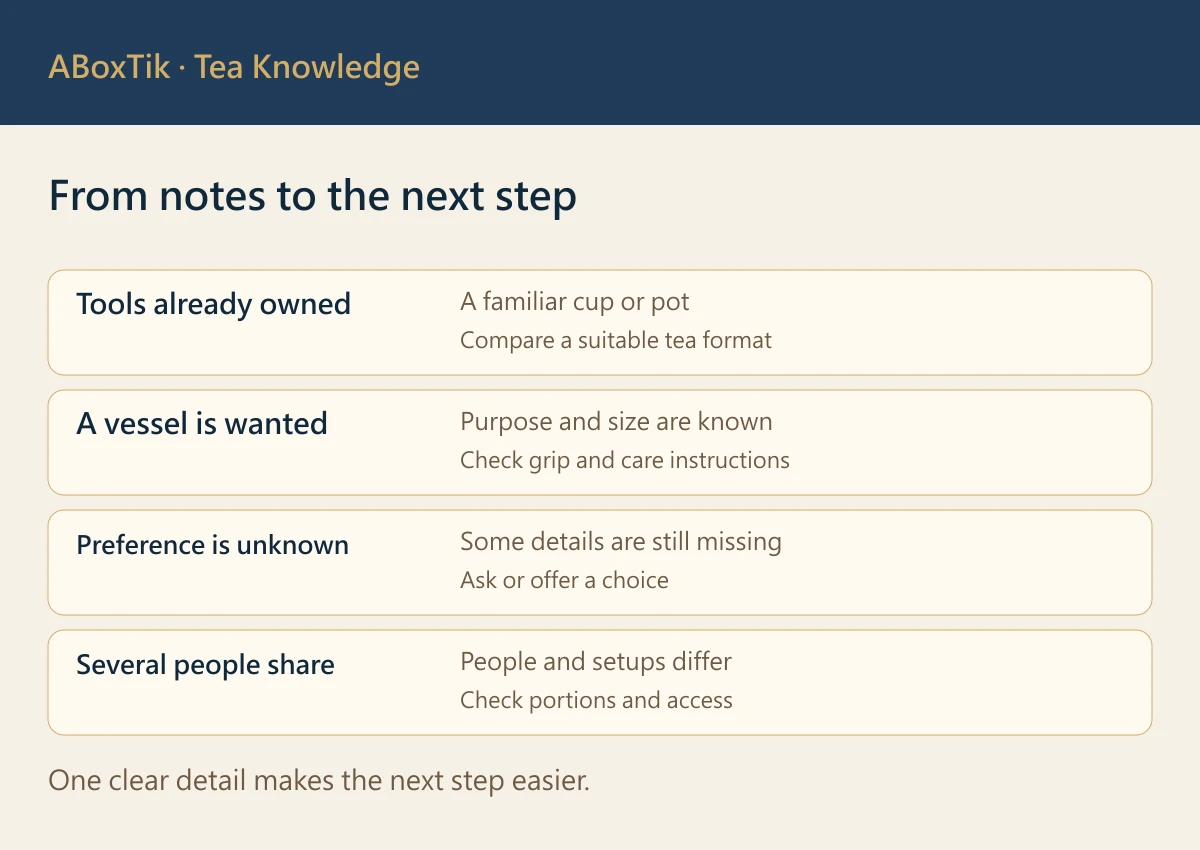
If someone enjoys tea, the choice between leaves and teaware starts with two questions: how do they brew now, and do they actually need another piece of equipment? A familiar tea can fit an existing routine; a vessel is more personal when you know which item, size and use the recipient wants. If neither is clear, a gentle question can do more than a complete tea set chosen by guesswork.
| What you know | A useful starting point | Check before choosing |
|---|---|---|
| They use a mug and enjoy a particular tea | A familiar tea or an easy-to-use format | Ingredients, quantity, storage and tea already at home |
| They have a tea setup and need a specific item | One piece chosen for that purpose | Capacity, feel, material, cleaning and storage |
| They enjoy comparing tea with family | A clearly described selection and quantity | Number of drinkers, preferences and actual contents |
| Little is known about either habit | Ask first or offer a choice | Whether they drink tea, gift policies, delivery and budget |
These are starting points, not rules. Loose leaf needs a suitable way to brew; a tea bag still calls for an ingredient and usage check. A cup or pot must fit a hand, a space and existing equipment. The thoughtful choice is the one someone can use comfortably.
One question can be enough
Ask “What tea have you enjoyed lately?” or “Is there a cup you have been wanting to replace?” If the gift is a surprise, someone close to the recipient may know the answer. Leave the unknowns flexible. A person who already has plenty of tea may appreciate a different gesture, and someone who does not drink tea need not be persuaded to begin.
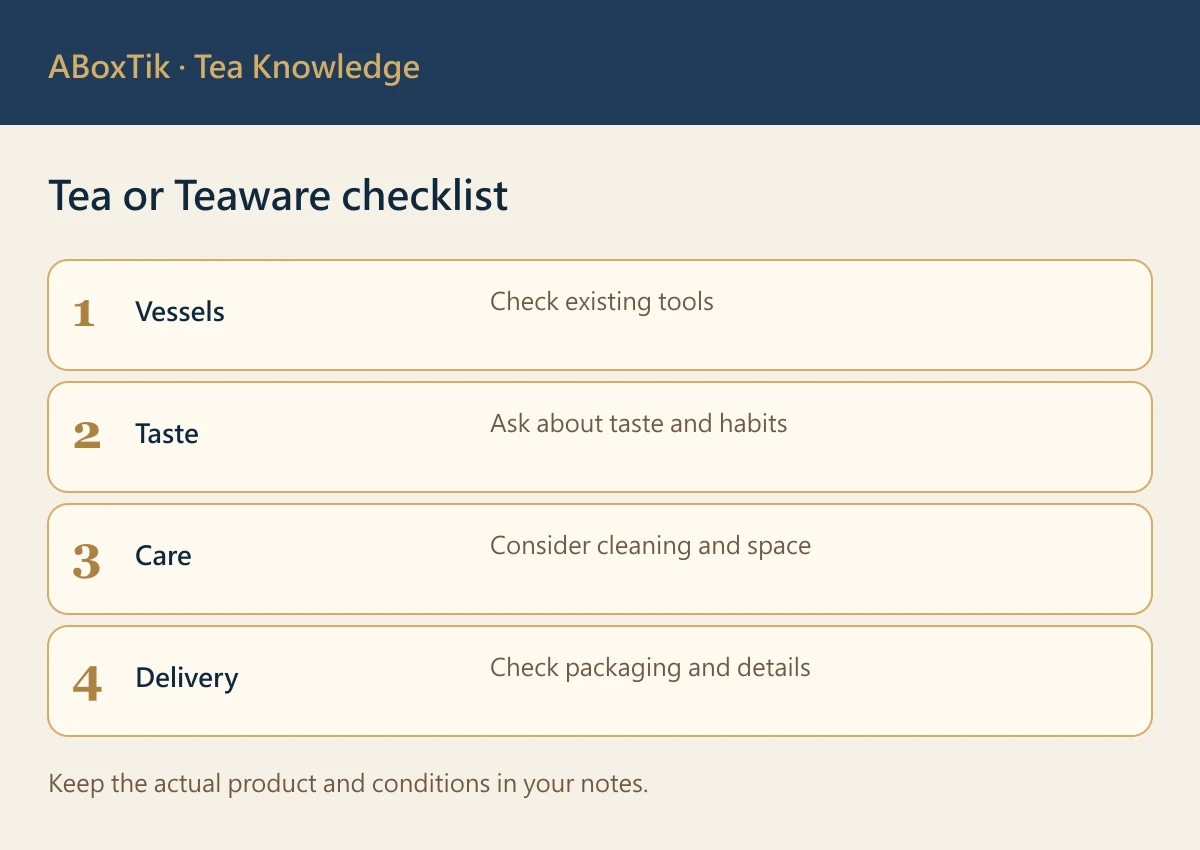
Before selecting a vessel, clarify whether it is for one person or a group, brewing or drinking, and whether the grip, washing and storage work for the recipient. Check the maker’s actual material and heat-use instructions rather than inferring them from a picture. If the piece is fragile, plan the handover and carrying as well.
If you give both, make the first cup easy
When you know both will be used, tea and one small vessel can make a welcoming set. Check that the tea format and equipment work together, and include the tea name and the product’s brewing and care instructions. Extra pieces are not required to make a gift feel complete.
Confirm the current specifications, cost, arrival and carrying arrangements. Our tea gift box guide and teaware material guide can help with the next comparison. A short card explaining the real reason for your choice lets the recipient see the thought behind it.
Three situations: narrowing the choice without guessing
The recipient drinks tea every day, but the cupboard is full
Ask what they have been enjoying and whether they would welcome more. If they already have a generous supply, a gift does not have to compete for the remaining shelf space. You might arrange to share what they already own or wait until they are ready to replenish it. If a tea gift still feels appropriate, a modest quantity with a clearly described format is easier to place in an existing routine. Check the actual contents and storage instructions before choosing.
This distinction matters because drinking tea frequently does not tell you how quickly someone finishes a particular package. One person may open several teas at once; another may prefer to finish one before starting another. A simple question about that habit can reveal whether variety or a single familiar choice would be more useful. Neither response needs to become a rule for every tea drinker.
The recipient likes beautiful objects, but has not named one
A vessel’s colour, weight, capacity and grip are personal. A pot can look lovely in a photograph and still be awkward for the person who will pour from it. Look at what they already use and ask whether there is a particular piece they have been considering. Choosing together can preserve the pleasure of the gift while letting the future owner decide how it feels in the hand.
If the gift must remain a surprise, ask a close contact only about details they actually know. A useful answer might be “she wants a smaller cup” or “he prefers a handle,” not an imagined assessment of what their tea table ought to look like. When the answer remains uncertain, give the recipient room to exchange or select, subject to the seller’s actual terms.
Several colleagues will share the gift
Start with the number of people and the water and cups available. Then consider whether individual portions, clear brewing instructions and tidy storage would help. An office with only mugs has a different setup from a team that already shares a teapot. Check the real package contents and the expected pace of use; more equipment is not automatically more useful.
Think through the handover as well. Will one person receive the box and distribute it later, or will everyone select a portion from a shared area? Where will the packaging and instructions stay? A gift can be generous without asking the recipient to build an unfamiliar system around it. If people have different preferences or dietary needs, make the ingredient information easy to find and allow each person to choose.
Choosing tea: a short card for the decision
Record the tea name if known, preferred flavour direction, usual vessel, approximate existing supply and number of people sharing. Leave unknown fields blank. When looking at a product, check ingredients, net quantity, package format, storage guidance and brewing directions. A multi-tea collection should be checked item by item: the name of a range does not guarantee the contents of every box.
Set a budget for the complete gift, then consider any separately confirmed packaging, card or delivery charge. Compare the actual quotations and what they include rather than assuming every accessory comes with the tea. Cost, quality and suitability are different questions. A smaller tea that someone is ready to use may be a better fit than a larger collection that needs equipment they do not own.
Choosing teaware: four details that affect daily use
- Purpose: Is the item intended for brewing, sharing or drinking? A single object does not need to do every job.
- Size and grip: Check capacity, weight and where the hand makes contact. A comfortable hold matters when the vessel is filled.
- Care: Read the maker’s cleaning, temperature and storage instructions and decide whether they fit the recipient’s routine.
- Space and handover: Consider shelf and table space, protective packaging and how the piece will be carried.
When an in-person trial is not practical, show the recipient the specifications and photographs. Invite them to choose between two suitable options or confirm the dimensions they want. Ask the supplier about the actual item, availability and delivery arrangements; do not infer a material property or a service promise from a picture.
Write a card that leaves the recipient a choice
Begin with a true observation and add an invitation that is easy to decline. For example: “I remembered you enjoyed this style of tea, so I chose a small amount for a future cup together.” If the recipient selected the cup, a simple “I hope this becomes part of a comfortable tea break” is enough. Neither line requires the recipient to report back or prove that the gift was successful.
If you do not know their preference, do not invent a shared memory. State the relationship honestly: “I thought we might enjoy choosing a tea together.” A card can identify the tea and point to the package instructions, while leaving preparation and timing up to the person receiving it. A little practical information is often more welcoming than a paragraph explaining how the recipient should feel.
Frequently asked questions
Does a first tea gift need teaware?
No. Check what the recipient already has and whether it suits the chosen tea format. If they would need another accessory before making the first cup, include that extra step and cost in the decision. An easily used tea and an existing mug may be a better fit than a set of unfamiliar pieces.
Is a teapot always a more thoughtful gift?
Thoughtfulness comes from fit, not object type. A pot may be ideal if the recipient wants that particular shape and has considered its capacity and care. When all you know is that they drink tea, a tea they already enjoy or an invitation to choose a vessel can be equally personal.
What if the gift turns out not to be useful?
Check the seller’s current return or exchange conditions and discuss the options openly with the recipient. Keeping the packaging and purchase details may help with that enquiry, but the actual outcome depends on the seller’s policy. Giving a useful item a comfortable path to its next home is kinder than insisting the original guess must have been right.
How much tea should I buy?
There is no universal amount. Consider how many people will share it, whether the recipient already has tea, and the actual packaging and storage guidance. If these details are unknown, a smaller selection can be easier to discuss than a quantity chosen to make the box look full. The recipient can always decide whether they would like more later.
Related reading
No kettle at home? Ask about the first cup
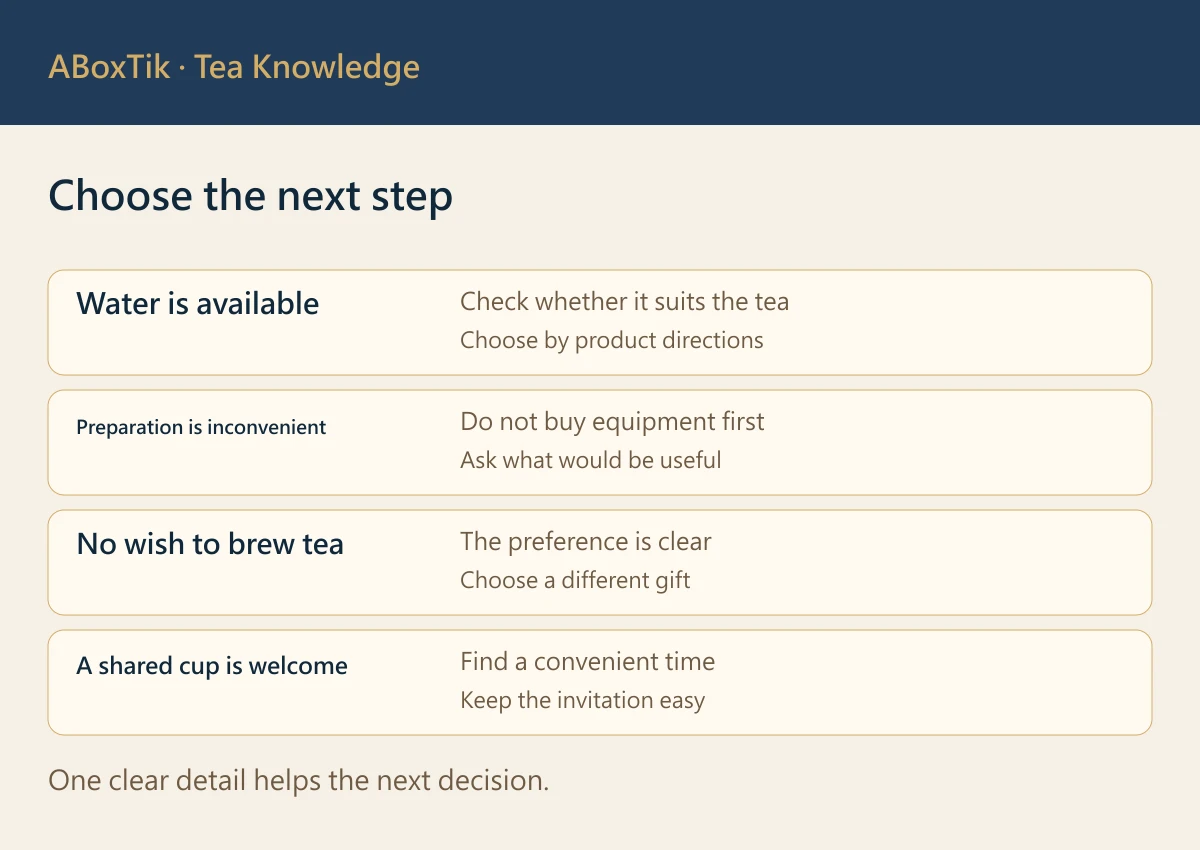
Start with how the recipient normally obtains water suitable for their tea and whether they want to prepare tea at all. Not owning an electric kettle does not tell you what other facilities they use or whether they want another appliance. If the water temperature recommended for the tea is inconvenient, a pretty cup alone does not settle the question. Check their existing routine together, or choose another gift they would actually welcome.
| What is known | Next question | Gift direction |
|---|---|---|
| A usual way to heat water | Does it suit the tea’s instructions? | Choose a suitable tea and quantity |
| Preparation is uncertain | Would they like to review the steps? | Ask before buying equipment |
| No interest in equipment or brewing | What would be useful instead? | Respect the answer and choose accordingly |
Tea bags simplify portioning, but still need suitable water and a container as specified by the product. Check those details, ingredients and storage before giving, and include the original directions if useful. An invitation to share a cup can wait for a time that suits both people; the gift need not become an appliance shopping list.