
Tea Knowledge
Book Forest Taichung: A Home Reading Tea Corner

Book Forest Taichung has brought reading spaces back into the news. To bring that inspiration home, give the book a dry reading area and keep the cup and brewing equipment on a separate tray. Start with a table already in use, then arrange a clear route for lifting the cup, turning pages and refilling.
Taichung City Government announced the project’s main structural completion on November 24, 2026, with further news coverage on November 25. That construction milestone is distinct from opening to visitors; check subsequent official announcements for admission information. At home, a book and a cup of Taiwanese tea offer a practical place to begin.
Start with the place where reading actually happens
Sit in a familiar chair and open the book intended for tonight. A hardback, a magazine and a paperback occupy different amounts of space. Let the open pages rest comfortably before deciding where the tea belongs. Add the lamp, glasses and notebook normally used, rather than arranging a table around decorative objects.
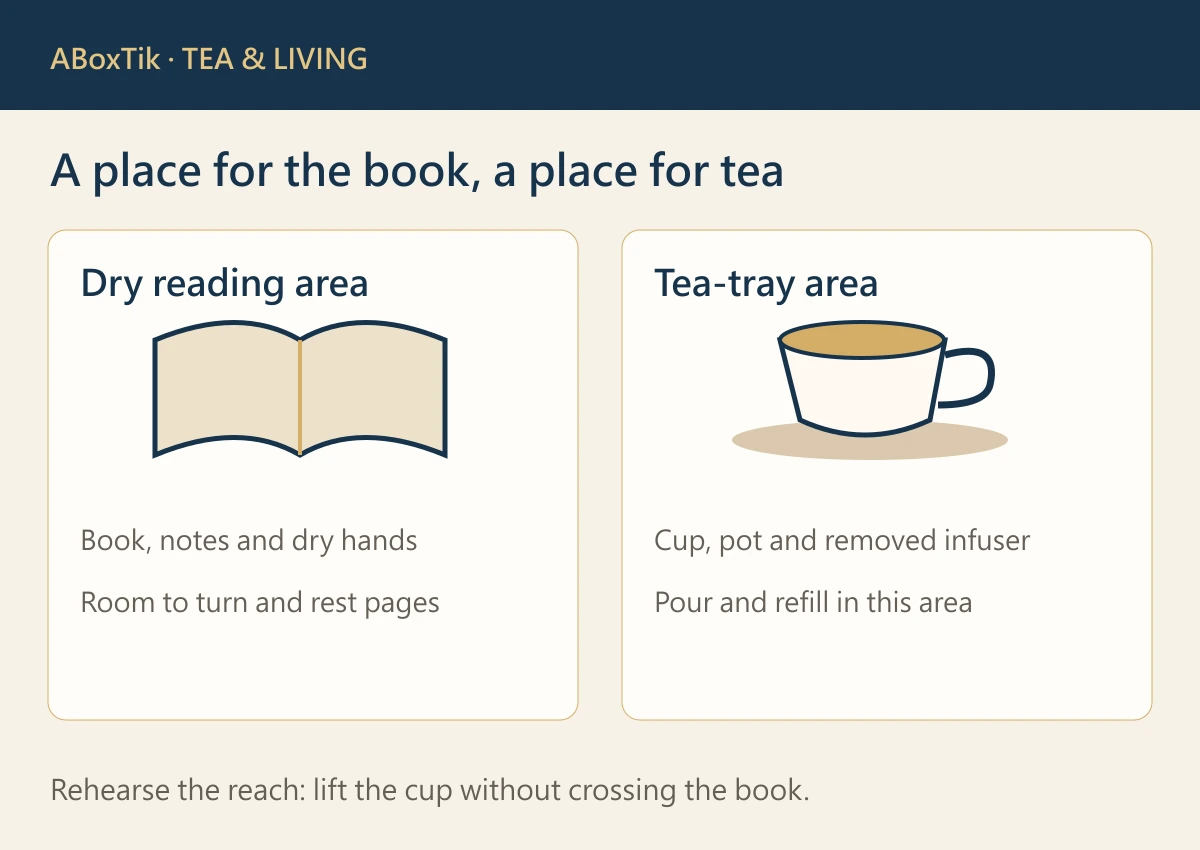
Now rehearse the movements with empty hands: turn a page, reach for a pen and lift an imaginary cup. If the arm crosses the book, move the tray to a clearer position. The useful kind of empty space gives each object somewhere to return. For the wider story behind the drink, explore Taiwanese tea’s landscape and craft.
Separate the dry reading area from the tea tray
Keep the book, notes, bookmark and glasses in the dry area. Put the cup, brewing vessel and a small dish for a removed infuser or tea bag on the tray. There is no universal left-or-right arrangement: the reader’s preferred hand, seat and table depth determine a comfortable reach. Pour and refill within the tea area.
On a small side table, brew elsewhere and bring over the finished cup. The kettle need not accompany every chapter. Keep the tray away from an unstable edge and check that the cup can be lifted easily. For details about cloth placement and working surfaces, see the dry tea-table guide; here, begin with the path between hand, cup and page.
Choose one of two manageable brewing arrangements
A single ready cup: a mug with a removable infuser, or a tea bag with a small resting dish, suits a longer stretch of reading. Follow the tea’s instructions, then separate leaves from water at the chosen time. Keep the dish on the tray so a wet infuser never needs an improvised place beside the book.
A small pot and cup: this suits readers who enjoy a pause between sections. Pour out on the tray, then serve an amount that is easy to lift. Match vessel capacity to the cup rather than filling everything at once. Compare a gaiwan and a teapot, or use the porcelain brewing guide to make the most of familiar equipment.
Finish brewing before settling into the page
Read the packet’s water and timing instructions before opening the book. The oolong water-temperature guide and steeping-time guide offer further context when needed. Put a timer near the brewing area; when it sounds, finish the pour or remove the infuser, then return to the paragraph.
When reaching for a drink, mark the place, lift the cup, try a small sip and put it back securely. Let very hot tea cool to a comfortable drinking temperature, and keep hands dry before turning pages. If interrupted, settle the cup and hot equipment before leaving. A bookmark can wait without requiring the tea to keep steeping.
For another infusion, leave the book in its dry area and refill at the tray. Adjust according to the tea’s instructions and how the preceding cup tasted; the tea re-steeping guide explains the next decision. A short reading session can have a small serving. There is no need to make a full pot simply because the table has room.
Begin with one familiar flavour
Choose a tea already comfortable to prepare before opening several new packets. The Taiwan tea starter guide can help plan a later comparison. Books have no required tea pairing: the flavour enjoyed, the equipment available and the amount of clearing up all matter more than matching a novel to an impressive tea name.
ABoxTik describes Yingxiang Oolong through delicate orchid and floral-fruity notes, a useful starting point for someone looking in a floral direction. To explore two choices on separate reading days, browse the current options in the two-box tea-bag set. One familiar choice and one that invites curiosity can be enough.
If a flavour note comes naturally, write one plain sentence on a separate card. The tea-aroma guide offers an observation sequence when wanted. Reading time does not need a tasting worksheet. A bookmark with the page number and a small tea note can each have their own place, ready to be found again.
Use three small resets: before, during and after
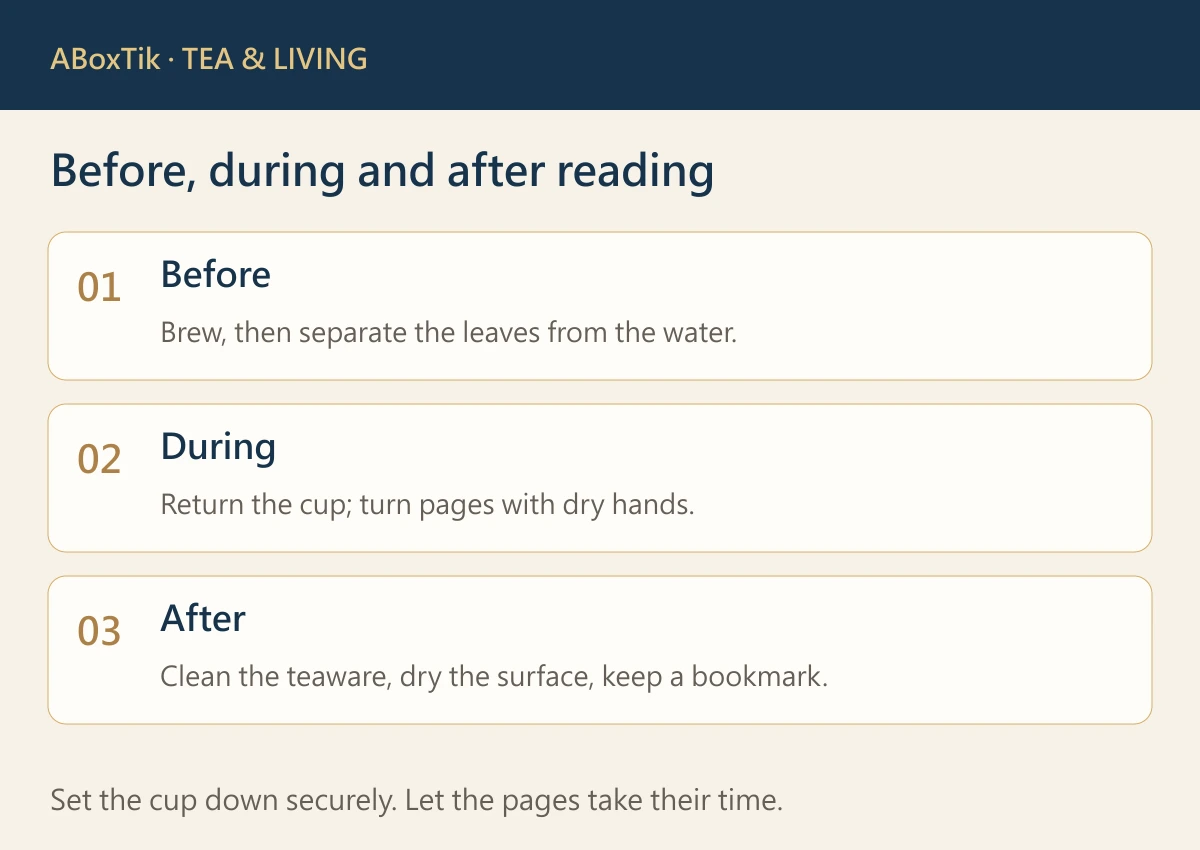
Before reading, check that the book rests comfortably, the cup has a tray and the removed infuser has a dish. During reading, return the cup to its place, turn pages with dry hands and refill away from the book. Afterwards, clean the teaware, dry the surface and leave the bookmark where the next session begins.
For example, brew a cup for one chapter, remove the infuser and sit down. At the chapter’s end, decide whether there is time and appetite for another infusion. If the arrangement keeps requiring trips to change equipment, bring one fewer object next time. The routine should fit the reading session rather than fill it with jobs.
Adapt the corner when space or the book changes
When a table is narrow, preserve the book’s full opening space and move the cup to another stable surface within comfortable reach. Alternatively, do all brewing on a kitchen counter. If book and cup can only squeeze each other out, separate them. A useful reading corner does not need to look like a carefully staged photograph.
Support a heavy book with a suitable reading rest already available; a working cup or pot should not become a page weight. For notes, return the cup before picking up the pen. Readers working through exhibition texts may enjoy reading craft artists’ statements. With two readers, preserve two dry book areas and make the shared tray accessible to both.
The Taiwanese brewing and serving guide can help with shared equipment. Reading together still leaves room for different speeds. One person may pause for tea while the other finishes a paragraph; neither needs to keep time for the other.
Leave a place worth returning to
The Book Forest Taichung news can prompt a fresh look at reading spaces. A home corner takes shape through much smaller decisions: where the book rests, where the cup returns and how easily everything clears away. Wash the cup, dry the tray and keep the book within reach. Try the arrangement once, then adjust it to the movements that felt natural.

Let the bookmark look after this page while you explore premium tea gifts, more articles and the latest boutique selections. By the next chapter, even the cup may have found its favourite place.